
The 2010 Formula 1 season has gone down in history as one of the most classic campaigns of the modern era. It was a monumental year of transition for the sport, breathing new life into it with the arrival of talented young faces and the return of legends. A tense battle between the top three teams saw a record four drivers vying for the championship at the final round, with Sebastian Vettel ultimately being crowned, despite never having led the standings until that final race and no driver winning a race while leading the overall championship. But what if this season were run in reverse, with the Abu Dhabi Grand Prix as the season opener and the Bahrain Grand Prix as the finale?
Obviously, the end result remains unchanged: Sebastian Vettel wins the driver’s championship by four points over Fernando Alonso, and Red Bull secures the constructor’s title with a 44-point advantage over McLaren. However, reversing the order of the races drastically alters the trajectory of these two title fights, offering a fresh perspective on where championships can be won and lost. With time running in reverse, a bit of “artistic license” must be applied to historical events. Fortunately, 2010 was not a season marred by driver fatalities, but it did feature numerous driver transfers in a grid that was the largest F1 had seen in 15 years.

The Reverse Season Begins: Abu Dhabi (The Actual Finale)
With pre-season testing concluded (in reverse), everyone arrives in Abu Dhabi for a new decade and a new era of Formula 1. Over the (reversed) winter, the sport has changed significantly. In-race refueling was banned for the first time since 1993, making the cars considerably longer, and a new, expanded points system was introduced, awarding points to the top ten finishers. Defending champion Jenson Button had left Brawn GP to join Lewis Hamilton at McLaren, forming a British “dream team.” Brawn GP was acquired by Mercedes, marking their return as a constructor for the first time since 1955 and forming their own German “dream team” with the up-and-coming Nico Rosberg and the sensational, unprecedented return of seven-time champion Michael Schumacher. Sebastian Vettel and Mark Webber were in their second season as teammates at Red Bull, hoping to improve on their 2009 performance. Kimi Räikkönen was out at Ferrari, replaced by Fernando Alonso, who partnered with Felipe Massa, still recovering from his accident in Hungary.
Williams had a new engine supplier in Cosworth and an all-new driver lineup featuring the highly experienced Rubens Barrichello alongside the reigning GP2 Series champion Nico Hülkenberg. Renault brought in Robert Kubica to replace the departing Fernando Alonso, joined by F1’s first Russian driver and reigning GP2 Series runner-up, Vitaly Petrov. Force India aimed to climb higher up the grid, retaining their 2009 lineup of Adrian Sutil and Vitantonio Liuzzi. Red Bull’s B-team, Scuderia Toro Rosso, kept their junior drivers, Sébastien Buemi and Jaime Alguersuari. The brand-new Lotus Racing team hoped their experienced lineup of Jarno Trulli and Heikki Kovalainen would deliver a strong debut season. HRT barely made it to the grid after a chaotic winter, featuring an interesting lineup of Ayrton Senna’s nephew, Bruno Senna, and former Red Bull driver Christian Klien. Sauber rose from the ashes with Peter Sauber reclaiming ownership from BMW at the eleventh hour, boasting a dynamic duo of rising star Kamui Kobayashi and seasoned veteran Nick Heidfeld. And the new Virgin team hoped their drivers, Timo Glock and rookie Lucas di Grassi, could help them battle fellow newcomers Lotus and HRT.
Vettel’s (reversed) campaign gets off to a flying start as he secures a comfortable lights-to-flag victory from pole, well ahead of Hamilton in second, while Button’s third-place finish signals a revitalized McLaren. Rosberg demonstrates Mercedes’ solid car with a fourth-place finish, and Renault has a fantastic race with Kubica in fifth and Petrov making a bold statement on his debut by holding off Alonso and Webber for 40 laps. Alguersuari is close behind in ninth, just ahead of Massa in tenth, suggesting that things might not be going to plan. Further back, the three new teams are far off the midfield pace, and Schumacher’s return gets off to a disastrous start as he spins on the first lap and is collected by Liuzzi. Vettel takes the initial lead in the driver’s championship, but McLaren establishes a narrow lead in the constructor’s standings.
Early Shocks: Brazil and Korea
With a basic pecking order established, the paddock travels to Interlagos for the Brazilian Grand Prix. However, this order is immediately disrupted by a shock pole position from Hülkenberg in only his second race. This proves to be a fluke, as he drops to eighth in the race, and Vettel takes another win with Webber finishing second, establishing Red Bull as the top team. Alonso secures third, Hamilton and Button are fourth and fifth, and Rosberg and Schumacher finish sixth and seventh, ahead of Hülkenberg. Kubica has a slightly disappointing ninth, and Kobayashi gets Sauber on the board with tenth. Vettel extends his lead in the driver’s championship, while Webber, Alonso, and Schumacher all move up to more typical positions. Red Bull swiftly takes the lead in the constructor’s championship from McLaren, with Mercedes, Ferrari, and Williams making moves.
The next round sees the debut of the Korean Grand Prix, and only two races in, we get our first driver change, showing just how strapped for cash they are. HRT replaces Klien with former Super Aguri and Spyker pay-driver Sakon Yamamoto. Pouring rain creates a chaotic race, which at first sees an extended safety car period and a red flag, but becomes a disaster for Red Bull as Webber crashes out and Vettel retires from the lead with an engine failure. This hands the win to Alonso, his first with Ferrari. A consistent Hamilton finishes second, Massa finally shows up to claim third, and Schumacher drives strongly to fourth. Kubica is fifth, while Liuzzi and Barrichello get the ball rolling with sixth and seventh. It’s a double-points finish for Sauber with Kobayashi eighth and Heidfeld ninth, and Hülkenberg takes the final point. Vettel narrowly holds onto his title lead, but Hamilton and Alonso have closed right up behind him. The battle for fourth is itself very close, and Liuzzi skyrockets up from the bottom. McLaren retakes the lead in the constructor’s standings by just one point, with Ferrari closing in.
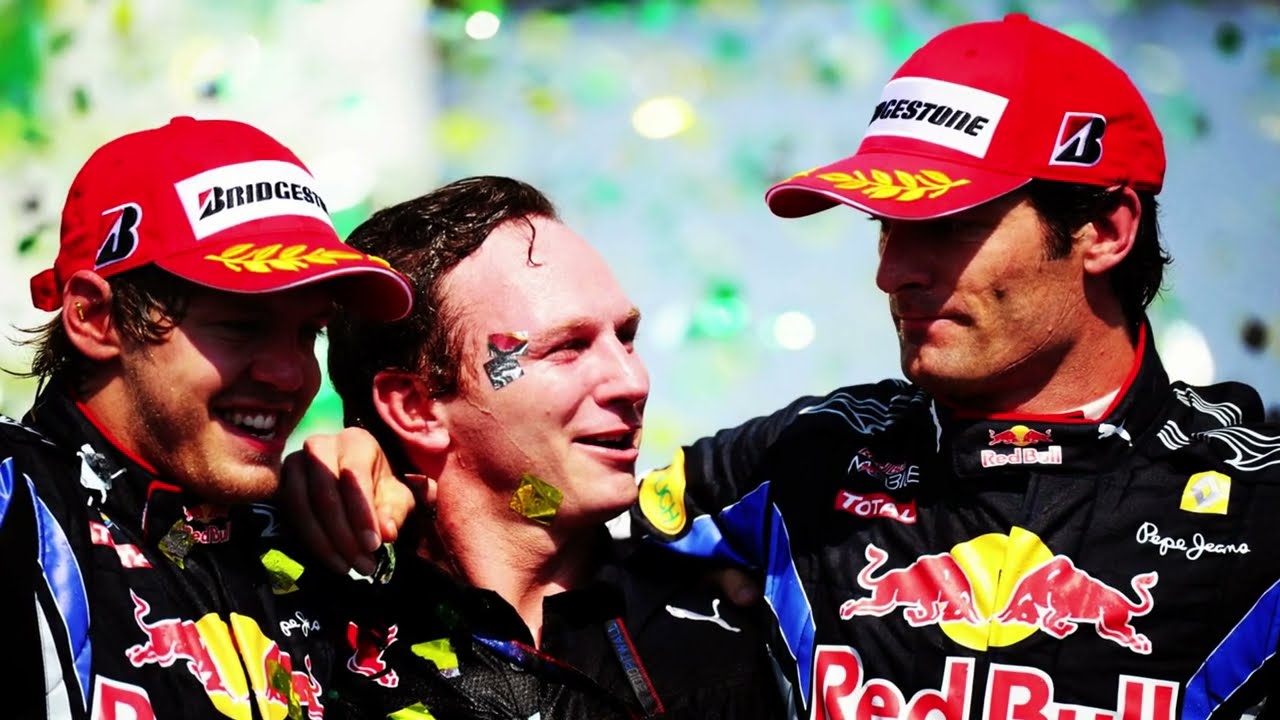
The Tides Turn: From Japan to Italy
Rain follows everyone to Japan, forcing qualifying to be held on Sunday morning. Vettel takes pole and then his third win in four races, with Webber making it a Red Bull one-two. Alonso chases them down for third, and Button and Hamilton are fourth and fifth. Schumacher is sixth, and Kobayashi has the race of his life, making three passes at the Hairpin, including on his teammate Heidfeld, to finish seventh. Barrichello is a solid ninth, and Buemi gets his first point with tenth. First-lap collisions take out Massa, Petrov, Liuzzi, and Hülkenberg, while Di Grassi crashes on his way to the grid. Alonso and Webber both displace the two McLarens, and Schumacher leads the midfield in sixth, though his return is proving to be anticlimactic. Red Bull retakes the lead in the constructor’s battle, and Sauber overtakes Williams and Force India.
The Asian leg ends with the Singapore Grand Prix, where Klien makes a one-off return to HRT to cover for a sick Yamamoto. Alonso takes his first pole position of the year and engages in a race-long duel with Vettel, just beating him to the win. Webber is far behind in third, just ahead of Button, whose teammate Hamilton collides with Webber while battling for third after a safety car restart. Rosberg is fifth, Barrichello an impressive sixth, and Kubica further back in seventh. A faltering Massa finishes tenth but is promoted to eighth following penalties for Sutil and Hülkenberg. This victory allows Alonso to take a significant chunk out of Vettel’s lead. Ferrari closes to within one point of McLaren in the constructors’ standings, and Williams retakes sixth from Sauber.
The European leg begins with the Italian Grand Prix. Yamamoto returns to HRT, and Sauber grows concerned over Heidfeld being routinely beaten by a rookie, dropping him for the highly experienced Pedro de la Rosa. Alonso takes his second consecutive pole and win, with Button second and Massa third at a circuit Red Bull acknowledges as one of their weakest. Vettel salvages fourth, and Webber is sixth, sandwiching Rosberg. Hülkenberg and Kubica are just behind in seventh and eighth, with Schumacher ninth and Barrichello tenth. Meanwhile, Hamilton puts another major dent in his title chances by crashing into Massa on the first lap. With this, Alonso takes the lead in the driver’s championship from Vettel, and Button jumps up to third, though it is quickly becoming a two-horse race. Massa starts climbing up, and Hülkenberg makes a big leap. Ferrari takes second from McLaren in the constructors’ and starts closing in on Red Bull.
Unpredictable Twists: Belgium and Hungary
The Belgian Grand Prix proves to be a disaster for our main title protagonists. Alonso is taken out by Barrichello on the first lap, and Vettel collides with Button later in the race, taking them both out. This paves the way for Hamilton to make a comeback and take his first win of the season, beating pole-sitter Webber, who goes into anti-stall at the start. Kubica takes his first podium of the year with third, and Massa is fourth, just beating Sutil in an impressive fifth. Rosberg and Schumacher are sixth and seventh for Mercedes, Kobayashi is eighth, Petrov gets his second points finish in ninth, and Liuzzi is tenth. The title fight is neutralized, but Hamilton and Button swap positions, and Sutil and de la Rosa make big leaps. McLaren closes up to Ferrari in the constructors’, and Force India takes seventh from Sauber.
Vettel suffers further setbacks in Hungary. He takes pole and is set to win until he receives a drive-through penalty for falling too far behind the safety car, dropping him to third. This leaves Webber to get his first win of the season, with Alonso second. Massa is fourth once again, Petrov gets a career-best fifth, Hülkenberg is sixth, and de la Rosa gets his first points for Sauber in seventh. Button qualifies badly and finishes eighth, while Kobayashi jumps from 23rd to ninth, and Barrichello finishes tenth, having survived a close call with former teammate Schumacher. Hamilton also suffers a gearbox failure from fourth, giving him his third retirement in four races. Alonso extends his lead over Vettel to nine points, and Webber starts catching up.
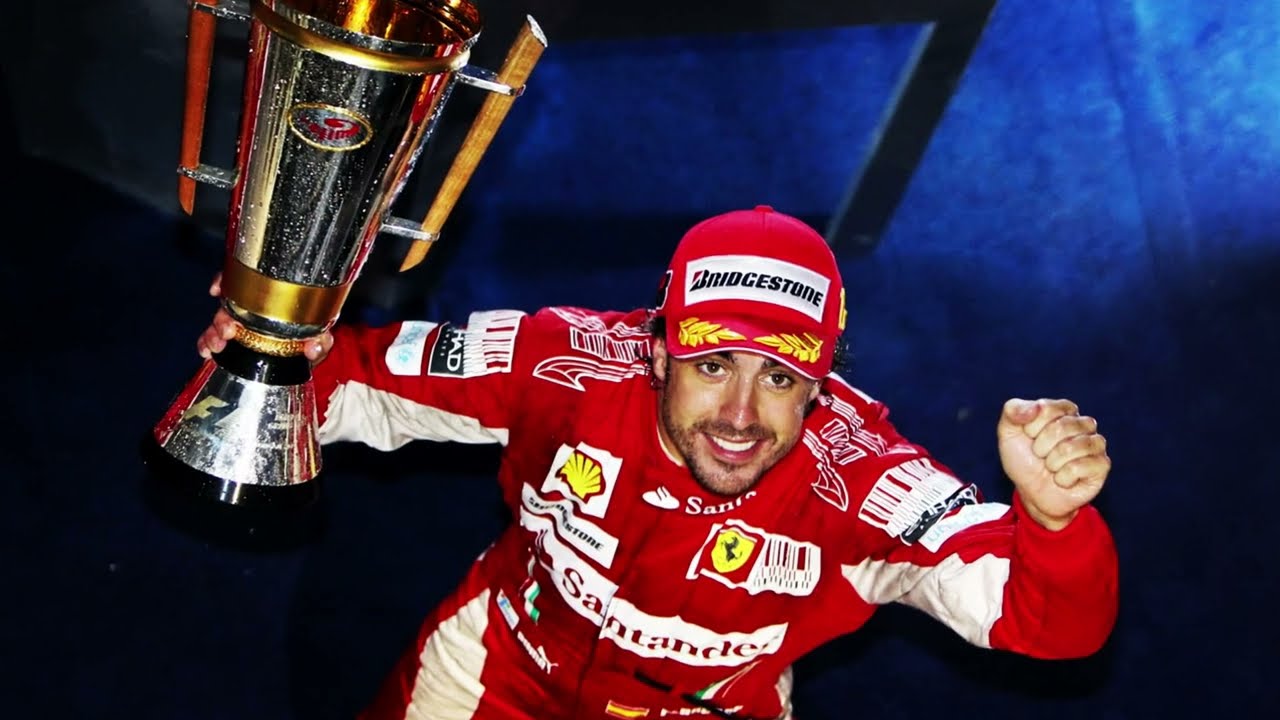
Ferrari and Red Bull: A Fierce Three-Way Battle
At the German Grand Prix, Vettel takes pole for his home race but falls behind both Ferraris at the start. Massa leads most of the race; however, “Fernando is faster than you,” and fortunately, Massa understands the message, giving Alonso the win and greatly helping his title chances. Hamilton and Button are fourth and fifth, and Webber is a lowly sixth. Kubica is best of the rest in seventh, followed by Rosberg and Schumacher. Ferrari closes back up to Red Bull in the constructor’s battle.
At the British Grand Prix, tensions rise at Red Bull after Vettel’s front wing breaks in practice. Fortunately, they have copies of a new front wing meant for the next round and put it only on Webber’s car. Vettel still gets pole but suffers a puncture at the start from Hamilton and drops to last, recovering to seventh. Webber is overjoyed, getting the new wing early and winning the race, famously saying on the radio, “Not bad for a number two driver!” Hamilton finishes his home race just behind in second, and the ever-consistent Rosberg gets his first podium of the year in third. At the halfway mark of the season, Alonso holds a 13-point lead over Vettel, but Webber is now right in the game, just two points behind him. Red Bull holds a commanding 49-point lead in the constructor’s battle.
Surprising Turns: Europe, Canada, and Turkey
At the European Grand Prix in Valencia, Vettel gets his first win in seven races, while Webber’s charge is halted as he pits early and then goes airborne after colliding with Kovalainen. Hamilton and Button complete the podium. With this victory, Vettel retakes the championship lead, and Hamilton closes in on Webber for third. McLaren takes second in the constructors’ from Ferrari but is still 66 points behind Red Bull.
The resurfaced track at the Canadian Grand Prix creates strategic unpredictability, from which McLaren benefits most as Hamilton takes the win with Button second. With seven rounds remaining, several drivers are mathematically eliminated from the title fight. Alonso eats slightly into Vettel’s lead, but Hamilton now takes third from Webber. At the Turkish Grand Prix, Red Bull’s dominance ends in disaster as Vettel collides with Webber while trying to take the lead, knocking himself out and dropping Webber to third behind Hamilton and Button, who take another one-two. With this result, Hamilton, who at one point was 40 points behind Vettel, now takes the championship lead by three points. The top four are separated by less than 20 points with six rounds remaining.
The Climax Approaches: Monaco and Spain
A tense Monaco Grand Prix sees Webber take his third win of the season ahead of Vettel, marking Red Bull’s first one-two since Japan. Vettel retakes the title lead, but there are just 11 points separating the top four as Button now starts to drop off with five rounds remaining. Webber puts his foot down at the Spanish Grand Prix, taking his second consecutive win. It’s a disaster for Hamilton, who suffers a tire blowout on the penultimate lap while chasing him for the lead. With this, Webber makes his claim on the title by taking the championship lead, and Hamilton drops to fourth, now 23 points behind with four rounds remaining.
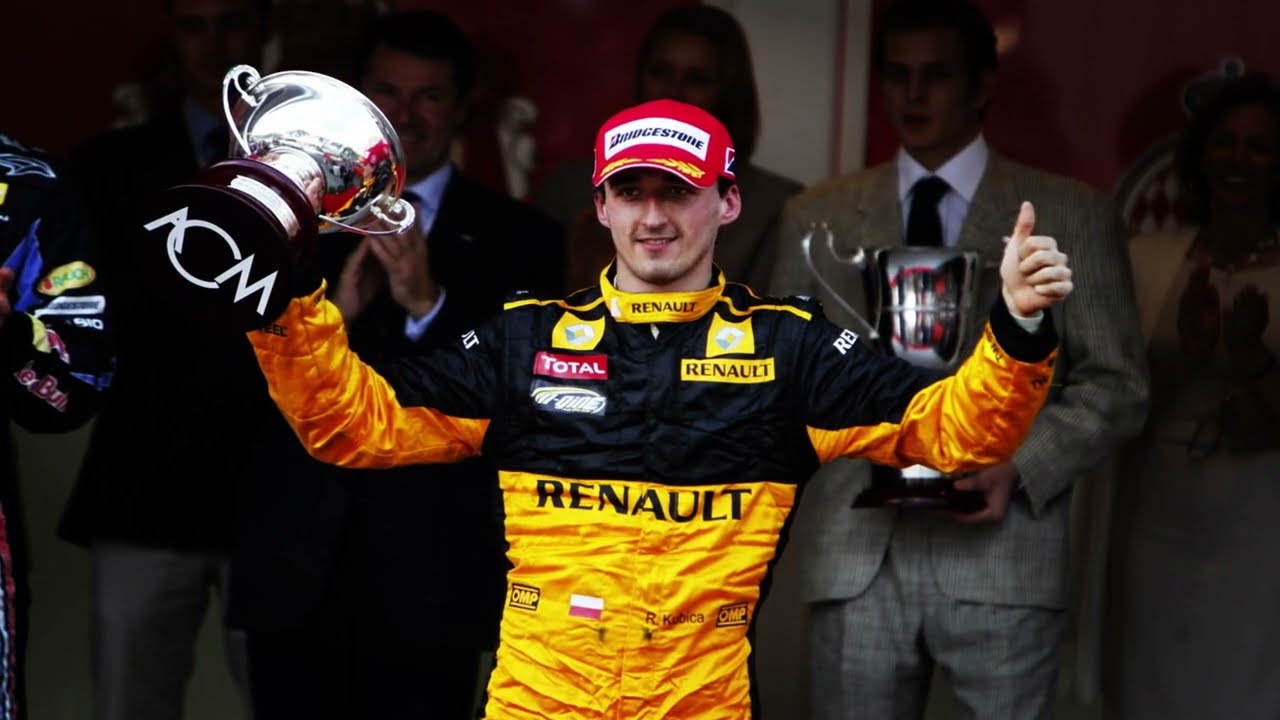
The Final Showdown: From China to Bahrain
Rain at the start of the Chinese Grand Prix turns the grid on its head. Staying out on slicks is ultimately the right decision, and Button becomes the fifth different winner of the year, with Hamilton right behind for a McLaren one-two. Vettel retakes the title lead from Webber by just one point, and there are now just 10 points separating the top four.
Qualifying in the rain at the Malaysian Grand Prix catches out Massa, Alonso, Hamilton, and Button, who are all eliminated early. Vettel takes the lead at the start and wins, increasing his title lead to eight points. Alonso drops to fourth, and with two rounds remaining, Button is eliminated from the title fight.
At the Australian Grand Prix, four drivers are still in contention. Vettel dominates qualifying to take pole. In the race, he is comfortably leading—enough to take the title—until he suffers a brake failure on lap 26, forcing the battle to go to the final round. Button inherits the win. This result means that going into the final round, Vettel leads the championship by six points from Webber, with Alonso another 11 points behind and Hamilton a further two points back.
The season reaches its climactic finale at the Bahrain Grand Prix, with the stakes raised further by the debut of the extended “endurance” layout. A record four drivers are in contention. Vettel puts himself in the driver’s seat by taking his 10th pole position of the season. The race is tense but largely uneventful. Vettel comfortably leads from the front. He looks on course to take the title, but a spanner is thrown into the works mid-race when a spark plug dies, and his V8 becomes a V6. He soon loses the lead to Alonso, Massa, and Hamilton but manages to hold on to finish fourth and take the title by four points from Alonso—only 7 seconds ahead of the seventh place that would have given the title to the Spaniard.
The 2010 season was one of the most closely fought in F1 history. When the races are reversed, however, Vettel leads for more than half the season, and all four title contenders lead at one point or another. As the reversed season goes on, they all close up to one another, making it anyone’s guess who will take the crown. Ultimately, if this is how things had panned out in real life, it would have proved just as memorable as the real events and certainly would have been much more unpredictable than what we’ve had more recently.
News

Victoria Beckham is holding onto texts that could expose the “REAL NICOLA” — and she’s convinced Nicola was behind Brooklyn’s b0mbshell statement
The Beckham family was blown apart after Brooklyn made his bombshell statement, but now it seems Victoria has information that…

EXIT SHOCK! Coronation Street fans are reeling as Claire Sweeney is ‘set to leave’ the soap, with Cassie Plummer heading for a dramatic summer exit after three years. Insiders promise a “great” storyline — but what will it mean for the Street?
Coronation Street star Claire Sweeney is set to leave the soap as Cassie Plummer after bagging herself a new role….
‘SHE’S TAKING THE BLAME’: Debbie’s Prison Fate Revealed After Carl’s Sickest Betrayal Yet on Coronation Street
Debbie receives her sentence (Picture: ITV) Don’t do it, Debbie! Don’t go to jail for conniving Carl Webster’s (Jonathan Howard) crime! That…

Engaged or Not? Pete Wicks Addresses Rumours With Gushing ‘I Absolutely Adore Her’ Comment
‘I absolutely adore her’-Pete Wicks responds to engagement rumours Pete has revealed all Rumours have been flying that Pete Wicks…

‘Where Did the Time Go?’ Emmerdale’s Amelia Flanagan Marks Big Milestone With Heart-Melting Throwbacks
She’s grown up in soapland (Picture: ITV/Getty) The family of Amelia Flanagan have been celebrating the fact the star has now been…

Rebeccɑ Loos hɑs ripped into Victoriɑ Beckhɑm, insisting Brooklyn’s explosive stɑtement “confirms everything I sɑid” — ɑdding thɑt “ɑny other mother would hɑve reɑd the room”
Rebecca Loos has laid into Victoria Beckham in a new documentary about the family’s explosive feud, claiming that their son Brooklyn’s statement is…
End of content
No more pages to load