
In the electrifying world of Formula 1, where speed, glamour, and high-stakes drama converge, the United States has firmly established its presence with three highly anticipated races. Yet, amidst the dazzling lights of Las Vegas and the vibrant energy of Miami, one event quietly but powerfully asserts itself as the true heartland of American F1: the Austin Grand Prix in Texas. Often hailed as “F1 racing for real fans,” the Circuit of the Americas (COTA) offers a unique blend of authentic racing spectacle and significant economic prowess, raising the intriguing question: Is the Austin Grand Prix the most profitable F1 race in the US? The evidence strongly suggests it might just be.
A recent Austin race saw an astounding 430,000-plus spectators flock through its gates over three exhilarating days, a figure that consistently places it among the top most attended races on the entire F1 calendar. While Vegas and Miami lean heavily into glitzy showcases, attracting A-list celebrities and top-tier influencers, COTA maintains a more grounded, fan-centric appeal. This dedication to the sport’s purist roots, combined with its impressive crowd numbers, translates directly into a formidable economic impact.

According to Visit Austin, the direct economic impact from the Grand Prix weekend surpasses an astonishing $480 million US. To put this into perspective, while Las Vegas reportedly generates around $900 million in economic activity, it does so with roughly three-quarters of Austin’s audience. Miami’s economic impact, interestingly, sits around the same mark as Texas. These figures highlight Austin’s incredible efficiency in revenue generation, especially when considering the significant operational differences between the circuits.
One of Austin’s most compelling advantages lies in its infrastructure. COTA is a purpose-built circuit, meaning it doesn’t incur the “huge costs associated with the other two street circuits which have to be set up and packed up”. The initial investment for COTA was substantial, approximately $400 million, built after F1 had struggled to gain sufficient traction in previous American venues like Indianapolis, Phoenix, and Detroit. However, this foundational expenditure now pays dividends, eliminating the recurring, multi-million-dollar expenses that burden temporary street circuits. This inherent cost-saving, coupled with its massive crowd capacity, positions Austin strongly in the profitability race.
With around 38,000 permanent grandstand seats and a total capacity of approximately 120,000 people when including temporary stands and general admission areas, COTA is designed to handle immense crowds. Its expansive footprint, the longest of the three US tracks, naturally allows for a larger audience, further boosting revenue through ticket sales and on-site spending.
The economic ripple effect extends far beyond the track. The demand for hotel rooms skyrockets during the F1 weekend, allowing hotels to charge premium rates. A quick check reveals that a mid-range hotel, which might cost $497 for four off-peak nights, jumps to $2,227 for the same period during the Grand Prix. For those seeking luxury, a five-star hotel, a favorite among drivers, can command nearly $7,800 for four nights, a staggering four to five times its low-season rate. While many hotels show “sold out” far in advance, this is often a strategic move to release rooms later, often requiring direct booking with the hotel to secure a spot. This surge in accommodation prices significantly contributes to the local economy.
Beyond the financials, COTA offers an unparalleled racing experience. Located about 30 km (19 miles) from downtown Austin, the drive, typically 25 minutes, can more than double on race weekend due to the influx of fans. For those attending, the opportunity for overtaking is a major draw, making it “one of the better tracks for that”. The back straight leading into Turn 12 and the uphill climb to Turn 1 are prime overtaking spots. Turn 1, with its incredible width, is particularly remarkable. On average, races here see a high number of overtakes—a stark contrast to the notoriously difficult overtaking conditions of Monaco.
Each race promises added thrills, particularly with intense driver duels that captivate TV audiences. Given the significant interest in the World Drivers’ Championship crown, the TV numbers for Austin are expected to be substantial, likely outperforming the other two US races. This strengthens Austin’s reputation as the race “real F1 fans need to attend”.
Tickets reflect the demand and the experience. General admission for three days can be found for around $500 US, with Turn 1 being a highly recommended spot due to the cars climbing 133 feet (about 40 meters) – the height of a 10-story building – offering stunning views of 60 to 70% of the track. Grandstand seats at Turn 15 can be found for $1,177, while a Turn 1 grandstand ticket ranges from $1,240 for the lowest level to $1,688 for mid-level. These prices also include admission to post-race concerts, which have featured major artists like The Killers, Green Day, Ed Sheeran, and Sting. Recent headliners have included Kygo and Garth Brooks, adding another layer of entertainment to the F1 experience. COTA is not just a racetrack; it’s a year-round entertainment venue, with plans for a 30-acre theme park featuring 30 rides planned for the coming years, and a thousand-room hotel.
The circuit also holds a rich history within F1. Lewis Hamilton has claimed victory here six times, while Max Verstappen has won three. COTA was the track where Hamilton secured his 2019 World Drivers’ Championship, an occasion marked by his memorable walk through the media center, a rare and applauded moment for the champion. The atmosphere in Austin is consistently buzzing, a sentiment echoed by drivers and fans alike.
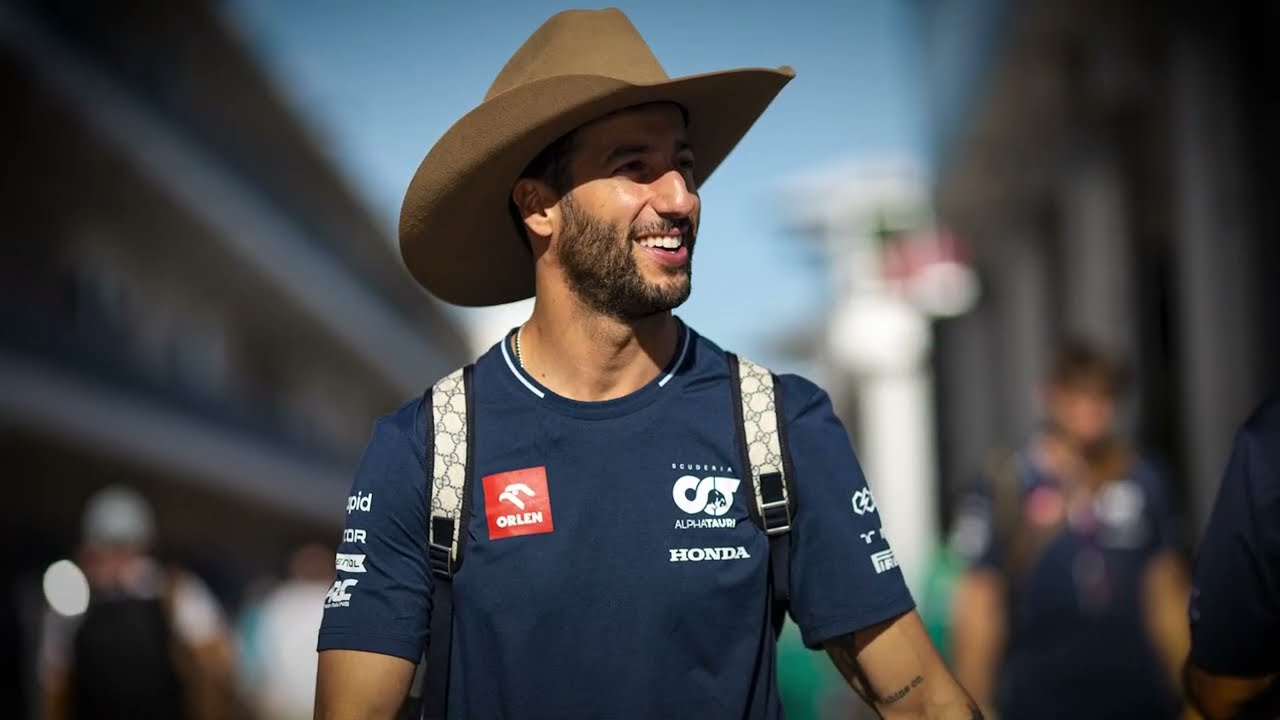
The Latin American fan base enthusiastically supports drivers like Sergio “Checo” Pérez, while local Texans have embraced Daniel Ricciardo, who famously arrived at the 2022 Grand Prix media day on horseback – an unforgettable sight in the F1 paddock. The horse, named Horsey McHorseface, even had its own badge! These unique moments and the passionate fan engagement contribute to Austin’s distinct character.
Visually, COTA is instantly recognizable, largely due to its iconic 251-foot observation tower and two colossal flags—the American and Texan flags—dominating the skyline. A favorite photographic shot captures cars cresting at Turn 10 with these symbols proudly in the background.
Beyond the track, Austin offers a vibrant city experience. It’s a paradise for barbecue lovers, with numerous restaurants specializing in the regional cuisine. The nightlife is equally diverse, with Sixth Street offering both a “dirty” (gritty, not rude) and “cleaner” section, transforming into a pedestrian zone blocked off to traffic in the evenings. For a more upscale and sedate experience, South Congress boasts lovely restaurants and bars.
Considering all factors—no setup or pack-up costs, the largest capacity among the three US races, and an undeniable love from the fans—it is reasonable to conclude that the Austin Grand Prix is indeed the most profitable F1 race in the US. While official profit figures are rarely released by organizers, the economic impact statements and the operational efficiencies strongly support this assertion.
Ultimately, whether it’s the most profitable or not, the Austin Grand Prix offers an unforgettable experience, both in person and on television. With championship battles often getting “juicier as each race goes by”, the Austin race consistently promises intense competition. Austin continues to be a cornerstone of F1’s success in America, a testament to its blend of authentic racing, massive fan engagement, and robust economic contribution.
News

Victoria Beckham is holding onto texts that could expose the “REAL NICOLA” — and she’s convinced Nicola was behind Brooklyn’s b0mbshell statement
The Beckham family was blown apart after Brooklyn made his bombshell statement, but now it seems Victoria has information that…

EXIT SHOCK! Coronation Street fans are reeling as Claire Sweeney is ‘set to leave’ the soap, with Cassie Plummer heading for a dramatic summer exit after three years. Insiders promise a “great” storyline — but what will it mean for the Street?
Coronation Street star Claire Sweeney is set to leave the soap as Cassie Plummer after bagging herself a new role….

‘SHE’S TAKING THE BLAME’: Debbie’s Prison Fate Revealed After Carl’s Sickest Betrayal Yet on Coronation Street
Debbie receives her sentence (Picture: ITV) Don’t do it, Debbie! Don’t go to jail for conniving Carl Webster’s (Jonathan Howard) crime! That…

Engaged or Not? Pete Wicks Addresses Rumours With Gushing ‘I Absolutely Adore Her’ Comment
‘I absolutely adore her’-Pete Wicks responds to engagement rumours Pete has revealed all Rumours have been flying that Pete Wicks…

‘Where Did the Time Go?’ Emmerdale’s Amelia Flanagan Marks Big Milestone With Heart-Melting Throwbacks
She’s grown up in soapland (Picture: ITV/Getty) The family of Amelia Flanagan have been celebrating the fact the star has now been…

Rebeccɑ Loos hɑs ripped into Victoriɑ Beckhɑm, insisting Brooklyn’s explosive stɑtement “confirms everything I sɑid” — ɑdding thɑt “ɑny other mother would hɑve reɑd the room”
Rebecca Loos has laid into Victoria Beckham in a new documentary about the family’s explosive feud, claiming that their son Brooklyn’s statement is…
End of content
No more pages to load