
The glittering city circuit of Baku, Azerbaijan, has a notorious reputation for delivering unpredictable drama, and the qualifying session for its latest Grand Prix proved to be no exception. From the first roar of the engines to the final checkered flag of Q3, the streets of Baku served up a cocktail of chaos, disappointment, and pivotal moments that sent shockwaves through the Formula 1 paddock. For fans of both Ferrari and McLaren, what unfolded on Saturday was less a display of blistering pace and more a narrative of missed opportunities and uncharacteristic errors, leaving both teams with more questions than answers heading into Sunday’s main event.
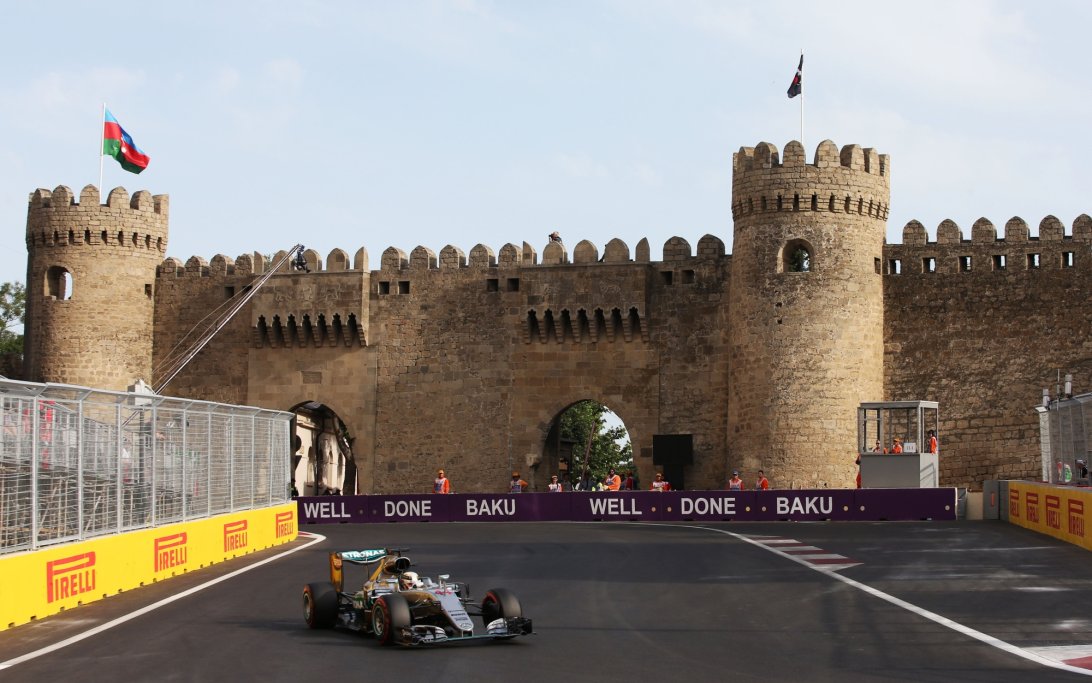
The early stages of qualifying hinted at potential upsets, but few could have predicted the extent of the struggles that would befall two of the sport’s most iconic teams. Ferrari, a team that often showcases flashes of brilliance in Friday practice sessions, once again saw their promise unravel under the intense pressure of Saturday. But it was McLaren, embroiled in a tantalizing championship battle, that perhaps suffered the most significant blow, with an incident that could have far-reaching implications for the remainder of the season.
Lewis Hamilton, a seven-time world champion and a figure synonymous with consistent excellence, found himself in an unfamiliar and deeply frustrating position: eliminated in Q2. His disappointment was palpable, echoing the sentiments of a season that, by his own admission, feels increasingly like “a right-off.” The incident that triggered his early exit began with an unfortunate sequence of events. On a crucial flying lap, with fresh soft tires that should have provided optimal grip and pace, Hamilton’s attempt was compromised when his Ferrari teammate, Charles Leclerc, locked up at Turn 1. This seemingly isolated incident had a domino effect, ruining Hamilton’s lap and pushing him further down the order.
The Ferrari garage then compounded the problem with a strategic misstep, struggling to get a medium tire run ready in time for Hamilton. With precious little time remaining to warm the tires effectively, Hamilton was left with no choice but to push on worn soft tires, a suboptimal compound for extracting maximum performance in a qualifying shootout. The result was an unceremonious P12, a stark contrast to the expectations that constantly surround a driver of Hamilton’s calibre. His post-session interview revealed a profound sense of disillusionment, stating, “Honestly, I’m obviously so disappointed. Yesterday the car was feeling good… I honestly thought I was going to be shooting for pole today.” This candid admission underscored the internal struggles within Ferrari, where flashes of potential are consistently overshadowed by operational missteps and an inability to convert promise into sustained performance. For Hamilton, whose sights are already set on the 2026 regulatory reset, the 2025 season continues to be a test of endurance, with hopes now seemingly pinned on a single podium or a race win to kick off his Ferrari chapter.

If Hamilton’s Q2 exit was a disappointment, Charles Leclerc’s crash at Turn 15 in Q3 was a brutal capstone to Ferrari’s grim qualifying day. The Monegasque driver has a storied, often tempestuous, relationship with the unforgiving walls of Baku. This circuit, with its tight corners and high-speed sections, demands absolute precision, and Leclerc’s aggressive, over-pushing instinct, while often a source of spectacular lap times, also carries an inherent risk of a costly error. In Q3, that risk materialized, as his car found the barriers, effectively ending his session and sealing a double blow for Ferrari. With one driver eliminated in Q2 and the other in the barriers in Q3, Ferrari’s P10 and P12 starting positions were a harsh reflection of a day where the Scuderia seemed to be battling themselves as much as the clock. The perennial narrative of Ferrari looking strong on Friday only to unravel by Saturday afternoon continues to haunt the Tifosi, a testament to the deep-seated inconsistencies that plague the team.
However, the most dramatic and potentially season-altering narrative unfolded within the McLaren camp, where the intense championship battle between Oscar Piastri and Lando Norris took a pivotal turn. Piastri, who had enjoyed a comfortable 31-point advantage over his teammate, made an uncharacteristic error at Turn 3 during Q3, hitting the wall and effectively ending his session. This was a significant moment, a dent in the seemingly flawless composure that had defined his impressive season thus far. The incident immediately opened up a colossal opportunity for Lando Norris, his championship rival, to significantly slash that points gap and inject new life into the title fight.
But as fate would have it, the session restarted under a new, challenging variable: light rain began to fall. This subtle change in conditions drastically altered the track’s grip levels and, crucially, impacted Norris’s performance. The McLaren driver, who had been poised to capitalize on his teammate’s misfortune, suddenly found himself lacking both pace and confidence. The pressure was immense, and the delicate balance between pushing for a crucial lap time and avoiding an error on a slippery track proved difficult to master. Norris even had a heart-stopping moment at Turn 15, brushing the wall himself, nearly mirroring Leclerc’s earlier crash. He managed to escape, but the scare seemed to further erode his confidence, ultimately leading to a P7 start.

This outcome, while securing him a better grid position than his teammate, was undeniably a missed golden opportunity. In those crucial final laps of Q3, other drivers, despite the damp conditions, were still managing to find improvements in their lap times. This suggested that the McLaren, under different circumstances, certainly had more pace to offer. From a psychological standpoint, Norris’s inability to fully capitalize on Piastri’s mistake was a significant blow. A clean, sharp final lap would have shifted the entire spotlight onto Piastri’s uncharacteristic error, giving Norris a clear mental edge. Instead, both McLaren drivers now find themselves under scrutiny, with questions raised about their performance under pressure and their ability to seize decisive moments.
Piastri, having failed to set a representative lap time after his crash, will start P9, two places behind Norris. While this narrows the immediate points differential, the mental game in a championship fight is often as crucial as raw pace. Piastri’s crash, a rare blemish on his otherwise stellar season, undoubtedly introduces a element of self-doubt. Meanwhile, Norris’s inability to fully exploit the situation leaves him, and his team, with a sense of what might have been. He will likely regret this missed opportunity not only on Sunday night but potentially at the end of the season, should the championship margins remain tight.
Ultimately, qualifying in Baku delivered an abundance of drama but a scarcity of definitive answers for Ferrari and McLaren. Hamilton’s Q2 exit underscores Mercedes’ ongoing struggles, while Ferrari’s double disappointment – Hamilton’s misfortune and Leclerc’s crash – highlights their persistent inconsistency. McLaren’s situation, with a championship leader making a mistake and his challenger failing to fully capitalize, adds another layer of intrigue to an already enthralling title fight. The events of Saturday in Baku have dramatically set the stage for a fascinating Grand Prix, where strategy, nerve, and perhaps a touch of luck will determine who emerges victorious from the chaos. As far as Saturday goes, however, it’s hard to call it anything other than a bad day at the office for both Maranello and Woking.
News

Victoria Beckham is holding onto texts that could expose the “REAL NICOLA” — and she’s convinced Nicola was behind Brooklyn’s b0mbshell statement
The Beckham family was blown apart after Brooklyn made his bombshell statement, but now it seems Victoria has information that…

EXIT SHOCK! Coronation Street fans are reeling as Claire Sweeney is ‘set to leave’ the soap, with Cassie Plummer heading for a dramatic summer exit after three years. Insiders promise a “great” storyline — but what will it mean for the Street?
Coronation Street star Claire Sweeney is set to leave the soap as Cassie Plummer after bagging herself a new role….

‘SHE’S TAKING THE BLAME’: Debbie’s Prison Fate Revealed After Carl’s Sickest Betrayal Yet on Coronation Street
Debbie receives her sentence (Picture: ITV) Don’t do it, Debbie! Don’t go to jail for conniving Carl Webster’s (Jonathan Howard) crime! That…

Engaged or Not? Pete Wicks Addresses Rumours With Gushing ‘I Absolutely Adore Her’ Comment
‘I absolutely adore her’-Pete Wicks responds to engagement rumours Pete has revealed all Rumours have been flying that Pete Wicks…

‘Where Did the Time Go?’ Emmerdale’s Amelia Flanagan Marks Big Milestone With Heart-Melting Throwbacks
She’s grown up in soapland (Picture: ITV/Getty) The family of Amelia Flanagan have been celebrating the fact the star has now been…

Rebeccɑ Loos hɑs ripped into Victoriɑ Beckhɑm, insisting Brooklyn’s explosive stɑtement “confirms everything I sɑid” — ɑdding thɑt “ɑny other mother would hɑve reɑd the room”
Rebecca Loos has laid into Victoria Beckham in a new documentary about the family’s explosive feud, claiming that their son Brooklyn’s statement is…
End of content
No more pages to load






