
A Shocking Departure and a Colossal Payout
Christian Horner’s ignominious exit from Red Bull Racing has finally been confirmed, closing a long and successful, yet turbulent, chapter in the F1 team principal’s career. After months of intense legal negotiations, the contract of the man who helped build and lead the team to eight drivers’ championships and six constructors’ championships has been officially terminated. Despite being removed as team principal at the start of July, Horner remained on Red Bull’s payroll, earning a substantial wage estimated at around £27,000 a day. With a contract extending to 2030, Red Bull faced the prospect of paying his salary for the next five years without any contribution. This situation was not ideal for either party: Red Bull was paying for an executive who was no longer working, while Horner was tied down, unable to work anywhere else.
Ultimately, a hefty severance deal was struck, freeing Horner from Red Bull. While the official statement from Red Bull did not disclose any figures, several reputable news outlets have provided different estimates. BBC Sport, citing reliable sources, reported the figure to be €60 million. Meanwhile, the Daily Mail reported €92 million, and The Race estimated €85 million. However, the BBC Sport figure of €60 million seems the most plausible, as Horner was reportedly earning €12 million a year at Red Bull. With five years left on his contract, this payout equates to paying out the remainder of his contract in full.
The idea of someone being sacked yet receiving their full salary might seem odd, but it’s not uncommon in the world of professional sports. Football managers who are dismissed for poor results often receive large payouts. The employment contracts of high-ranking sports figures differ from typical employment agreements. They usually run for a fixed period, have a calculable value, and offer greater protection to the employee. In Horner’s case, he and his lawyers would have argued that his dismissal was undeserved and that he should receive compensation on top of his salary. Conversely, Red Bull likely argued that the sacking was justified and that any settlement figure should be considerably lower. There may also have been a desire to reward him for the success he brought to the team. In the end, a compromise was reached that satisfied both parties.
While such a payout isn’t unprecedented, the amount Horner is receiving is surprising. The High Pay Centre, a UK think tank that analyzes issues related to top incomes and corporate governance, described this level of payout as “extraordinarily large” even by the standards of Europe’s biggest companies. They added that the sum would raise questions in the corporate world. Most CEO incentive payments are paid in shares, which they must hold for several years in case any wrongdoing comes to light or if the long-term impact of their decisions proves less positive than anticipated. Paying £50 million in cash to one individual in a lump sum is “a very casual way to spend an enormous sum of money”. Whatever happened behind the scenes, Horner has emerged an even wealthier man than he was before.
Legacy at Red Bull and New Ambitions
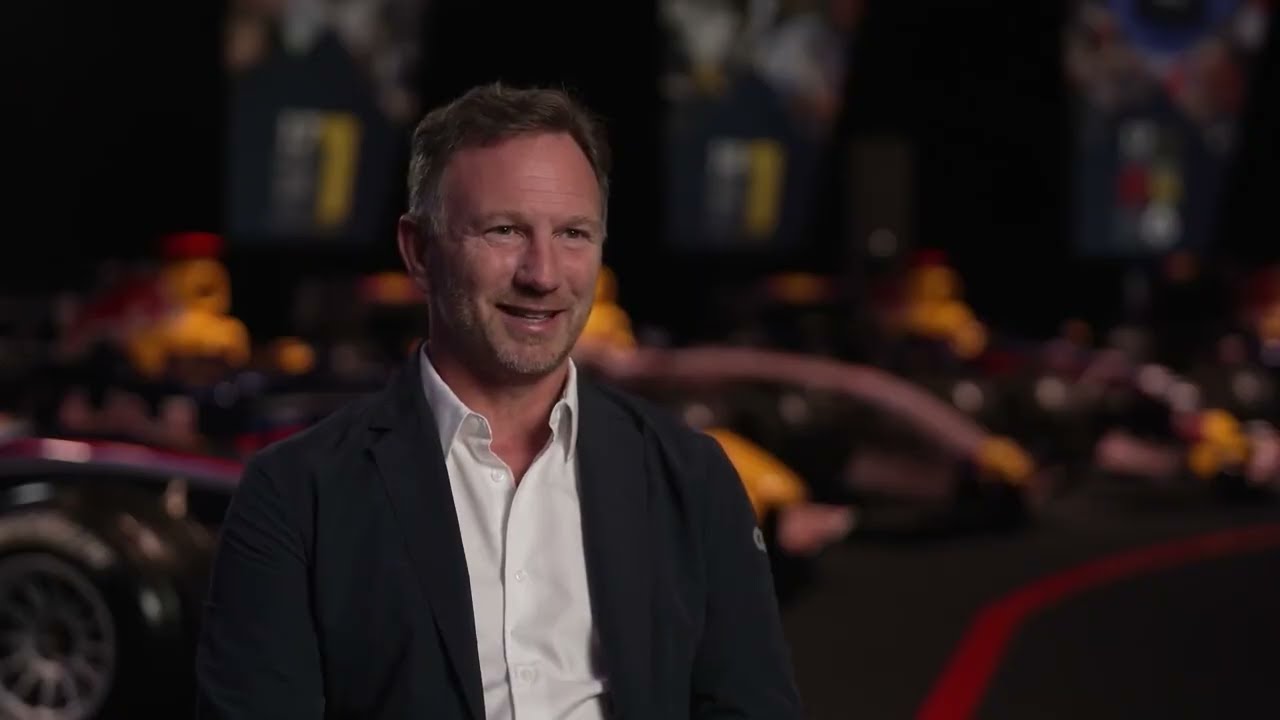
While Horner’s reputation with the new Red Bull board may have deteriorated in a few short years, his success is undeniable. In a statement, Oliver Mintzlaff, Red Bull’s CEO of Corporate Projects and Investments, thanked Horner for his “exceptional work with his tireless commitment, experience, expertise, and innovative thinking”. He stated that Horner “has been instrumental in establishing Red Bull Racing as one of the most successful and attractive teams in Formula 1”. Mintzlaff added that “what Horner did at Red Bull was incredible”.
When Red Bull entered F1 in 2005, they were considered “a bit of a joke” by rivals—a party team that played loud music and wasn’t to be taken seriously. But that changed almost immediately after Horner secured the services of Adrian Newey, who joined as technical director in 2006. Newey was already revered following his success with Williams and McLaren, but he built his reputation further at Red Bull. Together, Horner and the man widely regarded as the greatest F1 designer in history built a team that went on to win eight drivers’ championships, six constructors’ titles, and 124 Grand Prix. Regardless of how his time at Red Bull ended, Horner will be remembered as one of the most successful team bosses in history.
Because of this success, there will undoubtedly be interest in Horner should he wish to return to F1—which he definitely does. He has made it clear to senior figures inside F1 that he is looking for a new job. However, Horner will no longer be content with just a team principal role. He wants to be a shareholder and wants ultimate authority. Essentially, he wants the same status as his nemesis at Mercedes, Toto Wolff. Horner had always been jealous of Wolff’s position since Mercedes returned to F1 in 2010. Wolff’s one-third ownership of Mercedes and its engine department meant he had complete autonomy as team boss, able to make decisions as he wished without having to answer to anyone above him.
Horner isn’t just going to take a job at a team like Ferrari, with which he was heavily linked after being sacked by Red Bull. Ferrari would offer him no autonomy and would constrain him in ways he would hate. For Horner to get the freedom he wants, he needs to look to teams where he can buy a significant shareholding. The settlement with Red Bull has made Horner very wealthy, but almost certainly not wealthy enough to either set up his own team or buy a majority shareholding in an existing one, not when F1 team valuations start around a billion pounds these days and go up from there. For example, champions McLaren were recently valued at £3.5 billion following a change in shareholding. Therefore, if he is to have a shareholding in a team, Horner would likely have to find an investor who wants to back him. And of course, if he were anything but a majority shareholder, he would not have complete control of the team.
Potential Destinations and the Future in F1
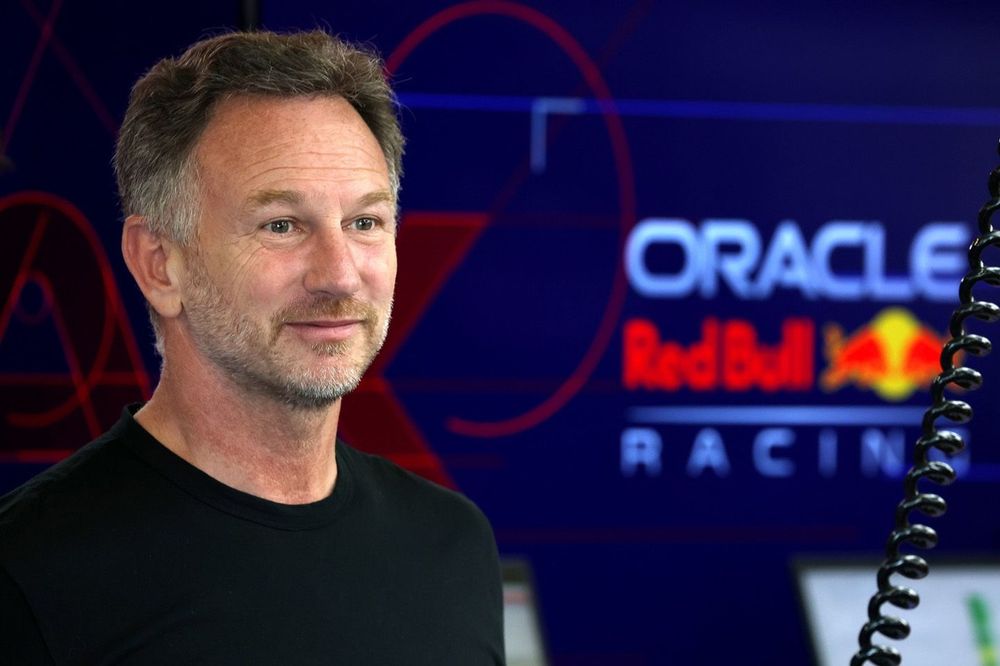
Christian Horner’s track record of on-track performance could make him very appealing to a wealthy investor who wants to make a success of their F1 team. According to the Daily Mail, two teams have emerged as potential new homes for Horner: Haas and Alpine.
Haas: Haas is currently owned by Gene Haas, who has been reluctant to invest heavily in the team since joining the grid in 2016. Haas recently joined forces with Toyota; however, the scale of that partnership is still quite minimal. The Daily Mail noted that Horner would likely want equity in a team rather than be prone to the whims of others—to be his own master. The American team is mooted by some decent sources as a possible destination. A buy-in to Haas, however, would require financial backing from elsewhere.
Alpine: This makes Alpine a potentially easier fit. Horner has a close relationship with Flavio Briatore, who is currently acting as team leader at Alpine. Rumors have suggested that the 75-year-old could look to bring his friend on board in Enstone. Ralf Schumacher has hinted that Horner could replace Briatore at the top if he were to join Alpine. Journalist John Noble says it would give the former Red Bull boss a clean slate to repeat his success in Milton Keynes. “We know Christian Horner is very good friends with Flavio Briatore. Alpine’s obviously going under a restructuring under Briatore,” he said.
The Alpine links make more sense than Haas. Gene Haas has had plenty of options to sell his team over the years, especially when the COVID pandemic almost caused them to go bust, but he hasn’t. Alpine, on the other hand, have looked less and less interested in recent years. They’ve closed down their engine department and brought in Briatore to manage the team. Horner and Briatore together, possibly with the backing of a Middle East-based entity, could make an offer to Alpine that would give Horner a big enough stake in the team to run it as he wished.
Christian Horner, with his immense fortune from Red Bull and relentless ambition, stands at a critical juncture in his F1 career. Whether it’s Haas, Alpine, or another surprising destination, one thing is certain: his return will stir up the Formula 1 world and bring dramatic developments to the sport. The question remains, can he replicate his empire of success, but this time with the ultimate power he has always craved? Only time will tell.
News

Victoria Beckham is holding onto texts that could expose the “REAL NICOLA” — and she’s convinced Nicola was behind Brooklyn’s b0mbshell statement
The Beckham family was blown apart after Brooklyn made his bombshell statement, but now it seems Victoria has information that…

EXIT SHOCK! Coronation Street fans are reeling as Claire Sweeney is ‘set to leave’ the soap, with Cassie Plummer heading for a dramatic summer exit after three years. Insiders promise a “great” storyline — but what will it mean for the Street?
Coronation Street star Claire Sweeney is set to leave the soap as Cassie Plummer after bagging herself a new role….

‘SHE’S TAKING THE BLAME’: Debbie’s Prison Fate Revealed After Carl’s Sickest Betrayal Yet on Coronation Street
Debbie receives her sentence (Picture: ITV) Don’t do it, Debbie! Don’t go to jail for conniving Carl Webster’s (Jonathan Howard) crime! That…

Engaged or Not? Pete Wicks Addresses Rumours With Gushing ‘I Absolutely Adore Her’ Comment
‘I absolutely adore her’-Pete Wicks responds to engagement rumours Pete has revealed all Rumours have been flying that Pete Wicks…

‘Where Did the Time Go?’ Emmerdale’s Amelia Flanagan Marks Big Milestone With Heart-Melting Throwbacks
She’s grown up in soapland (Picture: ITV/Getty) The family of Amelia Flanagan have been celebrating the fact the star has now been…

Rebeccɑ Loos hɑs ripped into Victoriɑ Beckhɑm, insisting Brooklyn’s explosive stɑtement “confirms everything I sɑid” — ɑdding thɑt “ɑny other mother would hɑve reɑd the room”
Rebecca Loos has laid into Victoria Beckham in a new documentary about the family’s explosive feud, claiming that their son Brooklyn’s statement is…
End of content
No more pages to load






