
The Great Strategy Debate: Will F1’s Mandatory Two-Stop Rule Reignite the Sport or Just Legislate a Gimmick?
Formula 1, the pinnacle of motorsport, stands at a critical crossroads. The cars are technological marvels, the speeds are breathtaking, and the drivers are global superstars. Yet, beneath the veneer of high-octane spectacle, a quiet, insidious problem has been growing: predictability. Race after race, the strategic drama that once defined the sport has evaporated, replaced by a monotonous, predictable procession.
The culprit is the omnipresent, safe, and efficient one-stop strategy. It has become the default setting for almost every team on the grid, transforming what should be a dynamic, high-speed game of chess into a long, often tedious, parade. In a bold and genuinely shocking move to inject desperately needed uncertainty and excitement, the sport’s governing body is now considering a radical solution for the 2026 season: forcing every driver to make at least two pit stops in a race.
This proposal, which is set to be fiercely debated by the F1 Commission before the end of the year, has utterly divided the paddock. Is this the long-awaited key to unlocking exhilarating, unpredictable racing, or is it an artificial gimmick destined to make a fundamental problem even worse? The debate is not just about a rule change; it’s a battle for the very soul of Formula 1.
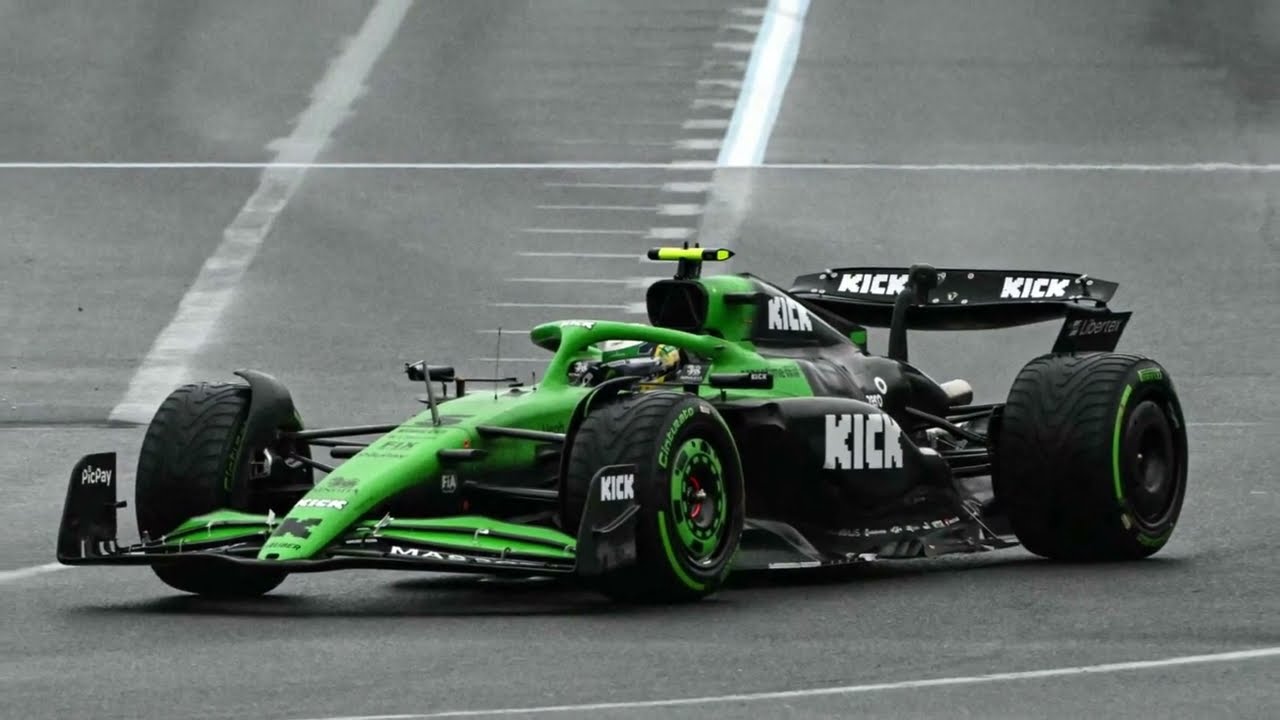
The Predictable Parade: Why One-Stop Races are Killing the Excitement
The problem F1 is attempting to solve is simple: one-stop races are consistently boring. In the majority of recent Grands Prix, the winning strategy has been a single, perfectly managed stop. The thrilling days when multiple pit stops shuffled the running order and created genuine strategic gambles now feel like a distant, nostalgic memory.
The reason for this strategic stagnation lies primarily with the current generation of Pirelli tires. Modern compounds have achieved an almost incredible level of durability. Even the softest tire, theoretically designed for pace over endurance, can now comfortably survive for half a race distance, making the one-stop strategy not just viable, but optimal.
But the tires are only half the story. The other is the technological prowess of the teams. Modern Formula 1 is a driven science, and teams are masters of tire management. Their incredibly sophisticated simulation software can calculate, with terrifying precision, the exact slowest possible lap time a driver needs to hit to ensure the tires last the required stint.
This calculation leads to the fundamental flaw in modern F1 racing: drivers are not pushing to the limit. They are driving to a number. They spend the vast majority of the race managing their pace, hitting a predetermined target lap time, and cruising toward the flag. This conservative approach is favored because, even if a two-stop strategy is theoretically a few seconds faster over the entire race distance, the one-stop strategy is exponentially safer. It halves the risk of a botched pit stop—a critical factor in a sport decided by milliseconds—and drastically reduces the chances of getting stuck in slower traffic after rejoining the track. The result is a long, high-speed train, a processional spectacle that leaves fans craving the wheel-to-wheel action that the sport is supposed to deliver.
The Golden Era of Degradation
This stagnation wasn’t always the case. When Pirelli first entered the sport as the sole tire supplier, the racing was vastly different. Their early high-degradation tires were specifically engineered to force multiple pit stops. This led to a golden era of strategy where two- and even three-stop races were commonplace.
The tires then were deliberately designed to perform a dramatic “fall off a cliff” in terms of performance. This created huge pace differentials between cars running on fresh rubber and those running on old, worn compounds. This disparity led to more overtaking, encouraged bold strategic gambles from the pit wall, and resulted in genuinely exciting, unpredictable races.
However, over time, as teams improved their understanding of the compounds and the cars themselves evolved, Pirelli was continuously pushed to produce more durable tires. Now, the pendulum has swung too far in the opposite direction. F1’s bosses, seeking to recapture that lost strategic drama, believe they must step in with a blunt instrument: the rule book.
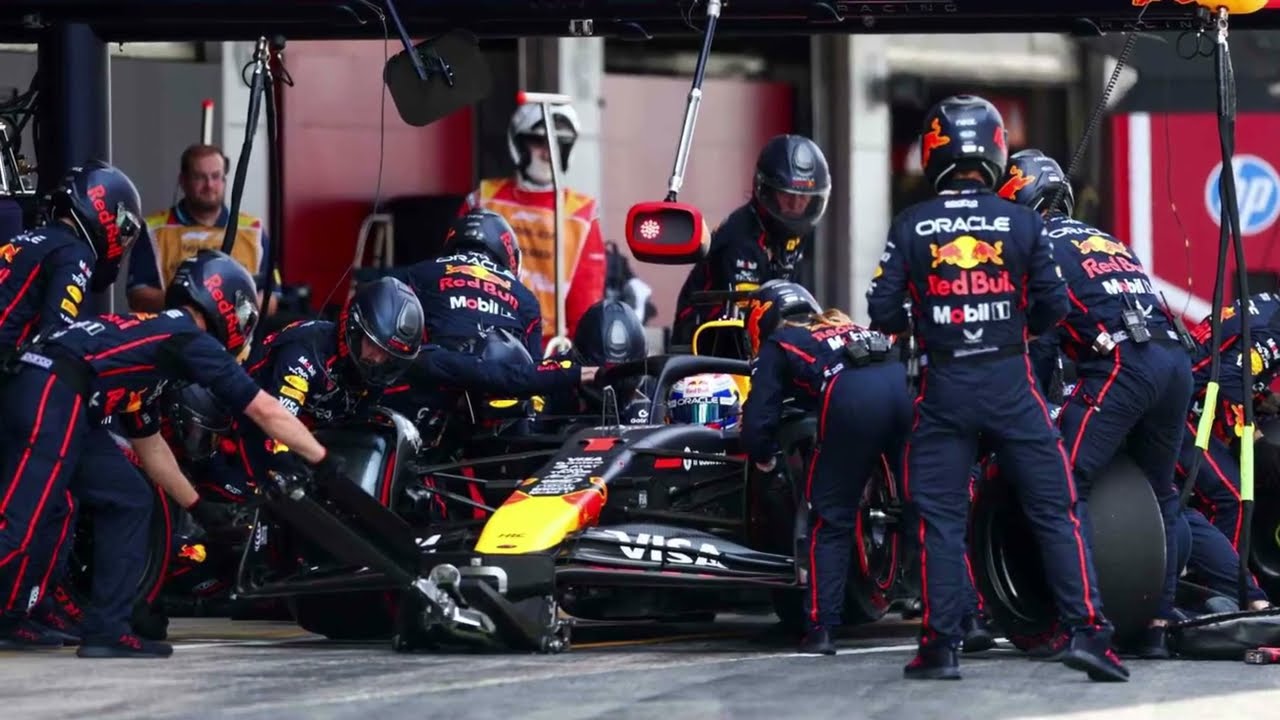
The Three Controversial Paths to Forced Excitement
The proposal to mandate two pit stops is not a monolithic idea. The F1 Commission is currently weighing three primary options to achieve this goal for 2026:
Mandate All Three Compounds:
- This is the most restrictive option. It would force teams to use all three available tire compounds (Hard, Medium, and Soft) during the race. This instantly guarantees two stops. The major flaw, critics argue, is that it simply leads to every team adopting the exact same, predetermined strategy, just in a slightly different order, thus eliminating genuine strategic variance.
Mandate Two Stops, Free Compound Choice:
- This option mandates two stops but removes the current rule requiring drivers to use at least two different compounds. This could theoretically open up more strategic variety, allowing a team, for instance, to run two stints on the Soft tire and one on the Medium, a strategy currently prohibited. This introduces a layer of freedom, yet still forces the action.
Maximum Stint Distance:
- This proposal seeks a more ‘natural’ force. It would set a maximum distance that any single set of tires can run—for example, no more than 45% of the race distance. This calculation would naturally require a minimum of two pit stops. While less restrictive in compound choice, it is still an arbitrary cap imposed purely to dictate strategy.
The Ghost of Qatar: Why Forced Stops Can Fail
The strongest argument against the mandatory two-stop rule comes from recent history. Proponents of organic racing point to the highly instructive failure of the 2023 Qatar Grand Prix. Due to legitimate safety concerns about tire integrity on the high-speed curbs, the FIA mandated that no set of tires could be used for more than a certain number of laps, which effectively forced a three-stop race.
While this did allow drivers to push their cars absolutely flat out, without any fear of tire wear or management, it had a disastrous and unintended consequence: it made the race incredibly predictable. The entire field pitted within a razor-thin three-lap window for each of the three stops, following identical, calculated strategies. Instead of generating exciting strategic variety, it resulted in a “synchronized dance of pit stops,” an artificial spectacle that was arguably more predictable than any one-stop race. It was a clear, unambiguous demonstration that simply forcing teams to pit does not automatically translate into exciting racing.
The fear is that a mandatory two-stop rule in 2026 would suffer the identical fate. Critics are emphatic: you cannot legislate excitement. Forcing teams to change tires doesn’t guarantee better racing if the underlying factors of tire degradation and car speed remain constant. The team’s simulation software is too powerful, and they will simply calculate the new optimal two-stop strategy, which, inevitably, will lead them all to converge on the same plan. The result would be an artificial, manufactured spectacle, not the genuine, organic, and unpredictable drama that fans truly love.
The Authentic Alternative: Fixing the Tires
Many of the sport’s purists and strategists believe the real solution is not to be found in the rule book but with the tires themselves. They argue that F1 should abandon its obsession with durability and, once again, task Pirelli with creating high-degradation tires that naturally force multiple stops.
This approach, they contend, is the only authentic way to create strategic variety. It would reward the teams and drivers who are genuinely the best at managing their compounds and pushing them to their limit, creating inherent differences in pace and strategy. This organic variation would ensure more opportunities for overtaking as cars on fundamentally different strategies meet on the track, leading to exciting, unscripted moments.
The mandatory two-stop rule, therefore, is viewed by many as a surrender—an admission that F1 cannot solve its tire problem and must resort to administrative fiat.
The 2026 Conundrum
This intense strategic debate is occurring at a time of seismic change for Formula 1. The 2026 season will usher in the biggest technical revolution in the sport’s history, with completely new engine and aerodynamic regulations. Teams are already stretched to the absolute limit, pouring every resource into preparing for this monumental technical shift.
Adding a major, fundamental sporting regulation change like mandatory pit stops on top of this revolution raises an unavoidable question: is this the right time for such a radical experiment? Or should the sport focus entirely on ensuring the new technical regulations deliver the desired racing parity, and then, if necessary, address the strategy issue later? The added complexity could prove to be one step too far, potentially destabilizing the grid just as it seeks to enter a new, exciting era.
The decision, which will be hammered out by the F1 Commission—where the teams, the FIA, and Liberty Media all hold crucial votes—will come down to a classic F1 battle: the desire for a better, more marketable show versus the purity and integrity of the sport. Can genuine excitement be mandated and forced through a rule, or must the conditions be created for it to happen organically? There is no easy answer, and the future of Formula 1 strategy—and arguably, its entire emotional appeal—hangs precariously in the balance. The sport is currently at its global zenith; it simply cannot afford an artificial decision that may alienate the fans who have powered its rise.
News

Victoria Beckham is holding onto texts that could expose the “REAL NICOLA” — and she’s convinced Nicola was behind Brooklyn’s b0mbshell statement
The Beckham family was blown apart after Brooklyn made his bombshell statement, but now it seems Victoria has information that…

EXIT SHOCK! Coronation Street fans are reeling as Claire Sweeney is ‘set to leave’ the soap, with Cassie Plummer heading for a dramatic summer exit after three years. Insiders promise a “great” storyline — but what will it mean for the Street?
Coronation Street star Claire Sweeney is set to leave the soap as Cassie Plummer after bagging herself a new role….

‘SHE’S TAKING THE BLAME’: Debbie’s Prison Fate Revealed After Carl’s Sickest Betrayal Yet on Coronation Street
Debbie receives her sentence (Picture: ITV) Don’t do it, Debbie! Don’t go to jail for conniving Carl Webster’s (Jonathan Howard) crime! That…

Engaged or Not? Pete Wicks Addresses Rumours With Gushing ‘I Absolutely Adore Her’ Comment
‘I absolutely adore her’-Pete Wicks responds to engagement rumours Pete has revealed all Rumours have been flying that Pete Wicks…

‘Where Did the Time Go?’ Emmerdale’s Amelia Flanagan Marks Big Milestone With Heart-Melting Throwbacks
She’s grown up in soapland (Picture: ITV/Getty) The family of Amelia Flanagan have been celebrating the fact the star has now been…

Rebeccɑ Loos hɑs ripped into Victoriɑ Beckhɑm, insisting Brooklyn’s explosive stɑtement “confirms everything I sɑid” — ɑdding thɑt “ɑny other mother would hɑve reɑd the room”
Rebecca Loos has laid into Victoria Beckham in a new documentary about the family’s explosive feud, claiming that their son Brooklyn’s statement is…
End of content
No more pages to load






