
Each Formula 1 season, fans worldwide place immense faith in Scuderia Ferrari, the legendary team with a glorious history and resounding victories. Yet, the 2025 season has once again become a series of continuous disappointments, leaving fans to exclaim: “Oh, Ferrari, you try so hard to change, but you never do!” From controversial strategic decisions to drivers’ personal errors and subpar car performance, Ferrari seems trapped in a vicious cycle of missteps. This article will delve into five key areas where Ferrari has repeatedly faltered during the 2025 season, revealing why this iconic team is enduring one of the most challenging periods in its recent history.
1. Chaos in Communication and Driver Position Swaps
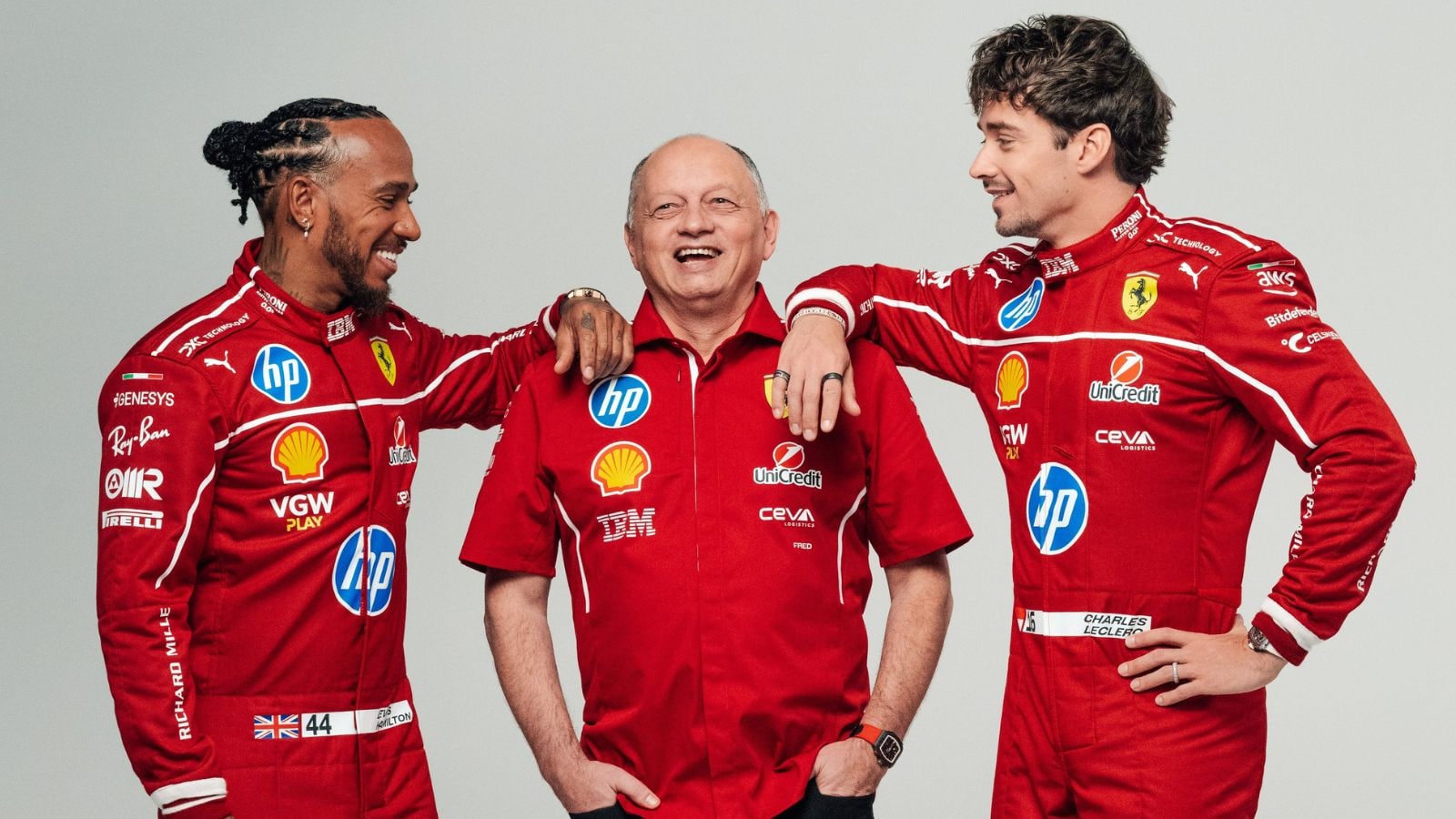
One of Ferrari’s most glaring issues in the 2025 season has been the lack of consistency and, at times, outright chaos in managing team orders for position swaps. The incident at the Azerbaijan Grand Prix serves as a prime example. Lewis Hamilton was instructed to hand eighth place back to Charles Leclerc on the final lap, just seconds from the finish line. Hamilton slowed down significantly, from over 340 km/h to under 190 km/h, but it wasn’t enough for Leclerc to pass, with Hamilton crossing the line just half a second ahead of his teammate. Perhaps Hamilton was confused about the finish line’s location in Baku, or he simply reacted too slowly. Whatever the reason, this incident reflected a deeper problem in how Ferrari orchestrates its drivers.
This wasn’t the first time Ferrari struggled with executing team orders. From the beginning of the season, upon Lewis Hamilton’s arrival, there were awkward situations. In China, before both cars were disqualified for separate technical infringements, Hamilton initially offered to let Leclerc pass, then changed his mind, and was ultimately still required by the team to do it anyway. This indecisiveness not only created confusion for the drivers but also angered team boss Fred Vasseur to the point where he protested Formula 1 Management’s broadcast of Ferrari’s radio exchanges, feeling it made Hamilton look needlessly belligerent.
The situation repeated in Miami, where both drivers were unhappy with how the Pit Wall handled things. Ferrari’s shilly-shallying led to Hamilton’s infamous sarcastic radio messages, where he suggested the Ferrari engineers “have a tea break” while they figured out what to do. He even asked if he should also let the Williams of Carlos Sainz pass after being told to swap positions with Leclerc. These incidents reveal a lack of clear direction and slow responses from the team, making it difficult for the drivers to comply correctly. Although Leclerc wasn’t overly concerned about finishing eighth on a poor weekend for the team, he still pointed out that “rules were not respected” in terms of how Ferrari’s drivers are supposed to race. This is a serious issue that erodes trust between the team and its drivers, hindering their ability to optimize results.
2. A Failure of Race Execution
The term “execution” in F1 refers to the ability to convert a car’s potential pace into the results it deserves on the track. Sadly, Ferrari has consistently failed in this aspect throughout the 2025 season. It’s difficult to find a race where Ferrari achieved the optimal result, especially with both cars. Perhaps the best example is in Austria, where Leclerc and Hamilton finished a comfortable third and fourth behind the dominant McLaren team, helped in part by Kimi Antonelli taking out Max Verstappen on lap one. Otherwise, this season has been characterized mostly by a fundamental lack of performance or missed opportunities.
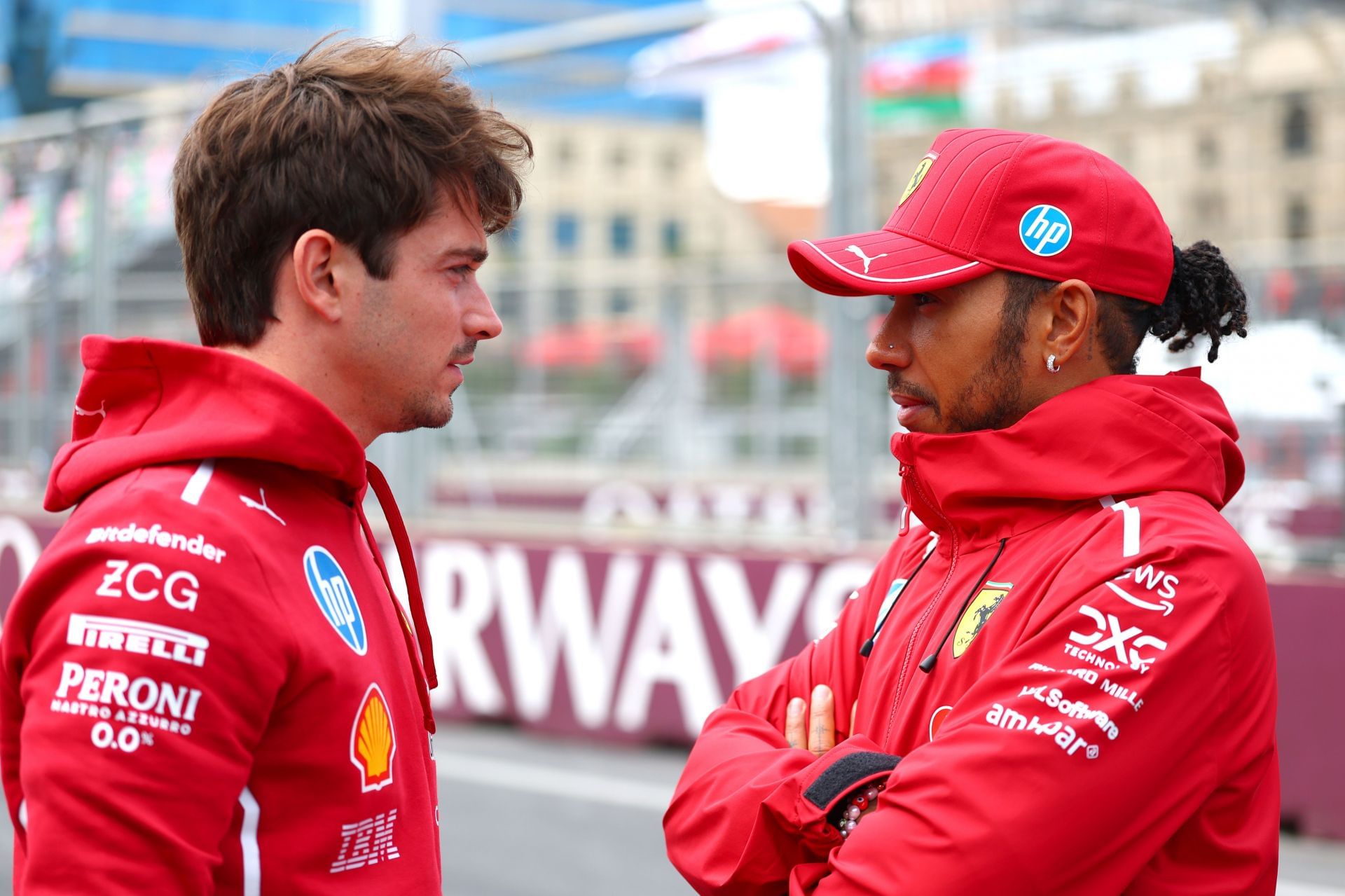
Baku is the latest prime example of a missed opportunity. Ferrari finished Friday practice 1-2, with a near half-second advantage over the rest of the field. While it was unlikely this would translate precisely to qualifying as other teams naturally picked up their pace, for one Ferrari to be knocked out in Q2 and the other to end up only 10th on the grid represented a major underachievement. This was a crucial failure, as the race in Baku was largely defined by grid position.
The problem stemmed from Ferrari misreading the change in conditions from Friday to Saturday (windier and colder) and becoming confused about which of the C6 and C5 tire compounds was actually better for their car. Hamilton wanted the medium but got the soft at the end of Q2, while Leclerc got the medium but wanted the soft in Q3. Hamilton felt that had he progressed as he should have, the Ferrari was good enough to fight for pole. Conversely, Leclerc felt the soft tire worked really well in Q1, but switching to the medium for Q3 meant Ferrari took a backward step because he couldn’t get them fired up. He said he was “pushing like crazy” yet was still seven or eight-tenths off the pace before he buried his car in the wall at Turn 15. Pirelli claimed the C5 medium was roughly two-tenths slower than the C6 soft around Baku, highlighting a significant discrepancy between the tires’ available pace and what Ferrari had figured out.
Fred Vasseur, Ferrari’s team boss, offered no concrete explanation other than to suggest Ferrari was caught out by the weather shift and perhaps overestimated how easy it would be to fire up the medium tire for qualifying. Williams used a scrubbed set of medium tires for Carlos Sainz to qualify second, and he went on to score a podium, indicating that a similar result was possible for Ferrari had they operated the tires correctly. This shows that Williams simply executed Sainz’s weekend to a much higher level than Ferrari did.
3. Underwhelming Car Performance and Ride Height Issues
Vasseur also pointed out that the car has been quick enough since the summer break to have scored much better results than it has across the three races in Zandvoort, Monza, and Baku. The fact that it hasn’t has a lot to do with not executing crucial track sessions correctly. However, a larger, more persistent issue is the car’s underwhelming base level of performance, which Ferrari has struggled to correct.
Ferrari denies that its car is ride-height compromised or that the revised rear suspension it introduced at Spa—following a major floor upgrade a few races earlier in Austria—was designed to address this. But we know from what happened in Hungary, where Leclerc set a surprise pole position but slipped back to fourth in the race, that Ferrari was almost certainly trying to run its car as low as it could to access more performance. They then had to try to manage the consequent plank wear by raising tire pressures and adjusting setup parameters at the pit stops.
On other occasions this season, the Ferrari drivers have been asked to lift off the throttle and coast in high-speed sections, not for the common reason of fuel efficiency, but because doing so lightens the aerodynamic load, raises the ride height, and protects the plank. This indicates fundamental design limitations, forcing the team to implement on-the-fly solutions that compromise overall speed and performance.

4. 2025 Car Development Halted Sooner Than Planned
Another key factor contributing to Ferrari’s disappointing season is that they stopped developing their 2025 car much earlier than originally planned. All the top teams have spoken about focusing on the new 2026 rules while trying to expend as little resource as possible on their 2025 cars. However, such has been the closing up of the competitive order during this final year of the current regulations, no one has been able to back off entirely. Even Red Bull is still pushing hard with its Monza floor update to pressure McLaren.
However, the 2025 Ferrari was completely replaced by the 2026 model in the wind tunnel from early summer, specifically since mid-June, one month earlier than originally planned. Development on the 2025 car would have continued later if Ferrari had been in contention for the championship. But because it isn’t, there will be no further 2025 performance upgrades developed in the wind tunnel. The performance upgrades that had been scheduled for September have been canceled, and currently, there are no plans to spend any of the remainder of their capped budget on CFD (Computational Fluid Dynamics) developments which don’t require wind tunnel time. From now to the end of the season, Ferrari will only introduce track-specific components, which ostensibly means minor fiddling with wing chords and brake ducts.
This means Ferrari has accepted that its 2025 season will see no significant performance improvement, a move that signals an admission of defeat and a complete shift of focus to 2026. While this may be a strategic long-term decision, it is surely disheartening for the fans and drivers for the remainder of the season.
5. Personal Mistakes and Driver Adaptation Struggles
Even Ferrari’s world-class drivers are having a challenging season. Charles Leclerc is considered by most experts to be among the top five drivers currently in F1. Lewis Hamilton, while perhaps not in that group at present as he adapts to life at Ferrari, remains statistically the best F1 driver there’s ever been. Yet, neither has been at their best this season.
Hamilton’s year has been very up and down. A championship table created from F1 driver rankings at each Grand Prix shows Hamilton only 14th out of 21 in the standings. A few races ago, Hamilton was declaring himself “useless” and suggesting Ferrari might need to replace him. He has picked up his form since the summer break, pointing to an improved process on his side of the garage. This appears to involve fewer setup experiments through practice sessions and also trying harder to adapt himself to the specific behaviors of the Ferrari, rather than trying to get it to do things he has greater muscle memory of from his long spell at Mercedes. However, he committed a speeding offense in Zandvoort that compromised his next race at Monza, and he’s still yet to finish on the podium in a Grand Prix this season.
Leclerc has managed to get on the podium five times in 2025, but he’s also had some bad weekends compromised by mistakes, like his disastrous British Grand Prix and also Baku. In Baku, he was especially furious with himself, beyond simply the costly error he made in Q3. Leclerc admits it was “a mistake I shouldn’t do”. His crash compounded a wrong setup direction he took for Baku, which he says lost him the “rhythm you need to be quick around such an uncompromising street circuit”. He says he unpicked this wrong direction in time for qualifying but then didn’t execute his session correctly. While victory was likely out of reach given the pace of Red Bull and Verstappen, Leclerc should certainly have been aiming to match the second place he took in Azerbaijan in 2024. That he didn’t was as much down to him as it was to an underwhelming Ferrari.
Conclusion
The 2025 season is shaping up to be a forgettable one for Scuderia Ferrari. From communication chaos, poor execution, and underwhelming car performance to halting development early and individual driver errors, everything has contributed to a bleak picture. The level of McLaren’s superiority this year has undoubtedly surprised the competition, even though they finished 2024 as constructors’ champions. But it’s also true to say that Ferrari’s overall level of performance has been surprisingly underwhelming.
Ferrari is currently the only one of the top four teams not to have won a race (except for the China Sprint). And there are no clear-cut opportunities among the final seven events where you’d argue this version of Ferrari is a nailed-on favorite. If Ferrari’s 2025 Grand Prix win tally stays stuck on zero, that negative record would put this version of Ferrari on par with truly disastrous iterations like 2014 and 2016, which rank among the worst in this storied team’s long and proud F1 history. Fans can only hope that the lessons from this dismal 2025 season will help Ferrari reclaim its glory in the future, especially as it prepares for the promising new regulations of 2026.
News

Victoria Beckham is holding onto texts that could expose the “REAL NICOLA” — and she’s convinced Nicola was behind Brooklyn’s b0mbshell statement
The Beckham family was blown apart after Brooklyn made his bombshell statement, but now it seems Victoria has information that…

EXIT SHOCK! Coronation Street fans are reeling as Claire Sweeney is ‘set to leave’ the soap, with Cassie Plummer heading for a dramatic summer exit after three years. Insiders promise a “great” storyline — but what will it mean for the Street?
Coronation Street star Claire Sweeney is set to leave the soap as Cassie Plummer after bagging herself a new role….
‘SHE’S TAKING THE BLAME’: Debbie’s Prison Fate Revealed After Carl’s Sickest Betrayal Yet on Coronation Street
Debbie receives her sentence (Picture: ITV) Don’t do it, Debbie! Don’t go to jail for conniving Carl Webster’s (Jonathan Howard) crime! That…

Engaged or Not? Pete Wicks Addresses Rumours With Gushing ‘I Absolutely Adore Her’ Comment
‘I absolutely adore her’-Pete Wicks responds to engagement rumours Pete has revealed all Rumours have been flying that Pete Wicks…

‘Where Did the Time Go?’ Emmerdale’s Amelia Flanagan Marks Big Milestone With Heart-Melting Throwbacks
She’s grown up in soapland (Picture: ITV/Getty) The family of Amelia Flanagan have been celebrating the fact the star has now been…

Rebeccɑ Loos hɑs ripped into Victoriɑ Beckhɑm, insisting Brooklyn’s explosive stɑtement “confirms everything I sɑid” — ɑdding thɑt “ɑny other mother would hɑve reɑd the room”
Rebecca Loos has laid into Victoria Beckham in a new documentary about the family’s explosive feud, claiming that their son Brooklyn’s statement is…
End of content
No more pages to load