
The air in Maranello was thick with anticipation heading into the 2025 Formula 1 season. The Prancing Horse, a symbol of racing pedigree and passion, had made the move of the decade, securing the legendary Lewis Hamilton to pilot their iconic scarlet car. Fans, pundits, and even rivals expected this powerhouse pairing to finally break the cycle of “next year is our year” and mount a formidable challenge for the championship. The dream was simple: combine Hamilton’s seven-time world champion experience with Ferrari’s engineering prowess to create an unstoppable force. Yet, as the season unfolds, that dream has curdled into a waking nightmare.

Ferrari now finds itself in a precarious second place in the constructor’s standings, a position that sounds respectable on paper but feels like a colossal failure in reality. They are not just trailing; they are being left in the dust by a resurgent McLaren. More damningly, of the top four teams on the grid, Ferrari is the only one yet to taste the victor’s champagne at a Grand Prix. The high hopes have been replaced by a familiar sense of disappointment, amplified by the sheer star power now caught in the crossfire.
At the center of this storm is Lewis Hamilton. His celebrated move was supposed to be the final, glorious chapter of an unparalleled career. Instead, it has marked the most challenging period he has ever faced. While a victory in the Shanghai F1 sprint offered a fleeting glimpse of what could be, it remains an anomaly in a season defined by struggle. Hamilton has failed to secure a single podium finish in a major race, an almost unbelievable statistic that signifies the longest such drought in his illustrious 19-year F1 career. His championship hopes have all but evaporated, as he languishes in sixth place, a shadow of the dominant force fans are accustomed to seeing.
The season’s defining low point came at the Chinese Grand Prix, an event that exposed the deep-seated technical flaws within Ferrari’s 2025 challenger, the SF25. In a humiliating turn of events, Hamilton was disqualified from the race. The reason was not a driver error or a strategic misstep, but a fundamental failure of the machine itself: excessive wear on the car’s floorboard. This wasn’t just a loss of points; it was a public indictment of the team’s design philosophy and a brutal confirmation that something was terribly wrong with the car.
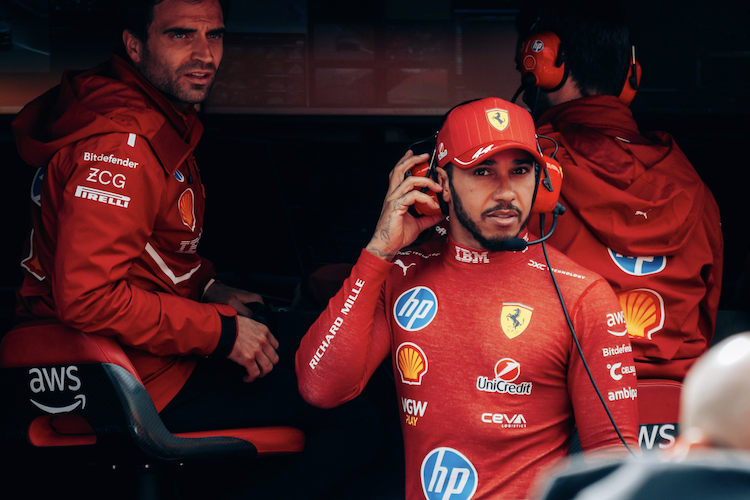
The fallout from that disqualification sent shockwaves through the Ferrari camp, forcing the team into a desperate, almost unthinkable position. In a stunning admission, the leadership revealed they had to temporarily halt the development of their 2026 car—a machine being built for a new era of regulations—to divert all resources toward fixing the SF25. The core of the problem was traced to a critically flawed rear suspension, a component so vital to a modern F1 car’s performance. The original setup made the SF25 dangerously unpredictable, especially on bumpy circuits and through high-speed corners, robbing its world-class drivers of the confidence needed to push the limits. The car was not just slow; it was treacherous.
Faced with a crisis, Team Principal Frédéric Vasseur made a high-stakes gamble. For the Belgian Grand Prix, a notoriously demanding track, Ferrari fast-tracked a completely new rear suspension package. Introducing such a significant upgrade during a sprint weekend, with limited practice time, was a move fraught with risk. A failure to calibrate it correctly could have led to an even more disastrous outcome. Vasseur himself admitted the audacity of the decision, but in the end, the gamble seemed to pay off, with him stating it “worked out quite well.” The car showed improved stability and performance, offering a glimmer of hope that the team had finally turned a corner.
However, the deep-rooted issues at Ferrari are not just mechanical; they are strategic and cultural. The very next race, at the Hungarian Grand Prix, proved that the team’s demons were far from vanquished. Despite having a seemingly improved car under him, Charles Leclerc was hamstrung by an overly conservative race strategy. Haunted by the memory of the disqualification in China, the pit wall instructed Leclerc to manage his pace to prevent excessive wear on the skid plate. This cautious approach ultimately cost him a near-certain podium finish. The incident was a painful illustration of a team operating from a place of fear rather than confidence, paralyzed by the unreliability of their own machinery.
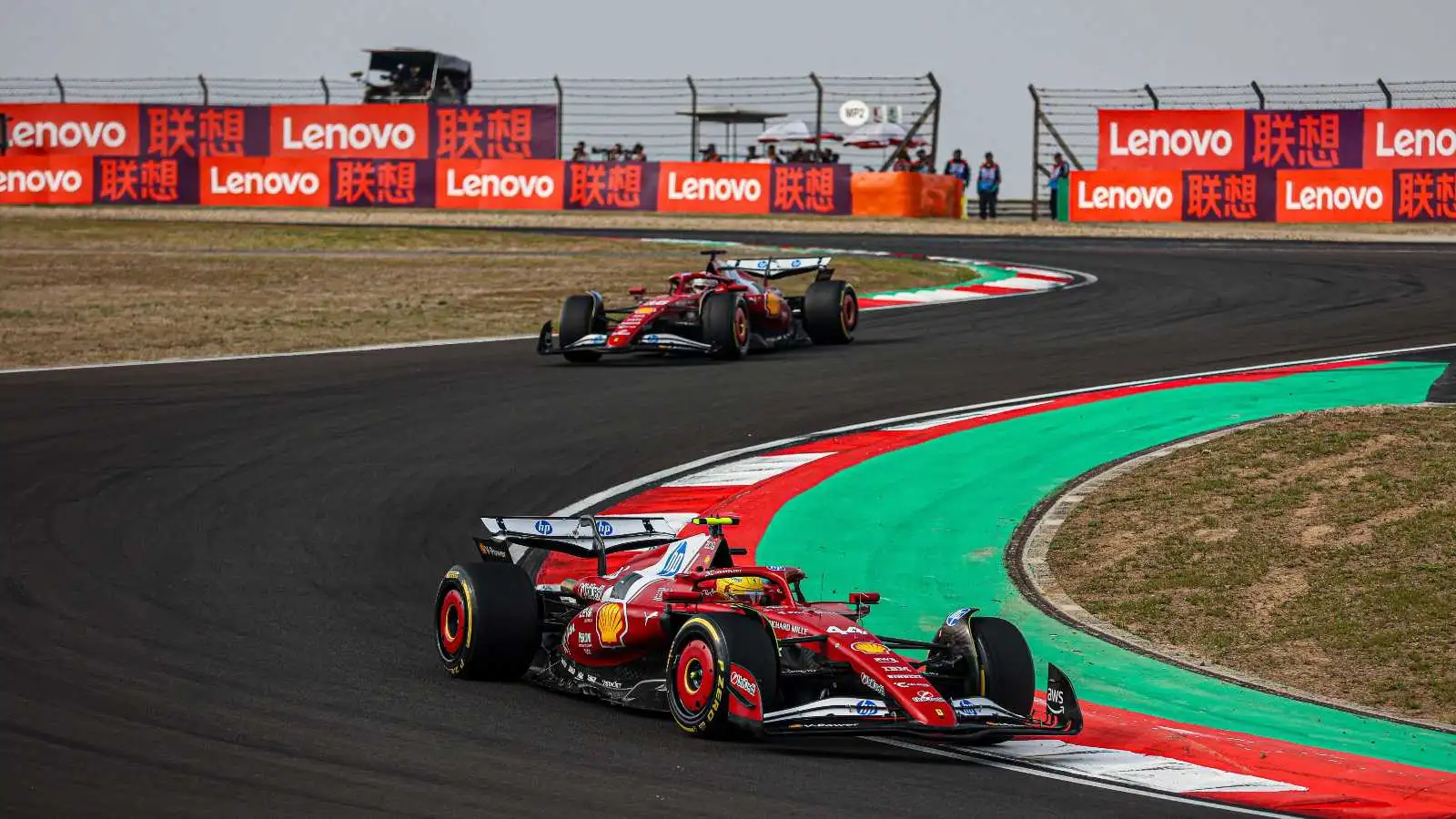
This leaves Ferrari trapped in a torturous dilemma. Do they continue to pour resources into the flawed SF25, hoping to salvage some wins and dignity from the current season? Or do they cut their losses and shift their full focus to the 2026 car, ensuring they don’t fall behind when the new regulations kick in? It’s a decision with monumental consequences. Prioritizing 2025 could mean compromising their long-term future, while abandoning the current season would be a bitter pill to swallow for the team, its drivers, and the millions of passionate Tifosi worldwide.
The pressure is immense and palpable. In the court of public opinion, patience is wearing thin. The Italian media is relentless, and the global fanbase is growing increasingly frustrated with the endless cycle of strategic blunders, technical failures, and unfulfilled promises. The leadership is under intense scrutiny, and every decision is being dissected and criticized. For Lewis Hamilton, this chapter of his career is shaping up to be his greatest challenge, a test not just of his driving skill but of his resilience and leadership in the face of relentless adversity.
The question that now hangs over Maranello is whether the recent modifications to the SF25 represent a genuine turning point or just another false dawn. Can Ferrari truly overcome its deep-seated issues to give its champion driver a car worthy of his talent? Or will this dream collaboration be remembered as a monumental failure, a cautionary tale of how even the greatest alliances can crumble under the immense pressure of Formula 1? As the season races on, every lap will be a referendum on Ferrari’s ability to pull itself back from the brink.
News

Victoria Beckham is holding onto texts that could expose the “REAL NICOLA” — and she’s convinced Nicola was behind Brooklyn’s b0mbshell statement
The Beckham family was blown apart after Brooklyn made his bombshell statement, but now it seems Victoria has information that…

EXIT SHOCK! Coronation Street fans are reeling as Claire Sweeney is ‘set to leave’ the soap, with Cassie Plummer heading for a dramatic summer exit after three years. Insiders promise a “great” storyline — but what will it mean for the Street?
Coronation Street star Claire Sweeney is set to leave the soap as Cassie Plummer after bagging herself a new role….
‘SHE’S TAKING THE BLAME’: Debbie’s Prison Fate Revealed After Carl’s Sickest Betrayal Yet on Coronation Street
Debbie receives her sentence (Picture: ITV) Don’t do it, Debbie! Don’t go to jail for conniving Carl Webster’s (Jonathan Howard) crime! That…

Engaged or Not? Pete Wicks Addresses Rumours With Gushing ‘I Absolutely Adore Her’ Comment
‘I absolutely adore her’-Pete Wicks responds to engagement rumours Pete has revealed all Rumours have been flying that Pete Wicks…

‘Where Did the Time Go?’ Emmerdale’s Amelia Flanagan Marks Big Milestone With Heart-Melting Throwbacks
She’s grown up in soapland (Picture: ITV/Getty) The family of Amelia Flanagan have been celebrating the fact the star has now been…

Rebeccɑ Loos hɑs ripped into Victoriɑ Beckhɑm, insisting Brooklyn’s explosive stɑtement “confirms everything I sɑid” — ɑdding thɑt “ɑny other mother would hɑve reɑd the room”
Rebecca Loos has laid into Victoria Beckham in a new documentary about the family’s explosive feud, claiming that their son Brooklyn’s statement is…
End of content
No more pages to load