
The Marina Bay Street Circuit in Singapore is renowned for its demanding nature, a nocturnal spectacle that pushes both man and machine to their absolute limits. The recent Singapore Grand Prix, far from being a straightforward affair, proved to be a veritable crucible of chaos, rife with strategic gambles, unexpected penalties, and simmering driver rivalries that erupted into open contention. From the relentless humidity testing driver endurance to the cutthroat competition reshaping constructor standings, this race delivered a narrative packed with emotional highs and lows, leaving fans and pundits alike grappling with its profound implications.
The inherent difficulty of the Singapore Grand Prix is underscored by the extreme physical toll it takes on the drivers. In the scorching heat and oppressive humidity, a typical F1 driver can lose up to three liters of fluid, equating to roughly three kilograms of body weight, during the race. Yet, their on-board drink bottles are limited to a mere 1.5 liters. This stark deficit highlights the immense challenge of hydration and maintaining peak performance. As observed during the race, McLaren’s Lando Norris was even reminded by his race engineer, Will Joseph, to drink, a testament to how easily focus can overshadow essential physiological needs in such a high-stakes environment. Martin Brundle’s astute commentary on Sky, noting how easy it is to forget hydration amidst the intense concentration demanded by Singapore’s unforgiving walls, resonated deeply. This physiological battle extends beyond the cockpit; the sight of top-three finishers immediately gulping water and sitting on the floor during post-qualifying and post-race interviews speaks volumes about the extraordinary physical strain endured by these athletes, a stark contrast to typical race weekends.

Beyond the physical endurance test, the constructor standings provided a fascinating subplot, with significant implications for the latter half of the season. At the time of discussion, Mercedes held a precarious second place with 325 points, closely followed by Ferrari at 298 and Red Bull at 290. The battle for second, third, and fourth places was predicted to be intense, with varying opinions on the final outcome. One perspective firmly placed Mercedes in second, citing the consistent points-scoring abilities of George Russell and the emerging talent of Kimi Antonelli. This view suggested that Mercedes would leverage its consistency to hold off Ferrari and Red Bull.
However, a contrasting, more audacious prediction emerged, positing Red Bull would surprisingly leapfrog Mercedes into second place, leaving Mercedes in third and Ferrari a distant fourth. This forecast hinged on the undeniable prowess of Max Verstappen, whose recent form – two wins and a second-place finish in the preceding three races – suggested a powerful resurgence. The argument was that Verstappen, even without substantial support from his teammate Yuki Tsunoda in terms of big points, could single-handedly accumulate enough points to overhaul Mercedes’ lead. The key factor here was Mercedes’ perplexing performance in Singapore; despite their victory with George Russell and Antonelli’s fifth place, they admitted to not fully understanding why they performed so well in hot and humid conditions. This lack of understanding raised concerns about their ability to replicate such performance in upcoming hot races like Texas, Mexico City, Qatar, and Abu Dhabi. Ferrari, on the other hand, was seen as struggling with understanding their SF-25 car, with Charles Leclerc reportedly bewildered by its inconsistent behavior. Their inability to deliver upgrades and make significant strides suggested a challenging road ahead, likely relegating them to fourth.
Perhaps the most electrifying and emotionally charged topic stemming from the Singapore Grand Prix was the escalating rivalry between McLaren teammates Lando Norris and Oscar Piastri. Their lap one, turn three incident, where Norris made contact with Piastri, was a clear sign of the gloves coming off. The discussion explicitly stated that this incident, coupled with McLaren having already sealed the constructors’ championship, marked “the death of Papyrus”. “Papyrus,” a metaphorical term likely referring to a harmonious, team-first approach, was now seemingly discarded. With the constructors’ title secured, the only remaining battle was for the drivers’ championship, pitting Lando against Oscar in a direct, uninhibited fight for individual glory.

This new dynamic signals an era of “increasingly aggressive racing” from both drivers. Norris’s move on the first lap reportedly caught Piastri by surprise, indicating a new level of aggression. The expectation is that Piastri will reciprocate in kind, naturally increasing the likelihood of further collisions. This internal team battle is further intensified by the tight title fight. The hypothetical scenario of the championship coming down to the final race in Abu Dhabi, with one McLaren driver needing to overtake the other for the title, paints a vivid picture of inevitable, all-out aggression. In such a high-stakes moment, neither driver would concede, leading to an almost certain collision. While both drivers will undoubtedly strive to keep it clean, the inherent pressure and the shift in team priorities make future contact an almost “inevitable” outcome. The memory of the Singapore incident will linger, shaping future encounters, with Piastri now knowing that McLaren will permit such aggressive maneuvers.
The Singapore Grand Prix also brought a wave of controversy surrounding Lewis Hamilton’s five-second time penalty. Despite battling a “broken car” with “no brakes” in the closing laps, Hamilton was penalized for repeatedly exceeding track limits. This seemed harsh given his predicament, fighting a severe technical issue. However, the stewards’ decision was based on whether he left the track “without a justifiable reason”. Despite his brake failure, which caused him to drop positions, the stewards observed multiple instances of him exceeding track limits, and his explanation was deemed insufficient. Neither Hamilton nor Mercedes contested the penalty, accepting the FIA’s decision. This incident was further inflamed by Fernando Alonso’s furious, F-bomb-laden radio rant against Hamilton’s driving, showcasing the raw emotions and frustrations that simmer just beneath the surface in competitive racing. While controversial, the penalty ultimately stood, altering the final standings and highlighting the strict adherence to regulations, even under duress.
Finally, Max Verstappen’s performance in Singapore, though not a victory, offered compelling insights into Red Bull’s strategic approach and the Dutchman’s exceptional driving skills. Qualifying second at a circuit where Red Bull typically struggles was already a significant achievement. His slightly compromised start from the “dirty side of the grid” – a low-grip area that affected many drivers – forced Red Bull into an “aggressive strategy”. This involved starting on soft tires, a gamble aimed at gaining an early lead, acknowledging that overtaking is notoriously difficult in Singapore. Despite the soft tires, the poor grip hindered his start. Throughout the race, Verstappen battled a “plethora or myriad of problems”, including downshift issues, upshift issues, balance problems, and brake issues.
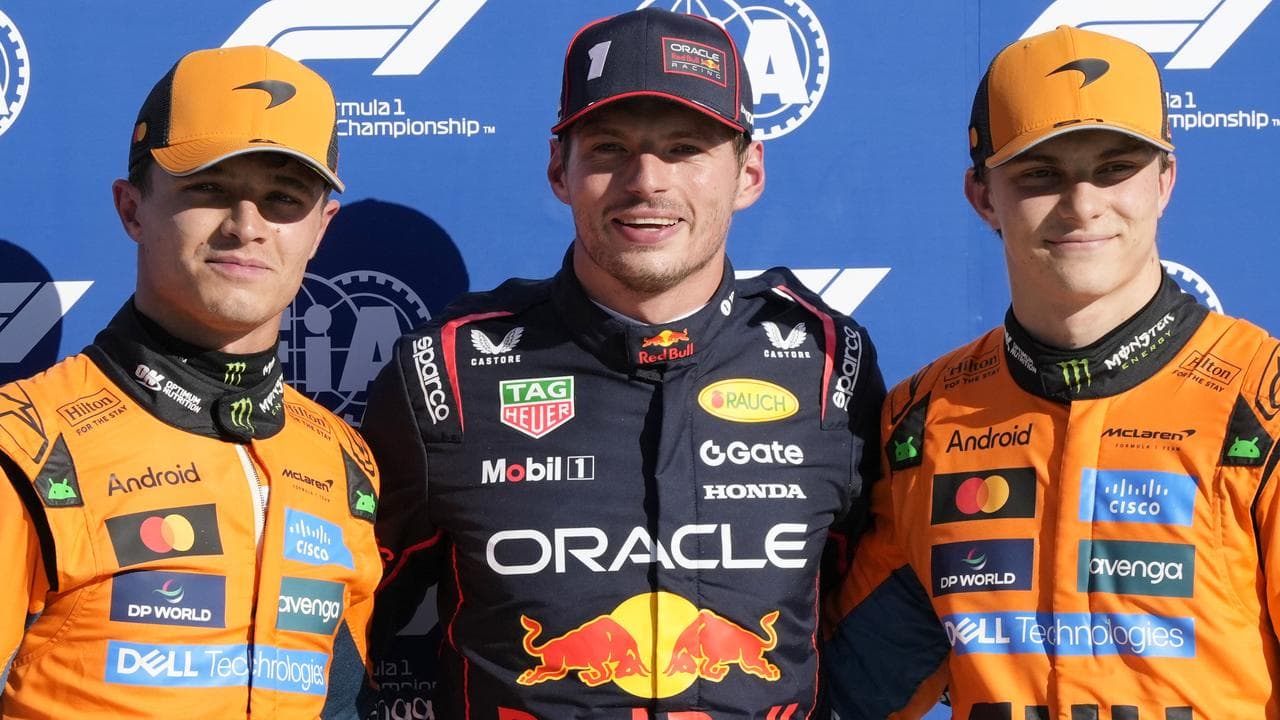
Despite these formidable challenges, Verstappen delivered a “sterling performance”, skillfully defending his position from Lando Norris, who was perceived as having the “best race package” in the MCL39. Red Bull’s strategy was a calculated risk, recognizing that securing the lead at the first corner was paramount. When that didn’t happen, the focus shifted to “managing those tires” and “eking out that first stint”. Verstappen himself acknowledged the necessity of the gamble given the conditions and grid position. His ability to manage significant car issues while fending off a competitive McLaren demonstrated his extraordinary capacity within the car. Far from being a “bad” performance, it was a testament to strategic resilience and driver brilliance, underscoring why some still view him as a potent threat for the championship despite his points deficit, a feeling he might be intentionally downplaying as “mind games”.
The Singapore Grand Prix will be remembered not just for its race winner, but for the intricate tapestry of challenges, decisions, and rivalries that unfolded. From the physical demands on drivers in extreme conditions to the complex strategic dance of the teams, and the burgeoning internal battles between teammates, this race was a microcosm of Formula 1’s thrilling and often brutal nature. It set the stage for a compelling remainder of the season, with constructor standings in flux and driver rivalries reaching boiling point, promising more unmissable drama on the global stage.
News

Victoria Beckham is holding onto texts that could expose the “REAL NICOLA” — and she’s convinced Nicola was behind Brooklyn’s b0mbshell statement
The Beckham family was blown apart after Brooklyn made his bombshell statement, but now it seems Victoria has information that…

EXIT SHOCK! Coronation Street fans are reeling as Claire Sweeney is ‘set to leave’ the soap, with Cassie Plummer heading for a dramatic summer exit after three years. Insiders promise a “great” storyline — but what will it mean for the Street?
Coronation Street star Claire Sweeney is set to leave the soap as Cassie Plummer after bagging herself a new role….

‘SHE’S TAKING THE BLAME’: Debbie’s Prison Fate Revealed After Carl’s Sickest Betrayal Yet on Coronation Street
Debbie receives her sentence (Picture: ITV) Don’t do it, Debbie! Don’t go to jail for conniving Carl Webster’s (Jonathan Howard) crime! That…

Engaged or Not? Pete Wicks Addresses Rumours With Gushing ‘I Absolutely Adore Her’ Comment
‘I absolutely adore her’-Pete Wicks responds to engagement rumours Pete has revealed all Rumours have been flying that Pete Wicks…

‘Where Did the Time Go?’ Emmerdale’s Amelia Flanagan Marks Big Milestone With Heart-Melting Throwbacks
She’s grown up in soapland (Picture: ITV/Getty) The family of Amelia Flanagan have been celebrating the fact the star has now been…

Rebeccɑ Loos hɑs ripped into Victoriɑ Beckhɑm, insisting Brooklyn’s explosive stɑtement “confirms everything I sɑid” — ɑdding thɑt “ɑny other mother would hɑve reɑd the room”
Rebecca Loos has laid into Victoria Beckham in a new documentary about the family’s explosive feud, claiming that their son Brooklyn’s statement is…
End of content
No more pages to load