
In the world of motorsport, Max Verstappen is a titan, a reigning Formula 1 World Champion whose name is synonymous with blistering speed, aggressive precision, and an almost untouchable level of dominance. He is the master of the world’s most advanced racing machines, a driver who has conquered the glamorous circuits of Monaco, Silverstone, and Monza. Yet, on a crisp weekend at the Nürburgring, the Dutch superstar voluntarily traded his crown for a learner’s permit, stepping away from the pinnacle of racing to become a rookie all over again. This wasn’t a publicity stunt or a gentle foray into a new discipline. It was a mandatory, humbling, and dangerous pilgrimage to the world’s most feared racetrack: the Nürburgring Nordschleife, affectionately and terrifyingly known as “The Green Hell.”
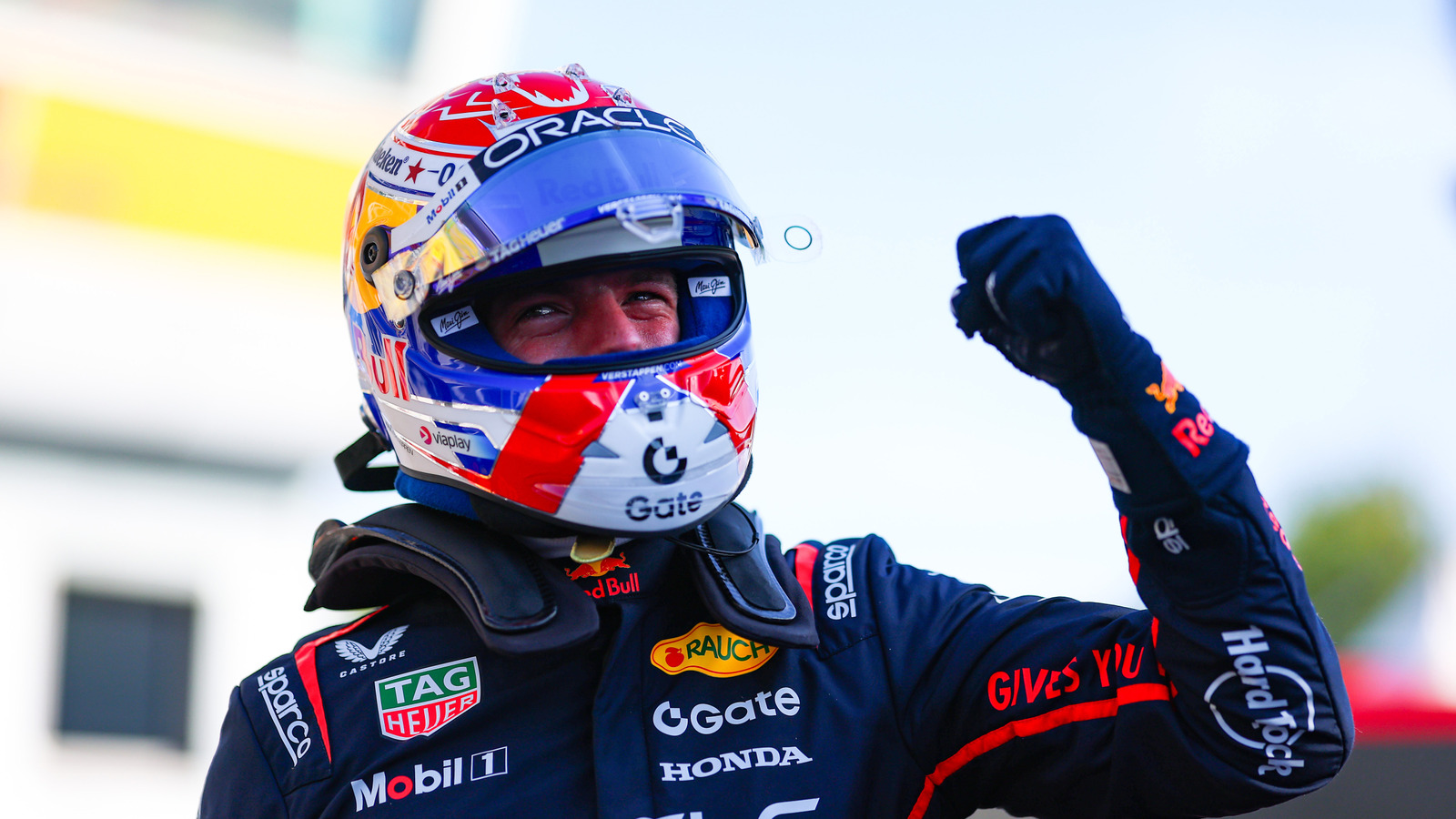
The mission was not to shatter lap records or spray champagne. Instead, Verstappen was there to do his homework. He was participating in the Nürburgring Langstrecken-Serie (NLS), an endurance championship famed for its grueling nature and eclectic mix of cars. His goal? To earn the necessary “Permit A,” a special license required to handle the fastest GT3 cars on this treacherous 20.8-kilometer ribbon of asphalt. To the casual observer, it’s a baffling sight: a three-time F1 champion being told he’s not yet qualified to drive at full potential. To those who understand the Nürburgring, it makes perfect sense. This track doesn’t care for résumés; it demands respect, paid in sweat, skill, and an intimate understanding of its 154 unique and unforgiving corners.
Verstappen wasn’t behind the wheel of a Red Bull F1 car or even a top-tier GT3 beast. His chariot for the weekend was a comparatively modest Porsche 718 Cayman GT4 Clubsport. To add another layer to this tale of forced humility, the car was intentionally restricted. Because he lacked the top-level permit, race regulations mandated his Porsche be choked down to a mere 300 horsepower, a significant drop from its standard 425. For a driver accustomed to wielding over 1,000 horsepower in his day job, this was the equivalent of asking a concert pianist to perform on a child’s keyboard. He was sharing the track with monstrous GT3 machines, the very cars he aspired to drive, which blasted past him on the straights, their roaring engines a constant reminder of the pecking order he was now at the bottom of.

This unique permit system is the Nürburgring’s great equalizer. The track is notoriously dangerous, a winding, undulating beast that has claimed the lives of over 70 professional drivers and countless more amateurs. Its narrow surface, blind crests, and ever-changing weather conditions make it a singular challenge. Unlike modern, sanitized circuits with vast runoff areas, the Nordschleife is lined with unforgiving Armco barriers, inches from the racing line. A single mistake doesn’t just end your race; it can have catastrophic consequences. The permit system was designed to instill a deep-seated respect for this danger. It forces drivers, regardless of their fame, to learn the art of multi-class racing—a chaotic ballet where hyper-fast prototypes and GT cars must navigate a field of slower production vehicles. It teaches the crucial skill of anticipating the movements of less experienced drivers and making split-second decisions in dense traffic, a lesson that can’t be learned anywhere else on earth.
For Verstappen, this experience was a reset. He was no longer the apex predator hunting for pole position. He was part of the complex traffic pattern, learning to manage his pace, watch his mirrors, and safely coexist with cars of vastly different speeds. Alongside his teammates, including his sim-racing partner Chris Lulham, he had to complete two full races with a classified finish to earn his upgrade. There was no special treatment, no shortcut for the champion. He had to put in the hours, demonstrate control, and prove to the track’s guardians that he understood its lethal potential.
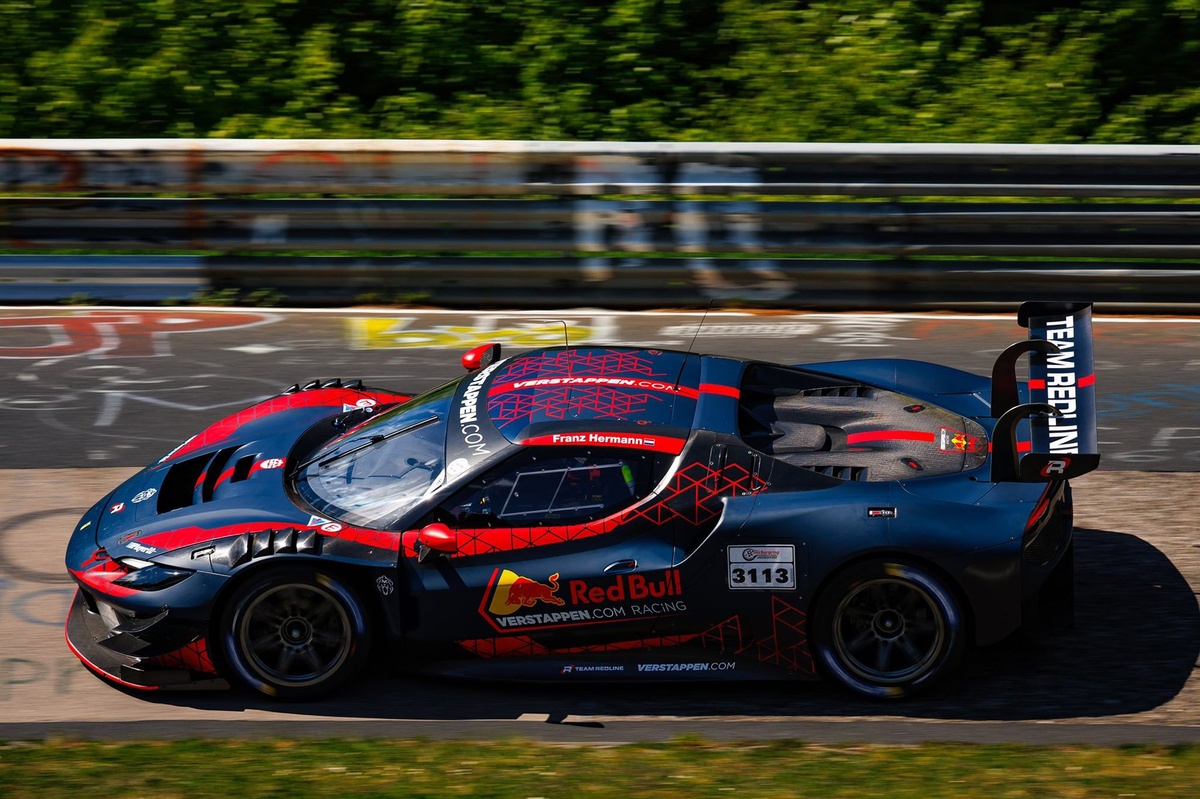
The atmosphere at the NLS is a world away from the polished, corporate sheen of Formula 1. It’s a grittier, more accessible form of motorsport where fans can get up close to the cars and drivers. The paddock is a bustling community of professionals and passionate amateurs, all united by their love for this legendary circuit. Verstappen’s presence brought a global spotlight, but within the NLS fraternity, he was just another driver seeking his stripes. His participation speaks volumes about his character. He is a pure racer at heart, driven not just by victory, but by the pursuit of new challenges and the mastery of his craft. He could have easily rested on his F1 laurels, but his desire to conquer endurance racing’s crown jewels—like the Nürburgring 24 Hours—pushed him far outside his comfort zone.
This journey is not just a personal quest for Verstappen; it carries wider implications for the sport. His involvement shines a light on the raw, unfiltered thrill of endurance racing at the Nürburgring, potentially drawing a new generation of fans and even inspiring other top-tier drivers to test their mettle in “The Green Hell.” It also hints at a potential future for the Verstappen-Red Bull partnership beyond Formula 1. Should he commit to endurance racing long-term, it’s conceivable that the energy drink giant could throw its considerable resources behind a GT3 program, further shaking up the landscape of sports car racing.
As Verstappen circulated the track in his power-limited Porsche, every lap was a lesson in patience and strategy. He wasn’t just driving; he was studying, absorbing the Nürburgring’s unique rhythm, its treacherous compressions, and its daunting blind corners. He was learning to be a different kind of racer—not the lone wolf of F1, but a collaborative endurance driver, working with his teammates toward a common goal of survival and completion. The ultimate prize this weekend wasn’t a trophy, but a simple piece of paper: the Permit A. It was his ticket to the next level, his key to unlocking the full potential of both himself and the machinery he is destined to drive on this hallowed ground. The world watched, fascinated by this spectacle of a champion being humbled, reminded that in the face of a challenge as immense as the Nürburgring, everyone starts from zero.
News

Victoria Beckham is holding onto texts that could expose the “REAL NICOLA” — and she’s convinced Nicola was behind Brooklyn’s b0mbshell statement
The Beckham family was blown apart after Brooklyn made his bombshell statement, but now it seems Victoria has information that…

EXIT SHOCK! Coronation Street fans are reeling as Claire Sweeney is ‘set to leave’ the soap, with Cassie Plummer heading for a dramatic summer exit after three years. Insiders promise a “great” storyline — but what will it mean for the Street?
Coronation Street star Claire Sweeney is set to leave the soap as Cassie Plummer after bagging herself a new role….

‘SHE’S TAKING THE BLAME’: Debbie’s Prison Fate Revealed After Carl’s Sickest Betrayal Yet on Coronation Street
Debbie receives her sentence (Picture: ITV) Don’t do it, Debbie! Don’t go to jail for conniving Carl Webster’s (Jonathan Howard) crime! That…

Engaged or Not? Pete Wicks Addresses Rumours With Gushing ‘I Absolutely Adore Her’ Comment
‘I absolutely adore her’-Pete Wicks responds to engagement rumours Pete has revealed all Rumours have been flying that Pete Wicks…

‘Where Did the Time Go?’ Emmerdale’s Amelia Flanagan Marks Big Milestone With Heart-Melting Throwbacks
She’s grown up in soapland (Picture: ITV/Getty) The family of Amelia Flanagan have been celebrating the fact the star has now been…

Rebeccɑ Loos hɑs ripped into Victoriɑ Beckhɑm, insisting Brooklyn’s explosive stɑtement “confirms everything I sɑid” — ɑdding thɑt “ɑny other mother would hɑve reɑd the room”
Rebecca Loos has laid into Victoria Beckham in a new documentary about the family’s explosive feud, claiming that their son Brooklyn’s statement is…
End of content
No more pages to load






