
The world of Formula 1 is no stranger to prodigies. It is a sport built on the promise of youth, where teenagers are thrust into the cockpit of multi-million-dollar machines and expected to perform miracles at over 200 miles per hour. Yet, even in this crucible of talent, some stars burn brighter, hotter, and with a ferocity that reshapes the very firmament of the sport. Max Verstappen was not just another prodigy; he was a phenomenon, a force of nature who arrived in Formula 1 less like a rookie and more like a reckoning. His journey from a karting wonderkid, meticulously molded by his racing family, to a four-time World Champion is a saga of raw speed, brutal controversy, public failure, and ultimately, an era of dominance so complete it borders on tyranny.
This is not a simple story of a boy who was fast in a race car. It is the story of how unyielding ambition, when honed by fire and failure, can forge a legacy that will be debated and admired for generations. It’s the story of a driver who didn’t just join the elite—he stormed the palace and seized the crown.

The Inevitable Heir: Forged in a Racing Dynasty
To understand Max Verstappen, one must first understand his lineage. Born on September 30, 1997, he was less a product of choice and more a product of destiny. His father was Jos Verstappen, a respected and aggressive Formula 1 driver who had shared the grid with the legendary Michael Schumacher. His mother, Sophie Kumpen, was a formidable and highly successful karting champion in her own right, having competed against future F1 stars like Jenson Button and Giancarlo Fisichella. Racing wasn’t in his blood; it was the blood itself.
From the age of four, when most children are learning to ride a bicycle, Max was being strapped into a go-kart. His childhood was not one of playgrounds and school friends but of asphalt tracks and the smell of burning rubber. Under the notoriously demanding tutelage of his father, his raw talent was not just nurtured; it was brutally and relentlessly forged. Jos Verstappen was determined that his son would succeed where he had not, that the Verstappen name would be synonymous not just with talent, but with victory. The training was intense, the expectations astronomical. This upbringing created a driver with an almost unnerving level of self-belief and a singular focus on winning, at any cost.
His dominance in the karting world was immediate and absolute. He tore through the Dutch and Belgian championships before ascending to the international stage. Between 2010 and 2013, he claimed a stunning collection of titles, including multiple WSK Euro Series championships and the coveted FIA European and World Championships. He wasn’t just winning; he was annihilating the competition, his aggressive, on-the-edge driving style becoming his fearsome signature. It was clear to everyone who watched him that this was not just another talented kid; this was a future king in waiting.
The Shocking Ascent: Too Fast, Too Soon?
The traditional path for an aspiring F1 driver is a slow, methodical climb through the junior single-seater ranks: Formula 4, Formula 3, then the crucial proving ground of GP2 (now Formula 2). Max Verstappen and his advisors at Red Bull had no time for tradition. In 2014, after a brief but successful stint in the Florida Winter Series, he jumped straight into the fiercely competitive FIA Formula 3 European Championship. The paddock was skeptical. He was raw, inexperienced, and many believed the jump was too great, too soon.
Verstappen responded by silencing his critics in the most emphatic way possible. At the legendary Hockenheimring, he became the youngest driver in the series’ history to secure a pole position and win a race. His performance was a statement of intent. He wasn’t there to learn; he was there to conquer. His meteoric rise caught the attention of every major F1 team, but it was Red Bull, with its reputation for betting on young talent, that made the move that would shake the sport to its core. They offered him a fast track to a Formula 1 seat, bypassing GP2 entirely.
In 2015, at the Australian Grand Prix, Max Verstappen made his F1 debut with Scuderia Toro Rosso, Red Bull’s junior team. At just 17 years and 166 days old, he shattered the record for the youngest driver to ever start a World Championship race. The move was met with a mixture of awe and outrage. The FIA was so alarmed that they subsequently changed the rules, introducing a minimum age of 18 and a super-license points system to prevent anyone from ever repeating Verstappen’s unprecedented leap. But the rules couldn’t change reality. A boy who wasn’t even legally an adult in most countries was now competing at the pinnacle of motorsport. And just two weeks later in Malaysia, he became the youngest driver ever to score points. The phenom had arrived.
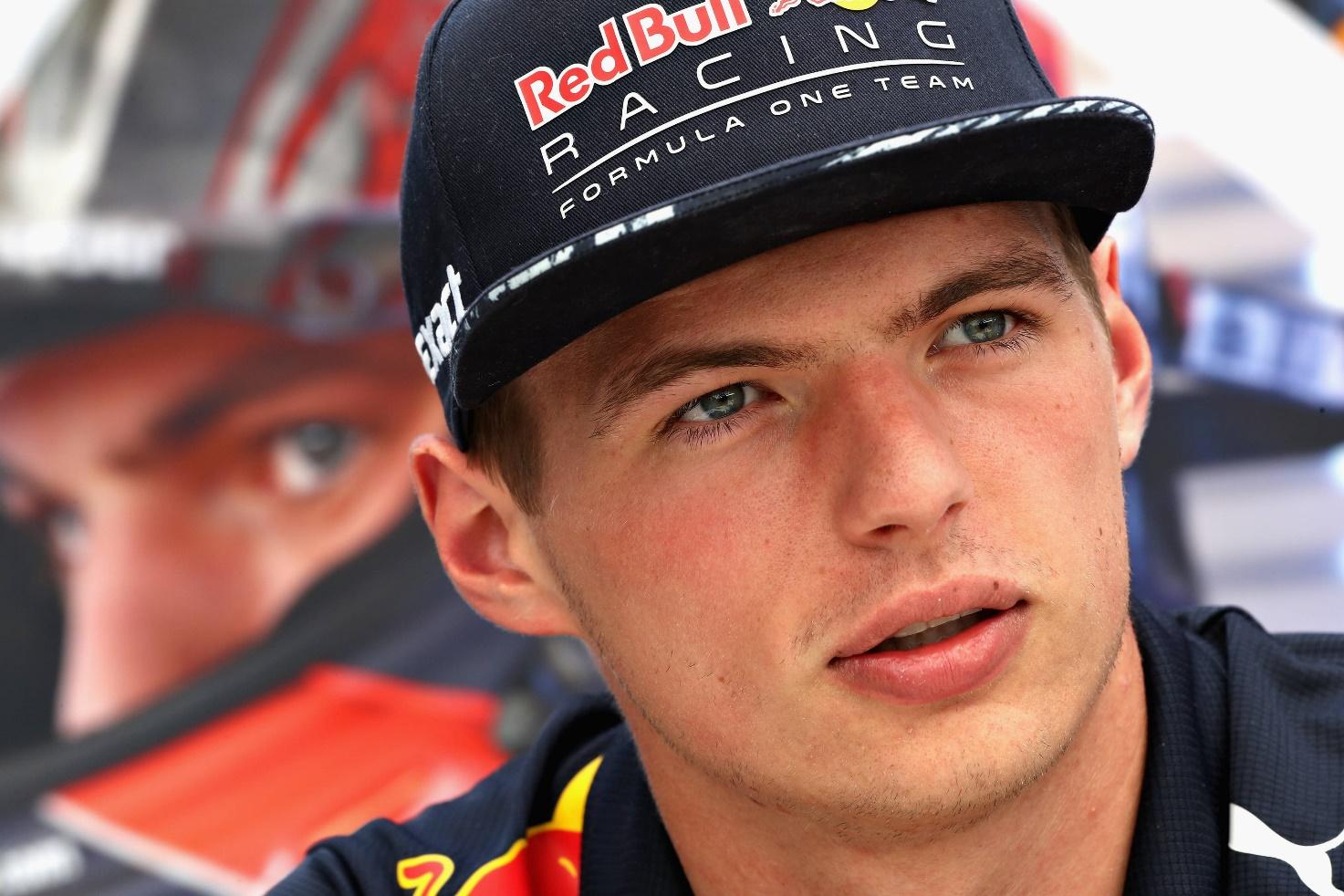
Taming the Beast: From “Mad Max” to Master
Verstappen’s early years in Formula 1 were defined by a breathtaking combination of blinding speed and heart-stopping recklessness. His overtakes were audacious, his car control sublime, but his aggression often boiled over into costly mistakes. He earned the nickname “Mad Max” for his uncompromising style, a reputation that both thrilled fans and infuriated his rivals.
The turning point came just five races into the 2016 season. In a ruthless and decisive move, Red Bull promoted him to their senior team, demoting the struggling Daniil Kvyat. His first race in the Red Bull car was the Spanish Grand Prix. In a moment that has become F1 folklore, the two dominant Mercedes drivers, Lewis Hamilton and Nico Rosberg, collided on the first lap, leaving the door wide open. Verstappen, under immense pressure, drove with the composure of a veteran, fending off the advances of Ferrari’s Kimi Räikkönen to take his maiden victory. At 18 years and 228 days old, he was the youngest Grand Prix winner in history. It was a stunning, fairy-tale achievement.
However, the path to greatness was not a straight line. The 2017 and 2018 seasons were a period of “growing pains,” marked by high-profile incidents and a sense of untamed potential. The lowest point came at the 2018 Monaco Grand Prix, a circuit where driver precision is paramount. Verstappen, a favorite for the win, crashed heavily in practice, forcing him to miss qualifying and start from the back of the grid. It was a public and humiliating error, one that led to intense criticism and introspection. It was this moment of failure, however, that proved to be the crucible in which a true champion was forged. He began to temper his raw aggression with a new layer of calculated patience and strategic intelligence. He was still the “Lion,” but he was learning when to hunt and when to wait. The beast was being tamed, not by others, but by himself.
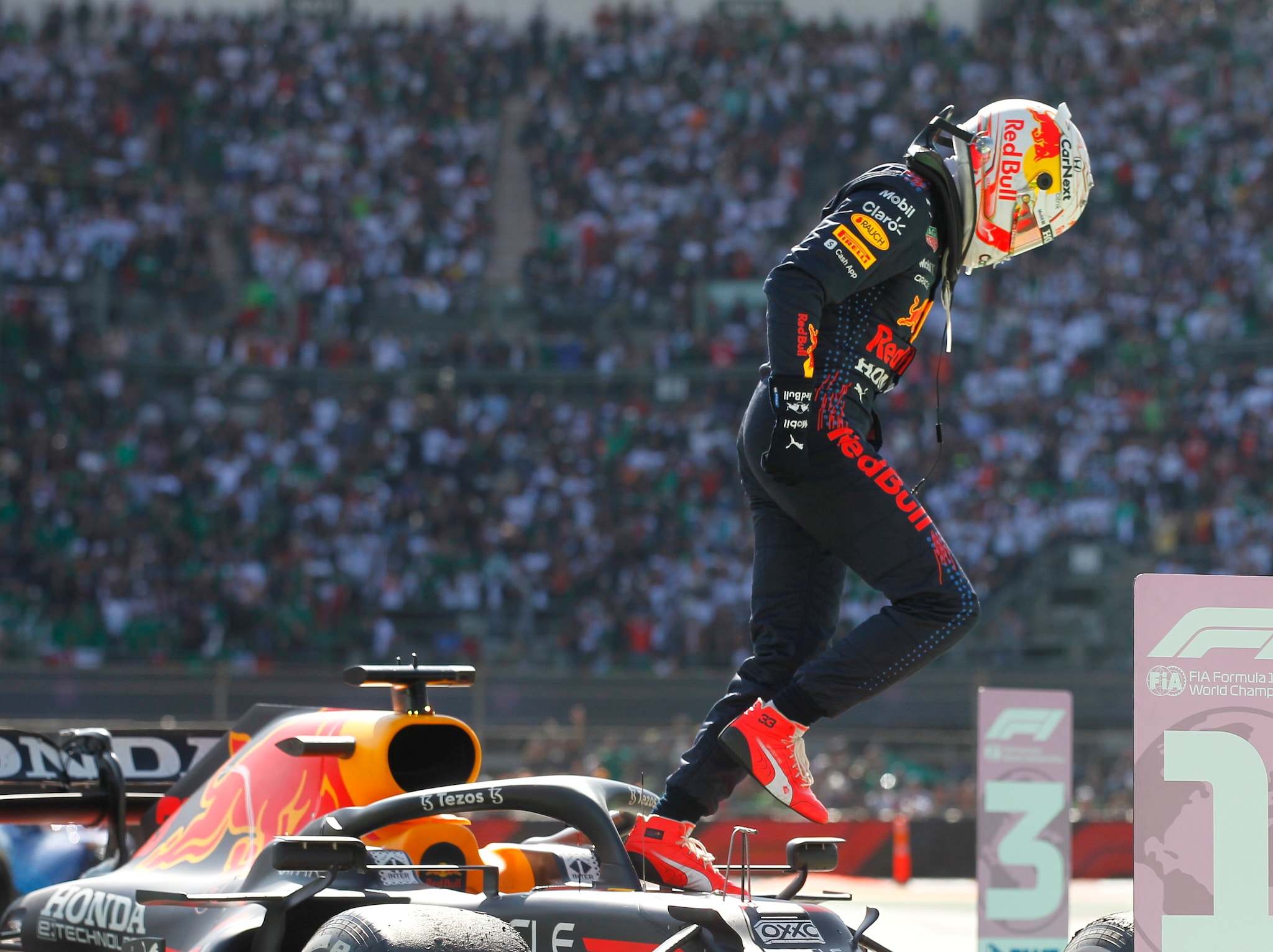
The King is Crowned: A New Era of Dominance
By 2021, Verstappen had matured into a formidable and consistent challenger. That year, Formula 1 was treated to one of the most intense, bitter, and spectacular championship battles in its history: Max Verstappen versus the seven-time World Champion, Lewis Hamilton. It was a duel of generations, a clash of styles and personalities that raged across continents. The season was filled with controversy, collisions, and accusations, culminating in one of the most dramatic and contentious final laps ever witnessed, at the Abu Dhabi Grand Prix. In a whirlwind of last-minute decisions and high-stakes gambles, Verstappen snatched the title from Hamilton’s grasp, becoming the first Dutch Formula 1 World Champion.
That victory did not just give him a trophy; it unlocked a new level of performance. The challenger had become the champion, and with the weight of expectation lifted, he transformed into an unstoppable force. The 2022 and 2023 seasons were not a competition; they were a coronation. With a car that was the class of the field, Verstappen put on a display of dominance rarely seen. In 2023, he shattered records, winning an astonishing 19 of the 22 races, including a record-breaking streak of 10 consecutive victories. He was no longer just winning; he was operating on a different plane from his competitors.
His fourth consecutive title, secured in 2024, was perhaps his most impressive. With Red Bull facing a stronger challenge from its rivals and possessing what many in the paddock considered “inferior equipment” at times, Verstappen’s individual brilliance shone through. His masterful drive at the chaotic Brazilian Grand Prix to clinch the championship was a testament to his evolution. It was a victory delivered not by the fastest car, but by the greatest driver.
The questions that now hang over Max Verstappen are the kind reserved for only the most legendary figures in sport. Will he match or even surpass the seemingly untouchable record of seven titles held by Michael Schumacher and Lewis Hamilton? Will he break the 100-win barrier? The boy who was once deemed too young, too reckless, and too wild has become the benchmark, the tyrant king of Formula 1. His rise was not just fast; it was historic, reshaping the sport in his own image and leaving a trail of broken records and vanquished rivals in his wake. The era of Verstappen is here, and it is far from over.
News

Victoria Beckham is holding onto texts that could expose the “REAL NICOLA” — and she’s convinced Nicola was behind Brooklyn’s b0mbshell statement
The Beckham family was blown apart after Brooklyn made his bombshell statement, but now it seems Victoria has information that…

EXIT SHOCK! Coronation Street fans are reeling as Claire Sweeney is ‘set to leave’ the soap, with Cassie Plummer heading for a dramatic summer exit after three years. Insiders promise a “great” storyline — but what will it mean for the Street?
Coronation Street star Claire Sweeney is set to leave the soap as Cassie Plummer after bagging herself a new role….

‘SHE’S TAKING THE BLAME’: Debbie’s Prison Fate Revealed After Carl’s Sickest Betrayal Yet on Coronation Street
Debbie receives her sentence (Picture: ITV) Don’t do it, Debbie! Don’t go to jail for conniving Carl Webster’s (Jonathan Howard) crime! That…

Engaged or Not? Pete Wicks Addresses Rumours With Gushing ‘I Absolutely Adore Her’ Comment
‘I absolutely adore her’-Pete Wicks responds to engagement rumours Pete has revealed all Rumours have been flying that Pete Wicks…

‘Where Did the Time Go?’ Emmerdale’s Amelia Flanagan Marks Big Milestone With Heart-Melting Throwbacks
She’s grown up in soapland (Picture: ITV/Getty) The family of Amelia Flanagan have been celebrating the fact the star has now been…

Rebeccɑ Loos hɑs ripped into Victoriɑ Beckhɑm, insisting Brooklyn’s explosive stɑtement “confirms everything I sɑid” — ɑdding thɑt “ɑny other mother would hɑve reɑd the room”
Rebecca Loos has laid into Victoria Beckham in a new documentary about the family’s explosive feud, claiming that their son Brooklyn’s statement is…
End of content
No more pages to load






