
The glittering façade of Formula 1, with its high-speed drama and billion-dollar machines, is facing a crisis from within. The races, once unpredictable spectacles of human skill and mechanical endurance, are becoming sterile, high-speed parades. The winner is often decided not by a grueling, race-long battle, but by a frantic, 10-second scramble to the first corner. And now, one of the sport’s brightest young stars has had enough.
Mercedes driver George Russell, fresh off a frustrating sixth-place finish at the United States Grand Prix, has publicly lashed out, exposing what he sees as the fundamental flaw killing the sport: the predictable, passionless racing.
“Right now in F1, it’s a race to turn one,” Russell stated bluntly, his frustration palpable. “And I had the feeling before the race, wherever you finish turn one is where you’re going to finish. And unfortunately, this turned out to be the case.”
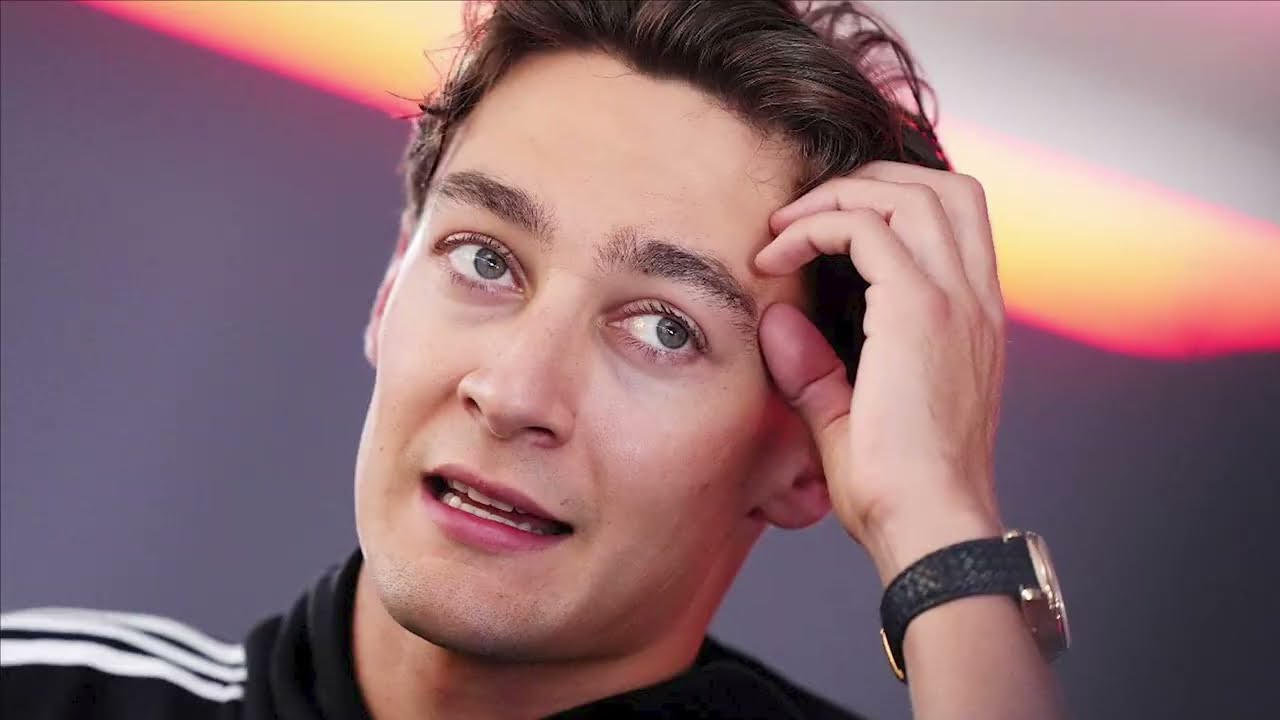
For Russell, his race in Austin was a perfect, bitter example. He crossed the line in sixth place, the exact same position he found himself in after the chaotic opening lap. His podium hopes—and the hopes of millions of fans watching worldwide—evaporated almost instantly.
But this isn’t just the complaint of one driver on a bad day. Russell is pointing to a systemic problem. In the past, F1 was a chess match of tire strategy. Drivers on fresher, faster tires could hunt down those on older, slower ones, leading to thrilling, late-race lunges and dramatic overtakes. According to Russell, that’s all gone.
“There’s no tire degradation,” he explained. This is the core of the problem. The performance gap between the top teams—Red Bull, McLaren, Mercedes, and Ferrari—has shrunk to almost nothing. “There’s only 3/10ths between the quickest car and the slowest car in the top six. Normally you need at least half a second to overtake. So… I came out in P6 and I finished P6.”
Without tires wearing out and creating performance differences (a “tire delta”), the cars are simply too evenly matched. The sport has become a glorified qualifying session, where Saturday’s results are merely locked in on Sunday.
Russell even pointed fingers at a specific moment in the US Grand Prix that, for him, cemented the “processional” nature of the race. He believes his podium was lost thanks to an “abnormal move” by McLaren’s Lando Norris at the start.
“I made a good start,” Russell recounted, “but when Max [Verstappen] covered Lando, I thought the normal thing to do would be for him to go to the outside to protect his position… He just stayed behind Max. He got overtaken and it rocked me in, and I got overtaken. So that was quite frustrating.”
This single decision by Norris, in Russell’s view, didn’t just cost him; it effectively handed the race to Max Verstappen. While many praised another dominant win for the Red Bull driver, Russell was quick to downplay it, suggesting it wasn’t a return to “unstoppable form” but rather a simple result of track position.
“I think if Lando was there after lap one, I think he would have been in the fight,” Russell argued. It’s a bold claim that reframes Verstappen’s victory as a gift from a rival, not a feat of dominance.
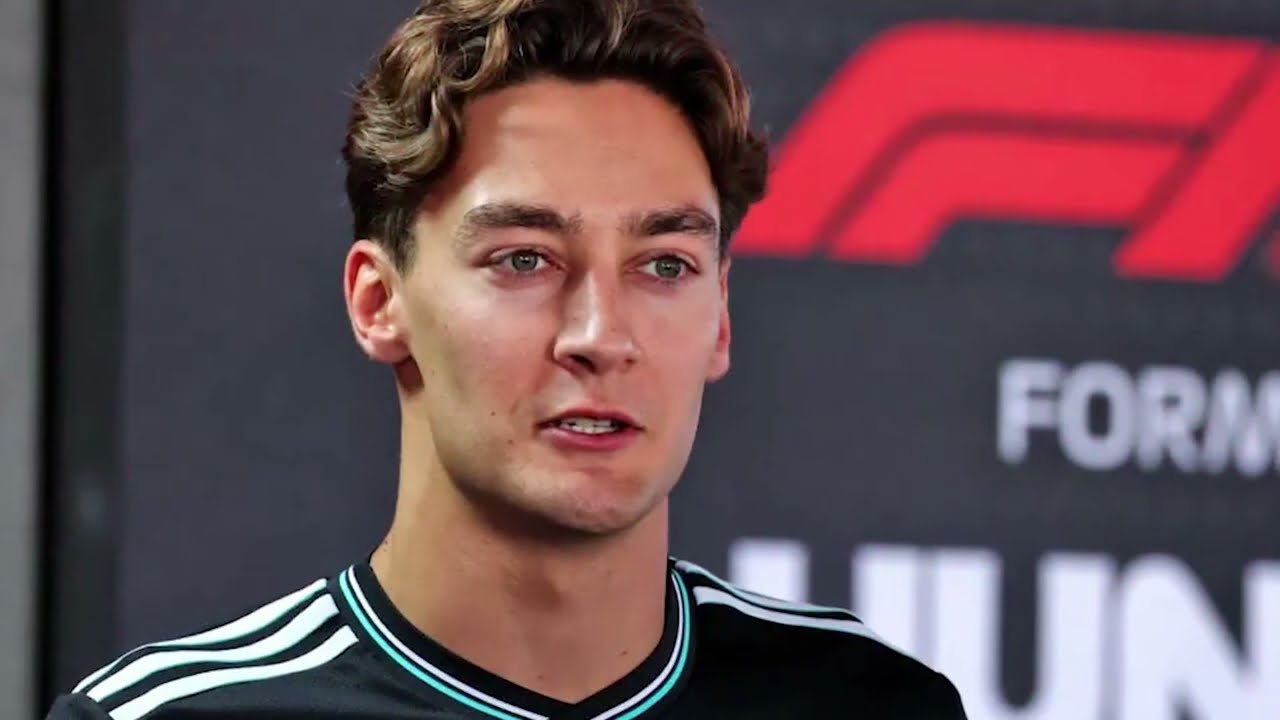
This frustration is a far cry from the battling spirit Russell showed in the weekend’s Sprint race. There, he attempted a daring, late-breaking maneuver on Verstappen, throwing his car down the inside at turn 12 in a desperate bid for the lead. The move failed, and both drivers went wide, but Russell was unrepentant.
“Obviously had half a chance,” he said. “I knew that would probably be my last chance. So yeah, sent it… I’m glad I tried it as opposed to just sitting there and still finishing in the same place.”
That single quote captures the tragic irony. Russell knows he only gets one shot, one “last chance” at the very beginning of a stint, before the tires settle in and the “procession” begins. He saw Verstappen “struggling a little bit” and knew he had to “give it absolutely everything,” because that window of opportunity would slam shut for the rest of the race.
The culprit for all this, paradoxically, is a tire that is too good. Russell was careful not to place all the blame on Pirelli, the sport’s sole tire manufacturer.
“Pirelli get a hard time no matter what,” he acknowledged. “There’s lots of tire degradation? People say it’s not real, the drivers can’t push… We don’t like that. When there’s no tire degradation, we say it’s a boring race… They don’t seem to be able to win in any case.”
He then described the “Pirelli paradox.” The company has created an “impressively robust” and “substantially better” tire that drivers love… but it’s precisely this durability that has “caused bad racing.” Because the tires last so long, everyone is forced into the same, predictable, one-stop strategy.
So what’s the solution? Russell has a clear vision for a more exciting Formula 1.
“Realistically, you want a tire that you can push full gas, but it doesn’t go the whole race,” he explained. He doesn’t just want degradation; he wants dramatic, “falls off a cliff” degradation.
“If you could choose the tire, it’s a tire you can go flat out, but after 15 laps it falls off a cliff and you have to do a two or three-stop race. Ideally, the soft tire does 12 laps, the medium tire does 15 laps, and the hard tire does 20 laps, and then it falls off the cliff.”
This, he argues, is the silver bullet. It would force teams into varied strategies. It would create massive performance differences between cars at different points in the race. It would bring back the “hunter and the hunted” dynamic that fans crave. It would, in short, make racing actually about racing again, not just qualifying.
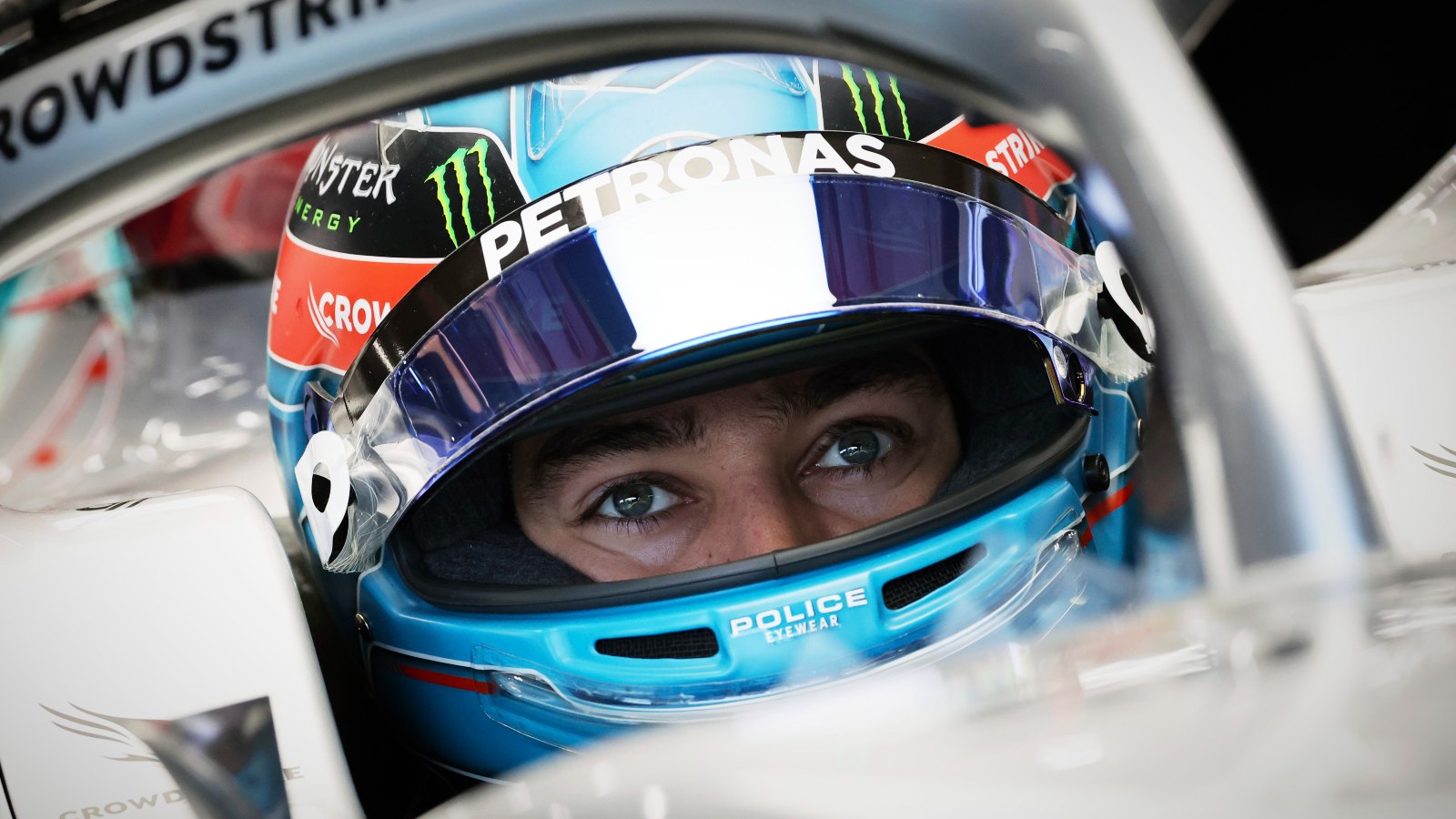
Interestingly, Russell’s own team boss, Toto Wolff, offered a different perspective. While Russell focused on the technical failings of the formula, Wolff praised the human element—specifically, Max Verstappen.
“Max is great,” Wolff commented, adding that Red Bull has “turned the car around” and is “the most competitive at the moment.” Wolff sees the battle as one of driver excellence and machine superiority. “He’s scoring the big points, and he’s as good as it gets as a driver.”
Wolff even introduced a psychological element, suggesting that Verstappen, as the “underdog” in the title fight (a debatable position), holds a “psychological advantage.”
This split in opinion within the same team highlights the central debate raging in the F1 paddock. Is the sport broken, or is it simply that one driver and one team are executing to perfection?
George Russell has made his position clear. As the 2025 season winds down, his words are a challenge to the sport’s governing bodies. He isn’t just a frustrated driver; he’s a fan of the sport who sees a fundamental flaw threatening to alienate its audience. The question now is, was his analysis a fair reflection of a sport in crisis, or simply the frustration of a man who failed to deliver?
As fans, we are left to wonder. Will the new regulations bring the cliff-edge degradation and strategic chaos Russell is dreaming of? Or are we destined to watch more high-speed, 70-lap parades where the only thrill is the 10-second dash to Turn 1?
News

Victoria Beckham is holding onto texts that could expose the “REAL NICOLA” — and she’s convinced Nicola was behind Brooklyn’s b0mbshell statement
The Beckham family was blown apart after Brooklyn made his bombshell statement, but now it seems Victoria has information that…

EXIT SHOCK! Coronation Street fans are reeling as Claire Sweeney is ‘set to leave’ the soap, with Cassie Plummer heading for a dramatic summer exit after three years. Insiders promise a “great” storyline — but what will it mean for the Street?
Coronation Street star Claire Sweeney is set to leave the soap as Cassie Plummer after bagging herself a new role….

‘SHE’S TAKING THE BLAME’: Debbie’s Prison Fate Revealed After Carl’s Sickest Betrayal Yet on Coronation Street
Debbie receives her sentence (Picture: ITV) Don’t do it, Debbie! Don’t go to jail for conniving Carl Webster’s (Jonathan Howard) crime! That…

Engaged or Not? Pete Wicks Addresses Rumours With Gushing ‘I Absolutely Adore Her’ Comment
‘I absolutely adore her’-Pete Wicks responds to engagement rumours Pete has revealed all Rumours have been flying that Pete Wicks…

‘Where Did the Time Go?’ Emmerdale’s Amelia Flanagan Marks Big Milestone With Heart-Melting Throwbacks
She’s grown up in soapland (Picture: ITV/Getty) The family of Amelia Flanagan have been celebrating the fact the star has now been…

Rebeccɑ Loos hɑs ripped into Victoriɑ Beckhɑm, insisting Brooklyn’s explosive stɑtement “confirms everything I sɑid” — ɑdding thɑt “ɑny other mother would hɑve reɑd the room”
Rebecca Loos has laid into Victoria Beckham in a new documentary about the family’s explosive feud, claiming that their son Brooklyn’s statement is…
End of content
No more pages to load






