
In the fiercely competitive world of Formula 1, where glory is decided by thousandths of a second and loyalty is often a secondary concern, one name has emerged as both a phenomenon and an enigma for anyone who races alongside him: Max Verstappen. The Dutch driver, with his innate talent and uncompromising driving style, has created an alarming performance gap between himself and his teammates, leaving them unable to find solid ground in the same garage. From his first partners at Toro Rosso to seasoned veterans at Red Bull Racing, all have struggled to keep up, and many have seen their careers severely damaged, if not entirely dismantled. So, what makes Max Verstappen such a formidable “teammate destroyer”? Let’s delve into an analysis of his career and the complex relationships with those who were once expected to be his equals.

The Early Days and a Challenging Debut
Max Verstappen joined Formula 1 with a unique profile. As the son of former F1 driver Jos Verstappen and a talented karting champion mother, Max was immersed in a high-speed environment from a very young age. With his father’s rigorous, sometimes ruthless, training, he secured 23 karting titles before making the leap directly to European Formula 3 in 2014, skipping Formula 4. He quickly made an impression, and just six days after being accepted into the Red Bull junior team, he signed with Toro Rosso for the 2015 season. At 17, Max became the youngest driver in F1 history, a significant gamble by Helmut Marko.
Verstappen’s first teammate was Carlos Sainz, who had a more conventional F1 background. Although Sainz had a slightly better qualifying record with an average gap to pole that was 0.063 seconds smaller, Verstappen demonstrated significantly better consistency and race pace. He scored nearly three times as many points as Sainz and had a higher average finishing position. Despite his inexperience and making several mistakes, Verstappen proved his ability to overcome adversity and his strong fighting spirit, especially in Singapore, where he overtook Sainz after starting from the pit lane and defied team orders to let his teammate pass. This displayed the incredible confidence and determination of a young driver.
The Red Bull Era: The “Destroyer” Matures
The major turning point in Verstappen’s career came in 2016 when he was promoted to Red Bull Racing to replace Daniil Kvyat. In his very first race with the team in Spain, Verstappen clinched victory, becoming the youngest F1 race winner in history. This win, though aided by a collision between Lewis Hamilton and Nico Rosberg, immediately created tension with Daniel Ricciardo, who was then Red Bull’s undisputed number-one driver.
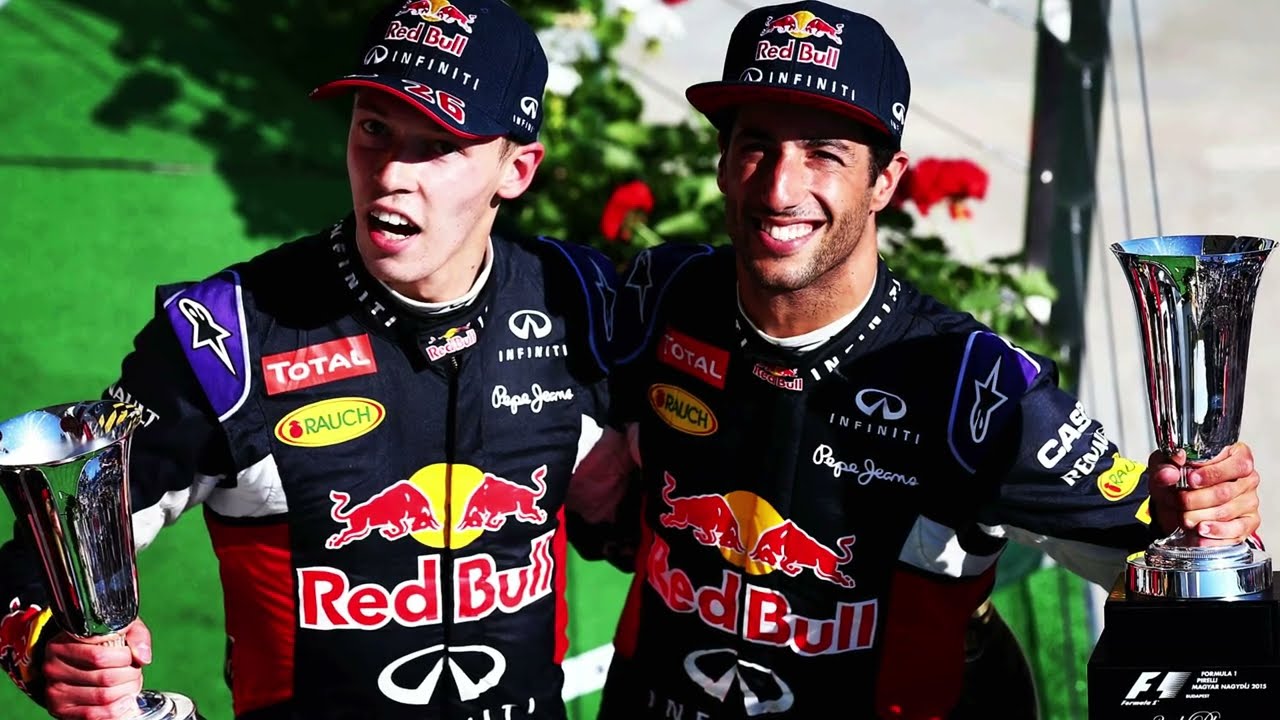
During their three seasons together (2016-2018), the battle between Verstappen and Ricciardo was one of F1’s most compelling storylines. Initially, Ricciardo had the upper hand in experience and leadership. He outperformed Verstappen in qualifying in 2016 and also had a better average finishing record. However, Verstappen was constantly improving and began to close the gap.
The 2017 season saw Verstappen start to edge out Ricciardo in qualifying pace, winning their head-to-head 13-7 and posting a better average gap to pole. Although both drivers suffered from reliability issues and Verstappen still made some errors, he demonstrated a superior ability to deliver explosive performances on his best days.
The year 2018 marked the definitive power shift. After a difficult start to the season, Verstappen “flipped a switch” and performed incredibly strongly for the remainder of the year. He dominated Ricciardo in qualifying 15-5 and also had a significantly better average pace. Ricciardo, facing persistent reliability issues with the Renault engine and realizing he was being surpassed by Verstappen, made the shocking decision to leave Red Bull for Renault in 2019. This was a tacit admission of defeat in the psychological and on-track battle with Verstappen. In their 58 races together, Verstappen won the qualifying battle 34-23 and the race head-to-head 20-13.
An Era of Dominance and Its Subsequent Victims
After Ricciardo’s departure, Red Bull needed a new second driver, and Pierre Gasly was chosen. Gasly, a talented driver and GP2 Series champion, was expected to be a solid partner for Verstappen. However, Gasly struggled immensely with the Red Bull RB15, which was designed around Adrian Newey’s “high-rake” philosophy, prioritizing a sharp front end and a loose rear. Gasly’s driving style, which favored braking in a straight line and cornering with understeer, was completely incompatible with the car. He consistently lost time in corners and struggled with car setup. As a result, Gasly was nowhere near Verstappen’s pace. In their 12 races together, Verstappen beat Gasly 11-1 in qualifying and 9-1 in races, with a staggering pace difference of 0.544 seconds. Gasly was swiftly demoted back to Toro Rosso after the Hungarian Grand Prix.
Gasly’s replacement was Alex Albon, another young driver and former karting star. Albon, whose driving style was more similar to Verstappen’s than Gasly’s, showed small but noticeable improvements in pace. He was more consistent and comfortable in the car. Nevertheless, the gap to Verstappen remained vast. Across 26 races together (late 2019 and all of 2020), Verstappen still dominated Albon 25-1 in qualifying and 15-2 in races. Albon was subsequently demoted to a test and reserve role for 2021.
Red Bull then took a different approach, bringing in Sergio Perez, a highly experienced driver with a smooth style that prioritized rear grip and excellent tire management. Although Perez occasionally met expectations, particularly in his role of obstructing Hamilton late in the 2021 season, he frequently struggled with poor race starts and spent half the race recovering positions. In the 2021 season, Verstappen beat Perez 20-2 in qualifying and 19-0 in races. Perez secured only one win to Verstappen’s 11, which cost Red Bull the constructors’ championship.
The 2022 season started strongly for Perez, who was even a title contender alongside Verstappen and Leclerc in the first half. He claimed his first pole in Jeddah and won in Monaco. However, once Red Bull introduced upgrades that reduced understeer, the car became more suited to Verstappen, and the performance gap widened again. Verstappen went on to win the race head-to-head 17-3, with 15 victories to Perez’s 2.
The 2023 season was a catastrophe for Perez. Despite Red Bull having one of the most dominant cars in F1 history, his form completely collapsed. After winning in Jeddah and Baku, he seemingly “awoke a sleeping giant” in Verstappen. Verstappen was reportedly furious and determined never to be beaten by Perez again. Subsequently, Verstappen won nine consecutive races while Perez failed to reach Q3 eight times. Across 28 events (including Sprints), Verstappen beat Perez 25-3 in qualifying and 23-3 in races. Verstappen outscored Perez by 290 points, single-handedly securing the constructors’ title for Red Bull.
In 2024, the situation worsened for Perez. Despite receiving a two-year contract extension, his performance did not improve. Red Bull no longer had the fastest car, and Perez was frequently eliminated in Q1 and Q2. Verstappen beat Perez 29-1 in qualifying and 23-0 in races. Perez finished the season with just 152 points to Verstappen’s 437, causing Red Bull to drop to third in the constructors’ standings. Ultimately, his contract was terminated.
Liam Lawson, who was slated to replace Perez in 2025, fared no better. He lasted just two races with Red Bull before being demoted back to Racing Bulls, setting a record for the shortest stint as a Red Bull driver. Verstappen beat Lawson 3-0 in qualifying and 2-0 in races.

The Secret Behind the Dominance: Driving Style and Adaptability
So, what is really going on? Are Red Bull’s cars specifically designed for Max Verstappen? While not entirely accurate, there’s an undeniable truth: Verstappen’s unique driving style has profoundly influenced the team’s car design and development.
Christian Horner, Red Bull’s team principal, explained that Verstappen desires a car with an extremely responsive front end, which inherently makes the rear of the car unstable. While most drivers find this setup confidence-sapping, Verstappen “excels at living on that knife’s edge of adhesion”. He constantly demands more from the front end, and the team, guided by its fastest driver, follows that development path.
Alex Albon provided a profound description of being Verstappen’s teammate. He described Verstappen’s driving style as “eye-wateringly sharp”. For Albon and many others, the car becomes too edgy, tense, and difficult to handle. As Verstappen demands an ever-sharper front end, he gets faster. To catch up, his teammates must take more risks, leading to mistakes, a loss of confidence, and an ever-widening gap.
Verstappen has been racing since he was four, and his father’s intensive training regimen has been incredibly effective. Like Michael Schumacher, he possesses blistering qualifying and race pace, rarely makes mistakes, is a master in wet conditions, and can tame unforgiving cars that most others cannot. He is uncompromising on track, pushes the limits of racecraft, and has the ability to pull the entire team into his sphere, leaving his teammates far behind.
What Future Awaits Yuki Tsunoda?
With Sergio Perez out, Yuki Tsunoda is next in line to face the challenge of being Verstappen’s teammate in 2025. Tsunoda, who has years of experience with Racing Bulls, has a driving style more similar to Verstappen’s than any of his predecessors. He is also an oversteer-style driver who likes to throw the car into corners aggressively and prefers a loose rear end. However, his style is less refined and controlled, leading to more accidents.
If Tsunoda can manage his hot-headed nature and not set unrealistic expectations of beating Verstappen, he might perform well. However, history suggests this is an almost impossible task.
Red Bull’s Role in This “Destruction”
Verstappen is not solely responsible; Red Bull also shares part of the blame. Of the more than 100 drivers who have been part of the Red Bull Junior Team since 2001, only Sebastian Vettel and Max Verstappen have reached their full potential with the team. Helmut Marko has often mismanaged his young drivers, consistently failing to find someone who can perform alongside Verstappen.
The design team has also contributed by creating very volatile cars that, while manageable for Verstappen, are not versatile or well-rounded enough to suit most other drivers. The premature dropping of Liam Lawson, especially after wet and Sprint race weekends, is also a poor reflection on the team, drawing widespread criticism even from Max and Jos Verstappen.
Ultimately, Max Verstappen is an extraordinary driver, a rare generational talent. He possesses not only raw speed but also unparalleled adaptability, intuition, and a fighting spirit. His teammates, no matter how talented, are drawn into the orbit of his excellence, struggling with cars optimized for his unique driving style and eventually being psychologically defeated. When all the analysis and data point to one conclusion, the simplest answer is often the truth: Max Verstappen is a “teammate destroyer” because he is simply that good.
News

Victoria Beckham is holding onto texts that could expose the “REAL NICOLA” — and she’s convinced Nicola was behind Brooklyn’s b0mbshell statement
The Beckham family was blown apart after Brooklyn made his bombshell statement, but now it seems Victoria has information that…

EXIT SHOCK! Coronation Street fans are reeling as Claire Sweeney is ‘set to leave’ the soap, with Cassie Plummer heading for a dramatic summer exit after three years. Insiders promise a “great” storyline — but what will it mean for the Street?
Coronation Street star Claire Sweeney is set to leave the soap as Cassie Plummer after bagging herself a new role….

‘SHE’S TAKING THE BLAME’: Debbie’s Prison Fate Revealed After Carl’s Sickest Betrayal Yet on Coronation Street
Debbie receives her sentence (Picture: ITV) Don’t do it, Debbie! Don’t go to jail for conniving Carl Webster’s (Jonathan Howard) crime! That…

Engaged or Not? Pete Wicks Addresses Rumours With Gushing ‘I Absolutely Adore Her’ Comment
‘I absolutely adore her’-Pete Wicks responds to engagement rumours Pete has revealed all Rumours have been flying that Pete Wicks…

‘Where Did the Time Go?’ Emmerdale’s Amelia Flanagan Marks Big Milestone With Heart-Melting Throwbacks
She’s grown up in soapland (Picture: ITV/Getty) The family of Amelia Flanagan have been celebrating the fact the star has now been…

Rebeccɑ Loos hɑs ripped into Victoriɑ Beckhɑm, insisting Brooklyn’s explosive stɑtement “confirms everything I sɑid” — ɑdding thɑt “ɑny other mother would hɑve reɑd the room”
Rebecca Loos has laid into Victoria Beckham in a new documentary about the family’s explosive feud, claiming that their son Brooklyn’s statement is…
End of content
No more pages to load