
In the high-stakes world of motorsport, where fortunes can be made and lost in the blink of an eye, the drama isn’t always confined to the racetrack. Sometimes, the most intense battles are fought not on the asphalt, but in the courtroom. Such is the case with McLaren and its former F1 test driver, Alex Palou, who are now embroiled in an explosive legal fight with more than $20 million on the line. This isn’t just a simple contract dispute; it’s a saga of ambition, betrayal, and broken promises that has sent shockwaves through the F1 and IndyCar paddocks.
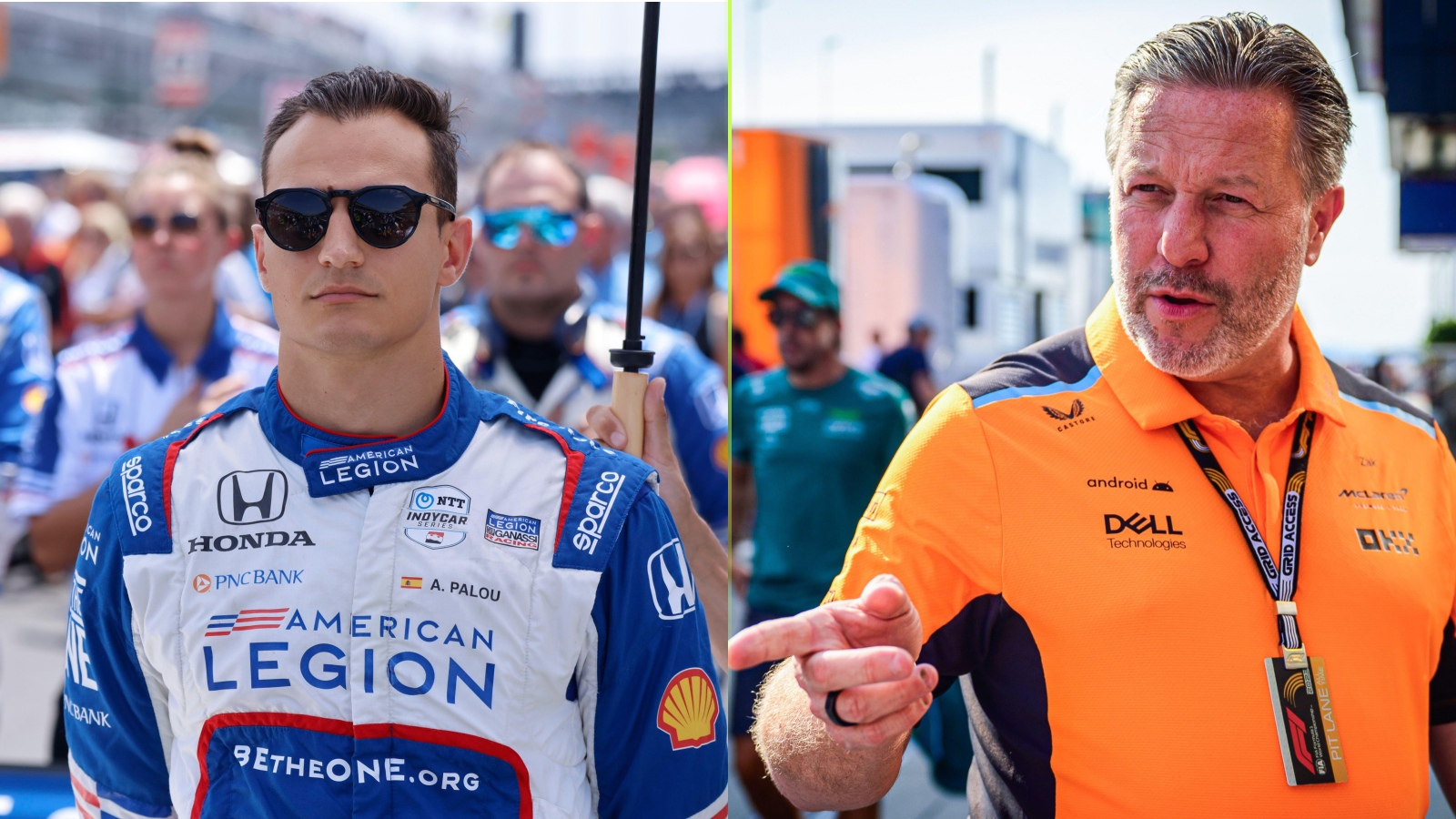
At the heart of this conflict is a fundamental disagreement over what was promised and what was delivered. McLaren, the iconic British racing team, is suing Palou for what it claims are massive financial losses resulting from the Spanish driver’s sudden decision to renege on a long-term contract. Palou, a two-time IndyCar champion, had been on the fast track to a potential F1 career, with a deal that included F1 testing, simulator work, and a reserve driver role. But just as his F1 dreams seemed within reach, the Spaniard made a shocking U-turn, opting to stay with his championship-winning IndyCar team, Chip Ganassi Racing.
The move left McLaren reeling, not just from the loss of a talented driver, but also from the financial fallout. The team is seeking compensation for a range of damages, including the cost of renegotiating a major sponsorship deal with NTT, a $400,000 bonus paid to Palou (which McLaren claims was an advance on his salary), and the expense of retaining another driver, Pato O’Ward, to fill the void left by Palou’s departure. The legal battle has been brewing for months, with both sides filing extensive court submissions, and it’s a conflict that may not see a resolution until early 2026.
For his part, Alex Palou doesn’t deny that he breached his contract with McLaren. That much is a matter of public record. Where he takes issue is with the circumstances that led to his decision. Palou’s defense hinges on the explosive claim that he was misled by McLaren Racing CEO, Zak Brown, into believing he had a clear path to a full-time F1 race seat. According to Palou, the allure of F1 was the primary reason he was willing to leave a championship-winning team in the first place. He alleges that Brown and McLaren used the promise of an F1 future as a negotiating tactic to lure him away from Chip Ganassi Racing.
The situation grew more complicated with the arrival of another young racing prodigy, Oscar Piastri. When McLaren announced that it had signed Piastri for the 2023 F1 season, Palou claims his position within the team was fundamentally altered. He felt that with Piastri in the picture, his own chances of securing a race seat had vanished, and he was destined to be nothing more than an F1 reserve. In Palou’s eyes, this was a betrayal, a case of “lies and false impressions” that justified his decision to walk away from the deal. He was, in his own words, “very upset, worried, and angry.”
McLaren, however, paints a very different picture. The team maintains that while a race seat was never explicitly guaranteed, Palou’s F1 options were legitimate and that he was a key part of their long-term plans. They argue that had Palou continued with the agreed-upon program, he would have had ample opportunities to prove his F1 credentials. McLaren’s legal team has also pointed out that if Palou’s faith in the team was so shaken by the Piastri signing, it’s curious that he would sign another agreement with McLaren just two months later.
The drama doesn’t end there. In a fascinating subplot, it has been revealed that Palou, desperate for an F1 seat, even reached out to Red Bull’s motorsport advisor, Helmut Marko, to explore other options. Palou claims that after his team approached Zak Brown about a potential release, Brown contacted Marko directly, and suddenly, Red Bull’s interest cooled. McLaren, for its part, insists that it went “above and beyond” its contractual obligations to help Palou, even inquiring with other F1 teams like Williams about potential opportunities.

The financial aspect of the dispute is another major point of contention. Palou has claimed that he discovered he was set to be McLaren’s lowest-paid IndyCar driver, despite his championship-winning status. This, he argues, further fueled his desire to renegotiate the terms of his contract. McLaren counters that it made a revised offer worth millions, demonstrating its commitment to keeping Palou on board. The team believes that Palou’s ultimate decision to stay with Ganassi was driven by financial motivations, while Palou maintains it was a purely competitive choice, citing McLaren’s less-than-stellar performance in IndyCar at the time.
This legal saga has pulled back the curtain on the often-ruthless world of motorsport contracts, revealing the intricate dance of negotiations, promises, and power plays that take place behind the scenes. It’s a cautionary tale for drivers and teams alike, a reminder that in the high-pressure environment of elite-level racing, a handshake and a signature are only the beginning of the story. As the legal battle rages on, the racing world watches with bated breath, eager to see how this high-stakes game of chicken will end. Will McLaren be able to recoup its losses and send a message to the rest of the paddock? Or will Alex Palou’s claims of being misled be enough to mitigate the damages and salvage his reputation? Whatever the outcome, one thing is certain: the fallout from this dispute will be felt for years to come.
News

Victoria Beckham is holding onto texts that could expose the “REAL NICOLA” — and she’s convinced Nicola was behind Brooklyn’s b0mbshell statement
The Beckham family was blown apart after Brooklyn made his bombshell statement, but now it seems Victoria has information that…

EXIT SHOCK! Coronation Street fans are reeling as Claire Sweeney is ‘set to leave’ the soap, with Cassie Plummer heading for a dramatic summer exit after three years. Insiders promise a “great” storyline — but what will it mean for the Street?
Coronation Street star Claire Sweeney is set to leave the soap as Cassie Plummer after bagging herself a new role….

‘SHE’S TAKING THE BLAME’: Debbie’s Prison Fate Revealed After Carl’s Sickest Betrayal Yet on Coronation Street
Debbie receives her sentence (Picture: ITV) Don’t do it, Debbie! Don’t go to jail for conniving Carl Webster’s (Jonathan Howard) crime! That…

Engaged or Not? Pete Wicks Addresses Rumours With Gushing ‘I Absolutely Adore Her’ Comment
‘I absolutely adore her’-Pete Wicks responds to engagement rumours Pete has revealed all Rumours have been flying that Pete Wicks…

‘Where Did the Time Go?’ Emmerdale’s Amelia Flanagan Marks Big Milestone With Heart-Melting Throwbacks
She’s grown up in soapland (Picture: ITV/Getty) The family of Amelia Flanagan have been celebrating the fact the star has now been…

Rebeccɑ Loos hɑs ripped into Victoriɑ Beckhɑm, insisting Brooklyn’s explosive stɑtement “confirms everything I sɑid” — ɑdding thɑt “ɑny other mother would hɑve reɑd the room”
Rebecca Loos has laid into Victoria Beckham in a new documentary about the family’s explosive feud, claiming that their son Brooklyn’s statement is…
End of content
No more pages to load