
The Formula 1 paddock is no stranger to high-stakes drama, but the story unfolding at McLaren is rapidly escalating from a championship charge into a full-blown crisis. What just weeks ago looked like a confident march toward dual titles has suddenly become a “major wobble,” a precarious balancing act threatening to send the entire organization tumbling. The team is now fighting battles on three fronts: a resurgent, relentless rival in Max Verstappen, a deeply concerning performance slump from their championship leader, and the most cardinal sin in motorsport—their own two drivers crashing into each other.
The warning bells, which had been ringing faintly, became a deafening siren at the United States Grand Prix. In a single, disastrous moment at turn one of the sprint race, McLaren’s season-long narrative of unity and dominance fractured. Lando Norris and Oscar Piastri, teammates and, until recently, harmonious partners in success, came together in a spray of carbon fiber. The incident was not just embarrassing; it was catastrophic. It immediately allowed their chief rival, Verstappen, to slice eight points from their lead.
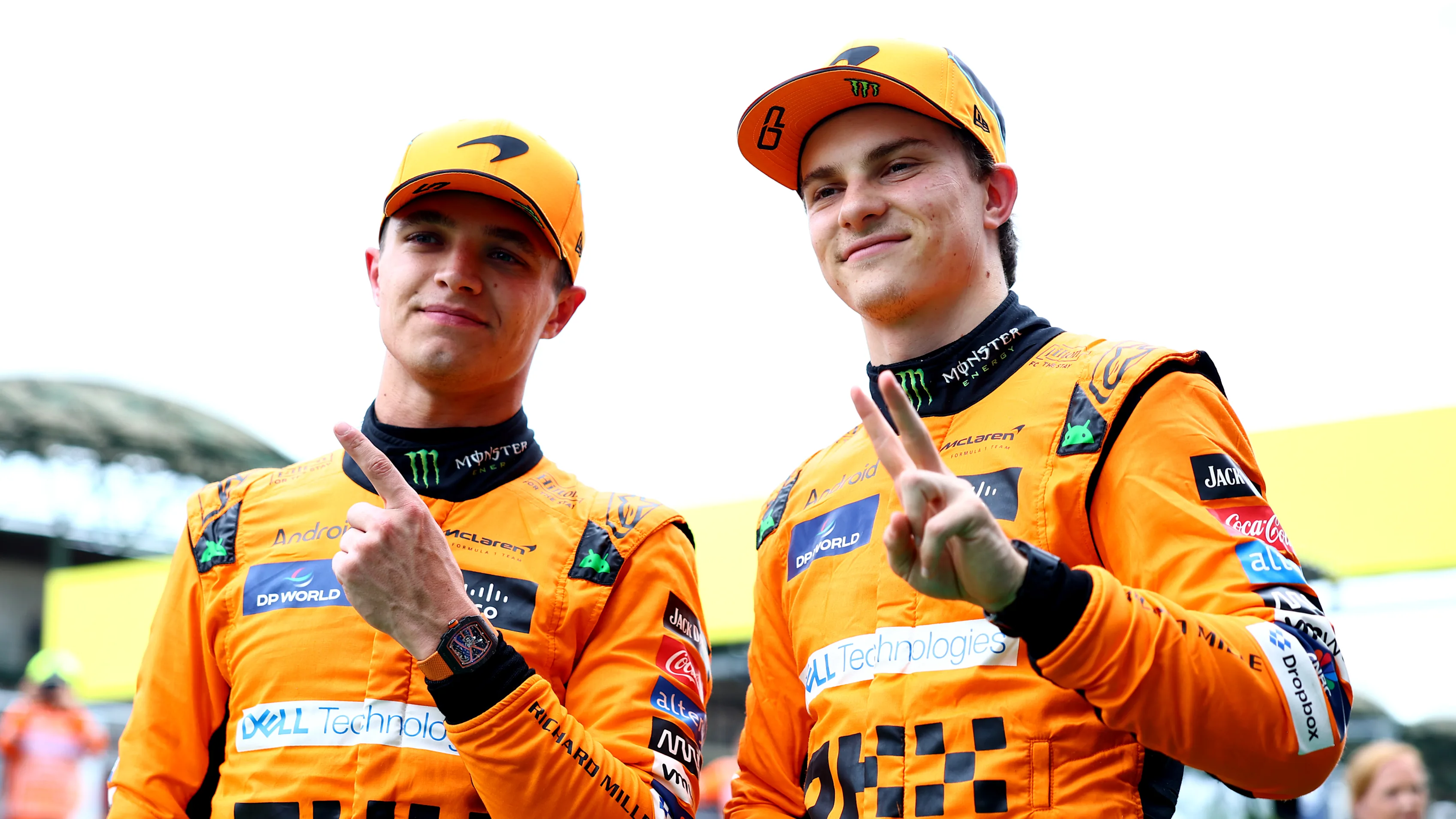
More damaging, however, was the data. On a sprint weekend, where practice time is already slashed to a bare minimum, that collision cost McLaren its only significant long-run data. Team boss Andrea Stella later admitted the devastating impact. The team went into Sunday’s Grand Prix effectively blind, unable to optimize the car or build driver confidence. The result was predictable: both drivers complained of tire issues within the first 10 laps, their car’s key strength—tire management—vanishing before their eyes.
This wasn’t an isolated incident. The Austin crash was a horrifying echo of their collision at the Canadian Grand Prix. Twice in one season, the two men supposedly fighting for the same goal have compromised each other, handing a golden opportunity to the one man who needs no help: Max Verstappen.
While McLaren has been busy battling itself, Verstappen and Red Bull have undergone a terrifying revival. Earlier in the season, Verstappen himself was dismissing any talk of a championship. Now, after winning three of the last four Grands Prix, his tune has completely changed. He sees blood in the water. The hunter, once distant, is now just 40 points behind Piastri with five races and two sprints to go. He has clawed back an astonishing 64 points in just four weekends. The momentum in this title fight has not just shifted; it has swung with the force of a wrecking ball.
Red Bull’s turnaround is a technical marvel. Since the summer break, a series of upgrades, particularly a reconfigured front wing, have transformed the RB21. The car that was once finicky is now, in Verstappen’s words, “so much more planted.” He can attack corners with a confidence that was missing, finding a perfect balance. In Austin qualifying, Red Bull’s superiority was undeniable, with Stella conceding a two-tenth-of-a-second deficit. Verstappen and his team, once on the back foot, have been “basically flawless.” They are executing their weekends with a clinical, ruthless precision that McLaren is suddenly, painfully, lacking.
As if the external threat of a resurgent champion wasn’t enough, McLaren is contending with a profound internal crisis. Oscar Piastri, the young Australian who has been a revelation all season and still leads the championship, is in a “proper funk.”

The US Grand Prix was an uncharacteristically poor weekend for Piastri. He was adrift of his teammate, lacking confidence, and bleeding lap time. He struggled with the bumpy circuit, unable to commit on the brakes or find a rhythm. This wasn’t just a bad day; it was the continuation of a deeply worrying trend. It marked the fourth consecutive race where Piastri was outscored by both his teammate Norris and his rival Verstappen.
This is the nightmare scenario for any team: the driver with the most points is on the worst run of form. Piastri’s struggles are so unusual that the team is reportedly stripping his car down to ensure nothing is mechanically wrong. But the issue appears to be one of confidence. On a track that demands drivers push to the absolute limit, Piastri couldn’t find it. This dip in form has come at the worst possible moment, opening the door not only for Verstappen but also for his own teammate.
This brings us to the final, combustible element in McLaren’s crisis: the team’s driver-management philosophy. Andrea Stella has remained steadfast in his refusal to impose team orders. He wants his drivers to be “free to race,” a laudable and sporting position. But this philosophy is now being tested to its breaking point. By letting them race, McLaren is allowing Norris and Piastri to take valuable points off each other.
Every point Norris finishes ahead of Piastri is a direct gift to Max Verstappen. The math is brutal. There are 141 points left on the table. Verstappen, while closing fast, doesn’t completely control his own destiny. He still needs help. And McLaren, by refusing to manage their drivers, is giving him exactly the help he needs. If this trend continues—Verstappen winning, with Norris finishing ahead of Piastri—the championship lead will evaporate. Verstappen would, in fact, become champion.
The scrappier the intra-team battle at McLaren becomes, the quicker Verstappen will close. He is an apex predator, and his prey is now wounded and fighting itself. Red Bull’s Helmut Marko has suggested that Verstappen’s attention drifted when his car wasn’t competitive. Now, with a winning machine beneath him and his rivals in disarray, he is at “maximum motivation and commitment.”
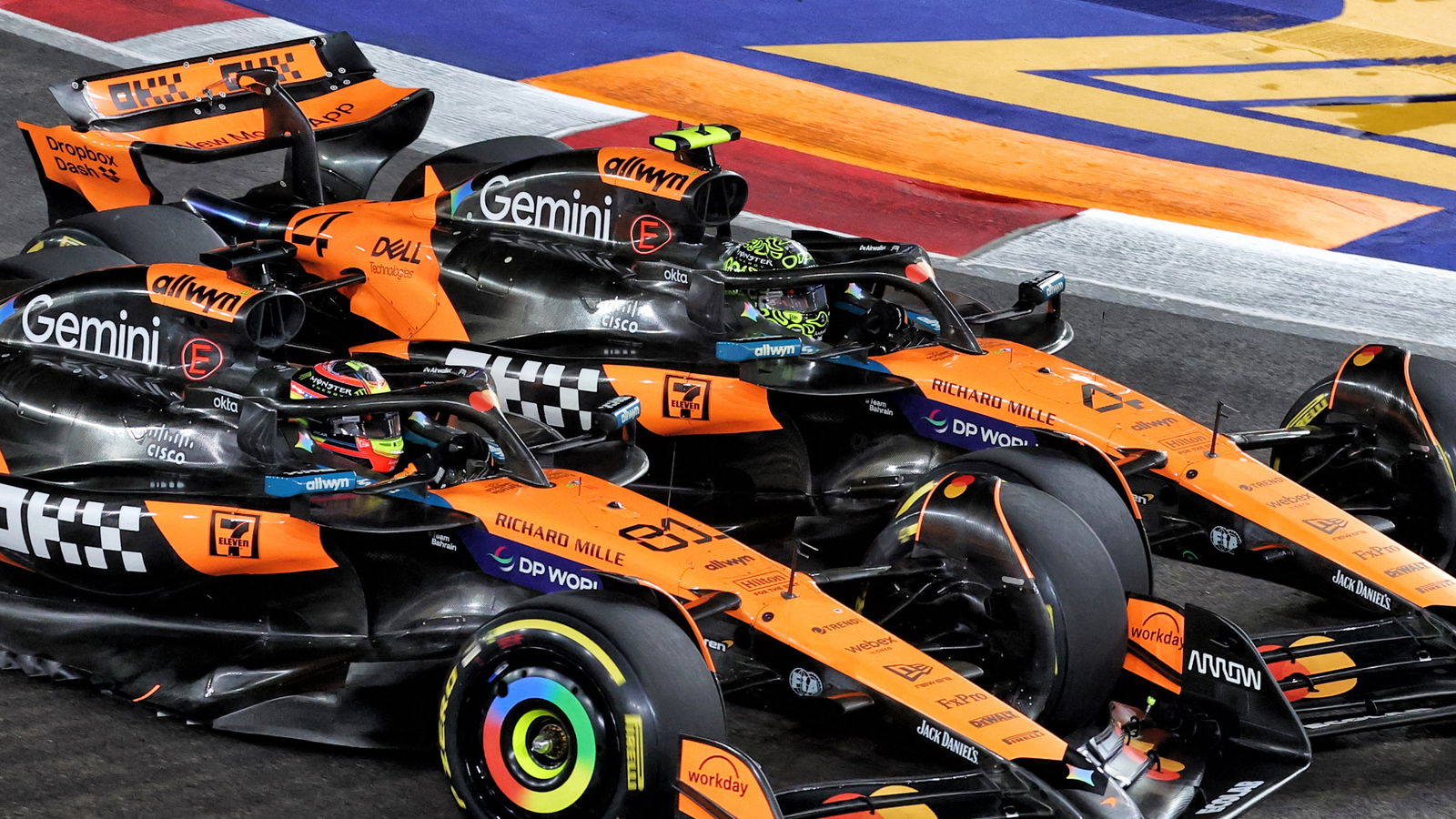
McLaren’s message is one of calm. Stella insists the team is still in control, that it just needs to execute “a cleaner job.” But having the right mindset is not the same as delivering results on the track. The pressure is now immense. Piastri must find a way to break out of his psychological “funk” and rediscover the form that built his championship lead. Lando Norris, with a teammate faltering, is in the complex position of chasing his own victories while knowing each one may doom his team’s championship hopes.
And Andrea Stella must confront the most difficult question a team boss can face: does he stick to his principles of letting his drivers race, or does he make the unpopular call to protect his lead driver and, just perhaps, save his team’s championship?
The season is not over. McLaren still has the points lead and a car that is, on its day, tremendously fast. But the cracks are no longer just visible; they are gaping. The team is wobbling, their champion is struggling, and the most relentless driver in modern F1 history is on an “absolute tear.” What happens in the next few races will not only define the 2025 F1 season but will also serve as a legacy-defining test of character for everyone in orange.
News

Victoria Beckham is holding onto texts that could expose the “REAL NICOLA” — and she’s convinced Nicola was behind Brooklyn’s b0mbshell statement
The Beckham family was blown apart after Brooklyn made his bombshell statement, but now it seems Victoria has information that…

EXIT SHOCK! Coronation Street fans are reeling as Claire Sweeney is ‘set to leave’ the soap, with Cassie Plummer heading for a dramatic summer exit after three years. Insiders promise a “great” storyline — but what will it mean for the Street?
Coronation Street star Claire Sweeney is set to leave the soap as Cassie Plummer after bagging herself a new role….
‘SHE’S TAKING THE BLAME’: Debbie’s Prison Fate Revealed After Carl’s Sickest Betrayal Yet on Coronation Street
Debbie receives her sentence (Picture: ITV) Don’t do it, Debbie! Don’t go to jail for conniving Carl Webster’s (Jonathan Howard) crime! That…

Engaged or Not? Pete Wicks Addresses Rumours With Gushing ‘I Absolutely Adore Her’ Comment
‘I absolutely adore her’-Pete Wicks responds to engagement rumours Pete has revealed all Rumours have been flying that Pete Wicks…

‘Where Did the Time Go?’ Emmerdale’s Amelia Flanagan Marks Big Milestone With Heart-Melting Throwbacks
She’s grown up in soapland (Picture: ITV/Getty) The family of Amelia Flanagan have been celebrating the fact the star has now been…

Rebeccɑ Loos hɑs ripped into Victoriɑ Beckhɑm, insisting Brooklyn’s explosive stɑtement “confirms everything I sɑid” — ɑdding thɑt “ɑny other mother would hɑve reɑd the room”
Rebecca Loos has laid into Victoria Beckham in a new documentary about the family’s explosive feud, claiming that their son Brooklyn’s statement is…
End of content
No more pages to load