
In the high-stakes world of Formula 1, where split-second decisions and unwavering loyalty define champions, a cloud of uncertainty has descended upon the Mercedes-AMG Petronas F1 Team. What should be a straightforward season conclusion has devolved into a perplexing saga of contractual delays, controversial philosophies, and public critiques that threaten to destabilize the team’s future. At the heart of this storm is Team Principal Toto Wolff, whose unconventional approach to driver negotiations has left both the seasoned George Russell and the prodigious rookie Kimi Antonelli in a state of professional limbo, sparking questions about whether Mercedes’ greatest strength—its strategic flexibility—has become its most glaring weakness.
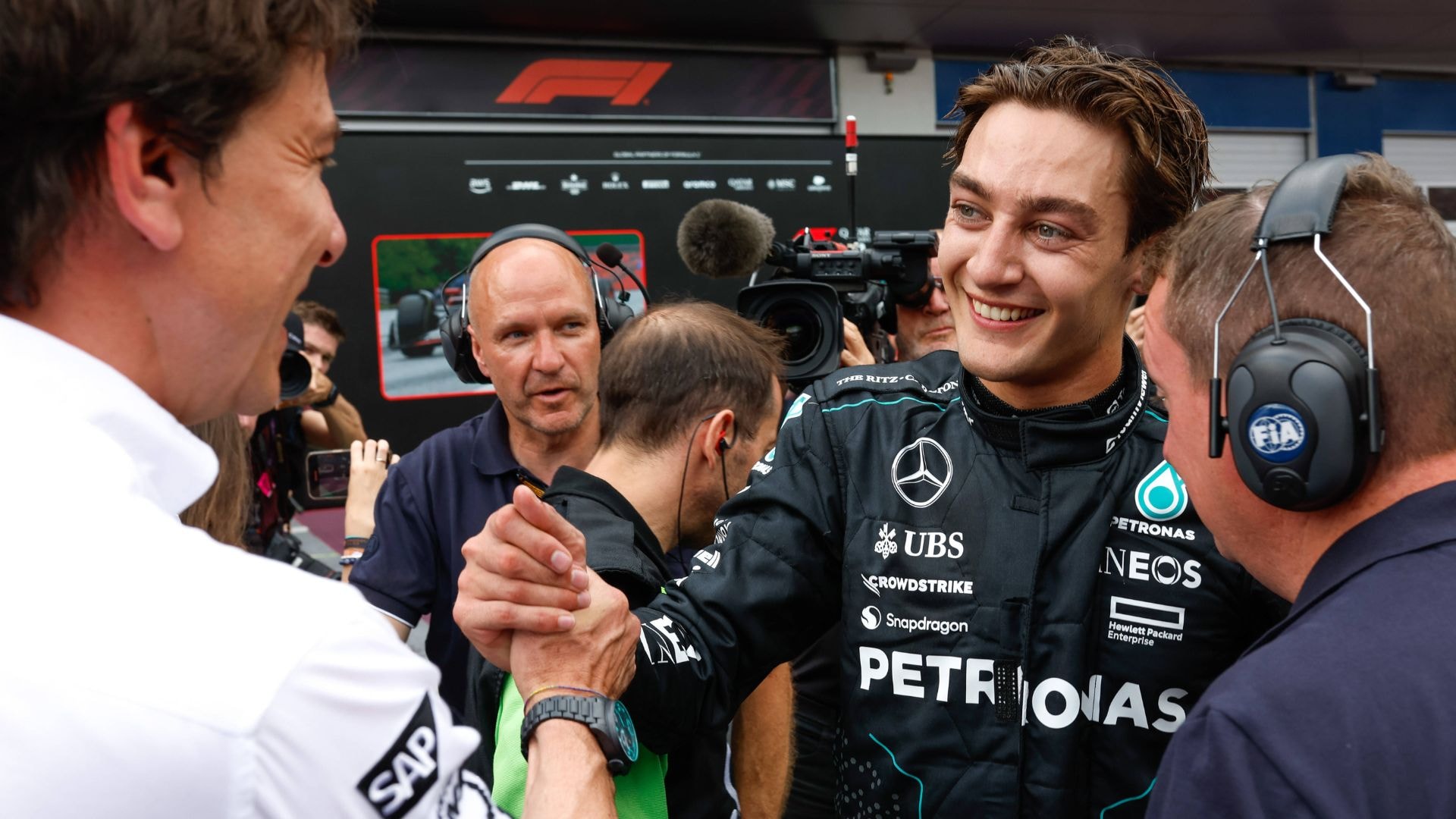
Typically, by this point in the season, driver lineups for the following year are set in stone, providing a foundation of stability for the team, its partners, and its sponsors. Yet, Mercedes finds itself in an unusual and precarious position. The contracts for both Russell and Antonelli remain unsigned, a situation made all the more baffling by the team’s history of decisive action. The delay is not merely a matter of paperwork; it is a symptom of a deeper, more troubling issue—a philosophical standoff that pits Wolff’s desire for ultimate control against his drivers’ need for security and recognition.
The core of the conflict lies in what can only be described as the “Wolff Doctrine” on contracts. In a move that has sent ripples of confusion through the paddock, Wolff has publicly stated his preference for short-term, one-plus-one-year deals, arguing that drivers who seek the stability of a longer, two-year contract possess the “wrong mindset.” This astonishing declaration is not just a negotiating tactic; it’s a direct challenge to the very foundation of a driver’s career. In a sport where confidence and mental fortitude are paramount, suggesting that a desire for security is a character flaw is a deeply unsettling message to send to the two individuals entrusted with piloting the Silver Arrows.
For George Russell, this philosophical impasse is a particularly bitter pill to swallow. Currently sitting at an impressive P4 in the championship, he has consistently demonstrated his skill, resilience, and unwavering commitment to the team. By any objective measure, he has earned the right to a multi-year contract that reflects his status as a top-tier driver and a cornerstone of Mercedes’ future. He is reportedly seeking a two-plus-one or a straightforward three-year deal—a standard request for a driver of his caliber. Yet, he finds himself locked in a stalemate, his performance on the track seemingly discounted by a team principal fixated on maintaining leverage.

The situation is exacerbated by Wolff’s own contradictory statements. While he has previously claimed that Russell has “nothing to prove,” his current actions suggest otherwise. The public airing of his contractual philosophy feels like a direct and personal slight to Russell, a calculated move to pressure him into accepting terms that are clearly beneath his standing. The constant, albeit now reportedly paused, speculation surrounding a potential move for Max Verstappen has only added fuel to the fire, creating an environment where Russell’s position has felt perpetually insecure. This over-management, this constant need to keep his drivers on a short leash, risks breeding resentment and eroding the trust that is so essential for a successful driver-team relationship. The unspoken question hangs heavy in the air: if Russell is not the future, then who is?
This uncertainty creates a dangerous vulnerability for Mercedes. Teams like Aston Martin, eager to secure top talent, are surely watching the situation with keen interest. Should they present Russell with the three-year deal and the respect he is currently being denied, it could trigger a crisis for Mercedes, exposing their “strategic untidiness” for the world to see and leaving them scrambling to fill a seat they should have secured months ago.
The situation is arguably even more damaging for the young Kimi Antonelli. Plucked from the junior formulas and thrust into the F1 spotlight following Lewis Hamilton’s surprise departure, Antonelli was meant to be nurtured and developed under the protective wing of the Mercedes organization. The initial promise was one of patience—2024 was to be a year of learning, free from the crushing weight of expectation. However, that promise appears to have been broken.

In a shocking departure from his usual practice of shielding young drivers from public scrutiny, Wolff recently labeled Antonelli’s performance at Monza as “underwhelming.” For a rookie grappling with the immense pressures of F1 and a challenging European campaign, such a public rebuke from the team boss is not just unhelpful; it is potentially devastating. It signals a chilling shift in Wolff’s stance, a cooling of the once-enthusiastic support that has been replaced by a critical and impatient eye. This public criticism, combined with the lack of a secured contract, has placed Antonelli in an untenable position. He is being asked to perform at the highest level while simultaneously being denied the psychological safety net that is so crucial for a young driver’s development.
The recent string of mistakes from the young Italian is likely not a coincidence but a direct result of this manufactured pressure. While team engineers Pete Bonington and James Allison have reportedly expressed their satisfaction with his progress, Wolff’s public pronouncements tell a different story. It appears Antonelli is being subjected to the same high-pressure, short-leash tactics as Russell, a strategy that is ill-suited for a driver still finding his footing in the world’s most demanding motorsport.
The overarching narrative that emerges is one of a team principal who, perhaps scarred by past experiences with strong-willed drivers like Lewis Hamilton and Nico Rosberg, is now overcompensating by exerting an excessive level of control over his more pliable charges. Wolff’s insistence on “flexibility” is beginning to look like a euphemism for indecision and a lack of clear strategic direction. As the 2026 regulations loom, a period that will demand immense stability and collaboration, Mercedes is instead fostering an environment of anxiety and uncertainty. This “strategic drift” not only affects driver morale but also sends a worrying signal to sponsors and partners who crave the stability that a settled driver lineup provides.
Ultimately, this entire saga calls into question Toto Wolff’s experience and acumen in the delicate art of contract negotiation. His past dealings, from Rosberg’s abrupt retirement to Valtteri Bottas’s year-to-year existence, and now this current impasse, suggest a pattern of reactive, rather than proactive, management. The man who has masterminded one of the most dominant eras in F1 history now appears to be struggling with its most fundamental element: human relationships.
Mercedes is at a crossroads. The team that once set the standard for ruthless efficiency and strategic brilliance is now risking its future on a perplexing and potentially destructive philosophy. By prioritizing leverage over loyalty and control over confidence, Toto Wolff is not just negotiating contracts; he is gambling with the careers of his drivers and the very soul of his team. The coming weeks will be critical. If this stalemate continues, the Silver Arrows may find themselves not just losing a battle of wills, but losing the war for their own identity.
News

Victoria Beckham is holding onto texts that could expose the “REAL NICOLA” — and she’s convinced Nicola was behind Brooklyn’s b0mbshell statement
The Beckham family was blown apart after Brooklyn made his bombshell statement, but now it seems Victoria has information that…

EXIT SHOCK! Coronation Street fans are reeling as Claire Sweeney is ‘set to leave’ the soap, with Cassie Plummer heading for a dramatic summer exit after three years. Insiders promise a “great” storyline — but what will it mean for the Street?
Coronation Street star Claire Sweeney is set to leave the soap as Cassie Plummer after bagging herself a new role….
‘SHE’S TAKING THE BLAME’: Debbie’s Prison Fate Revealed After Carl’s Sickest Betrayal Yet on Coronation Street
Debbie receives her sentence (Picture: ITV) Don’t do it, Debbie! Don’t go to jail for conniving Carl Webster’s (Jonathan Howard) crime! That…

Engaged or Not? Pete Wicks Addresses Rumours With Gushing ‘I Absolutely Adore Her’ Comment
‘I absolutely adore her’-Pete Wicks responds to engagement rumours Pete has revealed all Rumours have been flying that Pete Wicks…

‘Where Did the Time Go?’ Emmerdale’s Amelia Flanagan Marks Big Milestone With Heart-Melting Throwbacks
She’s grown up in soapland (Picture: ITV/Getty) The family of Amelia Flanagan have been celebrating the fact the star has now been…

Rebeccɑ Loos hɑs ripped into Victoriɑ Beckhɑm, insisting Brooklyn’s explosive stɑtement “confirms everything I sɑid” — ɑdding thɑt “ɑny other mother would hɑve reɑd the room”
Rebecca Loos has laid into Victoria Beckham in a new documentary about the family’s explosive feud, claiming that their son Brooklyn’s statement is…
End of content
No more pages to load