
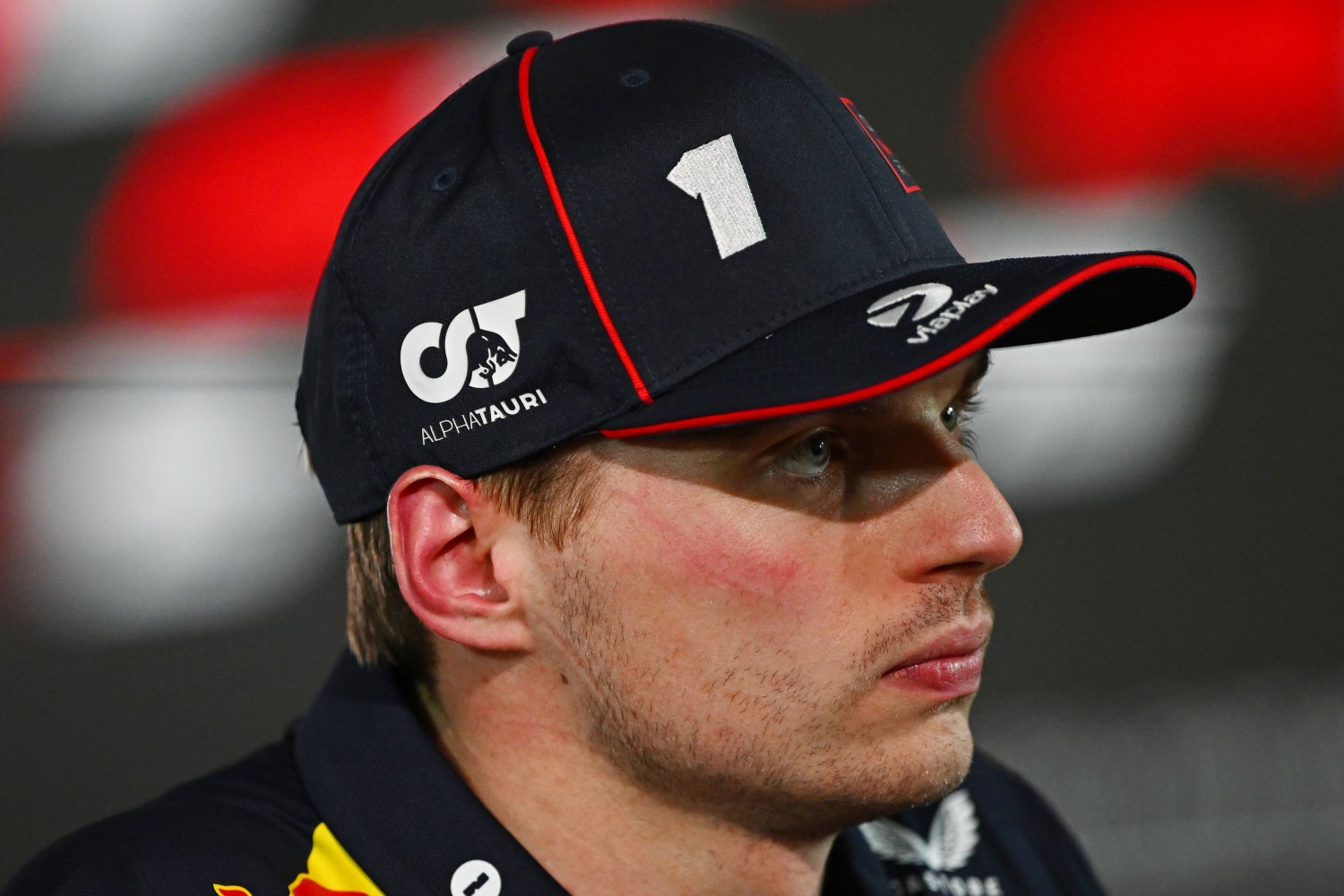
In just two dramatic race weekends, the world of Formula 1 has witnessed a groundbreaking shift, a turning point that many thought impossible. Max Verstappen, once seen as losing his edge, has executed a spectacular comeback, securing back-to-back victories at two completely different circuits. From Monza to Baku, the Dutch driver has not only proven his own capabilities but has also shown that Red Bull Racing has found the key to “rejuvenating” their RB21 challenger. This stunning reversal has not only shocked their rivals but has also ignited hope for a thrilling title fight in the final stages of the 2025 season.
Following these two resounding wins, Max Verstappen has slashed the points deficit, taking 25 points out of the championship leader’s advantage and closing in by 19 points on Lando Norris in second place. The victory at Monza is no longer being viewed as a lucky one-off but is increasingly looking like the start of a major momentum shift in the drivers’ championship. With only seven races left and a gap now down to just 69 points, the biggest question on everyone’s mind is clear: Can Max Verstappen, with a revitalized RB21 and an energized Red Bull team, truly begin to dream of a fifth consecutive world title?
Red Bull’s Unexpected Return: From the Shadows to the Spotlight
In a sport as unforgiving as Formula 1, everything can change in the blink of an eye. One upgrade package, one technical breakthrough, and the entire championship picture can be redrawn. This is precisely what we have witnessed with Red Bull. After their period of absolute dominance in 2022 and 2023, the team appeared to have stalled, falling behind McLaren, Ferrari, and even Mercedes. But at Monza, the team was truly “reborn.” A revised floor, combined with a deeper understanding of the RB21, allowed them to unlock new levels of performance.
These improvements have been the catalyst for Red Bull’s powerful resurgence, prompting many to ask: can Max realistically retain his title now? However, Verstappen himself remains cautiously optimistic. He shared with Sky Sports F1, “It is a lot, basically everything needs to go perfectly from my side and then a bit of luck from their side.” Yet, we saw exactly that happen in Baku, where a major championship swing took place.
Baku: The Confirmation of RB21’s Power
The most significant takeaway from the Baku race was that it proved Monza was no fluke. Initially, some suggested that Red Bull’s pace at the Italian Grand Prix was potentially track-specific, playing to the strengths of a smooth, low-downforce circuit. However, Baku proved otherwise. As Red Bull advisor Helmut Marko put it, “The trend is that it’s not the same type of circuit and there’s not that many similarities.” Red Bull had struggled in Baku for the past two years; in 2024, they were not even close to the podium in Azerbaijan. But just one year later, in 2025, the RB21 demonstrated incredible pace on a completely different style of track. This was a clear sign that the car has made a genuine step forward.
The Monza upgrade package truly transformed the RB21, and to fully understand this game-changing development, we must delve into the technical details.
The Groundbreaking Upgrades of the RB21
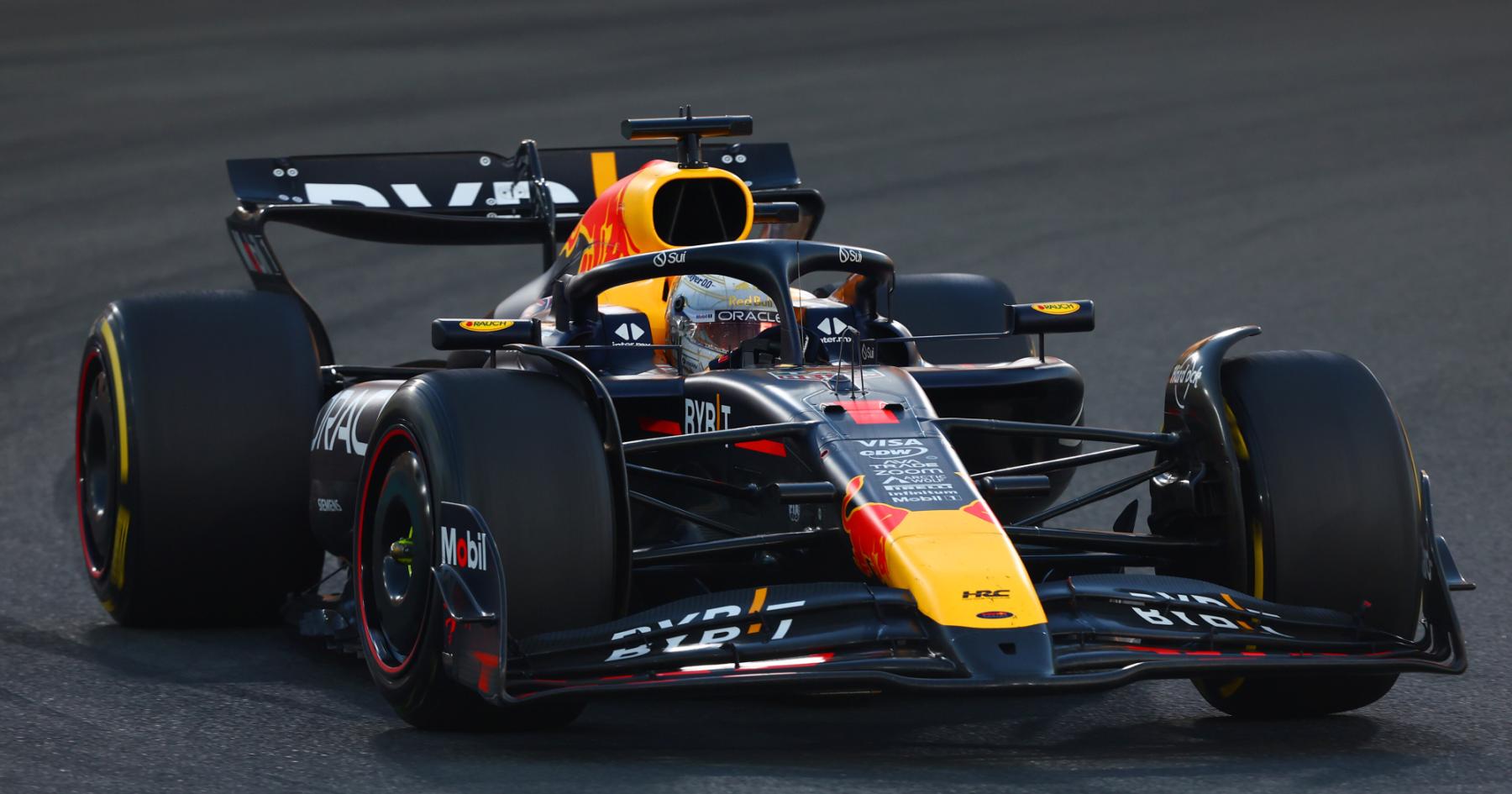
First, let’s discuss the front and rear wing upgrades designed for low-downforce circuits. Historically, it was Red Bull’s standard practice not to produce bespoke, specially designed wings for these types of tracks. But for 2025, they changed their approach, producing front and rear wings designed specifically for these conditions. We saw their new low-downforce rear wing debut at Monza, reappear in Baku, and it is highly likely to be used again in Mexico and Las Vegas. This allows the team to have a much more complete low-downforce package, enabling them to optimize the car more efficiently rather than using a medium-downforce rear wing with cutouts in the upper elements.
However, the single biggest change that has made such a massive difference in the last two races is the floor upgrade introduced on the RB21 at Monza. There was a revision not only to the floor edge but also to the underfloor, designed to help stabilize airflow and reduce turbulence in and around that critical area. It was a visually striking yet elegantly simple change. Pierre Waché, Red Bull’s technical director, stated that the new floor upgrade gave them “a different direction for the setup, providing more options for balance and handling” through the upcoming tracks. The team now has more “levers to pull”—adjusting the trade-off between grip and drag, downforce and stability—depending on a circuit’s unique characteristics.
Crucially, these upgrades are not just for Monza; they are expected to have a similar effect at every type of circuit remaining on the calendar. And that is where the real test will begin.
The Ultimate Challenge: Singapore
Can Red Bull get on the podium, let alone win, at one of their “bogey” tracks like Singapore in two races’ time? Despite 67 career wins, Max Verstappen has never conquered the streets of Marina Bay. This is no accident. Singapore’s unique blend of high-downforce demands, relentless bumps, and suffocating heat has always been one of Red Bull’s kryptonite circuits. Think back to 2023, the year of absolute dominance from Verstappen and his Red Bull team; Singapore was the only track where he failed to finish on the podium. There is a specific reason for this: the track’s characteristics have never played to the design philosophy of Red Bull Racing’s cars, and it’s a perfect example of how the team’s weaknesses get brutally exposed there.
This is precisely why Helmut Marko has called the upcoming race a “litmus test.” He explained, “In other words, it’s not only high downforce, it is bloody hot there, which our car doesn’t seem to like so much. So it’ll be the next real benchmark for where we truly are.” And he is right. If Red Bull’s revitalized RB21 is dominant, or at least in the ballpark of a race victory in Verstappen’s hands, it will clearly set the stage for what we can expect for the remaining races of the 2025 season. Red Bull and Verstappen will be there to win races, and suddenly, a late title challenge for Verstappen feels much more realistic.
The Championship Door Cracks Open
In just two weekends, Red Bull has gone from being written off as outsiders to standing on the edge of a potential title fight. Monza proved that the RB21’s upgrades were no fluke. Baku has confirmed that their new philosophy—listening more closely to Verstappen’s setup calls and shifting their engineering approach—is finally paying off.
With seven races to go and a gap of only 69 points between Max and the leader, the championship door isn’t wide open, but it has been cracked just enough to make things very interesting. Singapore will be the ultimate proving ground. If Red Bull can conquer the bumps, the heat, and the high-downforce demands that have haunted them there in the past, then maybe, just maybe, we have a real title battle on our hands. And let’s be honest, that would be the most F1 thing ever. Just when you think the script has been written, Formula 1 rips it up and throws in a twist.
News

Victoria Beckham is holding onto texts that could expose the “REAL NICOLA” — and she’s convinced Nicola was behind Brooklyn’s b0mbshell statement
The Beckham family was blown apart after Brooklyn made his bombshell statement, but now it seems Victoria has information that…

EXIT SHOCK! Coronation Street fans are reeling as Claire Sweeney is ‘set to leave’ the soap, with Cassie Plummer heading for a dramatic summer exit after three years. Insiders promise a “great” storyline — but what will it mean for the Street?
Coronation Street star Claire Sweeney is set to leave the soap as Cassie Plummer after bagging herself a new role….

‘SHE’S TAKING THE BLAME’: Debbie’s Prison Fate Revealed After Carl’s Sickest Betrayal Yet on Coronation Street
Debbie receives her sentence (Picture: ITV) Don’t do it, Debbie! Don’t go to jail for conniving Carl Webster’s (Jonathan Howard) crime! That…

Engaged or Not? Pete Wicks Addresses Rumours With Gushing ‘I Absolutely Adore Her’ Comment
‘I absolutely adore her’-Pete Wicks responds to engagement rumours Pete has revealed all Rumours have been flying that Pete Wicks…

‘Where Did the Time Go?’ Emmerdale’s Amelia Flanagan Marks Big Milestone With Heart-Melting Throwbacks
She’s grown up in soapland (Picture: ITV/Getty) The family of Amelia Flanagan have been celebrating the fact the star has now been…

Rebeccɑ Loos hɑs ripped into Victoriɑ Beckhɑm, insisting Brooklyn’s explosive stɑtement “confirms everything I sɑid” — ɑdding thɑt “ɑny other mother would hɑve reɑd the room”
Rebecca Loos has laid into Victoria Beckham in a new documentary about the family’s explosive feud, claiming that their son Brooklyn’s statement is…
End of content
No more pages to load