
The Singapore Grand Prix has always held a notorious status as one of Formula 1’s most gruelling endurance tests, renowned for its punishing combination of high humidity, stifling tropical heat, and a relentless stop-start street circuit layout. However, this year, the glittering night race at Marina Bay has escalated into a veritable “survival zone” for the McLaren team, and especially for their championship leader, Oscar Piastri. Shocking news from the FIA—the declaration of the first-ever official “Heat Hazard” in F1 history—has poured ice water on the Woking-based team’s hopes for a crowning weekend, instead creating a total strategic and physical crisis.
McLaren arrived in Singapore perched on the very brink of a historic resurgence. With the Constructors’ Championship within tantalizing reach, needing only a handful of points to secure the title, and the Drivers’ title battle between their two young stars, Piastri and Lando Norris, reaching a fever pitch, the weekend was meant to be a celebration of orange dominance. Instead, the unexpected intervention by the governing body threatens to transform their dream into a suffocating nightmare, making every fraction of a second and every tactical choice a high-stakes gamble with the entire season’s legacy hanging in the balance.
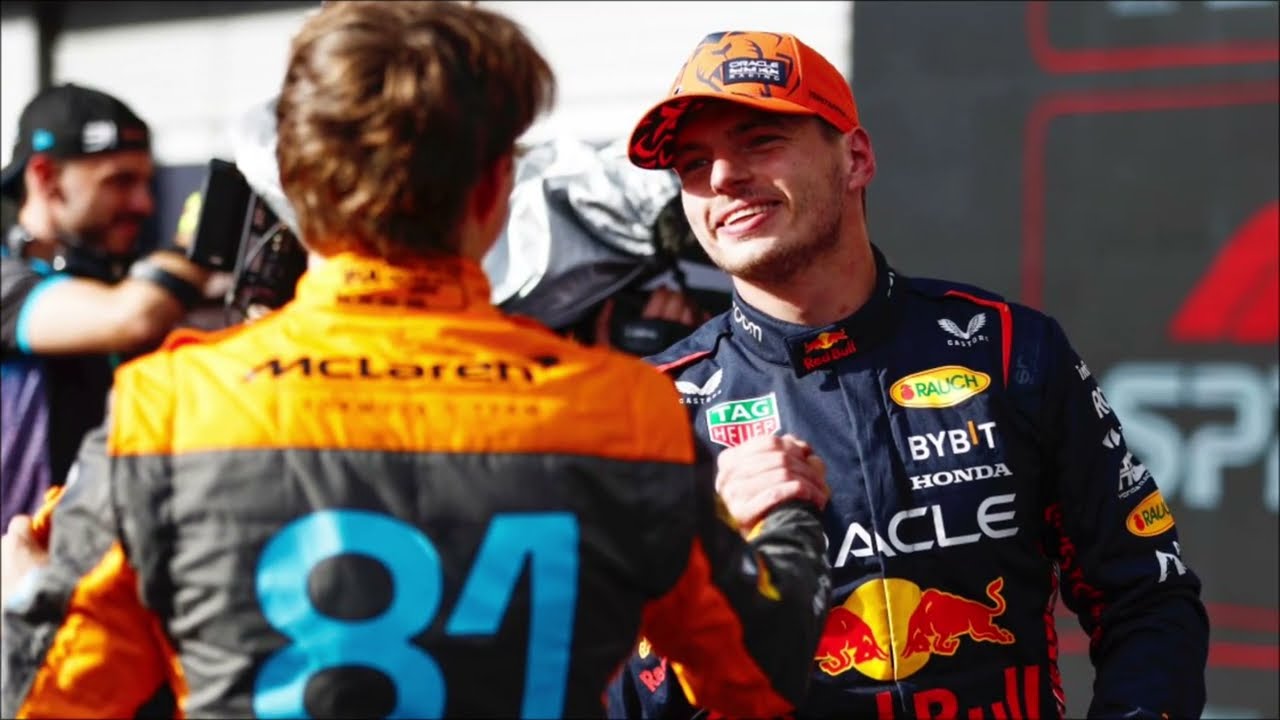
The Unprecedented Rule: A Mandate Born from Fear
The FIA’s decision to declare a Heat Hazard is not merely a caution; it is a direct consequence of soaring tropical temperatures predicted to push past the 31°C threshold, coupled with near-saturating humidity. This unprecedented move is a response to the lingering, terrifying memory of the 2023 Qatar Grand Prix, where several drivers suffered severe dehydration, required medical intervention, and even collapsed from exhaustion. The governing body is prioritizing safety, but the implementation of the new rules has created a monumental performance headache for the teams at the sharp end of the grid.
The new mandate forces teams like McLaren to address the heat with radical measures, specifically focused on the drivers. Piastri and his rivals must now choose between two brutally compromised options: utilize a specialized cooling vest designed to lower core body temperature, or opt for extra ballast placed within the car to compensate for any weight imbalances and potential structural changes required for the cooling system.
The sheer brutality of this choice cannot be overstated. In a sport governed by millimetres and milligrams, introducing a necessary piece of equipment or an unexpected weight adjustment is equivalent to sabotage. The cooling vest, while vital for driver stamina, adds complexity, potential points of technical failure, and an uncomfortable restriction within an already suffocatingly tight cockpit. The ballast, a simpler alternative, risks compromising the car’s finely-tuned weight distribution and aerodynamics, costing precious lap time on a circuit where track position is paramount. For McLaren, whose car relies on its agility and perfect balance through Singapore’s relentless 23 corners, this is a strategic torpedo fired directly into their title aspirations.
Piastri’s Crucible: The Impossible Choice of a Championship Leader
Oscar Piastri heads into Singapore leading the Drivers’ Championship, a testament to his ice-cold composure and immense skill. Yet, this race transcends mere skill behind the wheel; it is now a raw test of human endurance and mental clarity.
The cockpit of a Formula 1 car already operates like an oven; in Singapore, with the Heat Hazard declared, internal temperatures are projected to exceed a staggering 60°C. Piastri will race for nearly two hours, fighting off not only Lando Norris and Max Verstappen but also the debilitating effects of dehydration and exhaustion.
His dilemma is threefold:
The Cooling Vest Compromise:
- If he chooses the vest, he prioritizes his physical survival and concentration. But the added bulk and the necessary plumbing introduce discomfort and the risk of technical glitches. More crucially, the strategic team must then manage the compensating ballast, risking minute but vital losses in pace due to imperfect weight distribution.
The Ballast Gamble:
- If he gambles on his physical resilience and chooses the ballast without the vest, he maintains a cleaner cockpit setup but potentially sacrifices too much agility and pace to the weight. On a circuit where every tenth is magnified, this could be the opening Verstappen or Norris need.
The Mental Toll:
- Regardless of the choice, the knowledge that the smallest lapse of concentration—a single error in judgement while defending from a charging rival—could send him into the unforgiving walls of Marina Bay will place Piastri under the most intense mental scrutiny of his young career.
This is no longer just about out-driving his rivals; it’s about out-enduring the environment itself, and the outcome will be definitive in shaping Piastri’s legacy in the sport.
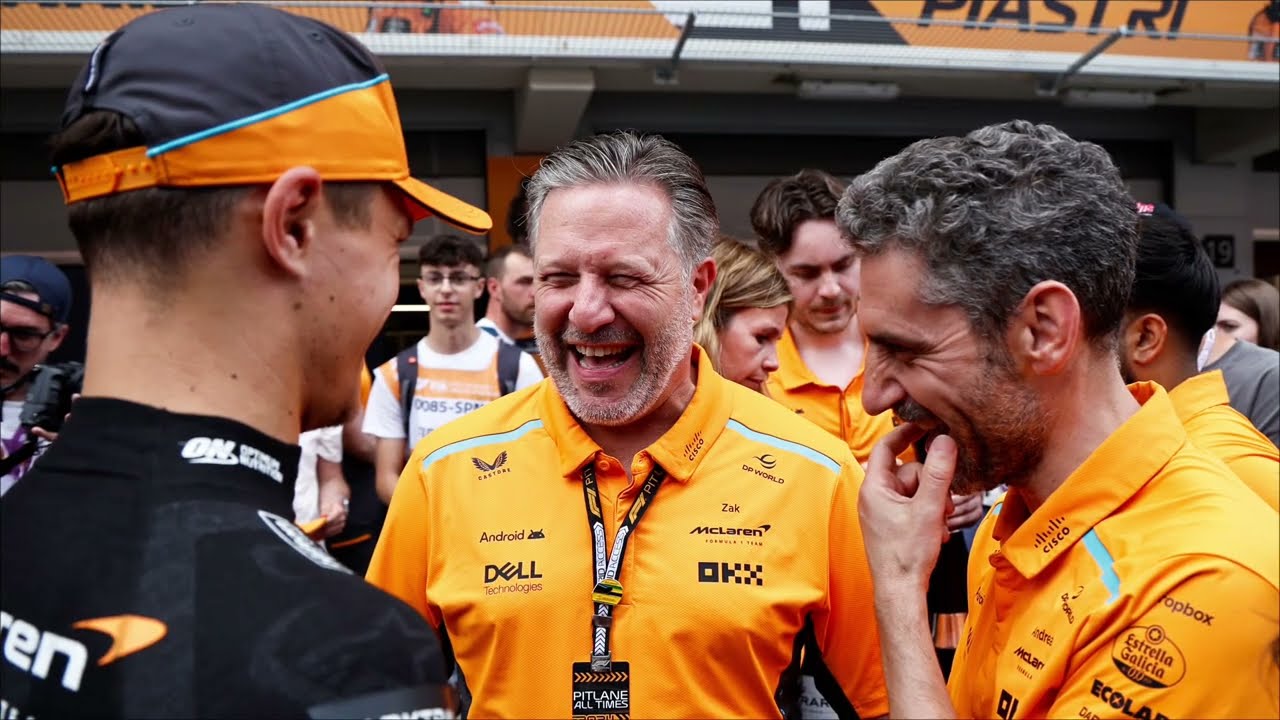
The McLaren Strategy Department: A Nightmare Balancing Act
The pressure on McLaren’s strategy department is perhaps the highest in the paddock. The Constructors’ title is just 13 points away—easily achievable under normal circumstances. But Singapore is anything but normal. The team cannot afford to sacrifice the agility needed to win the Drivers’ title for the sake of driver comfort, nor can they risk a costly DNF due to heat-induced error.
Under the leadership of Team Principal Andrea Stella, the engineers must weigh the cost-benefit analysis of every gram of weight. An extra half a kilo in the wrong place could upset the car’s sensitive balance, causing understeer or oversteer precisely when Piastri needs perfect stability in the braking zones. Their hydration and cooling management plans must be flawless, built to preserve their drivers’ stamina through the most gruelling contest of their lives.
Furthermore, the new FIA rules regarding pit lane speed limits, which allow pit stops to be up to six seconds faster, have added another layer of tactical complexity. Combined with Pirelli bringing the softest compounds (C3, C4, C5), the higher temperatures will inevitably drive up tire degradation. A two-stop strategy, once deemed risky, now becomes a viable and potentially necessary option. McLaren must be prepared to execute split-second decisions on the pit wall, knowing that a single misjudgement—pitting under a late safety car, miscalculating tire wear, or struggling for grip in the sweaty night air—could violently swing the entire championship picture away from them in a matter of laps.
The Predators: Norris and Verstappen See Opportunity in Chaos
The volatile situation is exactly what Piastri’s two main rivals have been waiting for.
Lando Norris views the Heat Hazard not as a problem, but as a golden opportunity. Still 25 points behind his rookie teammate, Norris is desperate to close the deficit and shift the psychological balance within McLaren. He is historically strong in Singapore, having thrived here when others struggled. In conditions where physical resilience and experience are paramount, Norris knows a strong performance could destabilize Piastri and prove to the world that he is the team’s most resilient contender. His determination is fueled by the fact that equal treatment from the team leaves him with zero excuses for failure.
Then there is Max Verstappen, the four-time champion and the storm looming on the horizon. Although Singapore has historically been a weaker spot for Red Bull, the chaos created by the heat hazard plays directly into his hands. The disaster scenario for McLaren is glaringly obvious: Piastri and Norris push each other to the limit, make mistakes driven by exhaustion or flawed strategy, and Verstappen capitalizes with the ruthless efficiency that defines his career. The FIA’s heat rules magnify the chances of every error, all of which are a direct gift to the Dutchman, who is poised and ready to pounce on any slip. If Verstappen can conquer Marina Bay under these brutal conditions, it will be a terrifying statement that he is fully back in the championship hunt.
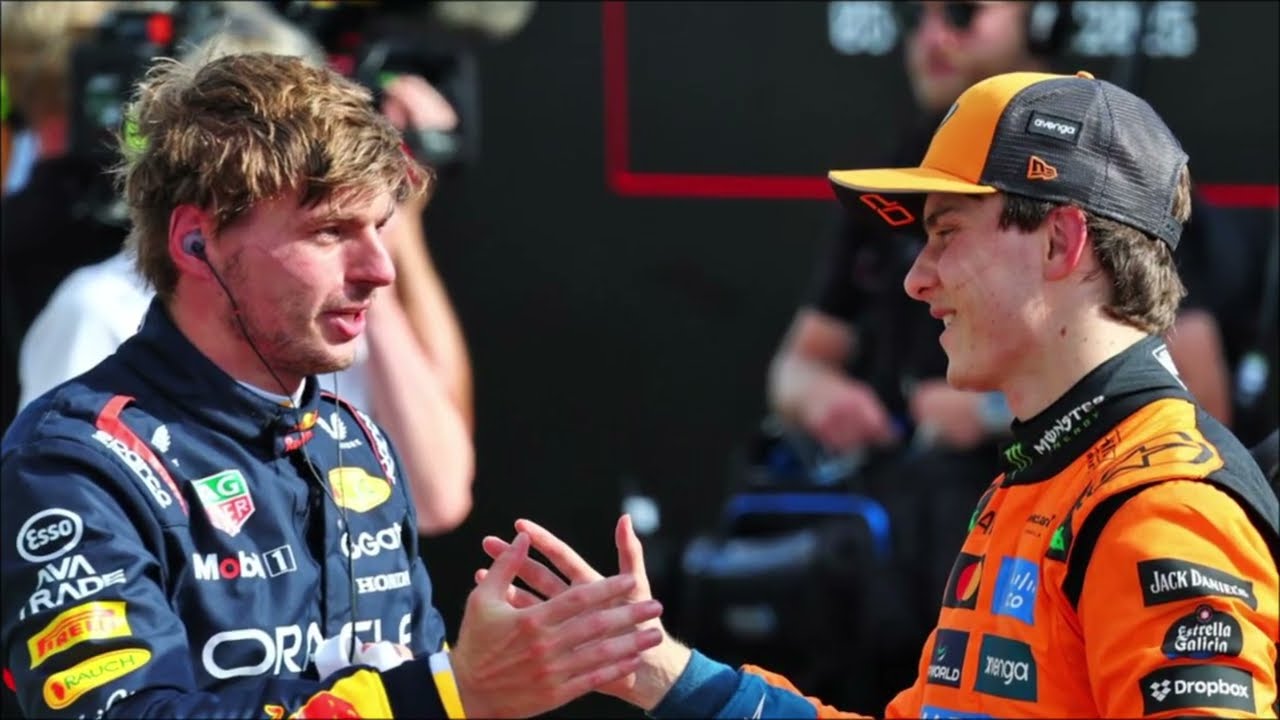
Conclusion: The Ultimate Test of Endurance and Legacy
The spectre of driver collapse, reminiscent of Qatar, hangs heavy in the air. McLaren supporters dread the thought of Piastri faltering under the unbearable physical stress while Verstappen storms to a critical victory. Yet, others argue that this is the very essence of Formula 1: to endure, to adapt, and to triumph not just over rivals, but over the extremes of man and machine.
The debate rages in the paddock: some praise the FIA for prioritizing safety with the cooling vest mandate, while others criticize the introduction of artificial variables into a title fight that should be decided purely by speed. What everyone agrees on is that Singapore will be the ultimate test. Drivers are no longer racing just each other; they are racing the environment itself.
For Oscar Piastri, the path forward is brutally simple yet impossibly complex: he must keep Verstappen at bay, fend off Norris’s relentless challenge, manage the physical toll of the heat, and adapt to crippling strategic uncertainties, all at once. If he succeeds, he will cement his reputation as the toughest young driver in the sport. If he fails, the cracks could widen into a collapse that costs McLaren not only the race but the dream of a Driver’s title, a dream that has been hanging by a thread since their resurgence began.
When the lights go down in Marina Bay and the heat presses in like a suffocating cloak, the world will be watching to see whether Piastri and McLaren can withstand the storm. The Constructors’ crown may be a formality, but the Drivers’ title is a knife-edge duel that will be tipped by endurance, strategy, and the unforgiving tropical night.
News

Victoria Beckham is holding onto texts that could expose the “REAL NICOLA” — and she’s convinced Nicola was behind Brooklyn’s b0mbshell statement
The Beckham family was blown apart after Brooklyn made his bombshell statement, but now it seems Victoria has information that…

EXIT SHOCK! Coronation Street fans are reeling as Claire Sweeney is ‘set to leave’ the soap, with Cassie Plummer heading for a dramatic summer exit after three years. Insiders promise a “great” storyline — but what will it mean for the Street?
Coronation Street star Claire Sweeney is set to leave the soap as Cassie Plummer after bagging herself a new role….

‘SHE’S TAKING THE BLAME’: Debbie’s Prison Fate Revealed After Carl’s Sickest Betrayal Yet on Coronation Street
Debbie receives her sentence (Picture: ITV) Don’t do it, Debbie! Don’t go to jail for conniving Carl Webster’s (Jonathan Howard) crime! That…

Engaged or Not? Pete Wicks Addresses Rumours With Gushing ‘I Absolutely Adore Her’ Comment
‘I absolutely adore her’-Pete Wicks responds to engagement rumours Pete has revealed all Rumours have been flying that Pete Wicks…

‘Where Did the Time Go?’ Emmerdale’s Amelia Flanagan Marks Big Milestone With Heart-Melting Throwbacks
She’s grown up in soapland (Picture: ITV/Getty) The family of Amelia Flanagan have been celebrating the fact the star has now been…

Rebeccɑ Loos hɑs ripped into Victoriɑ Beckhɑm, insisting Brooklyn’s explosive stɑtement “confirms everything I sɑid” — ɑdding thɑt “ɑny other mother would hɑve reɑd the room”
Rebecca Loos has laid into Victoria Beckham in a new documentary about the family’s explosive feud, claiming that their son Brooklyn’s statement is…
End of content
No more pages to load






