
While the Formula 1 Constructors’ Championship may already be decided at the summit, the real drama—the true life-or-death financial and sporting battle—is unfolding in the shadow of the top four. Here, a fierce, $30 million fight for prestige, resource allocation, and simple survival has been dramatically blown wide open, not by a seasoned veteran, but by a single, incredible performance from a rising star.
In a sport often defined by the dominance of the biggest budgets, the scrap for sixth place in the standings is an existential struggle, involving four hungry, desperate teams: Racing Bulls, Aston Martin, Haas, and Sauber. Separated by a razor-thin margin of just 12 points, the pressure is immense. The prize? A difference of nearly $10 million for every position gained in the final rankings, translating to a staggering $30 million swing between sixth and ninth place. For these midfield runners, this money is not just a bonus; it is the lifeblood that funds development for the crucial rule changes looming, secures key personnel, and dictates the entire future trajectory of the team.
This volatile battle, already simmering for weeks, reached a flashpoint in Mexico with the sensational performance of Haas’s young talent, Ollie Bearman. His incredible fourth-place finish was more than just a career-best result; it was a devastating uppercut that immediately catapulted Haas from ninth to eighth position, a move worth almost $10 million in prize money. As the analysis shows, Bearman’s personal achievement was a literal gold rush for his team, underscoring the immense value of driver execution in this tightly packed group. His 78kg weight, translated to gold at current market prices, is a poignant, if slightly whimsical, metaphor for the actual financial gain he secured for his employer. The stakes are now higher than ever, and this battle of execution, driver performance, and team mindset is now the single most captivating story left in the season.
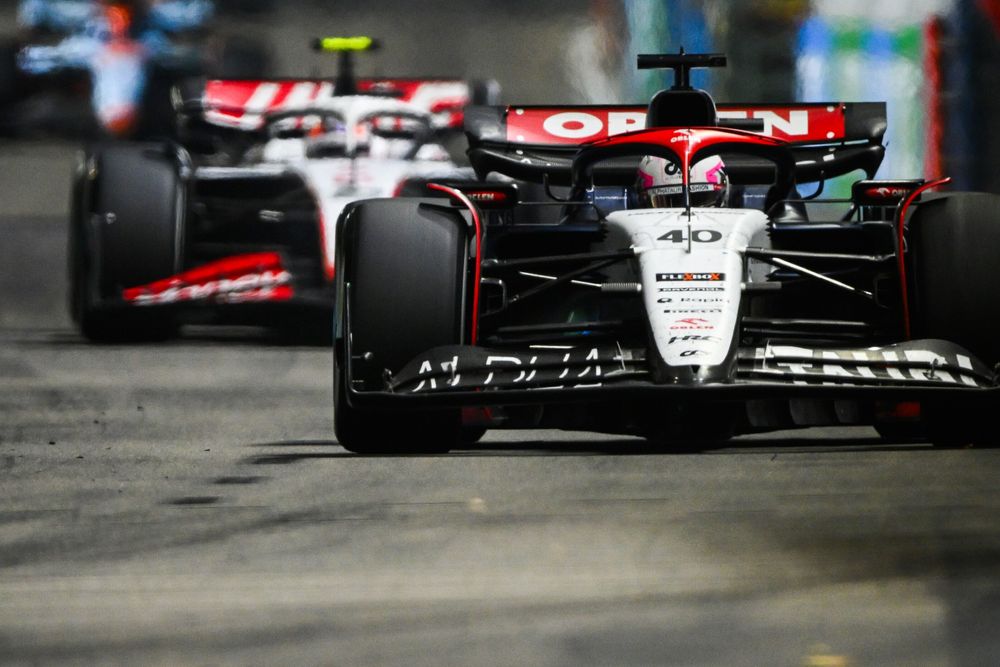
The Haas Renaissance: From Backmarker to Financial Gold Rush
The narrative surrounding Haas has undergone a remarkable transformation. They began the season as a team cut adrift at the back, possessing a car that showed flashes of speed it consistently failed to convert into points. Team boss Ayao Komatsu openly expressed his frustration, describing the team as “leaking points left, right, and center” due to a compounding series of “small mistakes through each race weekend.” The Belgian Grand Prix at Spa was a textbook example: both cars scored points in the sprint, yet a combination of poor qualifying margins, incorrect downforce levels, minor engine issues, and badly timed pit stops delivered a crushing zero points from the main event. Komatsu pinpointed the core issue as a wrong “mindset,” with the team trying too hard to force results rather than focusing on flawless execution.
This narrative has now been utterly flipped. The team’s latest upgrade package, combined with a profound psychological shift, has seen them emerge as a ruthless operator in the midfield. Mexico was the culmination of this newfound focus, netting their biggest points haul of the season and validating their commitment to getting “both cars into the top 10.” Bearman, in particular, is the catalyst of this change, recording his third consecutive points finish and delivering the career-defining fourth place.
Crucially, his progress is attributed not just to raw speed, but to a newfound maturity and “better judgment in how close to push the car to the limit and driving more within himself.” The team, now focused on executing “every single session correctly” rather than getting “carried away with a championship battle,” has propelled itself from the periphery right into the financial heart of the midfield war. Their story is a powerful testament to how a mindset shift, combined with a stellar driver performance, can unlock millions in prize money.
Racing Bulls: Qualifying Kings Facing a Sunday Speed Crisis
Leading this tightly bunched pack is Racing Bulls, yet their position is perhaps the most precarious. They head into the final rounds on a run of three events without a single point—their worst spell of the season. This worrying dry spell has allowed Aston Martin, Haas, and Sauber to rapidly erase the gap, turning a comfortable lead into a desperate dogfight.
The core of Racing Bulls’ dilemma lies in a troubling pattern of performance: they are consistently strong on Saturday but inexplicably weak on Sunday. Isack Hadjar, for example, has shown brilliant qualifying pace, making Q3 in two of the last three races. Yet, race day execution has been their undoing. In Mexico, Hadjar’s promising race was compromised by a spin on the first lap, losing him three crucial places, before eventually losing a points position in the closing stages due to being forced onto used soft tires. This weakness reflects a “trend of weaker race pace than qualifying pace” that has plagued them.
The problem extends beyond Hadjar. While Liam Lawson delivered an outstanding fifth place in Azerbaijan earlier in the year, he has lacked the critical edge when points were possible in recent races, culminating in an unfortunate first-corner collision in Mexico. Lawson diagnoses the car as “consistent across the board but lacking ultimate speed,” and with no major upgrades scheduled, the pressure is squarely on the team to optimize race setup and find a way to make the tires last. The midfield margins are so infinitesimally small that a “small lap time deficit is costly”—a deficit that is currently threatening to undo their season and cost them millions.

Aston Martin: A Crisis of Focus and Resources
Aston Martin presents the most confounding puzzle in this group. Given the staggering resources at its disposal and its self-proclaimed ambition, the team should, by all rights, be comfortably inside the top five. Instead, it is hanging onto seventh place by a fragile thread, the picture of a team massively underachieving.
The harsh assessment is that part of this underperformance stems from an almost “indifference” to the current campaign. The team’s gaze has been almost entirely focused on future regulations, including the strategic, game-changing hire of legendary technical guru Adrian Newey. Work done on the current car has been treated less like a proper mission and more as an exercise in “calibrating tools and methods,” with any potential performance uplift considered a mere “side quest.”
This fundamental lack of commitment to the present has left the car riddled with weaknesses. As Fernando Alonso pointed out, the team has struggled badly at circuits like Mexico under the current rule set. The car suffers from poor aerodynamic efficiency, particularly on low-downforce circuits like Spa and Monza, and struggles severely in low-speed corners.
Alonso, the legendary driver, has been forced to rely on pure ‘magic’ to extract results, delivering superb peaks like P5 at the Hungaroring and leading the midfield in Singapore. However, the lows of the Aston Martin car are “very low,” leaving even Alonso’s brilliance unable to salvage points in those scenarios. While Lance Stroll’s contribution in terms of points percentage is at a record high for him, his ongoing pointless streak suggests the true issue is the underlying machinery. Aston Martin is a giant with a top-tier engine and a legendary driver, yet their divided attention has left them scrambling for scraps in a financial dogfight they should have never been a part of.
Sauber: The Sunday Specialists Who Can’t Qualify
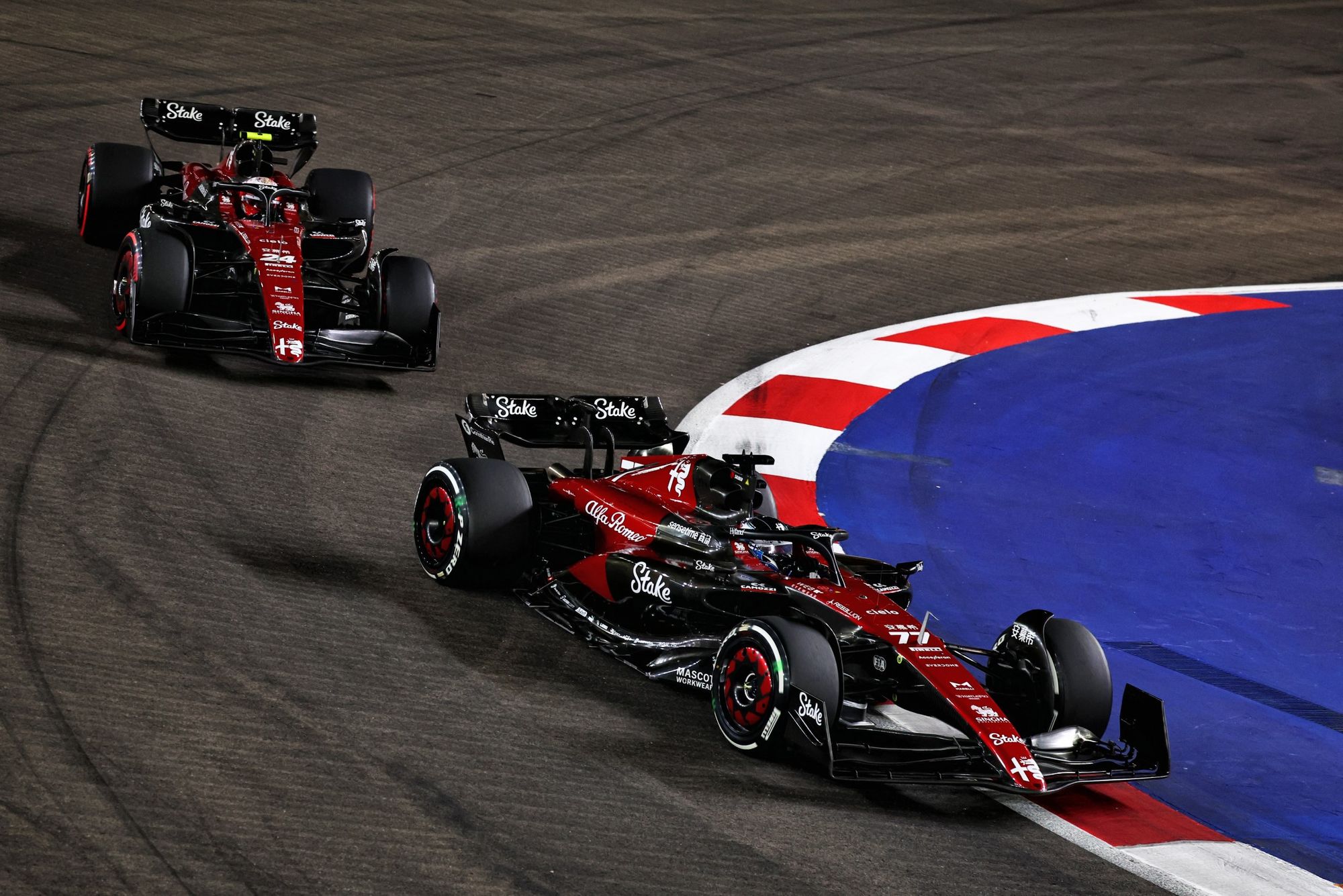
Rounding out the contenders is Sauber, a team with an almost mirror-image problem to Racing Bulls. The team’s C45 car is significantly stronger on Sunday than it is on Saturday. Early in the season, the car was unstable and unpredictable, but a series of robust mid-season upgrades successfully turned it into a consistent points threat.
Yet, the car remains “tricky… on low fuel,” resulting in the least impressive qualifying record of the entire group, with only four appearances in Q3 all season. This Saturday shortfall means drivers Nico Hülkenberg and Gabby Bortolotto are constantly “up against it” in the races.
Despite this, their Sunday race craft is formidable. Bortolotto’s climb from 16th on the grid to 10th in Mexico clearly demonstrated the car’s true speed in race trim. Even Hülkenberg’s long-awaited first podium at Silverstone was heavily reliant on brilliant, well-timed tire calls in wet conditions, rather than raw single-lap pace.
For Sauber, the immediate objective is clear: improve qualifying pace. Team boss Jonathan Wheatley believes this is possible, given the “sound fundamental understanding of how the car is working” that delivered impressive early-year gains. If Sauber can unlock its qualifying potential without sacrificing its proven Sunday performance, it instantly transforms into a formidable force for the remaining events.
The Decisive Factor: Two Drivers and Perfect Execution
The battle for sixth place will ultimately be decided by two factors: consistency of scoring and maximizing every opportunity. The tight packing of the four teams means that flawless execution by both the team and both drivers is the single most decisive factor. The lesson from history is sharp: a stunning second and third place finish in a wet race netted a rival team 33 points—a massive 54% of their total for the entire season—catapulting them from ninth to sixth place and earning them an additional $33 million. A similar haul in the remaining races is entirely possible and would irrevocably shift the balance of this war.
Currently, Ollie Bearman is the undisputed form driver, the only one from the four teams to score in the past three events. But, as the data shows, it takes two drivers to win this financial battle. While a single driver can secure a historic leap, the team with the strongest, most dependable performance across both cars will be the one celebrating a multi-million-dollar windfall at the season’s end. The war for sixth is a thrilling, high-stakes microcosm of Formula 1 itself, proving that sometimes, the biggest fights happen furthest from the finish line.
News

Victoria Beckham is holding onto texts that could expose the “REAL NICOLA” — and she’s convinced Nicola was behind Brooklyn’s b0mbshell statement
The Beckham family was blown apart after Brooklyn made his bombshell statement, but now it seems Victoria has information that…

EXIT SHOCK! Coronation Street fans are reeling as Claire Sweeney is ‘set to leave’ the soap, with Cassie Plummer heading for a dramatic summer exit after three years. Insiders promise a “great” storyline — but what will it mean for the Street?
Coronation Street star Claire Sweeney is set to leave the soap as Cassie Plummer after bagging herself a new role….

‘SHE’S TAKING THE BLAME’: Debbie’s Prison Fate Revealed After Carl’s Sickest Betrayal Yet on Coronation Street
Debbie receives her sentence (Picture: ITV) Don’t do it, Debbie! Don’t go to jail for conniving Carl Webster’s (Jonathan Howard) crime! That…

Engaged or Not? Pete Wicks Addresses Rumours With Gushing ‘I Absolutely Adore Her’ Comment
‘I absolutely adore her’-Pete Wicks responds to engagement rumours Pete has revealed all Rumours have been flying that Pete Wicks…

‘Where Did the Time Go?’ Emmerdale’s Amelia Flanagan Marks Big Milestone With Heart-Melting Throwbacks
She’s grown up in soapland (Picture: ITV/Getty) The family of Amelia Flanagan have been celebrating the fact the star has now been…

Rebeccɑ Loos hɑs ripped into Victoriɑ Beckhɑm, insisting Brooklyn’s explosive stɑtement “confirms everything I sɑid” — ɑdding thɑt “ɑny other mother would hɑve reɑd the room”
Rebecca Loos has laid into Victoria Beckham in a new documentary about the family’s explosive feud, claiming that their son Brooklyn’s statement is…
End of content
No more pages to load