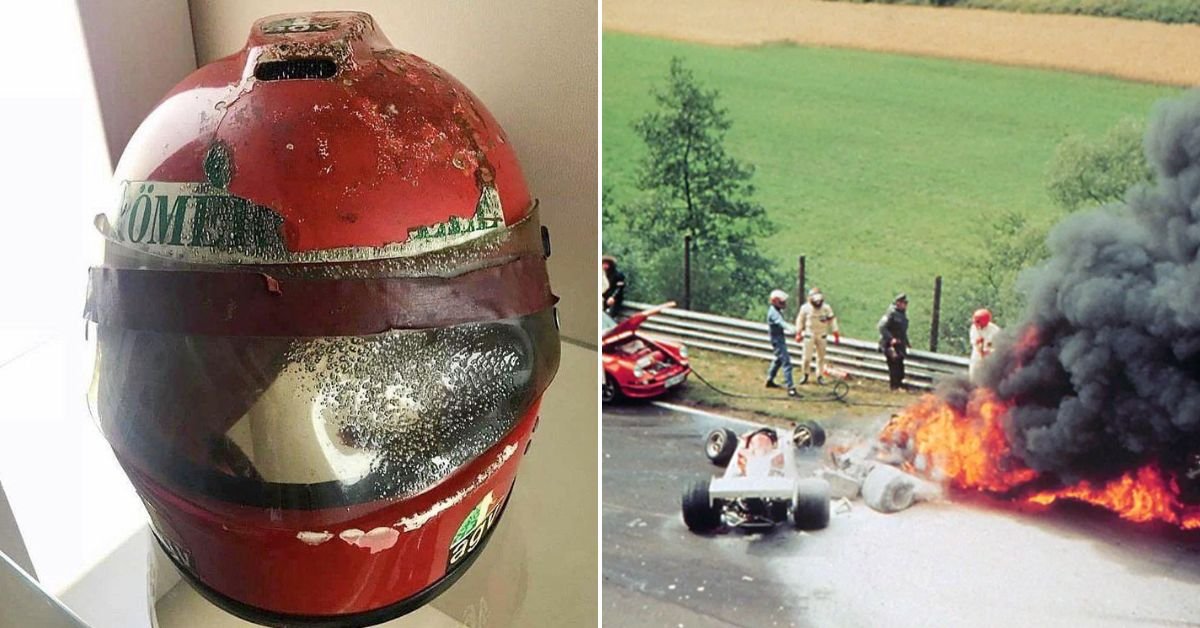
The air was thick with the acrid scent of burnt oil and scorching metal. Black smoke billowed into the sky, momentarily eclipsing the sun, and inside the mangled, blazing wreckage of a Ferrari sat a man trapped, screaming, and slowly being consumed by an 800-degree inferno. This was not a scene from a Hollywood disaster movie; this was the brutal reality of the Nürburgring on August 1st, 1976, and the man inside was Formula 1 World Champion Niki Lauda.
What happened on that notorious stretch of asphalt, affectionately known as the ‘Green Hell,’ became the defining event in the history of one of the world’s most dangerous sports. It was a moment that should have ended a career, and a life, but instead, it forged a legend. Forty-two days later, the world witnessed an act of survival and sheer defiance so profound it remains unmatched in the annals of sport. Lauda did not just live; he returned to the cockpit, still bleeding from his wounds, to fight for the title that nearly cost him everything.
The Rise of ‘The Computer’
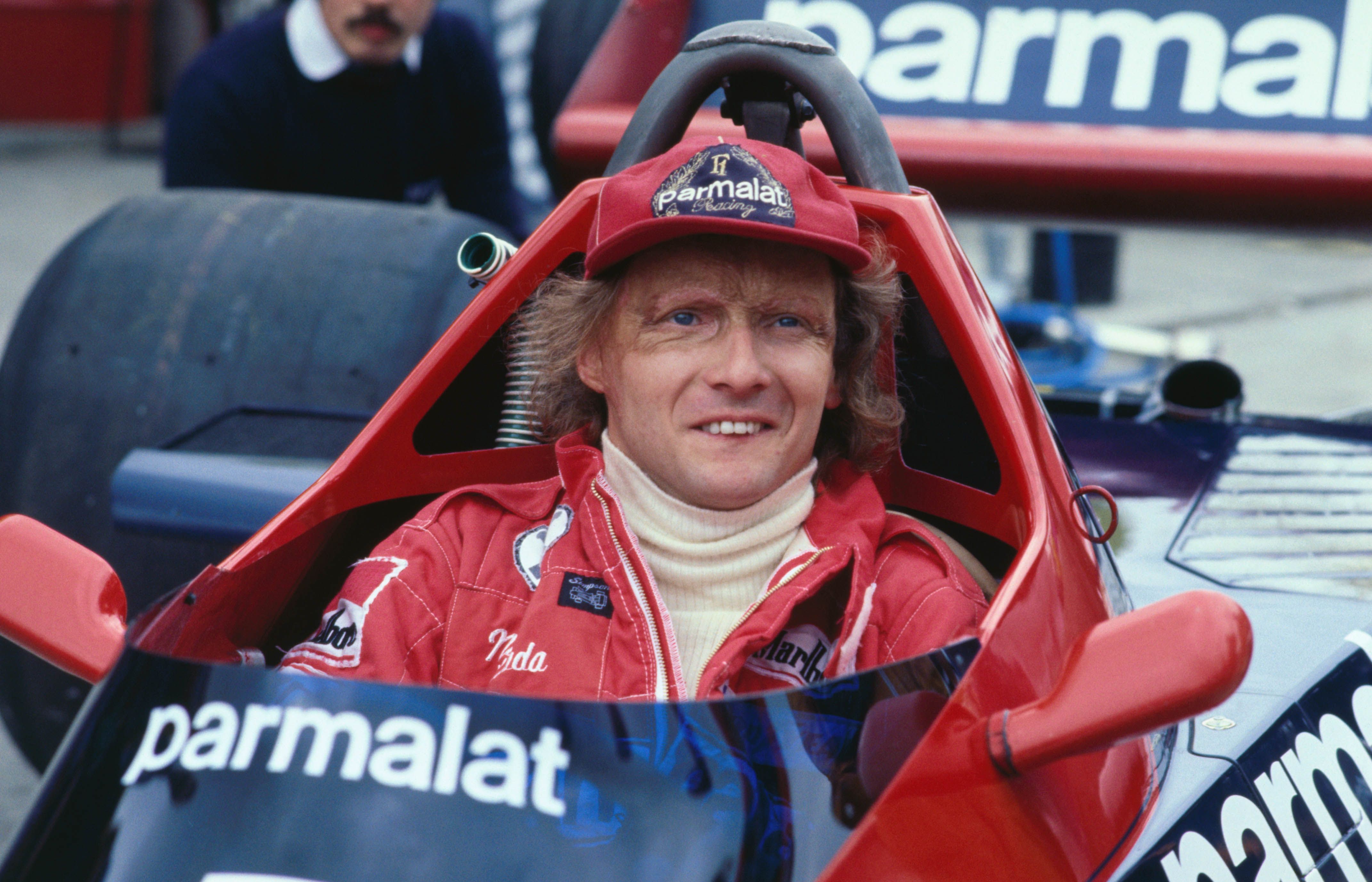
To understand the miracle of the comeback, one must first understand the man. Andreas Nikolaus “Niki” Lauda was born into a life of Austrian privilege, a life his wealthy family expected him to dedicate to business and finance. But Lauda was not built for comfort. He sought control, challenge, and the uncompromising precision of speed. When his family refused to fund his racing dreams, Lauda, in a move that defined his pragmatic ruthlessness, took out a substantial loan against his own life insurance policy to buy his way into Formula 2.
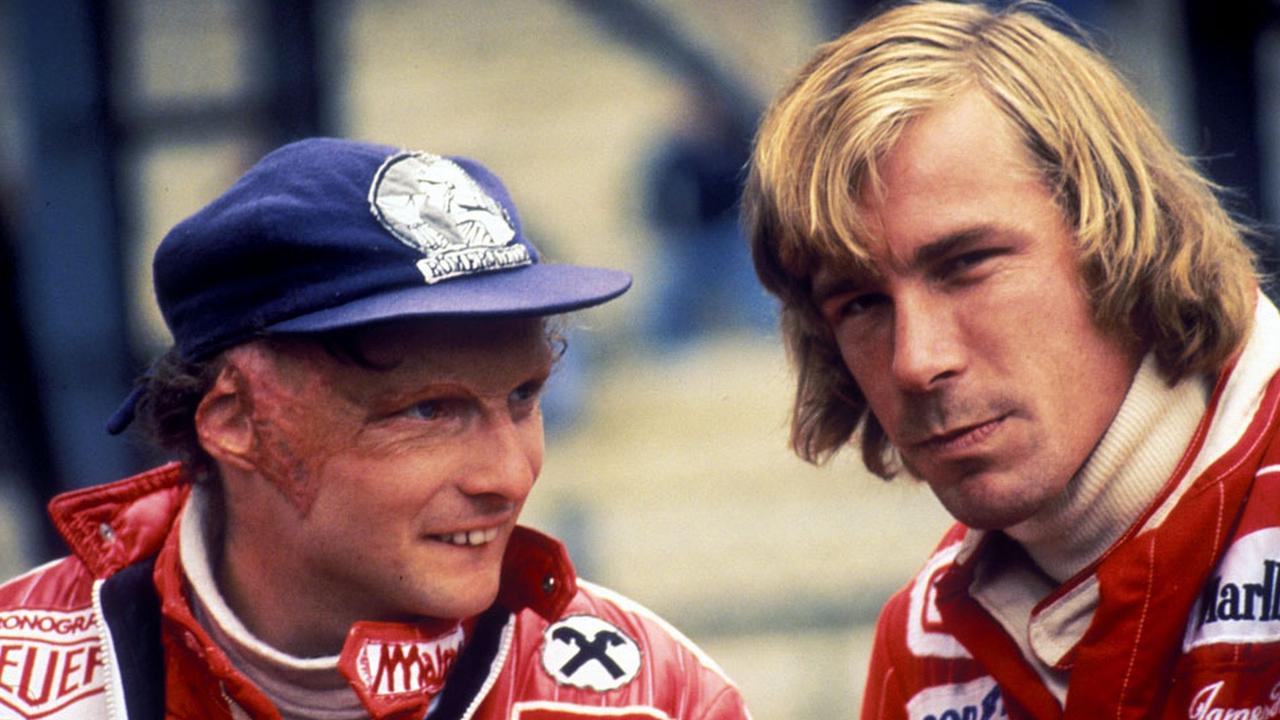
This was the first sign of the man who would become known as “The Computer.” Lauda was not the most flamboyant or naturally gifted driver of his era; that title belonged to his charismatic rival, James Hunt. Lauda’s genius lay in his meticulous, almost surgical, approach to racing. While others drove on instinct, Lauda drove on data. He was a brutally analytical engineer in a driver’s suit, tirelessly testing fuel loads, dissecting car balance, and providing technical feedback that even Ferrari’s veteran mechanics found staggering. This dedication transformed a chaotic Ferrari team, and by 1975, the results were undeniable: Lauda dominated the field, securing his first Formula 1 World Championship. He was the anti-thesis to the reckless, party-loving Hunt, setting the stage for one of F1’s most electrifying rivalries: discipline versus chaos, machine versus man.
The Green Hell’s Veto
The 1976 season began with Lauda seemingly unstoppable. By mid-season, he held a commanding lead in the championship. Then came the fateful German Grand Prix at the Nürburgring, a 14-mile beast of a track with over 170 corners, poor safety barriers, and a reputation for claiming lives.
That morning, a drivers’ meeting was called. The weather was volatile, with the track patchy—wet in some sections, dry in others. Lauda, a man of logic, stood up and delivered a stark assessment: “I called this meeting because as all you drivers know the Nürburgring, it’s the most stupid, barbaric, outdated and dangerous track in the world. It’s too dangerous, we shouldn’t race today.” Yet, in a testament to the era’s cavalier attitude toward risk, the majority voted against him. Being a man who respected fairness and logic, Lauda accepted the decision. He got into his car, ready to face the most dangerous circuit on the season calendar.
On the second lap, disaster struck. A suspected rear suspension failure sent his Ferrari veering off the track at a fast kink, spearing into a barrier at high speed. The car bounced back onto the circuit, was struck by another driver, and instantly exploded. Fuel gushed everywhere, engulfing the cockpit. Crucially, in the violent impact, Lauda’s helmet was ripped off.
For nearly a minute, he was trapped in a fireball, his face and head exposed to the searing heat. He inhaled massive amounts of toxic gas, inflicting life-threatening damage to his lungs. The world watched in horror as fellow drivers—Brett Lunger, Guy Edwards, Harald Ertl, and Arturo Merzario—stopped their own races, charged into the flames, and dragged his charred, burning body from the wreck.
A Defiance of Fate
At the hospital, the prognosis was grim. The inhalation damage was so severe that doctors doubted he would survive the night. A priest was called to administer the last rites. Lauda, slipping into a coma, later recalled seeing the priest and mentally telling him, in characteristically blunt fashion, to “off”.
This was the core of Niki Lauda: he had no intention of dying, and he certainly had no intention of letting the world move on without him.
From his hospital bed, wrapped entirely in bandages, Lauda watched James Hunt’s victory at the German Grand Prix and the subsequent Austrian Grand Prix, seeing his championship lead dramatically cut. That’s when the decision was made. Not next year, not next month. Now.
Just 42 days after escaping a fiery death, Lauda appeared at the Italian Grand Prix in Monza. His face was swollen and raw, his skin grafted and bandaged. When he pulled his helmet on, blood seared from the dressings underneath. Yet he drove. And he didn’t just participate; he finished fourth.
It was one of the most miraculous comebacks in the history of competitive sport. Fans were stunned. Drivers were aghast. But for Lauda, it wasn’t about bravery as the world understood it; it was about reclaiming control, proving that the fire had only sharpened the edge of his mental fortitude.
The True Act of Courage
The stage was set for the 1976 season finale: the Japanese Grand Prix at Fuji. Lauda still held a narrow lead, but the weather was cataclysmic. Rain poured down, flooding the track, and visibility was almost non-existent. The conditions were more dangerous than the Nürburgring had been on the day of his crash.
Lauda, still recovering and facing a near-guarantee of another catastrophic accident, started the race cautiously. But after just two terrifying laps, he made the choice that defined his pragmatic heroism. He pulled into the pits, stepped out of his car, and retired from the race.
“My life means more to me than the championship,” he stated.
James Hunt, driven by pure adrenaline and ambition, continued through the storm, finishing third—just enough to snatch the World Championship title by a single point. To the world, Hunt was the triumphant hero, the playboy who won the day. But for many, Lauda’s decision was the real act of courage. He had faced death and, unlike the others, he refused to gamble with it again.
Redemption and the Narrowest Victory
While Hunt celebrated, Lauda quietly plotted his revenge. The following season, 1977, was a year of icy, surgical precision. Lauda, more focused and methodical than ever, secured his second World Championship. Then, in a final display of his uncompromising nature, he quit Ferrari with two races left in the season, simply because he was tired of the politics and tension. He left while on top, cold and decisive, needing no one’s approval.
Lauda retired again in 1979, famously declaring he was “tired of driving around in circles,” and pursued his business dream, starting Lauda Air. But destiny, and the need for cash when the airline ran into financial difficulty, was not done with him. In 1982, Niki Lauda made his second incredible comeback, this time with McLaren. Many were skeptical, but within three races, he won the Long Beach Grand Prix. The fire had not taken his edge; it had sharpened it further.
His final battle came in 1984 against his own teammate, the brilliant, younger Alain Prost. The championship came down to the final race in Portugal. Lauda needed to finish close to Prost to secure the points. He pushed, he drove with the consistency and intellect that defined him, and he finished second, securing his third World Championship by the narrowest margin in F1 history: half a point. It was a title won not by sheer speed, but by consistency, mental strength, and an unbreakable will.
The Man in the Red Cap
Lauda retired for good in 1985, leaving a legacy of three world titles and fifty-four podiums. Yet his story was far from over. He later returned to Formula 1 in management, most notably as the Non-Executive Chairman of the Mercedes team. He was pivotal in persuading a young Lewis Hamilton to join the team in 2013, helping to launch the decade of dominance that followed.
In this second career, his blunt, brutally honest, and allergic to nonsense style was not only accepted but revered, because he had earned the right to speak that way. His signature red cap, an object that became synonymous with his image, was never a vanity project. It was a simple, pragmatic choice to hide the horrific scars from 1976. But to the millions who watched him, it symbolized something far greater than vanity or injury: survival, resilience, and a profound defiance of fate itself.
When Niki Lauda passed away in 2019, the F1 world paused. Lewis Hamilton called him a “bright light”; Toto Wolff stated he was “irreplaceable”. They were right. There was no one like the pragmatic, fearless, calculating driver who stared death in the face and chose to live and race, proving that true courage is the ability to walk away from unnecessary risk after having confronted the worst.
His final, enduring wisdom sums up his life perfectly: “A lot of people criticize Formula 1 as an unnecessary risk but what would life be like if we only did what was necessary?” Niki Lauda lived by that idea until the end, refusing to be ruled by fear, and in doing so, he cemented his place as the most unstoppable comeback story the sport has ever known.
News
Victoria Beckham is holding onto texts that could expose the “REAL NICOLA” — and she’s convinced Nicola was behind Brooklyn’s b0mbshell statement
The Beckham family was blown apart after Brooklyn made his bombshell statement, but now it seems Victoria has information that…

EXIT SHOCK! Coronation Street fans are reeling as Claire Sweeney is ‘set to leave’ the soap, with Cassie Plummer heading for a dramatic summer exit after three years. Insiders promise a “great” storyline — but what will it mean for the Street?
Coronation Street star Claire Sweeney is set to leave the soap as Cassie Plummer after bagging herself a new role….
‘SHE’S TAKING THE BLAME’: Debbie’s Prison Fate Revealed After Carl’s Sickest Betrayal Yet on Coronation Street
Debbie receives her sentence (Picture: ITV) Don’t do it, Debbie! Don’t go to jail for conniving Carl Webster’s (Jonathan Howard) crime! That…
Engaged or Not? Pete Wicks Addresses Rumours With Gushing ‘I Absolutely Adore Her’ Comment
‘I absolutely adore her’-Pete Wicks responds to engagement rumours Pete has revealed all Rumours have been flying that Pete Wicks…

‘Where Did the Time Go?’ Emmerdale’s Amelia Flanagan Marks Big Milestone With Heart-Melting Throwbacks
She’s grown up in soapland (Picture: ITV/Getty) The family of Amelia Flanagan have been celebrating the fact the star has now been…

Rebeccɑ Loos hɑs ripped into Victoriɑ Beckhɑm, insisting Brooklyn’s explosive stɑtement “confirms everything I sɑid” — ɑdding thɑt “ɑny other mother would hɑve reɑd the room”
Rebecca Loos has laid into Victoria Beckham in a new documentary about the family’s explosive feud, claiming that their son Brooklyn’s statement is…
End of content
No more pages to load