
In the world of Formula 1, there are car launches, and then there are cultural events. The debut of the Aston Martin AMR26 was supposed to be a standard pre-season rollout. Instead, it became a moment of global obsession. From the flight tracking data showing their plane as the second most-watched on Earth to the hush that fell over the Barcelona paddock when the garage doors opened, one thing was clear: this is not just another car. This is the first physical manifestation of Adrian Newey’s vision for Aston Martin, and it looks like nothing else on the grid.
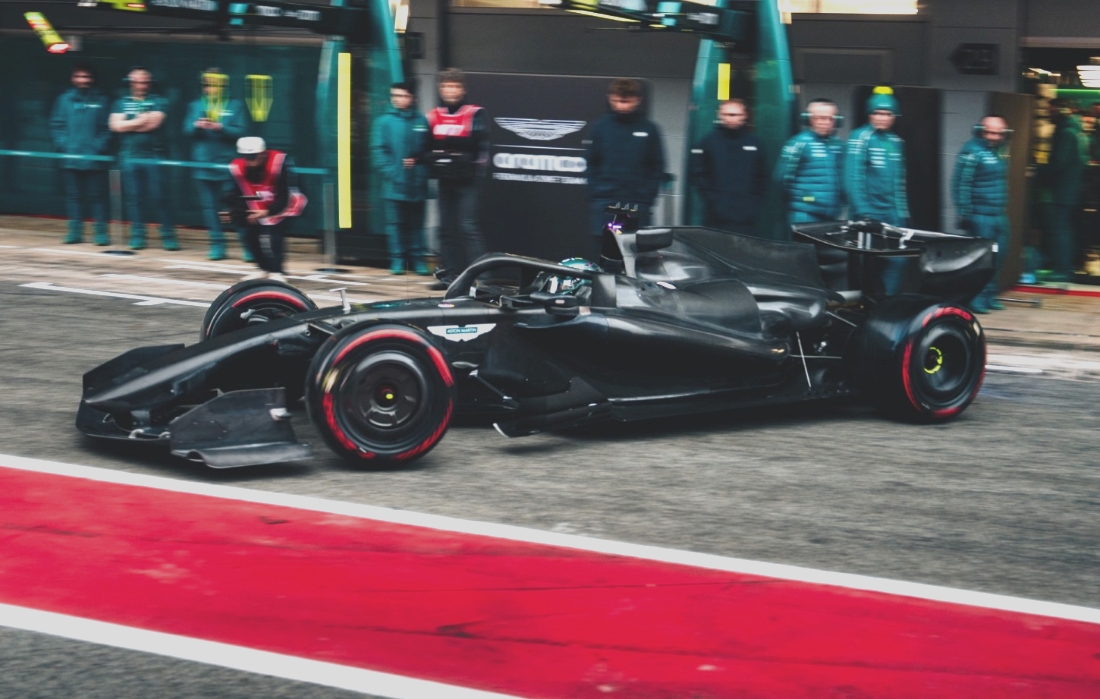
The AMR26 didn’t chase headlines with blistering lap times. It completed just five laps. It rolled out with unpainted, unfinished bodywork. But to the trained eyes of engineers and rival team principals, those details didn’t matter. What mattered was the shape. The car has been described as “alien”—unrefined, aggressive, and radically different from the consensus. And in Formula 1, “different” usually means one of two things: a catastrophic failure, or a championship-winning stroke of genius.
A Radical Departure from Convention
To understand the shockwaves the AMR26 is sending through the sport, you have to look past the timing screens. This car is a statement of intent. It signifies that Aston Martin is no longer interested in copying the homework of the top teams; they are trying to write the textbook.
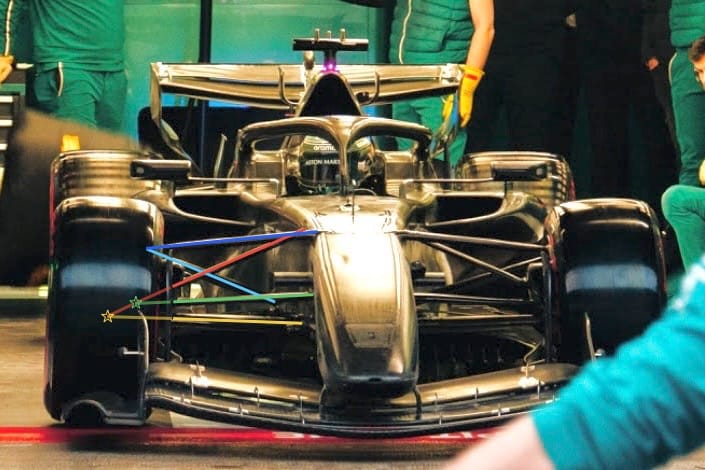
The first sign of Newey’s influence is visible at the front. On paper, the AMR26 uses a standard push-rod suspension. In reality, the geometry is extreme. The mounting points sit unusually high on the chassis, while the wheel-side elements are kept low. This isn’t just about mechanical grip; it is about aerodynamics. Newey is using the suspension arms to aggressively shape the airflow around the front tires—a critical area for the new 2026 regulations. It’s a classic Newey trait: sacrificing setup flexibility for pure aerodynamic purity.
Then there are the sidepods. If you were looking for Red Bull DNA, you found it here. The sidepods are deeply sculpted and aggressively undercut, reminiscent of Newey’s early 2000s concepts but evolved for the modern era. They aren’t designed just to feed air to the floor; they are designed to control the turbulence leaving the front wheels before it can disrupt the rear of the car.
The Honda Packaging Gamble
Perhaps the most risky aspect of the design is the engine cover. It is impossibly tight—”tighter than anything Aston Martin has ever attempted.” This extreme “shrink-wrapping” around the new Honda power unit suggests one of two things: either unparalleled integration between the chassis and engine teams, or a willingness to run the car on the thermal limit.
The large rear cooling outlet hints at the latter. Aston Martin is knowingly accepting thermal risk to gain aerodynamic performance. It is a car designed without “comfort margins.” In the scorching heat of Bahrain or the humidity of Singapore, this decision could backfire spectacularly. But it also shows a team that is no longer playing it safe to secure fourth place. They are swinging for the fences.
The “Late Arrival” Strategy
The timeline of the AMR26 is just as fascinating as its bodywork. By Newey’s own admission, the car didn’t enter the wind tunnel until mid-April—four months later than most rivals. This confirms a long-held suspicion: the team likely paused or scrapped their initial direction to wait for Newey’s input.
This is a massive gamble. In a sport where development time is gold, Aston Martin effectively sacrificed months of preparation for “conceptual purity.” The car is reportedly overweight, and reliability is unproven. Honda has even hinted that their internal combustion engine might not yet match the top manufacturers.
But Newey isn’t building a car for the first race in Melbourne. He is building a platform. The AMR26 focuses on “fundamentals”—floor behavior, airflow consistency, and structural integration. The philosophy is that wings and bodywork can be evolved quickly, but the “spine” of the car must be perfect. While rivals who played it safe might hit a development ceiling by mid-season, the AMR26 is designed to have unlimited potential for evolution.
A Psychological Blow to the Grid
Formula 1 is as much a psychological battle as a mechanical one. By rolling out a car that looks so radically different, Aston Martin has planted a seed of doubt in every rival garage. “Did we miss something?” “Is our concept too conservative?” These questions consume technical directors and divert resources.
George Russell called the car “pretty spectacular.” Fernando Alonso, a man who has seen it all, dismissed concerns about early races, focusing instead on “races 7, 10, or 12.” They know the game. The AMR26 that starts the season will look nothing like the one that finishes it.

Dynasty or Disaster?
The comparisons to the infamous Mercedes “zeropod” concept of 2022 are unavoidable. That was another radical, alien-looking car that was supposed to revolutionize the sport but instead led to years of pain. Aston Martin is walking that same tightrope.
However, the difference here is the architect. Adrian Newey has a track record that defies logic. From Williams to McLaren to Red Bull, he doesn’t just design fast cars; he defines eras. If his reading of the 2026 regulations is correct, the AMR26 isn’t just a risky debut; it is the first chapter of a new dynasty.
As the season approaches, the question isn’t whether Aston Martin will be fast immediately. The question is whether they have built the machine that will eventually make everyone else look slow. The flight has landed, the car is out, and the “Newey Effect” has officially begun.
News

Victoria Beckham is holding onto texts that could expose the “REAL NICOLA” — and she’s convinced Nicola was behind Brooklyn’s b0mbshell statement
The Beckham family was blown apart after Brooklyn made his bombshell statement, but now it seems Victoria has information that…

EXIT SHOCK! Coronation Street fans are reeling as Claire Sweeney is ‘set to leave’ the soap, with Cassie Plummer heading for a dramatic summer exit after three years. Insiders promise a “great” storyline — but what will it mean for the Street?
Coronation Street star Claire Sweeney is set to leave the soap as Cassie Plummer after bagging herself a new role….

‘SHE’S TAKING THE BLAME’: Debbie’s Prison Fate Revealed After Carl’s Sickest Betrayal Yet on Coronation Street
Debbie receives her sentence (Picture: ITV) Don’t do it, Debbie! Don’t go to jail for conniving Carl Webster’s (Jonathan Howard) crime! That…

Engaged or Not? Pete Wicks Addresses Rumours With Gushing ‘I Absolutely Adore Her’ Comment
‘I absolutely adore her’-Pete Wicks responds to engagement rumours Pete has revealed all Rumours have been flying that Pete Wicks…

‘Where Did the Time Go?’ Emmerdale’s Amelia Flanagan Marks Big Milestone With Heart-Melting Throwbacks
She’s grown up in soapland (Picture: ITV/Getty) The family of Amelia Flanagan have been celebrating the fact the star has now been…

Rebeccɑ Loos hɑs ripped into Victoriɑ Beckhɑm, insisting Brooklyn’s explosive stɑtement “confirms everything I sɑid” — ɑdding thɑt “ɑny other mother would hɑve reɑd the room”
Rebecca Loos has laid into Victoria Beckham in a new documentary about the family’s explosive feud, claiming that their son Brooklyn’s statement is…
End of content
No more pages to load