
In the high-stakes world of Formula 1, momentum is everything. And just a few months ago, all of it belonged to McLaren. After the Hungarian Grand Prix, Red Bull’s superstar driver, Max Verstappen, was a staggering 97 points adrift of championship leader Oscar Piastri. The title fight seemed all but over. The RB21 car, while decent, appeared to have hit its development ceiling. Pundits and fans alike had turned their attention to the next era of regulations, assuming all top teams were quietly shifting their resources accordingly.
All, it seems, except Red Bull.
In a stunning reversal that has electrified the paddock and thrown the championship wide open, Red Bull has engineered one of the most impressive mid-season turnarounds in recent memory. A second-place finish in Zandvoort followed by dominant, back-to-back victories in Monza and Baku have slashed Verstappen’s deficit to just 69 points. With seven races still to go, the impossible now seems plausible.
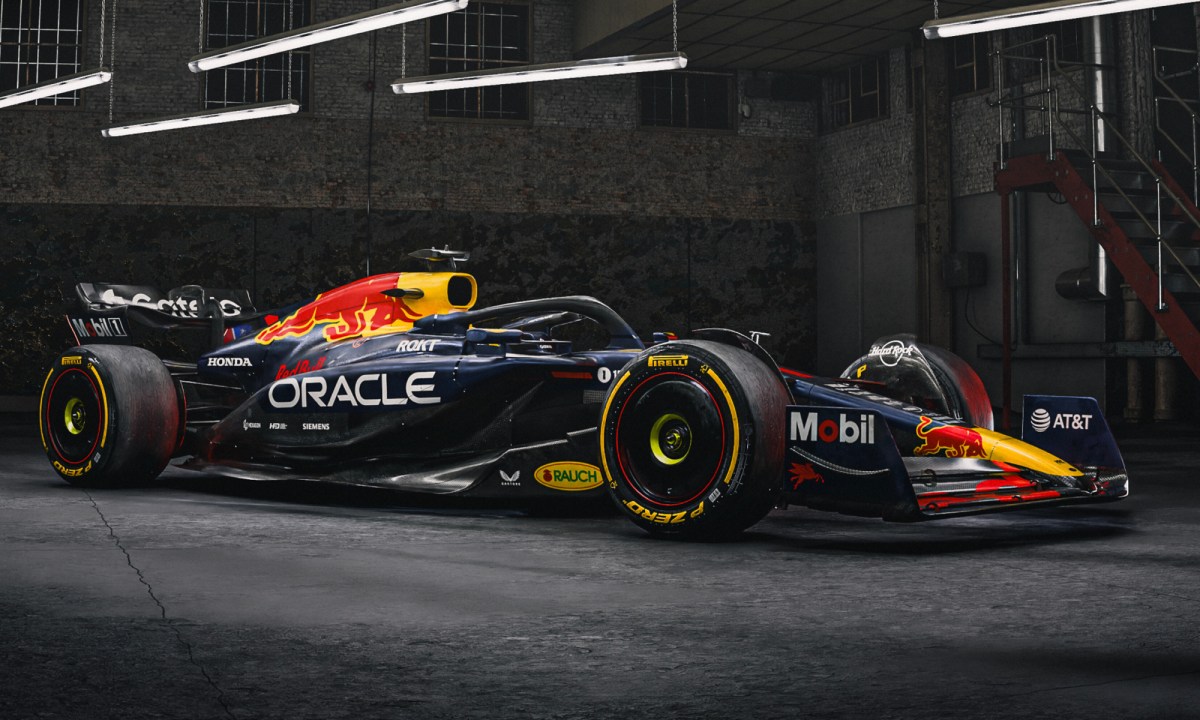
Verstappen, once a distant longshot, is now a legitimate outsider for the title. But this isn’t just a story about points. It’s about pressure. As Red Bull’s star has risen, McLaren’s young guns, Piastri and Lando Norris, have begun to show the first cracks in their armor. Mistakes have crept in, a product of the immense expectation of securing a first-ever championship. Suddenly, they aren’t just racing the clock or the track; they’re racing the relentless, experienced presence of Max Verstappen in their mirrors. The psychological threat of Max capitalizing on every single slip-up has added a new, thrilling dimension to the season’s final act.
But how did this happen? How did a team that seemed lost in the summer find the “on” switch while their rivals were winding down? The answer is not a single, magic-bullet upgrade. Instead, it’s a story of methodical, relentless development, a new leadership philosophy, and a team proving it can thrive even after the departure of its greatest icon.
The transformation of the RB21 has been nothing short of remarkable. While other teams conserved resources, Red Bull felt justified in continuing to aggressively develop their current car. This decision has paid off spectacularly, but the journey began not with a bang, but with a series of intelligent, interconnected updates.
The first major package arrived at the Belgian Grand Prix. It featured a brand-new front wing designed to fundamentally redistribute the airflow across the car. This was paired with new sidepod inlets and a revised engine cover. On the surface, these seem like standard updates, but their brilliance was in their synergy. The new inlets drastically improved cooling efficiency. This meant the team no longer had to run with “gills” or larger cooling outlets on high-speed tracks like Monza and Baku. Opening up bodywork for cooling is a necessary evil that creates massive amounts of drag—the enemy of straight-line speed. By solving the cooling problem, Red Bull slimmed down the car’s profile, reducing drag and unlocking free performance.
But they didn’t stop there. After the summer break, the team arrived in Monza—a track where they had been embarrassingly slow last year—with another ace up their sleeve. They introduced a revised new floor, designed specifically to work in harmony with the front wing from Belgium. In a sign of supreme confidence (or perhaps calculated desperation), they only had one version of this new floor, and it was immediately given to Verstappen.
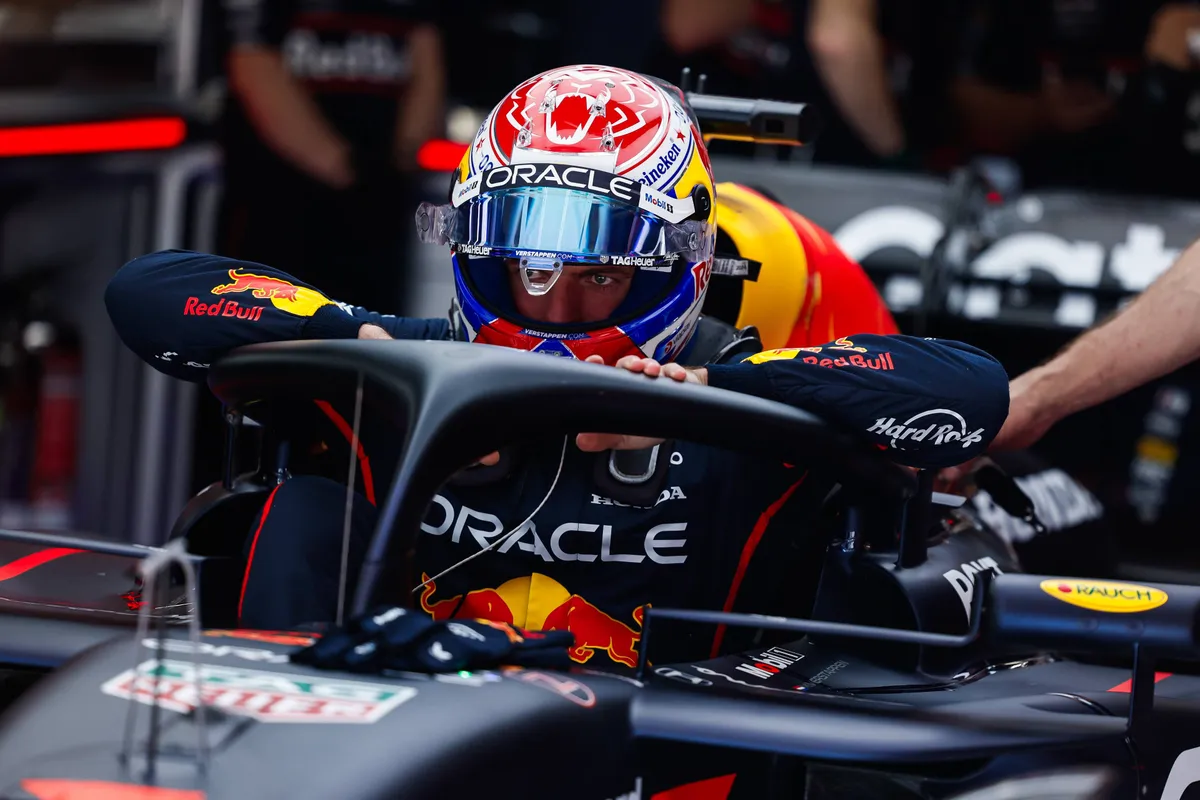
The masterstroke, however, was the rear wing. Monza, the “Temple of Speed,” demands a unique, low-drag setup. Most teams, conscious of their budgets, simply modified older-spec wings. Red Bull, clearly targeting this former weakness, spent precious time and resources developing a completely bespoke low-downforce rear wing package.
This technical prowess culminated in a moment of pure driver-team synergy. Confident in the car’s newfound stability and downforce, Max Verstappen made a critical call right before qualifying: he asked the team to trim out even more downforce. It was a gamble that could have destroyed his tires in the race. Instead, it was a masterstroke. The RB21 had immense straight-line speed, allowing Verstappen to effortlessly re-overtake Norris at the start of the race. Crucially, the car’s strong aero platform meant it didn’t slide and overheat its tires, proving it had both speed and endurance.
This confidence to add downforce without negative consequences highlights a key difference between Red Bull and their rivals. While Ferrari has struggled with bouncing and plankwear issues when trying to add performance, Red Bull has demonstrated a superior understanding of their car’s aerodynamic platform, allowing them to push the limits without fear.
This revival extends beyond just Verstappen. Teammate Yuki Tsunoda, who had endured a seven-race scoreless streak, has also seen a slight uptick in form, reaching Q3 twice and scoring his best-ever result with a P6 in Baku. It’s a small but significant sign that the car’s improvements are fundamental, not just tailored to Max.
However, the car is only half the story. The other, perhaps more significant, change has been human. The arrival of new Team Principal Laurent Mekies has heralded a counter-intuitive but brilliant shift in philosophy. Mekies, an engineer by trade, has systematically moved the team away from an over-reliance on simulations and data.
As Verstappen himself explained, the team had been “shooting left and right” with extreme setup changes, a sign that they were “not in control” and didn’t fully understand the car. Mekies, with his engineering background, began asking the right, “common sense” questions, empowering the engineers to trust what the driver was feeling over what the computer models predicted. This new approach has given more power to Max, allowing his world-class feel and feedback to guide the car’s setup, resulting in a more controlled, predictable, and ultimately faster machine.
This entire turnaround is happening in the long shadow of Adrian Newey’s departure at the beginning of last season. It’s hard not to connect the team’s subsequent drop-off with the exit of its legendary designer. This placed immense pressure on Technical Director Pierre Waché to prove that Red Bull’s technical department was not a one-man show. This mid-season revival, achieved without Newey, is perhaps the team’s most significant victory. It has restored faith and confidence internally, proving that Waché and his team are fully capable of delivering a championship-level car on their own.

Now, all eyes turn to Singapore. This is the “litmus test.” The victories at Monza and Baku were on low-downforce tracks that clearly suited the RB21’s new, slippery profile. Singapore is the opposite: a high-downforce, slow-speed, bumpy street circuit that has historically been Red Bull’s single weakest track.
This is where all the upgrades will be pushed to their limit. The new cooling efficiency will be vital in the humid city heat. The car’s improved braking potential, another area Max had criticized earlier in the season, will face its toughest challenge. The car will be put into its high-downforce configuration, and the world will see if the suspension and aero platform can remain stable and drivable over the infamous Singapore bumps.
If the Red Bull is competitive in Singapore—if Max can genuinely challenge the McLarens on a track that should be their fortress—it will be a terrifying signal to the rest of the grid. It will prove that the RB21 is no longer a “track-specific” car, but a true all-rounder.
Red Bull and Max Verstappen have transformed their season and deserve every ounce of credit for clawing their way back into contention. But Singapore will be the final exam. It will determine if this is just a remarkable late-season surge, or if they are truly a genuine title threat, ready to push McLaren all the way to the final checkered flag.
News

Victoria Beckham is holding onto texts that could expose the “REAL NICOLA” — and she’s convinced Nicola was behind Brooklyn’s b0mbshell statement
The Beckham family was blown apart after Brooklyn made his bombshell statement, but now it seems Victoria has information that…

EXIT SHOCK! Coronation Street fans are reeling as Claire Sweeney is ‘set to leave’ the soap, with Cassie Plummer heading for a dramatic summer exit after three years. Insiders promise a “great” storyline — but what will it mean for the Street?
Coronation Street star Claire Sweeney is set to leave the soap as Cassie Plummer after bagging herself a new role….

‘SHE’S TAKING THE BLAME’: Debbie’s Prison Fate Revealed After Carl’s Sickest Betrayal Yet on Coronation Street
Debbie receives her sentence (Picture: ITV) Don’t do it, Debbie! Don’t go to jail for conniving Carl Webster’s (Jonathan Howard) crime! That…

Engaged or Not? Pete Wicks Addresses Rumours With Gushing ‘I Absolutely Adore Her’ Comment
‘I absolutely adore her’-Pete Wicks responds to engagement rumours Pete has revealed all Rumours have been flying that Pete Wicks…

‘Where Did the Time Go?’ Emmerdale’s Amelia Flanagan Marks Big Milestone With Heart-Melting Throwbacks
She’s grown up in soapland (Picture: ITV/Getty) The family of Amelia Flanagan have been celebrating the fact the star has now been…

Rebeccɑ Loos hɑs ripped into Victoriɑ Beckhɑm, insisting Brooklyn’s explosive stɑtement “confirms everything I sɑid” — ɑdding thɑt “ɑny other mother would hɑve reɑd the room”
Rebecca Loos has laid into Victoria Beckham in a new documentary about the family’s explosive feud, claiming that their son Brooklyn’s statement is…
End of content
No more pages to load