
In the high-stakes world of Formula 1, contract announcements are typically moments of celebratory clarity, cementing a driver and team’s shared vision for the future. However, the recent confirmation of George Russell’s new deal with Mercedes has stirred the paddock not with its certainty, but with its conspicuous ambiguity. On the surface, it’s a continuation of a partnership. Dig a little deeper, and you’ll find a masterclass in mutual bet-hedging, a carefully constructed arrangement that leaves both parties with an eye on the exit door come 2027.
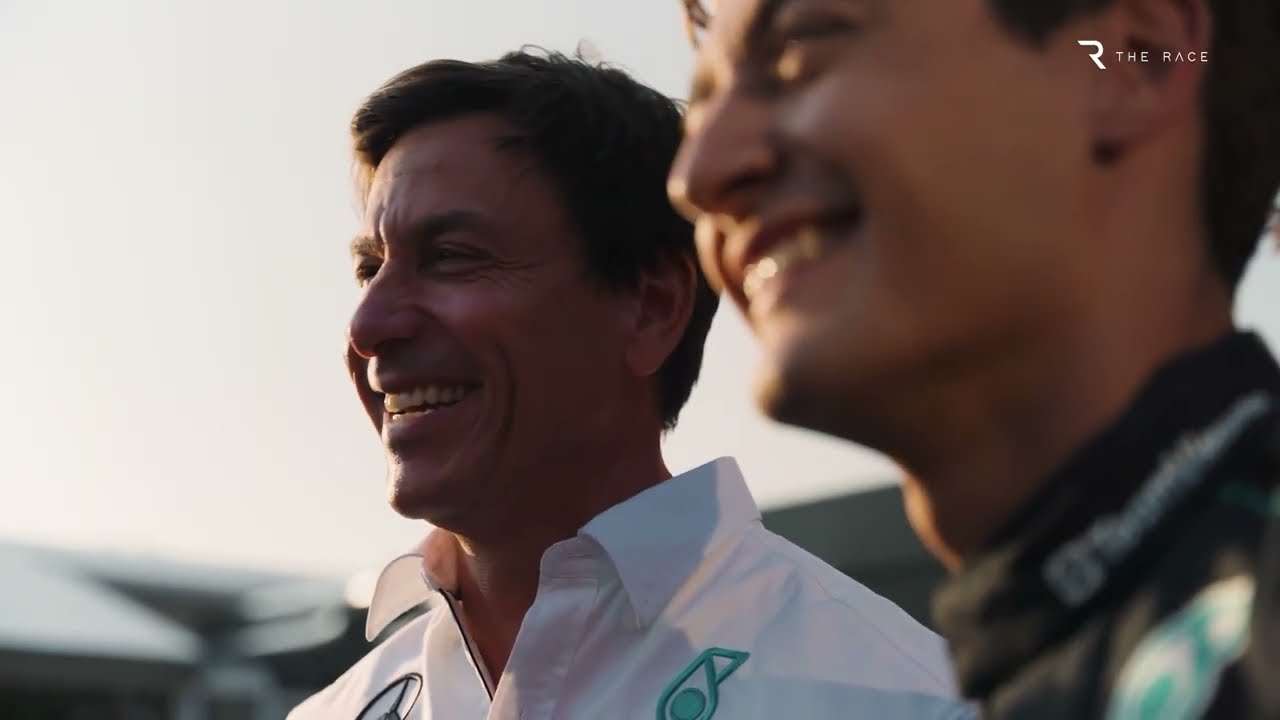
The official press release was elegantly simple, confirming that both Russell and his new teammate, Kimi Antonelli, would be with the team for 2026. Yet, the language was as notable for what it didn’t say as for what it did. In an era where teams are locking down star drivers like Max Verstappen and Lando Norris to long-term, ironclad deals, Mercedes’ deliberate omission of the 2027 season in their public statement speaks volumes. Sources indicate Russell’s contract does, in fact, run into 2027, but the decision to keep that detail under wraps is a piece of brutal pragmatism from both camps. This isn’t a simple extension; it’s a strategic maneuver, an acknowledgment of the monumental uncertainty looming over the sport with the 2026 rules revolution.
At the heart of this calculated ambiguity lies a simple truth: both George Russell and Mercedes are keeping their options open. For Mercedes, the allure of another, potentially bigger, prize hangs in the air. It’s no secret that team boss Toto Wolff holds a deep admiration for Max Verstappen. The Dutch phenom is theoretically locked down at Red Bull until the end of 2028, but his contract is understood to contain performance clauses. If Red Bull falters under the new 2026 regulations, Verstappen could become a free agent. By not publicly committing to Russell for 2027, Wolff ensures Mercedes has a seat at the table should the grid’s top driver become available. It’s a pragmatic, if slightly cold, strategy for a team desperate to return to its championship-winning ways.
From Russell’s perspective, this flexibility is equally valuable. At 28, he is entering the prime of his career. He has weathered the storm of Mercedes’ struggles in the ground-effect era, emerging as a bona fide team leader in the wake of Lewis Hamilton’s departure. He’s a five-time Grand Prix winner, responsible for the vast majority of the team’s victories in a challenging period. He has proven his speed, his race craft, and now, his consistency. The question for Russell is no longer whether he is good enough for Mercedes, but whether Mercedes, in its current form, is good enough for his championship ambitions.
The 2026 season represents a hard reset for Formula 1. With sweeping changes to both chassis and engine regulations, the competitive order could be completely upended. The dominant force of Red Bull could be neutralized, while midfield teams could surge to the front. A team that seems like a dream destination today might be a midfield runner in two years. For a driver of Russell’s caliber, being locked into a multi-year deal as this new era dawns could be a golden ticket or a career-defining mistake. He is keenly aware that his services will be in high demand. Should Adrian Newey’s first car for Aston Martin prove to be a world-beater, or if Red Bull needs a new star should Verstappen depart, Russell’s name will be at the top of the list. By keeping 2027 open, he gives himself the freedom to assess the new landscape and make the best decision for his own legacy.
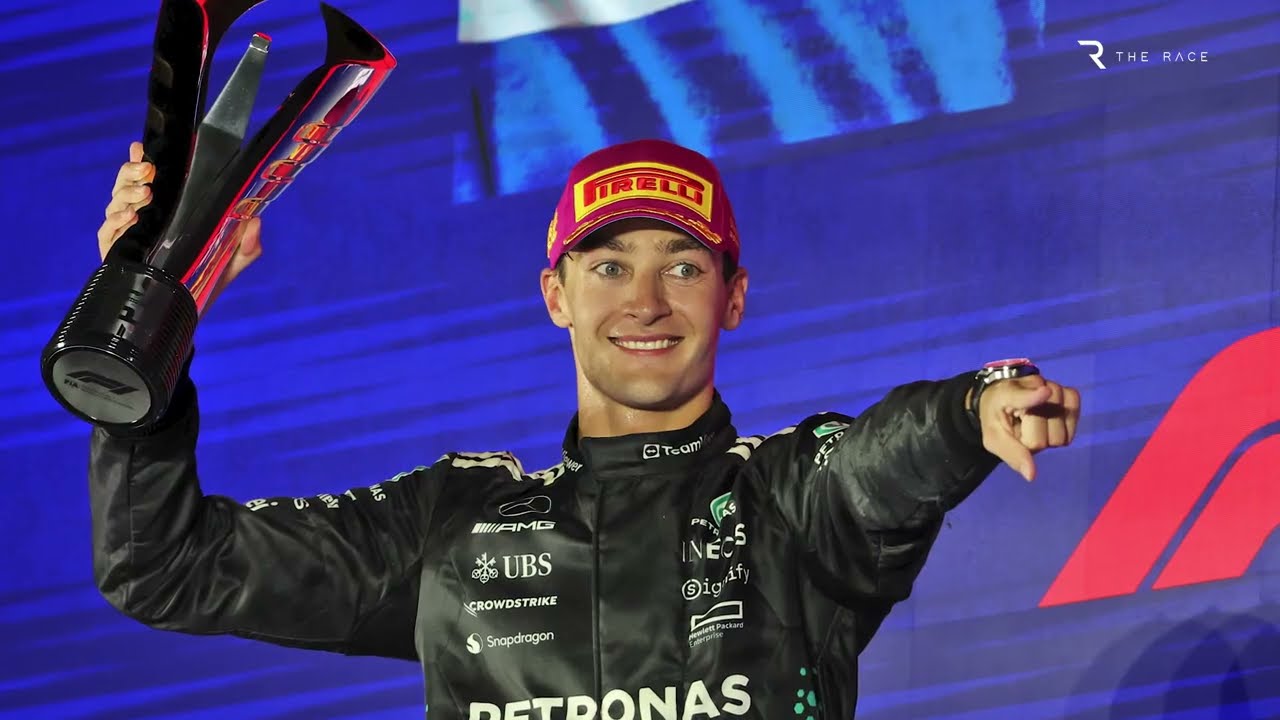
This strategic flexibility is only possible because of the remarkable evolution Russell has undergone. When he first joined Mercedes alongside the legendary Lewis Hamilton, he was a driver of immense potential, but one prone to costly errors. The raw speed was undeniable, but it was sometimes overshadowed by a tendency to overreach or lose focus at critical moments. Incidents like the crash from a podium position in Singapore in 2023 or gambling on the wrong tires were marks of a driver still honing his craft.
However, the 2025 season has seen the emergence of a new George Russell. He has become the “north star” Mercedes desperately needed after Hamilton left. The mistakes have been minimized, replaced by a relentless consistency that top teams crave. He appears more relaxed, more in control, and has transformed his raw talent into the robust, dependable performance of a true team leader. He has single-handedly carried the fight for Mercedes, securing five victories while the team has struggled to get on top of the complex ground-effect cars. This newfound maturity is the bedrock of his current market value. He’s no longer just Hamilton’s heir apparent; he is a top-tier driver in his own right, and he knows it.
This dynamic creates a fascinating tension. Right now, Russell looks far more attractive to other F1 teams than Mercedes looks to other top-tier drivers. The once-dominant Silver Arrows have become a team of occasional brilliance, capable of winning on their day but lacking the week-in, week-out dominance that defined their dynasty. For Russell, who is consistently delivering drives worthy of a championship contender, the wait for the car to match his abilities must be frustrating.

Ultimately, the carefully worded announcement reflects a partnership built on a shared dream but grounded in a realistic understanding of the sport’s ruthless nature. Both Mercedes and Russell hope their journey, which began nearly a decade ago in the junior formulas, will culminate in world championship glory. They are aligned on this goal for 2026. But as the Sergio Pérez saga at Red Bull demonstrated, contracts in Formula 1 can be made to be broken. Loyalty and long-term vision are valuable, but performance is the ultimate currency.
For now, they will present a united front, working together to conquer the challenges of the present. But behind the scenes, both driver and team are acutely aware that the landscape of Formula 1 is about to change dramatically. This contract isn’t a declaration of unwavering, long-term faith. It’s a strategic alliance, a partnership of convenience that allows both sides to prepare for a future that is thrillingly, and perhaps terrifyingly, wide open. The race for 2026 is on, but the real prize fight might just be for 2027.
News

Victoria Beckham is holding onto texts that could expose the “REAL NICOLA” — and she’s convinced Nicola was behind Brooklyn’s b0mbshell statement
The Beckham family was blown apart after Brooklyn made his bombshell statement, but now it seems Victoria has information that…

EXIT SHOCK! Coronation Street fans are reeling as Claire Sweeney is ‘set to leave’ the soap, with Cassie Plummer heading for a dramatic summer exit after three years. Insiders promise a “great” storyline — but what will it mean for the Street?
Coronation Street star Claire Sweeney is set to leave the soap as Cassie Plummer after bagging herself a new role….

‘SHE’S TAKING THE BLAME’: Debbie’s Prison Fate Revealed After Carl’s Sickest Betrayal Yet on Coronation Street
Debbie receives her sentence (Picture: ITV) Don’t do it, Debbie! Don’t go to jail for conniving Carl Webster’s (Jonathan Howard) crime! That…

Engaged or Not? Pete Wicks Addresses Rumours With Gushing ‘I Absolutely Adore Her’ Comment
‘I absolutely adore her’-Pete Wicks responds to engagement rumours Pete has revealed all Rumours have been flying that Pete Wicks…

‘Where Did the Time Go?’ Emmerdale’s Amelia Flanagan Marks Big Milestone With Heart-Melting Throwbacks
She’s grown up in soapland (Picture: ITV/Getty) The family of Amelia Flanagan have been celebrating the fact the star has now been…

Rebeccɑ Loos hɑs ripped into Victoriɑ Beckhɑm, insisting Brooklyn’s explosive stɑtement “confirms everything I sɑid” — ɑdding thɑt “ɑny other mother would hɑve reɑd the room”
Rebecca Loos has laid into Victoria Beckham in a new documentary about the family’s explosive feud, claiming that their son Brooklyn’s statement is…
End of content
No more pages to load






