In the heroic history of Formula 1, there was a turbulent period, dubbed the “FISA-FOCA War,” that shook the entire structure of this high-speed sport. Taking place from the late 1970s to the early 1980s, this confrontation was not just a simple power grab but a grueling battle over rules, money, and vision between two major organizations: the Fédération Internationale du Sport Automobile (FISA) and the Formula One Constructors’ Association (FOCA). This war, though seldom mentioned, left a profound legacy, shaping the modern Formula 1 we know today.

The Birth of Two Giants and the Seeds of Discord
To fully understand the “FISA-FOCA War,” we need to step back in time to the origins of these organizations. The Fédération Internationale de l’Automobile (FIA) was founded in France in 1904, originally known as the Association Internationale des Automobile Clubs Reconnus (IARAC). The main goal of the IARAC was to represent the interests of automobile clubs and car users. By 1922, the IARAC established the Commission Sportive Internationale (CSI), the governing body for Grand Prix motor racing, laying the foundation for international championships. After World War II, the IARAC became the FIA, and in 1946, they created a standard set of rules for Grand Prix motor racing, from which Formula 1 was officially born. The CSI, representing the FIA, was responsible for creating the rules, regulations, and organizing the race calendar. Meanwhile, the race organizers at each venue handled prize money and the day-to-day running of the event.
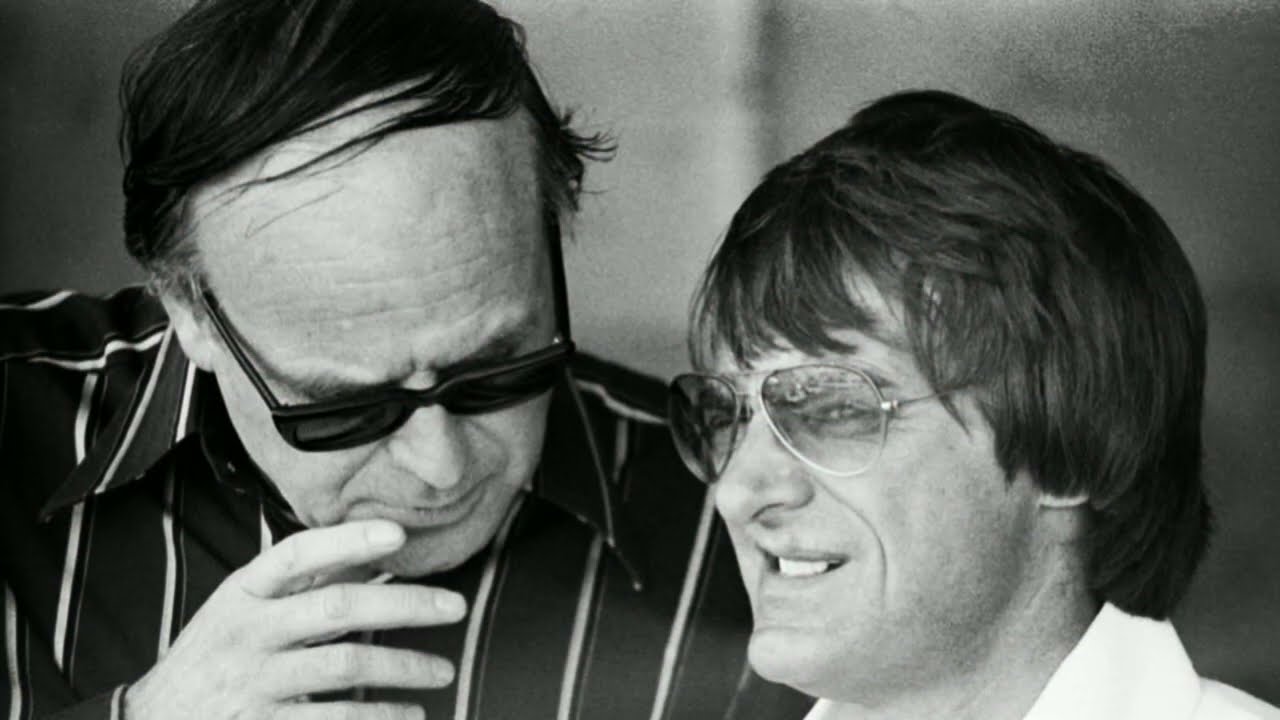
In 1972, Bernie Ecclestone bought the Brabham team. Two years later, he founded the Formula One Constructors’ Association (FOCA) along with several influential figures in F1 such as Frank Williams (team principal of Frank Williams Racing Cars), Colin Chapman (team principal of Lotus), Teddy Mayer (team principal of McLaren), Ken Tyrrell (team principal of Tyrrell), and Max Mosley (co-founder and legal and commercial representative for March Engineering). FOCA’s initial purpose was to represent the commercial interests of the smaller, privately-owned teams, first against the race organizers, and later against the large manufacturer teams like Ferrari, Matra, and Alfa Romeo. In 1978, Ecclestone made himself Chief Executive of FOCA, with Mosley as his legal representative.
In the same year, the CSI was dissolved and replaced by the Fédération Internationale du Sport Automobile (FISA), with Jean-Marie Balestre becoming its president. The parallel existence of these two powerful organizations—FISA responsible for sporting regulations and FOCA representing the commercial interests of the teams—created a ripe environment for conflict.
The First Clashes: The “Fan Car” and Driver Boycotts
The first tensions began to erupt at the 1978 Swedish Grand Prix. Ecclestone’s Brabham team unveiled the BT46B “fan car,” designed to challenge the pioneering ground effect of Colin Chapman’s Lotus 79. Niki Lauda won the race comfortably. Although its design was protested by other teams on the grounds that the fan was a movable aerodynamic device, FOCA declared it legal, as technical director Gordon Murray claimed the fan’s primary purpose was to cool the engine. However, Brabham later voluntarily withdrew the car as other FOCA-aligned teams threatened to withdraw their support, which Ecclestone needed for his own career ambitions.
In 1979, Ecclestone began pushing for better commercial rights for the FOCA teams, who felt that prize money and regulations often favored the manufacturer-backed teams. The first major salvo was fired at the 1980 Spanish Grand Prix. The drivers from FOCA-aligned teams had boycotted the driver briefings at the preceding Belgian and Monaco Grands Prix. FISA claimed these briefings were compulsory, despite no official rule being in place, and subsequently fined each driver $2,000. When none of them paid the fine, FISA tried to have their super licenses revoked. In response, all FOCA-aligned teams threatened to boycott the race.
The Royal Spanish Automobile Club (RACE), the event organizer, attempted to pay the fines themselves, but FISA rejected the offer. Eventually, King Juan Carlos intervened, insisting the race go ahead, which forced RACE to bypass the FISA-affiliated Spanish motorsport federation. This meant that as the race was no longer sanctioned by FISA, there was no need to possess a FISA super license. However, as a result, it also became a non-championship race. Consequently, Ferrari, Renault, and Alfa Romeo all withdrew, as did Osella, though their cars were loaned to their sponsors as separate entries so they could still race. After the race, the FIA committee removed FOCA’s seat from the FISA executive committee and also declared the race illegal, removing any championship points before the following round in France. Eventually, all drivers paid their outstanding fines and had their FISA super licenses returned to them.
The First Concorde Agreement and New Battlegrounds
In late 1980, FISA banned flexible side skirts on the cars, which had been crucial in their application of ground effect. In response, Bernie Ecclestone attempted to create a rival series called the World Federation of Motorsport and formed an 18-race calendar. However, he did not have the support of the FISA-aligned teams nor many of the race organizers, and it caused numerous disruptions to the official FISA-sanctioned calendar. The season was expected to open with the Argentine Grand Prix in January, which had to be cancelled, followed by the South African Grand Prix, which was postponed from February to April. This was not well received by the hosts, as they had already done all their marketing and promotion for the February date, and April had less favorable weather conditions.
FISA delivered an ultimatum to the hosts: either host the race in April against their wishes or keep it in February but as a non-championship Formula Libre event. They chose the latter, so the FISA-aligned teams of Ferrari, Renault, Alfa Romeo, Osella, and Toleman all sat out the event, leaving the 11 FOCA-aligned teams (all British, except for the German ATS) all running the Cosworth DFV and all running with flexible side skirts, which were now legal again. The lack of support from FISA, poor fan attendance, and limited coverage meant the breakaway series quickly fell apart.
A few weeks earlier, after Goodyear had threatened to withdraw as Formula 1’s official tire supplier, Ecclestone organized a meeting with the FIA, FISA, and all team principals at the FIA headquarters at the Place de la Concorde in Paris. All agreed to sign the first Concorde Agreement. This made attendance by all teams at all races compulsory, mostly because the television rights to Formula 1 had now been given to FOCA, and they needed to guarantee their audiences had a race to watch. The agreement also stipulated that FOCA would comply with the FISA skirt ban, provided they continued to have financial or commercial control and that FISA maintained a period of stability regarding the regulations over the next four years.
Escalating Games: Ride Height and Turbo Engines
To properly enforce the skirt ban, FISA also mandated a minimum ride height of six centimeters for the cars. Brabham, however, quickly got around this and arrived at the United States Grand Prix West with Gordon Murray’s BT48C fitted with hydropneumatic suspension. This system held the ride height at six centimeters when the car was stationary but would then drop under the pressure of the downforce when the car was on track and the ride height couldn’t be measured. The other teams were naturally not happy about this, but it was permitted as Murray had found a loophole in the regulations where a degree of suspension compression was permitted, but exactly how much had never been specified. The other teams tried and failed to replicate this system and eventually made a similar design where a simple switch would lower the ride height on track.
Both the skirt ban and minimum ride height were reversed in 1982, but the next battleground turned towards engines. Renault had introduced the first turbocharged Formula 1 car in 1977. Various teething problems meant it wasn’t until 1982 that several other teams had developed their own, and the enormous power gains made it the way forward. Brabham, Renault, Ferrari, and Toleman all ran with turbocharged engines in 1982. Brabham was the only FOCA-aligned team of the four but also used a naturally aspirated engine for the second and third rounds, and all other FOCA-reliant teams were still using the Cosworth DFV, which had been ubiquitous in Formula 1 since 1967.
The Drivers’ Strike and Regulatory Loopholes
Also in 1982, FISA tried to impose new super license conditions which would have tied drivers to a single team for up to three years. The Ferraris of Gilles Villeneuve and Didier Pironi, the McLaren of Niki Lauda, the Renault of René Arnoux, and the Alfa Romeos of Bruno Giacomelli and Andrea de Cesaris all refused to sign the new deal. A meeting was held by Jean-Marie Balestre on the Wednesday before the opening round in South Africa, who said that no changes could be made to the deal without first going through the FIA executive committee, so if the drivers refused to sign, they would not be allowed to race.
The following day, the GPDA hired a bus, which all the drivers except Jochen Mass and Jackie Ickx boarded, and instead of taking part in practice, they staged a sit-in at the Sunnyside Park Hotel in Kyalami. Teo Fabi eventually defected and explained everything the drivers had been discussing to Toleman boss Alex Hawkridge. Practice on Friday morning went ahead with only Mass taking part. The other drivers eventually abandoned the strike after ostensibly being told they would not be penalized. The race went ahead, but all drivers were issued fines of between five and ten thousand dollars and given a two-race ban, and the new license rules were scrapped. The drivers refused to pay the fines and abandoned the GPDA, replacing it with the Professional Racing Drivers’ Association (PRDA), available to all racing drivers. The FIA court of appeal intervened, reduced the fines, changed the two-race ban to a one-race suspended ban, and the Grand Prix went ahead.
In the Concorde Agreement, a minimum weight of 585 kilograms was mandated for all cars. The naturally aspirated teams, however, were at such a power disadvantage that they found yet another loophole: the car’s weight would be measured before and after the race, but any oils and cooling fluids could be refilled before the weigh-in, as the rules said nothing about said fluids needing to still be in the car at the end of the race. So, the teams installed large water tanks in the side pods, which they would fill up before the weigh-in, claim it was used as brake coolant, and then dump the water on the track when they left the pit lane. Williams and Brabham both got found out at the second round in Brazil. Carlos Reutemann had won and Keke Rosberg finished second, but they were both disqualified after Renault, who finished third, protested. Williams and Brabham both appealed this ruling, which took several weeks to be heard.
In the meantime, the FISA-aligned Ferrari arrived at the next round in Long Beach with a car with two rear wings. Both wings were within the size regulations but essentially worked as one unit that was double the permitted width, which they somewhat facetiously claimed was legal as the rules did not specify that the car should have only one rear wing. FISA, however, did not agree and they were also disqualified after Ken Tyrrell protested it. Three weeks later at Imola, after Williams and Brabham’s appeal was thrown out, all the FOCA-aligned teams opted to boycott the race, but Tyrrell, Osella, and ATS all broke the boycott, meaning only 14 cars took part. However, unlike the two races which the FISA-aligned teams had boycotted, this one did still count towards the championship. Ken Tyrrell had been forced to break the boycott as he had run with sponsorless cars for the first three races and had just secured a two-race deal with Saramiche Mala to run Michele Alboreto, and Osella and ATS had lost faith in the largely British FOCA after this.
The End of an Era and a Lasting Legacy
After these events, the hostilities abruptly stopped, and the full reasoning as to why is not really known. The naturally aspirated teams agreed to race at Zolder with appropriately ballasted cars, but the deaths of Gilles Villeneuve and Riccardo Paletti in consecutive races turned people’s attentions elsewhere. Ground effect was banned in 1983, and almost all teams were now using turbo power. Tyrrell ended up being one of the last teams to do so, not acquiring Cosworth Moreno engines until late 1985 after retroactively being disqualified from every race in 1984 for utilizing a water tank filled with water and lead shot to help cool the cylinders and increase power, which would only be filled late in the race, meaning they ran most of it underweight.
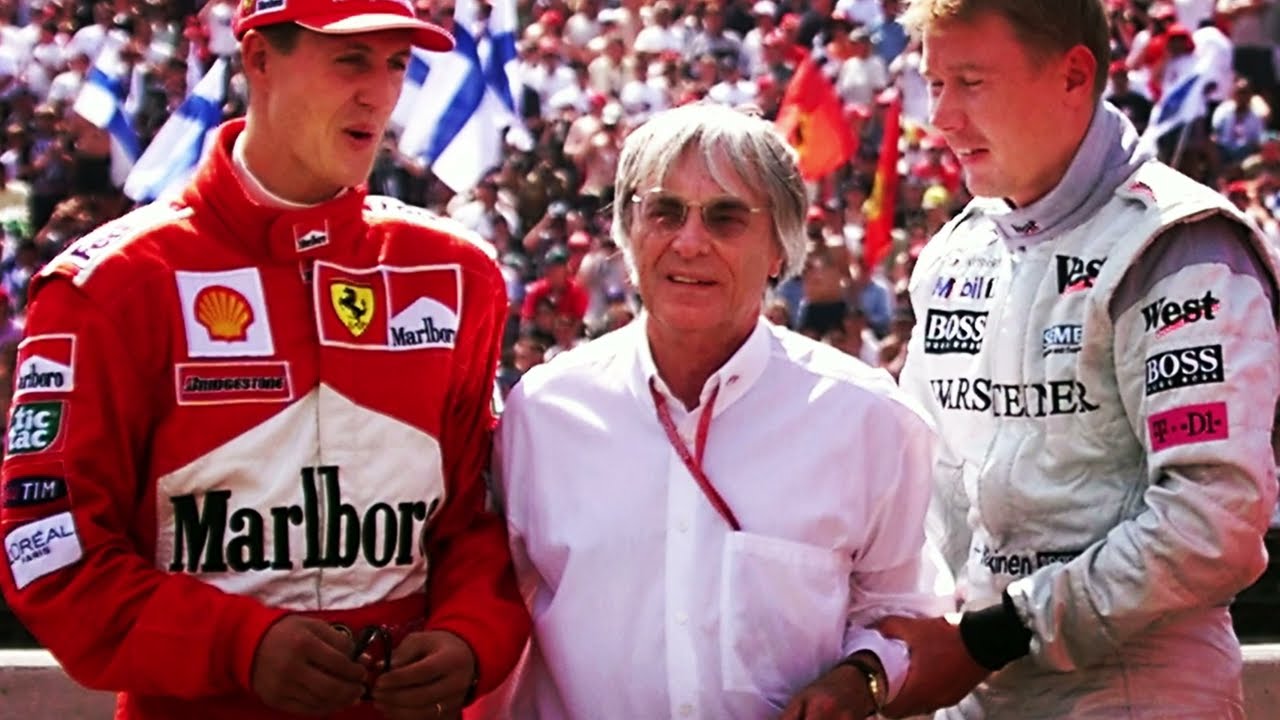
The first Concorde Agreement was replaced by the second one in 1987. At the same time, Ecclestone left Brabham and founded Formula One Promotions and Administration (FOPA), which would later become Formula One Management (FOM), essentially putting an end to FOCA. With this, FOPA received 49% of TV revenues, 1% went to the teams, and the remaining 50% went to the FIA, with FOPA also paying out all prize money. The GPDA was reformed in 1994 after the deaths of Roland Ratzenberger and Ayrton Senna and is still active to this day. Jean-Marie Balestre was made FIA President in 1986. He was beaten in an election as FISA president by Max Mosley in 1991, and two years later, during the FIA presidential election, decided to stand down and propose that FISA merge with the FIA. Balestre died in 2008, and Mosley remained FIA president until 2009.
Ecclestone remained in charge of FOM until 2017, during which time the sport expanded into a major global franchise broadcast live all over the world, before handing the keys over to Liberty Media, who have brought the sport into the social media age. Eight different Concorde Agreements have been ratified since 1981, which the drivers now get a lot more say over. There have been smaller-scale conflicts since and threats to boycott races, though none have been carried out as teams now receive very heavy financial penalties if they are capable of racing but refuse to do so. Accusations of bias towards certain teams or drivers are still thrown around regularly, too, most frequently at Ferrari and Mercedes.
Both Liberty Media and the FIA came under particular scrutiny during 2021 for what was seen as an inconsistent application of the rules designed to create an entertaining spectacle rather than fair racing, as well as their choices of race hosts in an age when the drivers and fans, in particular, are becoming increasingly concerned about the sport’s stance on sustainability and human rights. As little as three races ago, drivers threatened to boycott a race over safety concerns, and with the all-seeing eye of social media watching its every move, it’s possible another conflict of this nature could erupt in the not-too-distant future.
News
Victoria Beckham is holding onto texts that could expose the “REAL NICOLA” — and she’s convinced Nicola was behind Brooklyn’s b0mbshell statement
The Beckham family was blown apart after Brooklyn made his bombshell statement, but now it seems Victoria has information that…
EXIT SHOCK! Coronation Street fans are reeling as Claire Sweeney is ‘set to leave’ the soap, with Cassie Plummer heading for a dramatic summer exit after three years. Insiders promise a “great” storyline — but what will it mean for the Street?
Coronation Street star Claire Sweeney is set to leave the soap as Cassie Plummer after bagging herself a new role….
‘SHE’S TAKING THE BLAME’: Debbie’s Prison Fate Revealed After Carl’s Sickest Betrayal Yet on Coronation Street
Debbie receives her sentence (Picture: ITV) Don’t do it, Debbie! Don’t go to jail for conniving Carl Webster’s (Jonathan Howard) crime! That…
Engaged or Not? Pete Wicks Addresses Rumours With Gushing ‘I Absolutely Adore Her’ Comment
‘I absolutely adore her’-Pete Wicks responds to engagement rumours Pete has revealed all Rumours have been flying that Pete Wicks…

‘Where Did the Time Go?’ Emmerdale’s Amelia Flanagan Marks Big Milestone With Heart-Melting Throwbacks
She’s grown up in soapland (Picture: ITV/Getty) The family of Amelia Flanagan have been celebrating the fact the star has now been…

Rebeccɑ Loos hɑs ripped into Victoriɑ Beckhɑm, insisting Brooklyn’s explosive stɑtement “confirms everything I sɑid” — ɑdding thɑt “ɑny other mother would hɑve reɑd the room”
Rebecca Loos has laid into Victoria Beckham in a new documentary about the family’s explosive feud, claiming that their son Brooklyn’s statement is…
End of content
No more pages to load