
The roar of a Formula 1 engine, the flash of carbon fiber, and the high-octane drama of a Grand Prix weekend are all thrilling components of the world’s most advanced motorsport. Yet, behind the spectacle of the pit wall and the glory of the podium stands a body that is neither a team nor a broadcaster, but the ultimate authority, the International Automobile Federation, or the FIA.
Oft-criticized, frequently misunderstood, and unquestionably essential, the FIA is the referee, the safety enforcer, the rule-maker, and, perhaps most surprisingly, the landlord of Formula 1. Its role is so sprawling, so intricate, and so laden with both power and controversy that understanding the modern era of F1 is impossible without unmasking this non-profit, Paris-headquartered giant.
The Unprecedented 110-Year Lease: A Landlord of Motorsport
The foundational truth of the FIA’s power is a commercial one: they are the legal owners of the Formula 1 championship. This is not a ceremonial title but the source of the organization’s unprecedented leverage.
In a move that continues to shape the economics of F1 today, the FIA leased the commercial rights to Formula 1 Management—now owned by Liberty Media—for a colossal period of 110 years. This means that while Liberty Media manages the business, marketing, media rights, and promotion fees that generate F1’s billions, the sport literally cannot exist without the FIA. They hold the legal title, the ultimate authority over the championship’s rules, and the power to declare compliance. They are the bedrock upon which the $26 million annual entry fees and the immense global structure of F1 are built.
This foundational relationship guarantees the FIA several lucrative revenue streams necessary for its global operations. For example, the combined annual entry fees paid by all ten F1 teams totaled an astonishing $26 million. But perhaps the most contentious financial burden is the Super License fee. Every single driver must secure this license to race, and the total cost across the grid amounts to approximately $7.2 million. The fees consist of a base rate plus an additional amount for every championship point scored in the previous season. While the license belongs to the driver, it is typically the teams, not the individuals, who are forced to stump up this substantial amount. Beyond these fees, the FIA receives a percentage of F1’s overall commercial revenue, along with additional monies generated through fines and penalties levied against drivers and teams.
Contrary to public speculation, this money is not, as the video notes, frittered away on luxurious meals for track stewards. As a non-profit organization, the FIA states that these profits—including a crucial profit turned in one recent year, the first after nearly a decade of losses—are reinvested. This reinvestment is directed toward vital beneficial initiatives, including funding grassroots motorsport programs, developing critical global road safety projects, and backing campaigns to combat online abuse.
The Political Crucible: Leadership and Legal Challenges
The immense power of the FIA naturally attracts intense political scrutiny, particularly at the highest level of leadership. The organization is currently helmed by President Muhammad Ben Salion, who took over from Jean Todt. As the elections loom, the political landscape is highly charged.
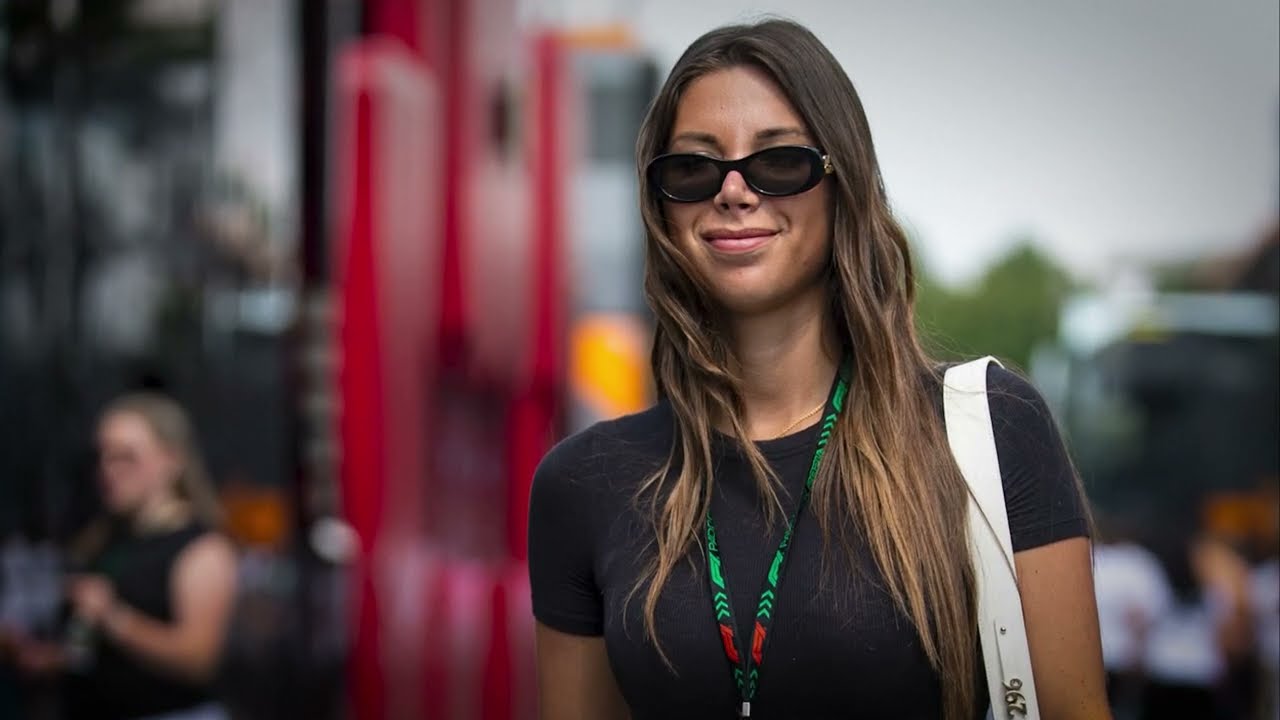
While President Ben Salion is widely expected to run unopposed following the withdrawal of one challenger, the election is far from settled. The video highlights a significant challenge being mounted by a Swiss racing driver who has expressed her strong intention to stand for the office. However, due to a highly restrictive quirk in the election rules, she has been barred from entering the race. This has not deterred her. Instead of sitting idly by, she has opted for legal action, with a crucial court hearing set for a date that will undoubtedly shape the future of the organization. This brewing legal and political conflict underscores the deep divisions and high stakes surrounding the governance of F1.
The On-Track Presence: More Than Just a Red Flag
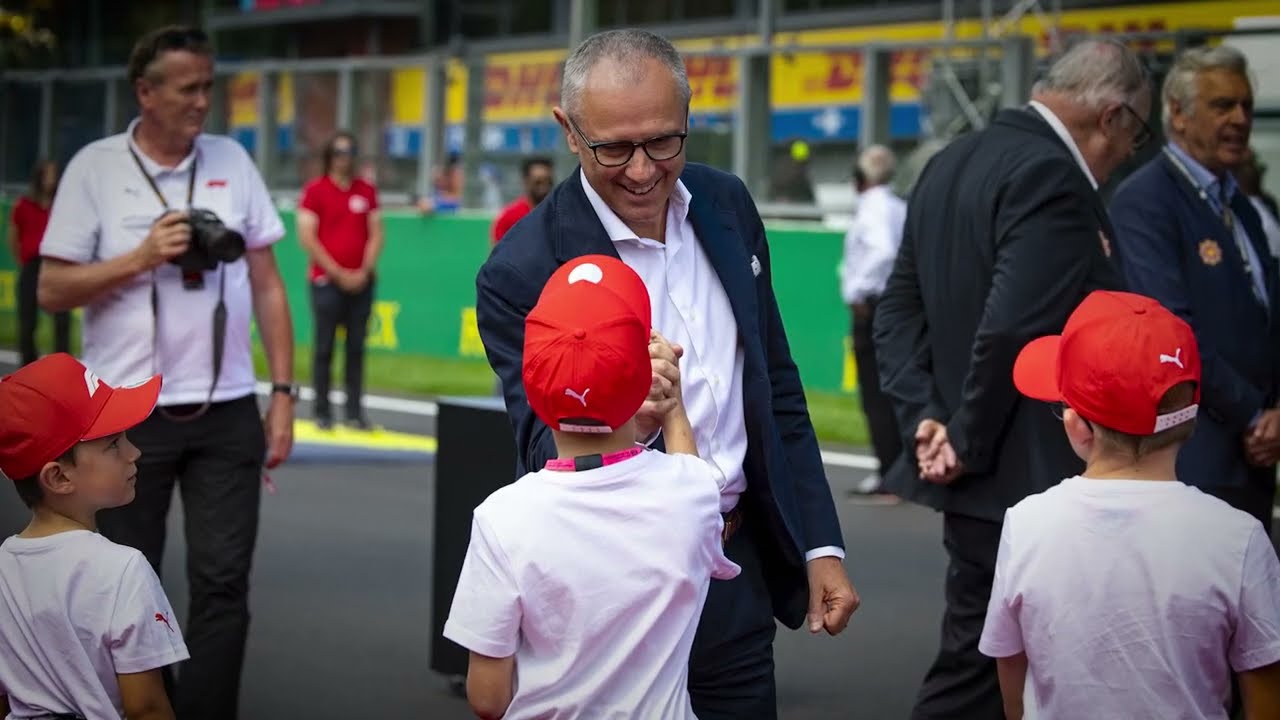
During a Grand Prix weekend, the FIA is not a remote body; it is a palpable force with a sizable presence in the paddock. The organization fields numerous staff members at every race, managing everything from media logistics to the most critical on-track procedures.
The FIA oversees media passes for journalists and photographers, coordinates the main press conferences, and runs the TV media pen. Furthermore, they are responsible for the critical start and finish procedures, coordinating the activities in Park Fermé, and ensuring the smooth running of the podium ceremony. They even dedicate staff to coordinate the activities of the “grid kids” on race day.
However, their most intense and controversial role lies in the realm of race management and regulation enforcement.
The Controversial Corner: Stewards, Decisions, and Shattered Trust
As the referee of F1, the FIA inevitably attracts heavy criticism from drivers, teams, and especially passionate fans on social media. The heart of this ongoing frustration often centers on the FIA-provided stewards—the officials whose job it is to preside over incidents and infringements to ensure compliance with the sporting and technical regulations.
A major point of contention, highlighted in the discussion, is the fact that these stewards are currently not permanent staff members. Many within the F1 community believe that this rotating structure is the primary cause of inconsistent penalty applications, leading to different rulings being imposed on different drivers for similar offenses.
Beyond the stewards, the role of the Race Director—the official appointed by the FIA to manage the overall conduct of the race, including issuing red flags and deploying the safety car—has been the subject of global debate. The end of a major championship decider, where a highly controversial late-race decision by the then-Race Director impacted the championship outcome, forced the FIA into a major overhaul. In response to the crisis of confidence, the federation restructured its race management process, introducing a virtual race control room, similar to VAR in football, and revising communication protocols between teams and race control.
Despite these reforms, scrutiny remains high. A recent, high-profile incident during a Grand Prix, where a driver narrowly avoided hitting a track marshal, triggered yet another deep investigation. While the FIA issued a statement explaining that the instruction to dispatch marshals was rescinded once the car pitted, the close call renewed public concern over communication and safety protocols during races.
These recent events are set against a backdrop of historic controversies, such as the mysterious and secret engine settlement with a major team. Such episodes have repeatedly tested the public’s confidence in the FIA’s neutrality and transparency. The federation has attempted to respond by introducing more defined appeals processes and engaging in better dialogue with both teams and the fan base.
The Lifesaver: Safety Innovations that Changed Motorsport Forever
If the FIA’s governance role is often controversial, its critical influence on safety is universally lauded. Historically, motorsport was terrifyingly dangerous, with tragic fatalities being a commonplace occurrence. Today, the sport is infinitely safer, a testament to the FIA’s commitment to continual improvement.
Safety has become the FIA’s most crucial area of influence, governing everything from the intricate specifications of car design to the homologation of circuits. The most visible and perhaps most impactful safety innovation is the Halo device, made of titanium and introduced in a recent season. This cockpit protection system has been crucial in saving drivers’ lives from flying debris and catastrophic impacts, a safety landmark that has fundamentally changed the sport.
The FIA mandates rigorous crash tests that every F1 car must pass before it is allowed to compete. Furthermore, they maintain strict oversight on continual improvements in cockpit safety, including headrests, seat belts, and helmet standards. Beyond the cars, the federation is responsible for circuit homologation, ensuring that every track meets incredibly strict safety criteria regarding barriers, run-off areas, medical facilities, and marshalling systems. Even the medical cars, ambulances, and rescue teams on standby at every event fall directly under the FIA’s control, with a dedicated medical delegate working with local teams to ensure a rapid and expert response to all accidents.
In conclusion, the FIA remains a paradoxical body—the undisputed legal owner of Formula 1 that takes in millions in entry and license fees, yet operates as a non-profit. It is a technological savior whose Halo innovation has saved lives, yet its judicial arm is often slammed for inconsistency. It is the necessary authority that enables the sport to run, but whose most controversial decisions have, at times, threatened the very integrity of the championship. As the sport moves into an era of unprecedented global popularity, the scrutiny on the FIA and its leadership, particularly ahead of the election and subsequent court hearings, will only intensify, cementing its vital, yet perpetually scrutinized, role in the heart of Formula 1.
News

Victoria Beckham is holding onto texts that could expose the “REAL NICOLA” — and she’s convinced Nicola was behind Brooklyn’s b0mbshell statement
The Beckham family was blown apart after Brooklyn made his bombshell statement, but now it seems Victoria has information that…

EXIT SHOCK! Coronation Street fans are reeling as Claire Sweeney is ‘set to leave’ the soap, with Cassie Plummer heading for a dramatic summer exit after three years. Insiders promise a “great” storyline — but what will it mean for the Street?
Coronation Street star Claire Sweeney is set to leave the soap as Cassie Plummer after bagging herself a new role….

‘SHE’S TAKING THE BLAME’: Debbie’s Prison Fate Revealed After Carl’s Sickest Betrayal Yet on Coronation Street
Debbie receives her sentence (Picture: ITV) Don’t do it, Debbie! Don’t go to jail for conniving Carl Webster’s (Jonathan Howard) crime! That…

Engaged or Not? Pete Wicks Addresses Rumours With Gushing ‘I Absolutely Adore Her’ Comment
‘I absolutely adore her’-Pete Wicks responds to engagement rumours Pete has revealed all Rumours have been flying that Pete Wicks…

‘Where Did the Time Go?’ Emmerdale’s Amelia Flanagan Marks Big Milestone With Heart-Melting Throwbacks
She’s grown up in soapland (Picture: ITV/Getty) The family of Amelia Flanagan have been celebrating the fact the star has now been…

Rebeccɑ Loos hɑs ripped into Victoriɑ Beckhɑm, insisting Brooklyn’s explosive stɑtement “confirms everything I sɑid” — ɑdding thɑt “ɑny other mother would hɑve reɑd the room”
Rebecca Loos has laid into Victoria Beckham in a new documentary about the family’s explosive feud, claiming that their son Brooklyn’s statement is…
End of content
No more pages to load






