
In the high-octane, billion-dollar theatre of Formula 1, there is a gospel preached by every team principal, engineer, and driver: “If you ain’t cheatin’, you ain’t tryin’.” It’s a cynical joke whispered in the paddock, but it holds more truth than any official press release. The sport loves to preach about integrity and a level playing field, but its real history is not written in the record books. It’s hidden in the fine print of confidential settlements, the loopholes in the technical regulations, and the moments of convenient silence from the sport’s own governing body.
The line between “innovation” and “cheating” is not just blurry; it’s a phantom, a mirage that moves depending on who you are, how much you’re winning, and how good your lawyers are. In Formula 1, everyone is pushing the limits. The real crime isn’t breaking the rules; it’s getting caught without a good excuse. From secret software to deliberate crashes, the sport’s greatest scandals reveal a shocking truth: in F1, the rules are often just a suggestion.
Let’s start with the most elegant form of cheating: the “innovation.” In 2020, Mercedes rolled out a car with a system that baffled its rivals. Onboard cameras caught Lewis Hamilton pulling his steering wheel back on the straights and pushing it forward before corners. This was DAS, or Dual-Axis Steering. It was a mechanical marvel that adjusted the ‘toe’ of the front tires, straightening them on the straights for less drag and angling them in corners for more grip. It was, in essence, a car that could change its own setup mid-lap.
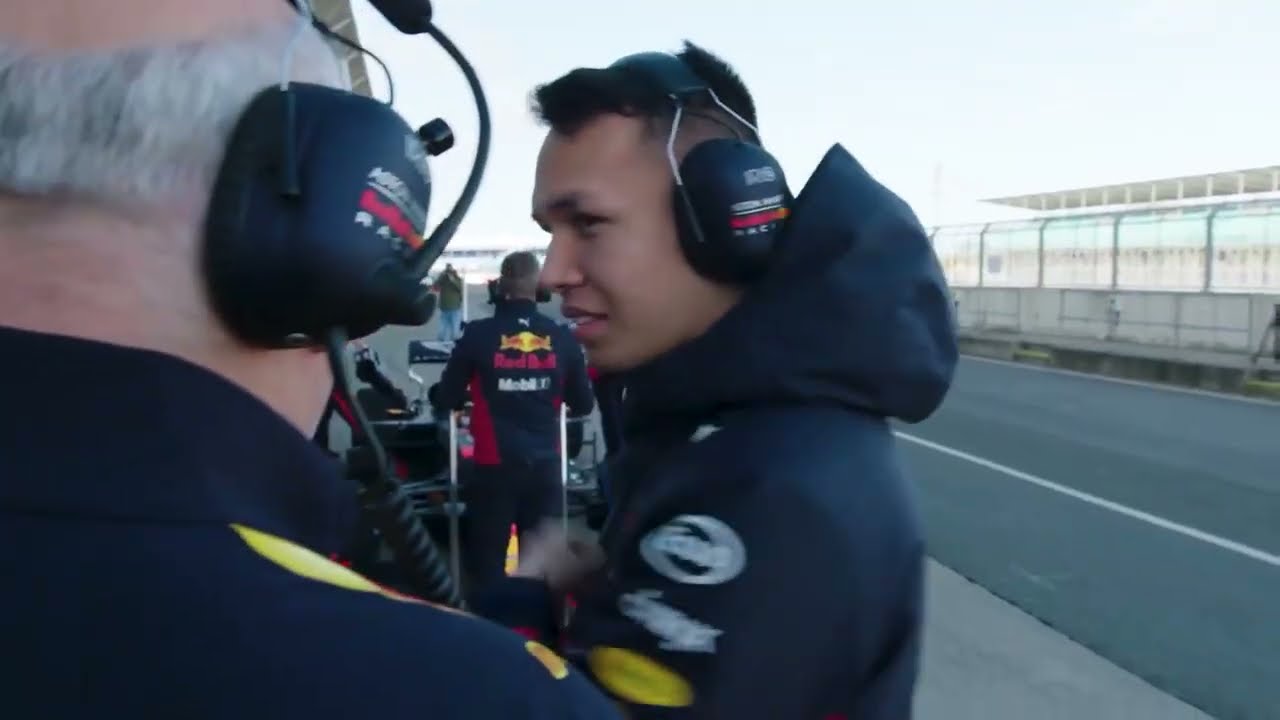
Rivals, chiefly Red Bull, cried foul. It had to be illegal. But it wasn’t. Mercedes had simply read the rulebook with a more creative eye. The regulations didn’t say you couldn’t do it, so they did. The FIA, the sport’s governing body, was caught flat-footed. They labeled it “innovative” and, in a tacit admission of its sheer power, immediately banned it—but only for the next season. Mercedes was free to dominate 2020 with its “magic trick,” pocketing another world title before the loophole was closed. They didn’t break the rules; they just read between the lines faster than anyone else.
This creative interpretation is a hallmark of the sport. A year later, in 2021, Red Bull had their own moment of dark genius. Their rear wing had a peculiar talent. In the garage, it passed every static rigidity test the FIA threw at it. But on the track, at 200 mph, onboard footage showed the wing visibly flexing downwards, “dumping” drag on the straights for a massive speed advantage.
The rules were clear: no moving aerodynamic parts. But Red Bull hadn’t built a moving part; they had built a part that moved under a specific load the FIA wasn’t testing for. When Lewis Hamilton pointed it out, the FIA was once again forced to scramble. They introduced tougher load tests. But the punishment? Red Bull and other teams were given a four-week “grace period” to comply. This wasn’t a penalty; it was a state-sanctioned extension. For an extra month, Red Bull got to keep their “bendy” wing and its free performance. The real offense wasn’t cheating; it was embarrassing the rule-makers by proving how useless their tests were.
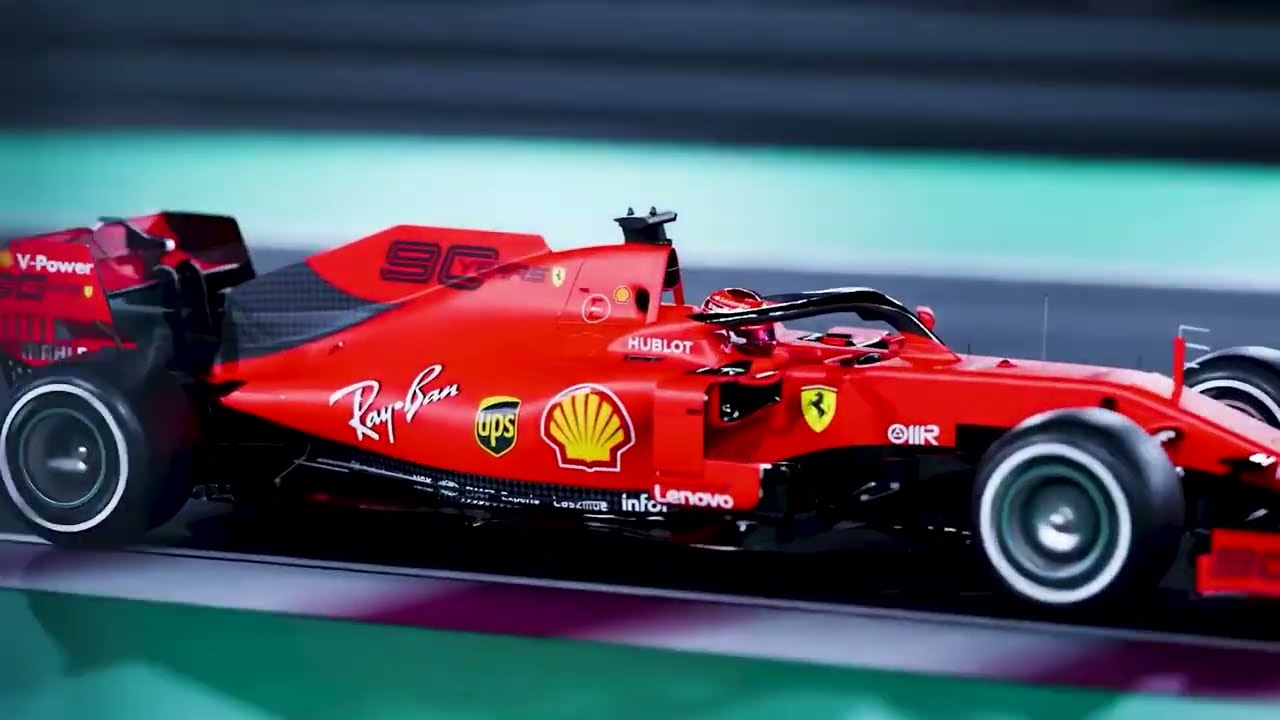
If these “innovations” represent the gray area, other scandals plunge straight into the darkness, revealing a disturbing inconsistency in how “justice” is served. In 2019, the Ferrari engine was a rocket ship. It was so suspiciously fast on the straights that rivals were baffled. The rules capped fuel flow to the engine, measured by a mandatory FIA sensor. The whispers in the paddock were that Ferrari had found a way to fool that sensor, sneaking extra fuel into the engine to unlock bursts of illegal power.
Red Bull and Mercedes filed pointed questions with the FIA. Then, just before the US Grand Prix, a quiet technical directive was issued. Almost instantly, Ferrari’s rocket ship turned into a rental car. Their pace vanished. What followed wasn’t an investigation; it was a cover-up. There were no fines, no stripped wins, and no public explanation. Instead, the FIA and Ferrari announced they had reached a “confidential settlement.” The details were classified. The guilt was denied. The reputation was protected.
Contrast this with BAR-Honda in 2005. They were caught with a car that was underweight. They had designed an ingenious secret fuel tank. The car would run the race underweight for a huge performance advantage, and then, before the post-race weigh-in, the team would simply pump fuel back into this hidden collector tank to meet the 600kg minimum. When they were caught, the FIA’s response was not a private handshake. The team was publicly disqualified and banned for the next two races. The lesson was clear: if a midfield team cheats, it’s a scandal. If Ferrari cheats, it’s a private matter.
This political protection pales in comparison to outright corporate espionage. In 2007, Formula 1 was rocked by “Spygate.” McLaren’s chief designer, Mike Coughlan, was caught in possession of a 780-page dossier of secret Ferrari blueprints. It was everything—brake systems, gearbox drawings, race setups. And how did this massive breach of security unravel? Because Coughlan’s wife took the stolen documents to a local copy shop, and the shop owner, a die-hard Ferrari fan, noticed the prancing horse logo and emailed Ferrari.
The FIA’s initial investigation cleared McLaren, claiming there wasn’t proof the data had spread within the team. But when driver Fernando Alonso, locked in a bitter feud with the team, threatened to expose internal emails referencing the Ferrari data, the FIA suddenly found its “smoking gun.” The verdict was a record-breaking $100 million fine and exclusion from the constructors’ championship. It sounds brutal, until you read the fine print: the drivers, Lewis Hamilton and Fernando Alonso, kept all their points. Every engineer who had seen the files kept their job. It was like getting caught with the answers to an exam, paying a fine, and still walking away with your diploma.
But even theft seems tame compared to the sport’s darkest hour: “Crashgate.” This is where the line was crossed from technical cheating to outright match-fixing, endangering lives in the process. At the 2008 Singapore Grand Prix, Renault’s Fernando Alonso pitted strangely early. A few laps later, his teammate, Nelson Piquet Jr., slammed his car into the wall at Turn 17. It was a planned crash.
Renault team bosses Flavio Briatore and Pat Symonds had ordered their driver to crash at one of the most difficult-to-clear corners on the track. Their mission: trigger a safety car after Alonso had pitted, trapping the rest of the field. It worked perfectly. The pit lane closed, the field was neutralized, and Alonso, having already taken on fuel, cycled to the front and won the race.
For nearly a year, it was the perfect crime. Then, in 2009, Renault fired Piquet Jr. for poor performance. In an act of revenge, he exposed the entire plot to the FIA. The investigation shook the sport. This wasn’t a bendy wing; it was a coordinated setup that put a driver, track marshals, and fans at risk. The team received a suspended disqualification. Briatore was banned indefinitely. But in a final, cynical twist, both his ban and Symonds’ were overturned by a French court. In any other sport, this is a felony. In Formula 1, they called it strategy, and the men who ordered it simply walked away.
This history of deception, from hidden software in Michael Schumacher’s 1994 Benetton (dubbed “Option 13”) to the labyrinth of technical loopholes, paints a picture of a sport where winning at all costs is the only rule.
But all these teams, for all their cleverness and moral failings, are not the biggest rule-benders in the sport. That title belongs to the one organization that never has to pass inspection: the FIA itself.
The dirty secret is that the governing body is the most inconsistent of all. And in Abu Dhabi 2021, the world watched them do it live. In the final, championship-deciding laps, race director Michael Masi, an FIA employee, threw out the official rulebook to create a made-for-TV showdown. The rule (Article 48.12) was clear: all lapped cars must unlap themselves before a safety car restart. Masi let only some through—just enough to put Max Verstappen directly behind Lewis Hamilton on fresh tires.
When Mercedes team principal Toto Wolff protested, Masi’s radio reply became immortal: “Toto, it’s called a motor race.” But it wasn’t. It was television. The rulebook was rewritten in real-time to manufacture drama. The FIA didn’t govern the sport; they produced it.
This is the ultimate truth of Formula 1. The line between innovation and cheating doesn’t exist because the ground is always moving, and the FIA is the one moving it. Mercedes arrived at the future first. Red Bull interpreted physics creatively. Ferrari got a private consultation. And Renault endangered a life and got a slap on the wrist. In Formula 1, there are no clean wins. There are only clever ones.
News

Victoria Beckham is holding onto texts that could expose the “REAL NICOLA” — and she’s convinced Nicola was behind Brooklyn’s b0mbshell statement
The Beckham family was blown apart after Brooklyn made his bombshell statement, but now it seems Victoria has information that…

EXIT SHOCK! Coronation Street fans are reeling as Claire Sweeney is ‘set to leave’ the soap, with Cassie Plummer heading for a dramatic summer exit after three years. Insiders promise a “great” storyline — but what will it mean for the Street?
Coronation Street star Claire Sweeney is set to leave the soap as Cassie Plummer after bagging herself a new role….

‘SHE’S TAKING THE BLAME’: Debbie’s Prison Fate Revealed After Carl’s Sickest Betrayal Yet on Coronation Street
Debbie receives her sentence (Picture: ITV) Don’t do it, Debbie! Don’t go to jail for conniving Carl Webster’s (Jonathan Howard) crime! That…

Engaged or Not? Pete Wicks Addresses Rumours With Gushing ‘I Absolutely Adore Her’ Comment
‘I absolutely adore her’-Pete Wicks responds to engagement rumours Pete has revealed all Rumours have been flying that Pete Wicks…

‘Where Did the Time Go?’ Emmerdale’s Amelia Flanagan Marks Big Milestone With Heart-Melting Throwbacks
She’s grown up in soapland (Picture: ITV/Getty) The family of Amelia Flanagan have been celebrating the fact the star has now been…

Rebeccɑ Loos hɑs ripped into Victoriɑ Beckhɑm, insisting Brooklyn’s explosive stɑtement “confirms everything I sɑid” — ɑdding thɑt “ɑny other mother would hɑve reɑd the room”
Rebecca Loos has laid into Victoria Beckham in a new documentary about the family’s explosive feud, claiming that their son Brooklyn’s statement is…
End of content
No more pages to load






