
The Formula 1 World Championship has taken a dramatic, emotionally charged turn, transforming what was once a compelling two-car fight into a heated controversy now engulfing the halls of the McLaren Technology Centre. The dust has barely settled on the Mexican Grand Prix, but the real fireworks are exploding off-track, fueled by whispers of internal bias and the brutal mechanics of an F1 title showdown.
Lando Norris’s dominant lights-to-flag victory in Mexico was a masterclass, securing him the championship lead for the first time since the early races of the season and staking his claim as the man to beat. Yet, the story is not just about the victor; it’s about the devastating collapse of his teammate, Oscar Piastri. The young Australian sensation, who had held the championship advantage since the season’s opening races, crossed the line a staggering distance adrift, losing the lead by a razor-thin single point. The juxtaposition of Norris’s surge and Piastri’s struggles has served as a lighting rod for speculation, with many in the Australian media now openly “crying foul” and suggesting that Norris is receiving the “golden treatment” in a potentially biased internal power play.
This is more than standard F1 rivalry; this is an in-house civil war playing out on the global stage, forcing fans and pundits alike to ask: is McLaren’s Golden Boy being quietly ushered toward the F1 crown, or is this simply the unvarnished, high-stakes reality of elite motorsport?
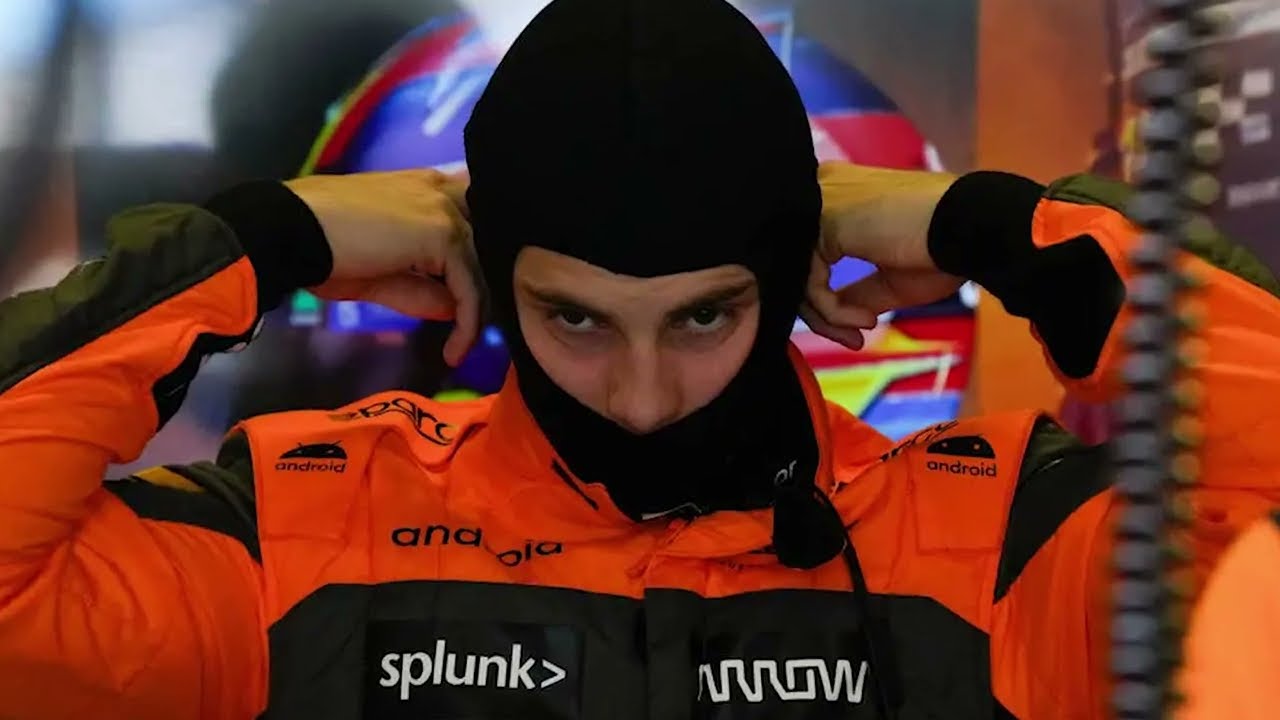
The Chaotic Sunday and the Vanishing Pace
Piastri’s race in Mexico City was fraught with chaos from the opening lap. Starting from P7, his prospects evaporated instantly at the first corner. He described a “tricky Turn 1,” where cars ahead hit patches of dirt, forcing him to do the same. “When I hit it, I lost a lot of grip and drifted wide, lost a couple of spots there,” he recounted, dropping him as low as P9. While the Australian driver showed characteristic grit in his recovery, dispatching rivals like Tsunoda and Russell before leapfrogging others through the pit cycles, his car appeared fundamentally lacking in the raw pace needed to challenge the frontrunners.
In the closing laps, his pursuit of P4 was abruptly shut down by a late Virtual Safety Car, freezing the action and denying him the chance for a final desperate charge. It was a day defined by misfortune and a palpable lack of the speed that had characterized his earlier season dominance. His recent run tells an alarming story: he hasn’t stood on a podium since the race in Monza. In contrast, Norris has been a perennial fixture in the top three ever since, relentlessly chipping away at the deficit.
This alarming divergence in performance is the root of the “sabotage” narrative. Why has the car suddenly stopped working for the man who was leading the championship for months? Piastri himself noted the puzzling change, stating, “I think the last couple of races has been surprising in terms of the pace. I think there’s been we have some evidence of where the pace is and what to do but I’ve got to drive the car very differently these last couple of weekends which when it’s been working well for you for the previous 18 races is a little bit difficult to kind of wrap your head around.” The implication, for external observers, is clear: a sudden, disruptive shift in the machinery itself.
The Voice of Reason vs. The Conspiracy
To gain perspective on the turmoil, the discourse turned to Kim Keedell, Piastri’s former high-performance coach, a man intimately familiar with the Australian’s mindset and the inner workings of elite motorsport. Keedell, while acknowledging the external suspicion, offered a powerful counter-argument: the simplest explanation is often the correct one.
Keedell staunchly rejects the notion of a conspiracy, stating, “I don’t buy into the conspiracy theories. I think it’s all above board and fair.” He frames the situation not as malice, but as the “brutal reality of elite motorsport” and the relentless, unforgiving nature of in-season F1 development.
The most grounded explanation centers on the recent car upgrades. In F1, development never stops, and every aerodynamic tweak, every suspension refinement, presents a new variable. “Pastri’s been wrestling with recent car upgrades while Norris seems to have clicked with them instantly,” the video notes. Keedell refers to the “swings and roundabouts in F1,” where one driver’s strength can be momentarily undercut by a development that perfectly suits his teammate. McLaren began the season with the fastest car, only for rivals like Red Bull, Mercedes, and Ferrari to catch up, creating a constantly shifting competitive landscape. Piastri’s current struggle is simply a combination of technical adaptation and a run of races that do not necessarily play to his intrinsic driving strengths.
Keedell’s confidence in the team’s integrity is absolute. “I know how McLaren operates and they have handled this well internally. I understand how it might look suspicious externally,” he affirmed, providing a vital layer of balance to the narrative.
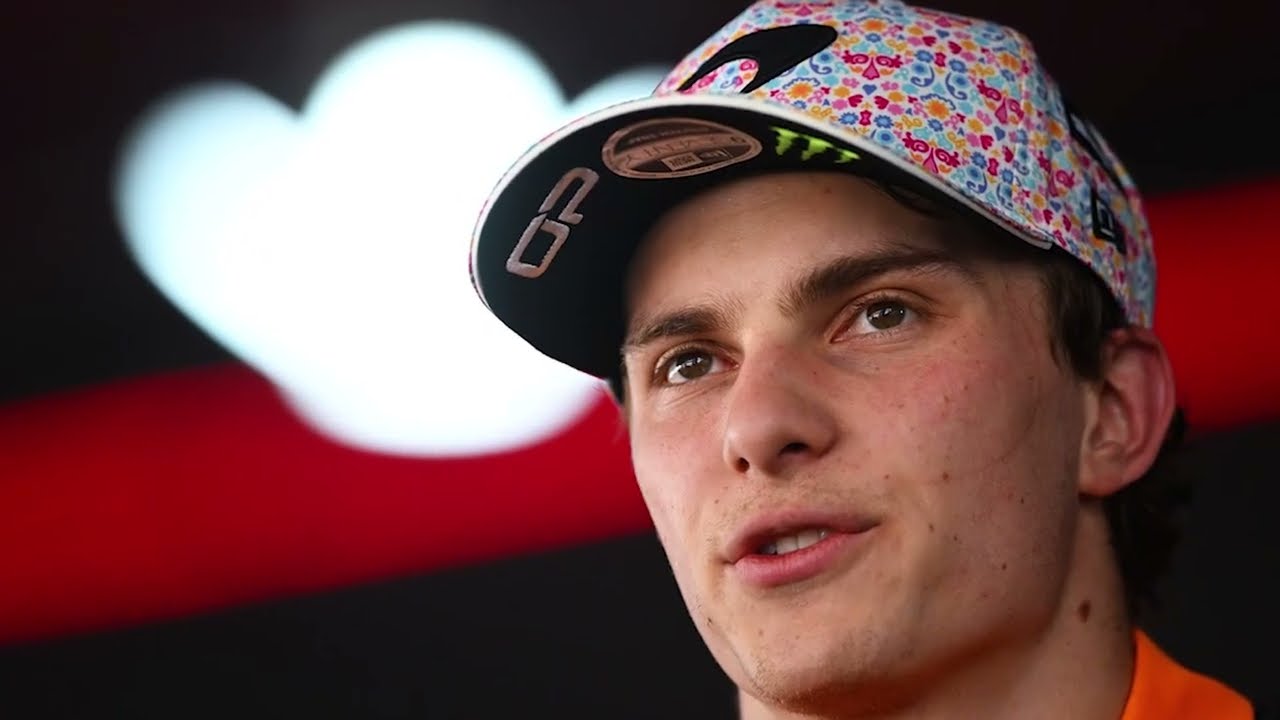
The Crucible of the Mind: Poise Over Pace
As the championship enters its final, frantic four-race stretch, the battle for the title is transitioning from one of raw pace to one of pure mental fortitude. For Oscar Piastri, the next few weeks will be the most intense “pressure cooker of expectation, scrutiny and opportunity” of his young career. The stakes are monumental: he is fighting to become Australia’s first F1 World Champion since Alan Jones decades ago. The weight of an entire nation’s hope is now resting on his shoulders.
Piastri is now in a “crucible where champions are forged.” The question is no longer just about milliseconds on the clock, but about “poise”—can he channel the immense pressure into fuel for a final charge? Can he “silence the noise, block out the whispers of favoritism and rise above the narrative”?
Keedell, drawing on his experience with drivers like Piastri and Romain Grosjean, emphasized that the elite mindset is not about eliminating fear or pressure, but about achieving “mastery” over it. He confirmed Piastri’s work ethic in this area: “Mentally he will be coping well… He works hard on dealing with that, he understands this is a big part of performance.” The true challenge for a young driver in F1 is often not the physical act of driving, but managing the peripheral demands: the media, the sponsors, the team politics—the “extra things besides the driving” that can take away from focus.
Keedell’s philosophical insight is that fear, for these athletes, becomes a signal—one that demands focus, not panic. The near-miss with Marshalls in Mexico, where another driver came terrifyingly close to disaster, is a stark reminder of the razor’s edge they live on. The drivers who succeed are those whose courage is not the absence of fear, but the ability to keep pushing with full knowledge of the stakes. The dramatic case of Grosjean’s fiery crash, which left him with “mental demons,” underscores how fine the margins are.
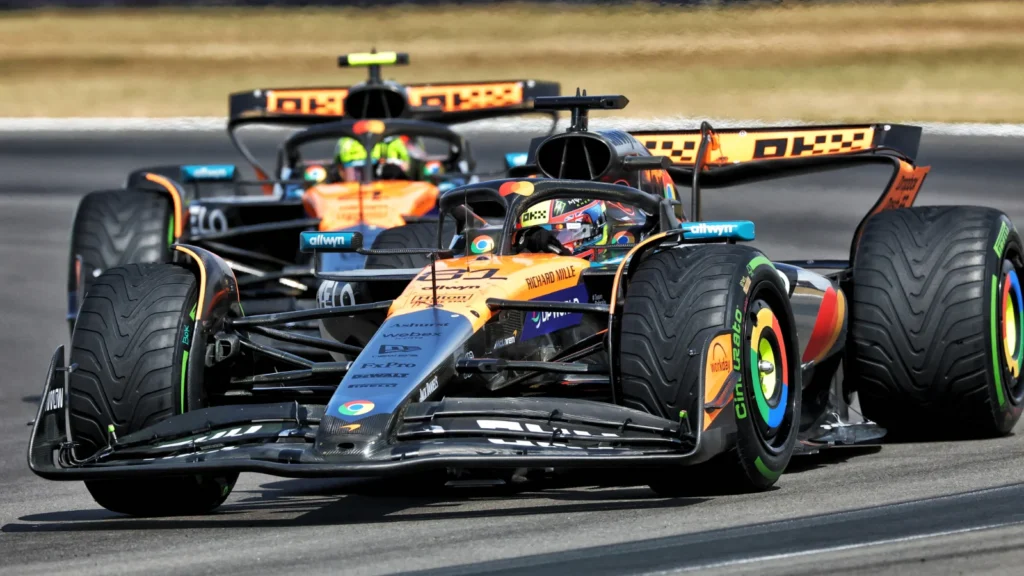
The Final Showdown
Lando Norris has achieved a stunning, well-timed surge. After wrestling with issues that plagued his earlier qualifying sessions, the Brit made a crucial adaptation, realizing, “I wasn’t getting to grips and wasn’t finding a way to make it work and I’m finding a better way to make it work now. It’s as simple as that.” His ability to adapt, refine his approach, and reap the rewards as Piastri’s form falters is a powerful testament to his own championship credentials.
With Norris now leading and Piastri under enormous pressure—both from his competitor and the external whispers—the final races promise an unprecedented level of drama. The narrative is set: one driver riding a wave of perfectly timed momentum, and the other desperately fighting to recover his lost pace while simultaneously battling the suspicion that his own team is working against him.
The McLaren civil war is not just a tale of two drivers; it is a profound examination of integrity, mental resilience, and the relentless evolution of the F1 machine. The final checkered flag will not only crown a champion but will either vindicate the theory of fair play or forever cast a shadow of doubt over one of the most compelling intra-team battles in recent memory.
News

Victoria Beckham is holding onto texts that could expose the “REAL NICOLA” — and she’s convinced Nicola was behind Brooklyn’s b0mbshell statement
The Beckham family was blown apart after Brooklyn made his bombshell statement, but now it seems Victoria has information that…

EXIT SHOCK! Coronation Street fans are reeling as Claire Sweeney is ‘set to leave’ the soap, with Cassie Plummer heading for a dramatic summer exit after three years. Insiders promise a “great” storyline — but what will it mean for the Street?
Coronation Street star Claire Sweeney is set to leave the soap as Cassie Plummer after bagging herself a new role….

‘SHE’S TAKING THE BLAME’: Debbie’s Prison Fate Revealed After Carl’s Sickest Betrayal Yet on Coronation Street
Debbie receives her sentence (Picture: ITV) Don’t do it, Debbie! Don’t go to jail for conniving Carl Webster’s (Jonathan Howard) crime! That…

Engaged or Not? Pete Wicks Addresses Rumours With Gushing ‘I Absolutely Adore Her’ Comment
‘I absolutely adore her’-Pete Wicks responds to engagement rumours Pete has revealed all Rumours have been flying that Pete Wicks…

‘Where Did the Time Go?’ Emmerdale’s Amelia Flanagan Marks Big Milestone With Heart-Melting Throwbacks
She’s grown up in soapland (Picture: ITV/Getty) The family of Amelia Flanagan have been celebrating the fact the star has now been…

Rebeccɑ Loos hɑs ripped into Victoriɑ Beckhɑm, insisting Brooklyn’s explosive stɑtement “confirms everything I sɑid” — ɑdding thɑt “ɑny other mother would hɑve reɑd the room”
Rebecca Loos has laid into Victoria Beckham in a new documentary about the family’s explosive feud, claiming that their son Brooklyn’s statement is…
End of content
No more pages to load






