
In the high-stakes, high-speed world of Formula 1, nothing captures the imagination quite like a new team. Every fan secretly harbors the hope of a modern fairytale, a repeat of the legendary 2009 Brawn GP debut, where a new outfit emerges from the winter smoke to stun the established giants. The excitement for Cadillac’s arrival in 2026 is palpable. But as the American automotive titan prepares to join the grid, a dose of brutal reality is required. Launching a team in modern-day F1 is not a sprint; it’s a multi-year marathon undertaken without any prior training.
So, as the 2026 season approaches, what can we—and Cadillac—realistically expect? The truth is sobering. Success in their first year will not be measured in podiums, or even points. It will be measured in survival, in finishing races, and in simply proving they belong.
The core of the challenge, and what makes Cadillac’s journey so profoundly difficult, is the path they’ve chosen. They are not buying an existing team. They are not taking over a ready-made operation. They are starting from absolute zero. This is an almost unheard-of task in today’s F1. It means they must build everything—every facility, every production line, every workflow, and every single department—from the ground up.
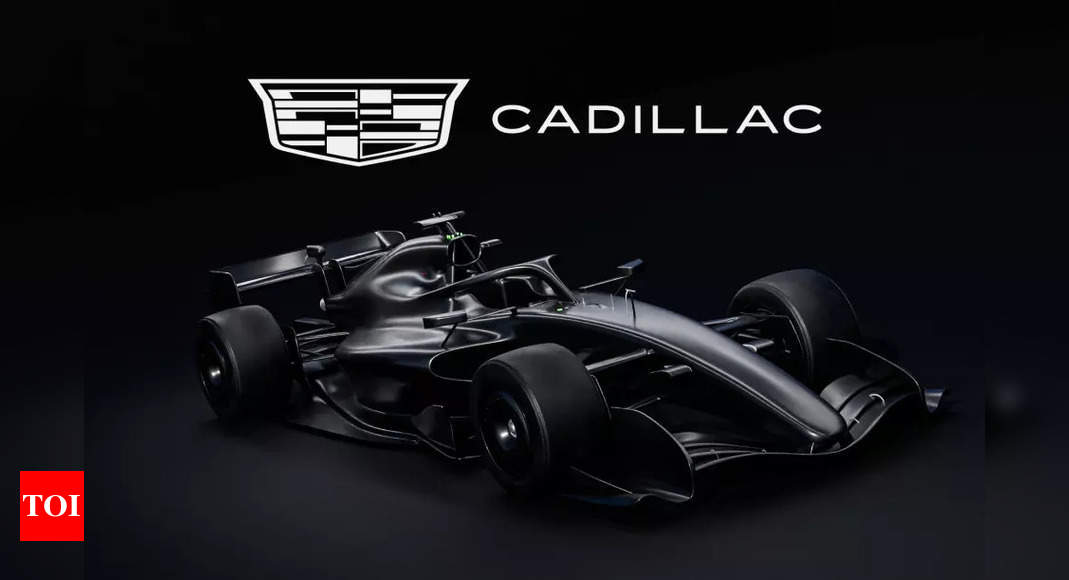
To put this in perspective, established giants like Ferrari, Red Bull, and Mercedes operate with a workforce of over a thousand employees. Cadillac is starting in the 600-person range, with plans to hire more over the coming years. But it’s not just a numbers game. It’s one of cohesion. Hiring hundreds of specialized individuals is one challenge; getting them to work harmoniously as a single, efficient unit is another entirely. This is a different beast from any of Cadillac’s other successful motorsport programs. The level of specialized knowledge and integration required in Formula 1 is on another planet.
As if that monumental task weren’t enough, Cadillac is diving in at the deep end during a “perfect storm” of technical upheaval: the brand-new 2026 regulations. The entire sport will be hitting a reset button on car and engine design. For an established team, this is a massive hurdle. For a new team, it’s a vertical cliff face. They won’t be able to look at the past success of other teams, to use their cars as blueprints or inspiration. They are designing a brand-new car for brand-new rules with a brand-new team.
This isn’t to say the project is doomed from the start. Cadillac is not going in “completely blind”. They have made some shrewd hires to build a foundation of experience. Their team principal, Graham Loden, previously ran the Virgin/Marushia F1 teams. While those operations were severely underfunded, the experience of running a team, any team, in this paddock is invaluable. He’s joined by Technical Lead Nick Chester, who brings a long F1 history dating back to the mid-1990s, and Pat Simmons, a highly respected engineering consultant with deep technical and leadership experience. Add in the credibility and high-level guidance of 1978 world champion Mario Andretti, and you have a leadership core that at least knows what the mountain looks like.
Furthermore, Cadillac has secured a crucial lifeline: a customer partnership with Ferrari. They will be starting with Ferrari engines, gearboxes, and potentially other suspension components. This is a smart move. It will significantly shorten the learning curve and give the fledgling team “a bit less to think about”. But this lifeline comes with a critical clarification.
Many will immediately point to 2016 and the debut of Haas, the last new team to enter F1. Haas was immediately competitive, scoring points in their very first race. They did this by exploiting the regulations to their advantage, taking the vast majority of their parts—literally every single component they could—from Ferrari. Their car was, in effect, a “customer Ferrari.” Cadillac is not doing this. Their partnership is for specific components, but it does not reach the “H-level of dependence” that Haas has. This means more of the heavy lifting, from aerodynamics to chassis integration, will fall squarely on Cadillac’s inexperienced shoulders.

This brings us to what might be the team’s single greatest challenge, one that appears to be entirely self-inflicted: its organizational structure. In a sport where milliseconds are decided by seamless communication, Cadillac has chosen to split its operations into four different main bases across two continents. They will have their headquarters in Indiana, a power unit operations base in North Carolina, the GM technical center in Michigan, and a UK base for the majority of race operations.
This setup adds a staggering “ton of complexity”. In year one, while they are still building the facilities themselves, they will also have to create, test, and sync all their new processes across this fragmented global network. Getting all of this synced to F1 standards will be a colossal challenge, one that no other team on the grid faces in such an extreme way.
The contrast becomes even clearer when you look at the other major newcomer for 2026: Audi. While Audi is also a new F1 project, their method of entry is completely different. Audi is entering as a full works project by taking over an existing, established F1 team, Sauber. They will inherit a workforce, a factory, operational infrastructure, and decades of F1 data. Audi’s challenge will be scaling up that team and building its new power unit—a massive task, to be sure. But Cadillac’s challenge, building absolutely everything from scratch, is “a lot tougher at the start”.
So, with all this context, what is a “win” for Cadillac in 2026? We must redefine success. Forget points. Some analysts have suggested that a single point in their debut year would be a “borderline miracle”. A more pragmatic and meaningful early benchmark, as suggested by analysts like Ed Straw, would be simply qualifying within the 107% rule. This rule exists to remove any team so far off the pace that they aren’t competitive. Just being eligible for the race on Sunday will be a meaningful milestone.
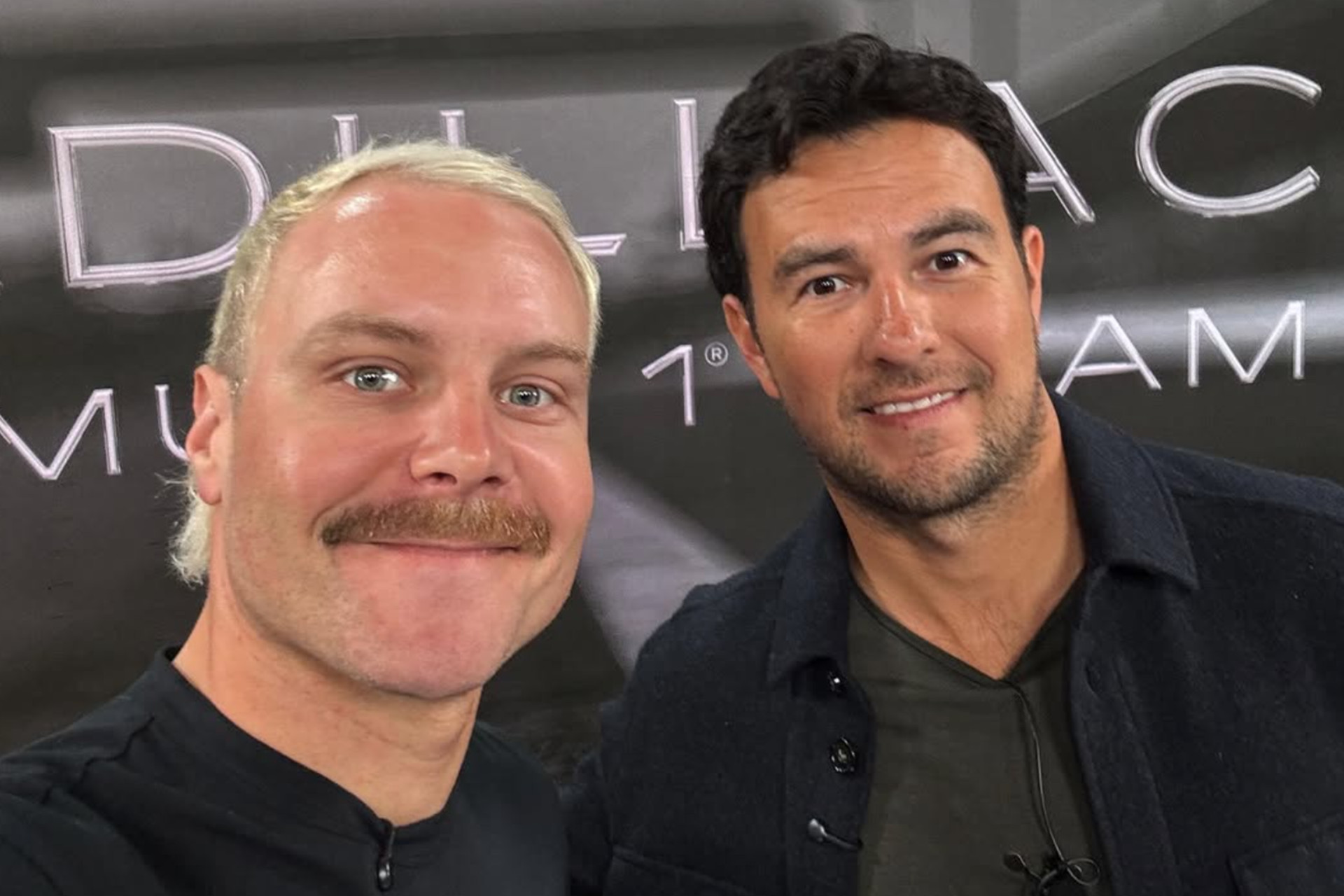
Sensible year-one goals should be humble: qualify both cars for the race, finish races, keep the “Did Not Finish” (DNF) count as low as possible, and build a base of understanding across those split sites. They will need to lean heavily on the experience of their drivers. Milestones that current F1 teams take for granted—the first fire-up of the car, the first on-track run, the first implementation of an upgrade—will be huge, hard-won victories for a team that is “truly starting from basically zero”.
We must keep our expectations low. It’s exciting to have a new team, especially a name like Cadillac, but this will not be a 2009 Brawn debut. The good news is that they have credible people, sensible decisions like the Ferrari customer deal, and the serious backing and long-term commitment of General Motors. 2026 will be about learning fast, finishing races, and tightening operations for the future. The potential to be a credible F1 team is there, but it is going to take time—almost certainly “many years”.
If, at the end of their first season, Cadillac can say they qualified for every race, limited their mechanical failures, and were not “completely miles off the back,” that will be a win. The long, hard road starts now.
News

Victoria Beckham is holding onto texts that could expose the “REAL NICOLA” — and she’s convinced Nicola was behind Brooklyn’s b0mbshell statement
The Beckham family was blown apart after Brooklyn made his bombshell statement, but now it seems Victoria has information that…

EXIT SHOCK! Coronation Street fans are reeling as Claire Sweeney is ‘set to leave’ the soap, with Cassie Plummer heading for a dramatic summer exit after three years. Insiders promise a “great” storyline — but what will it mean for the Street?
Coronation Street star Claire Sweeney is set to leave the soap as Cassie Plummer after bagging herself a new role….

‘SHE’S TAKING THE BLAME’: Debbie’s Prison Fate Revealed After Carl’s Sickest Betrayal Yet on Coronation Street
Debbie receives her sentence (Picture: ITV) Don’t do it, Debbie! Don’t go to jail for conniving Carl Webster’s (Jonathan Howard) crime! That…

Engaged or Not? Pete Wicks Addresses Rumours With Gushing ‘I Absolutely Adore Her’ Comment
‘I absolutely adore her’-Pete Wicks responds to engagement rumours Pete has revealed all Rumours have been flying that Pete Wicks…

‘Where Did the Time Go?’ Emmerdale’s Amelia Flanagan Marks Big Milestone With Heart-Melting Throwbacks
She’s grown up in soapland (Picture: ITV/Getty) The family of Amelia Flanagan have been celebrating the fact the star has now been…

Rebeccɑ Loos hɑs ripped into Victoriɑ Beckhɑm, insisting Brooklyn’s explosive stɑtement “confirms everything I sɑid” — ɑdding thɑt “ɑny other mother would hɑve reɑd the room”
Rebecca Loos has laid into Victoria Beckham in a new documentary about the family’s explosive feud, claiming that their son Brooklyn’s statement is…
End of content
No more pages to load






