
The noise around the Mexican Grand Prix was deafening, but it wasn’t just the roar of the engines. The chatter centred on Lando Norris, who, after an “utterly flawless performance” that saw him win by a massive margin—30.324 seconds—emerged as the new leader of the World Drivers’ Championship. While Norris deserves every applause for securing his sixth win of the season and finally dethroning his teammate, the true headline is not about the victor, but the vanquished: Oscar Piastri.
The Australian sensation, who had been “so steady, so cool, so consistent all season”, had seen a 34-point championship advantage over Norris after the Dutch Grand Prix completely evaporate. In the five races that followed, Piastri went podium-less, dropping points to his teammate in four consecutive races, leading to speculation that his challenge was “petering out at the worst possible moment”. The media machine, hungry for drama, has since declared a “psychological implosion”. But scratch beneath the surface of the headlines, and the story of Piastri’s decline is not one of mental frailty, but a completely explainable sequence of events—a perfect storm of team orders, a rival’s resurgence, and a technical weakness exposed by bad timing. The narrative of a complete collapse, it turns out, is “massively overhyped”.
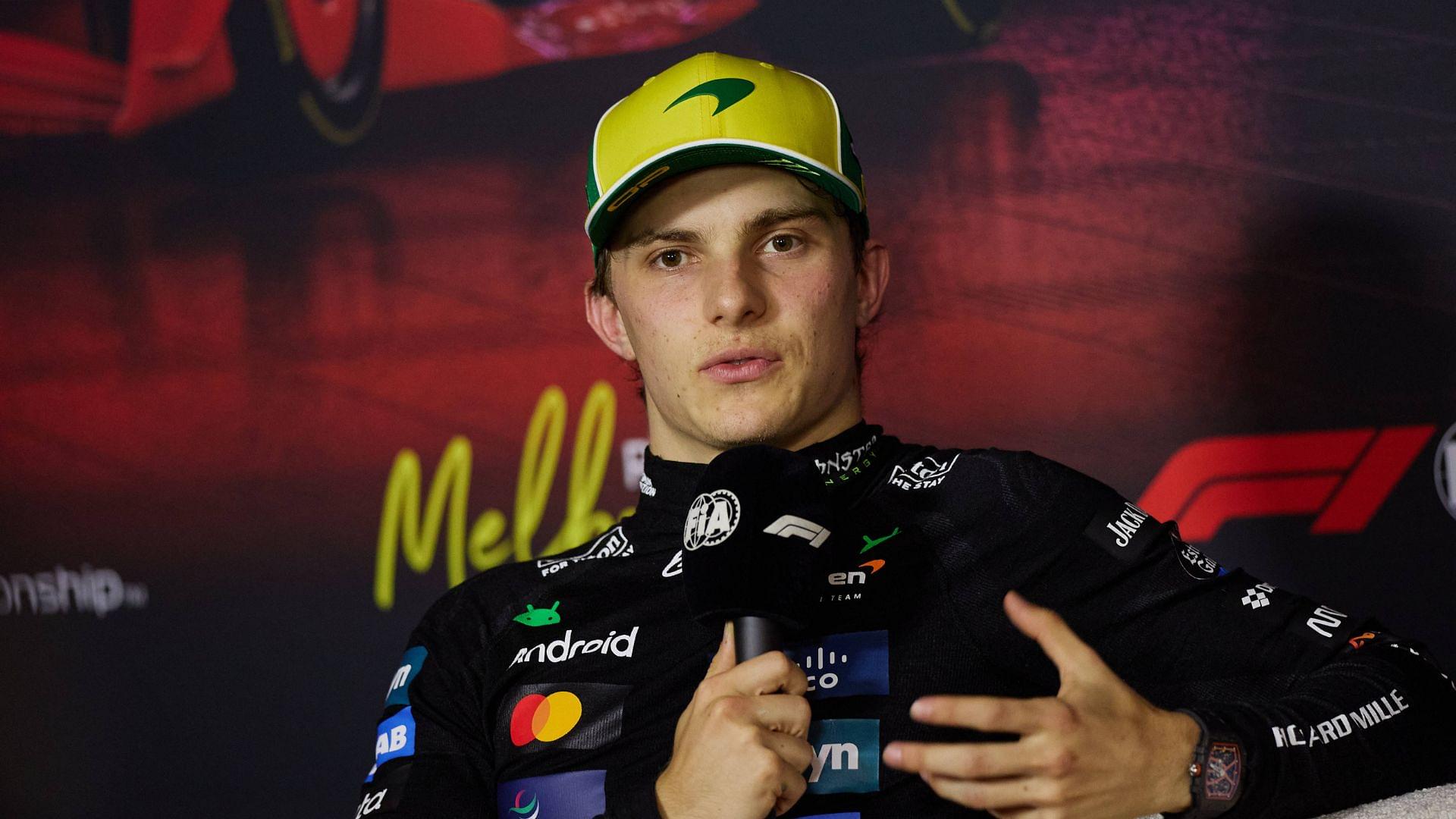
The Illusion of Comfort: When a 34-Point Lead Is Not Enough
To understand the current situation, we must first look back at the supposed high-water mark of Piastri’s season: the aftermath of the Dutch Grand Prix. After that race, Piastri was, indeed, in the “strongest position he’s been in all season”. He held a dominant 104-point lead over Max Verstappen, a margin everyone thought should have ended the Dutch driver’s title chances. Crucially, he also held his largest lead of the year over Lando Norris—34 points.
This lead, however, came with a caveat. Piastri had been leading the championship since round five, the Saudi Arabian Grand Prix, but his advantage had “never been anything close to comfortable”. The two moments where he established a ‘reasonable’ gap over his teammate—in Canada and the Netherlands—occurred only because Lando Norris had a “really bad weekend”, suffering a retirement from second place in Zandvoort with an oil leak.
The public perception of Piastri’s performance was perhaps inflated by the sheer excitement of his season. He was lauded for his media handling, being compared to the stoic Kimi Räikkönen off the track, and for his “calculated and consistent driving style”, likened to Alain Prost on the track. Yet, even before the pivotal race in Zandvoort, the largest lead he had ever held was 22 points, secured after the Canadian Grand Prix. Over the 11 races he led the championship leading up to the Netherlands, his average lead over Norris had been a negligible 14.18 points.
The reality, therefore, is that the two McLaren drivers had been “incredibly closely matched” all season. Piastri’s slight edge was always fragile, and after the Dutch Grand Prix, it was set to disappear. The turning point, the moment Piastri’s form went “off a cliff”, was the Italian Grand Prix in Monza.
The Monza Blow: Pressure, a Pass, and the Terminator’s Return
The Italian Grand Prix was a double-edged sword for the young Australian. Firstly, Piastri was involved in the infamous team order call where McLaren instructed him to let Lando Norris pass, costing him three points in the championship. While this loss was small in the “grand scheme of things”, the incident was far from normal, going “way beyond what was the normal scope of Papaya rules”. The intervention, caused by a slow pit stop, focused all the media’s scrutiny onto Piastri.
Suddenly, the driver who had been a beacon of calm, who “keeps his feelings private and puts on this amazing super cool calm façade for the media”, found himself defending the situation under intense questioning.
The second, and arguably greater, blow was the man who finished ahead of them both: Max Verstappen. The Dutchman’s win came off the back of a “huge upgrade for the RB21”. Verstappen finished nearly 20 seconds ahead of Norris, instantly “reemerging as a threat”. The pressure on Piastri became immense, as he was now not only fighting his “far more experienced teammate” who is seen as “Mr. McLaren” and “Zack Brown’s favorite son”, but also “Max Verstappen, the four-time reigning world champion who is basically the Terminator of the sport”.
Piastri is, after all, only 24 years old and in his third Formula 1 season. He may have psychologists, but he is still a “normal person with the same emotions that you or I have”. This combined psychological weight led directly to his calamitous weekend in Baku. Arriving at the circuit with the pressure “building”, he made mistakes in Q3 and ended up not setting a qualifying time. When the race started, the pressure culminated in an uncharacteristic mistake on the first lap, leading to his retirement. This retirement, the narrator argues, was simply a “consequence of all that pressure”, a completely normal error that happens “even to the very best Formula 1 drivers”.

The Technical Achilles’ Heel: The Dry, Dusty Tracks
While Monza and Baku provided the psychological turning points, the recent races in the United States and Mexico provided the final nails for the coffin of his championship lead. And here, the explanation is purely technical and environmental.
In the last five races, Piastri only picked up 47 points, compared to 82 for Norris and a staggering 116 for Verstappen. While Piastri’s results in the US (COTA) and Mexico were not what he wanted, they were attributed to a specific weakness. Both the Circuit of the Americas and the Autódromo Hermanos Rodríguez share a common trait: they are “dry and dusty locations” where the sand and dirt on the track mimic driving on a “partially wet track”, significantly reducing grip.
This lack of grip plays havoc on Piastri’s natural style. The young Australian himself confessed that he had to “drive differently the last couple of weekends” to try and adapt. Team principal Andrea Stella put it more bluntly, explaining that when “the car slides a lot,” it requires a familiarity with how to exploit the car—a skill that Oscar “still needs to work on a little bit”.
Stella confirmed that low-grip conditions, such as when the tires are old or the track is dusty, are Lando Norris’s “regime”. The difference was visible on track, especially in Mexico, where Piastri was “sliding all over the place” and “getting sideways” when trying to put the power down out of corners. This tendency “sucked away all of his lap time” and destroyed his tires, leaving him unable to compete with his teammate.
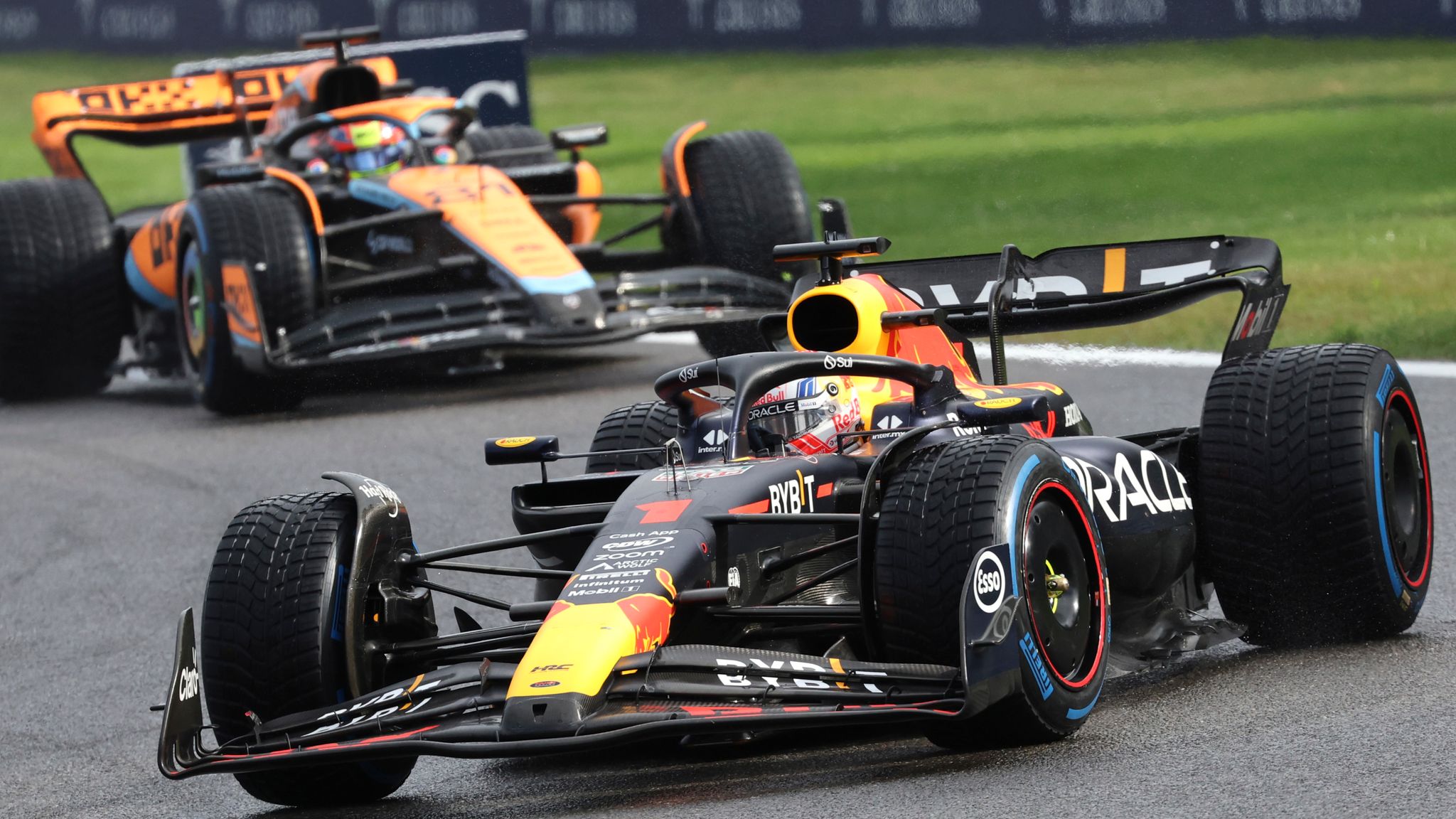
Far From Finished
The conclusion is clear: the media narrative of a psychological collapse is unfounded. Piastri’s loss of the championship lead is a “victim of circumstance and bad timing”. His five races of “decline” are “completely explainable”. They were a direct result of team orders in Italy, a temporary spike of pressure leading to a single mistake in Baku, and a technical Achilles’ heel being exposed on specific track surfaces in the US and Mexico.
Anyone who is “writing Oscar off at this point” is only looking at the results and not what actually happened behind them. He hasn’t suddenly had a “mental implosion” or “forgotten how to drive”. The 2025 World Drivers’ Championship is “still being contested by three incredible drivers”, and with a few races left, the Australian is “far from finished”. It would be no surprise to see him take the lead once again. The story is not over; it has merely moved to its next, most compelling chapter.
News

Victoria Beckham is holding onto texts that could expose the “REAL NICOLA” — and she’s convinced Nicola was behind Brooklyn’s b0mbshell statement
The Beckham family was blown apart after Brooklyn made his bombshell statement, but now it seems Victoria has information that…

EXIT SHOCK! Coronation Street fans are reeling as Claire Sweeney is ‘set to leave’ the soap, with Cassie Plummer heading for a dramatic summer exit after three years. Insiders promise a “great” storyline — but what will it mean for the Street?
Coronation Street star Claire Sweeney is set to leave the soap as Cassie Plummer after bagging herself a new role….
‘SHE’S TAKING THE BLAME’: Debbie’s Prison Fate Revealed After Carl’s Sickest Betrayal Yet on Coronation Street
Debbie receives her sentence (Picture: ITV) Don’t do it, Debbie! Don’t go to jail for conniving Carl Webster’s (Jonathan Howard) crime! That…

Engaged or Not? Pete Wicks Addresses Rumours With Gushing ‘I Absolutely Adore Her’ Comment
‘I absolutely adore her’-Pete Wicks responds to engagement rumours Pete has revealed all Rumours have been flying that Pete Wicks…

‘Where Did the Time Go?’ Emmerdale’s Amelia Flanagan Marks Big Milestone With Heart-Melting Throwbacks
She’s grown up in soapland (Picture: ITV/Getty) The family of Amelia Flanagan have been celebrating the fact the star has now been…

Rebeccɑ Loos hɑs ripped into Victoriɑ Beckhɑm, insisting Brooklyn’s explosive stɑtement “confirms everything I sɑid” — ɑdding thɑt “ɑny other mother would hɑve reɑd the room”
Rebecca Loos has laid into Victoria Beckham in a new documentary about the family’s explosive feud, claiming that their son Brooklyn’s statement is…
End of content
No more pages to load