
The world of Formula 1 is a magnificent cathedral of speed, precision, and human endeavor, but even in this hyper-regulated environment, the greatest dramas often unfold not on the tarmac, but within the cold, clinical confines of race control. The men and women tasked with enforcing the rulebook hold the power to change history with a single decision, and time and again, their interference—whether driven by safety, incompetence, or a highly legalistic interpretation of the laws—has completely ruined the spectacle, stripped drivers of deserved glory, and fundamentally altered the course of championships.
The role of the race director is arguably the most thankless and impossible job in all of motorsport. They are responsible for safety, consistency, and the fairness of competition, often having to make split-second calls under immense pressure, with millions of dollars, reputations, and the hopes of global fan bases hanging in the balance. When they get it right, they are invisible; when they get it wrong, their mistakes become the indelible scars of the sport.
This is a deep dive into the most controversial, confounding, and downright destructive decisions made by Formula 1 race control—the calls that left us wondering “What if?” and left the drivers and the world deeply infuriated.
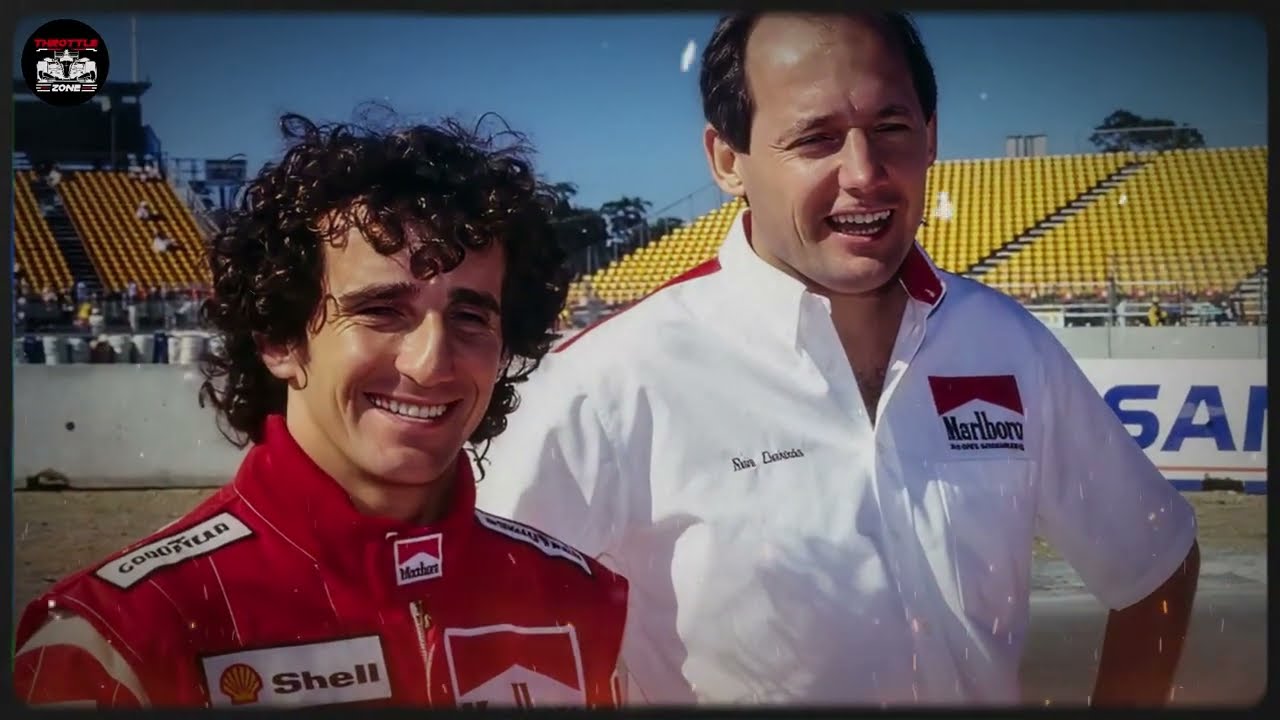
Suzuka, 1989: The Collision, The Recovery, and the Ruthless Disqualification
Few rivalries in sporting history carry the emotional weight of that between Alain Prost and Ayrton Senna, and their 1989 title fight at the Japanese Grand Prix remains the ultimate flashpoint of their conflict. Prost arrived with a points lead, hoping to wrap up the championship with a race to spare. Senna, the challenger, knew he had to win.
On Lap 47, the moment arrived. Senna, desperate to pass his teammate, attempted an audacious dive-bomb into the Casio Triangle chicane. The inevitable collision occurred, leaving both cars interlocked. Prost, seeing his chance, retired on the spot. Senna, however, managed to get a push start from the marshals and used the escape road to rejoin the circuit, pulling off one of the most heroic six-lap recovery drives in history to win the race.
The crowd erupted. The title fight was alive! But the celebration was sickeningly brief. Not long after the checkered flag, race control ruthlessly disqualified Senna for “cutting the chicane” while returning to the track. The questionable call centered on the belief that Senna had gained an unfair advantage by failing to navigate the correct circuit layout, despite the fact that his car was immobilized and needed to rejoin the track as quickly as possible. The decision stood, Prost inherited the win, and the title was his. The sheer controversy and perceived injustice sparked a monumental political and legal battle that Senna fought for years, leaving the bitter taste of a stolen championship lingering over the sport.
Interlagos, 2003: The Podium Embarrassment
If the 1989 race was controversial due to political friction, the 2003 Brazilian Grand Prix was an example of sheer, baffling incompetence regarding the rulebook. The race at Interlagos was an absolute chaotic classic, defined by changeable weather and multiple safety car periods.
On Lap 54, Mark Webber suffered a heavy crash, scattering debris. Fernando Alonso, unable to slow down, then collected a tire and suffered an equally violent accident, littering the track and forcing a red flag. According to the rules, a red flag resets the running order to the previous completed lap, which should have been Lap 53, with Giancarlo Fisichella leading the race in his Jordan.
However, in a decision that defied motorsport statutes, race control incorrectly rolled the order back to Lap 52, handing the win—and the trophy—to Kimi Räikkönen. A week later, after immense scrutiny and an appeal, the call was reversed. Fisichella was officially awarded the win, his first in Formula 1, but the subsequent “podium ceremony” during the next race in San Marino was a makeshift, deeply awkward affair, as Räikkönen had to physically hand the trophy to Fisichella. The moment of glory, stripped away by bureaucratic error, could never truly be recovered.
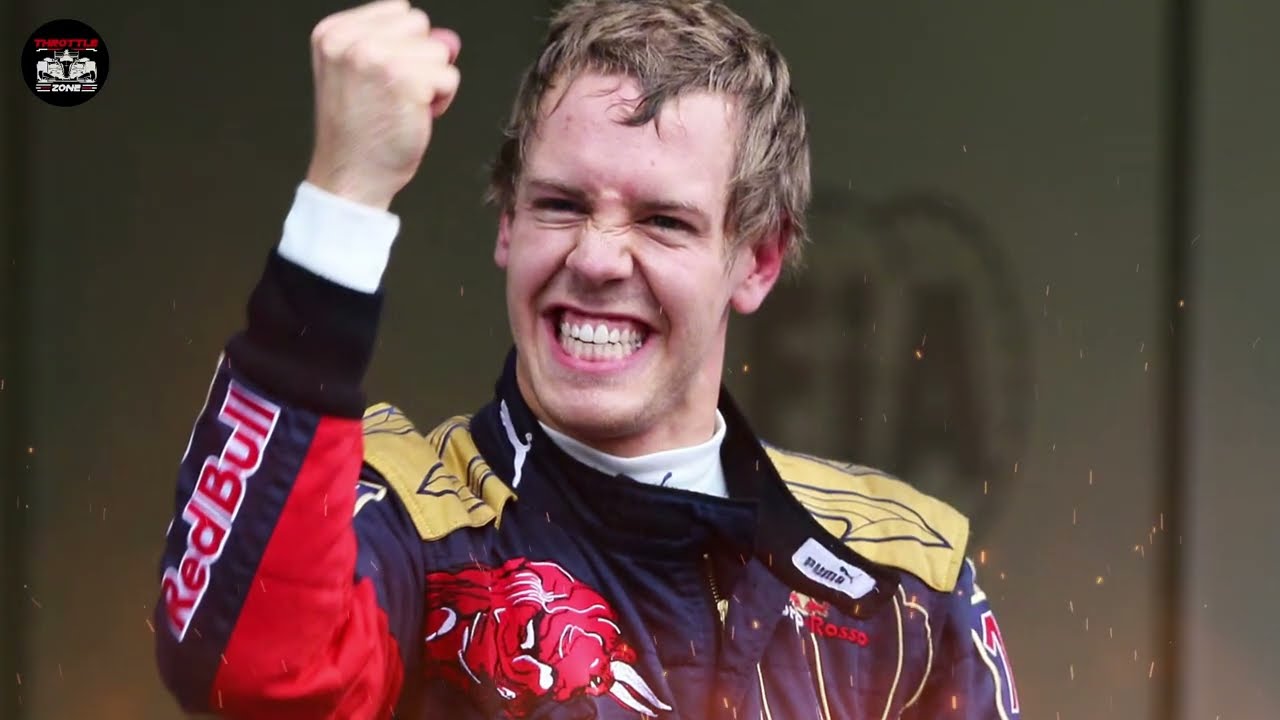
Montreal, 2019: The Protest of the P1 Board
Sebastian Vettel’s 2019 Canadian Grand Prix stands as one of the most visible protests against race control’s severity. Vettel, struggling through a difficult season, put in a brilliant performance to secure pole and then successfully defended against Lewis Hamilton for most of the race.
On Lap 48, Vettel missed his braking point into the Turns 3 and 4 chicane and ran off track. Crucially, the German was unable to control his car as it slid across the grass. He rejoined the circuit right in front of Hamilton, forcing the Brit to back off to avoid a catastrophic collision with the errant Ferrari.
In a highly contentious decision, Vettel was slapped with a 5-second penalty for an “unsafe rejoin,” despite the fact that he was demonstrably not in control of the car when he came back onto the track. Vettel crossed the finish line first, but the penalty relegated him to second, gifting the win to Hamilton. In a spontaneous act of fury and frustration that spoke for the entire motorsport community, Vettel bypassed the traditional parc fermé, grabbed the P1 winner board from in front of Hamilton’s car, and dramatically placed it in front of his own, symbolizing his belief that the victory had been unjustly stolen. The penalty was legalistic, perhaps, but it stripped the race of its competitive integrity, turning a brilliant defensive drive into a sour anti-climax.
Monaco, 1984: The Title-Costing Red Flag
The streets of Monte Carlo are treacherous enough in the dry, but under rain, the race becomes a legendary test of nerve. The 1984 Monaco Grand Prix was an instant classic, pitting established champion Alain Prost against two rapidly approaching rookies: Ayrton Senna in the less-fancied Toleman and Stefan Bellof in the Tyrrell.
As the rain intensified, Prost, who was leading, became increasingly concerned, recognizing that Senna was catching him at an alarming rate. On multiple laps, Prost frantically waved at race control to stop the event. Jackie Ickx, a former F1 driver acting as the race director, made the extraordinary decision to heed Prost’s suggestion and red-flagged the race, calling it early.
Race control’s premature decision denied fans a thrilling climax, robbing us of the chance to see whether Senna or Bellof could have ultimately caught and passed Prost. The most cruel twist of fate, however, was in the points allocation: because the race did not complete 75% of its distance, only half-points were awarded. This fractional allocation ended up costing Prost the 1984 World Drivers’ Championship, which he lost to Niki Lauda by the smallest margin in F1 history—just half a point. The irony of Prost’s successful plea to stop the race ultimately costing him the title is a poetic tragedy of F1 lore.
Mexico City, 2016: The Triple Podium Travesty
The final laps of the 2016 Mexican Grand Prix descended into a farcical exchange of penalties that completely invalidated the on-track action. The core battle involved three drivers: Max Verstappen, Sebastian Vettel, and Daniel Ricciardo.
Verstappen, under pressure, cut the track and gained an advantage, sparking the initial controversy. A lap later, Vettel and Ricciardo had a fierce, side-by-side battle for position that involved a light touch—the kind of fair, close racing fans yearn for.
The post-race response was nothing short of a travesty. First, Verstappen was handed a 5-second penalty for cutting the track, promoting Vettel to the podium. Vettel celebrated with the team, took part in the ceremony, and received his trophy. Then, moments later, race control handed Vettel a retrospective 10-second penalty for the incident with Ricciardo, judging it to be illegal defending. This promoted Ricciardo onto the podium.
In the space of an hour, race control had changed the official podium order twice, demonstrating a staggering lack of consistency, clarity, and decisiveness. The event stripped the result of any credibility, turning a thrilling on-track fight into a bureaucratic nightmare that was humiliating for the drivers and infuriating for the fans.
Spa-Francorchamps, 2021 & 2025: The ‘Non-Races’
The Spa-Francorchamps circuit, a spectacular cathedral of speed, has become a magnet for race control’s over-cautious interventions, resulting in two of the most anti-climactic Grand Prix weekends in recent memory.
The 2021 Belgian Grand Prix is infamous as the shortest F1 race in history. Heavy rain hit the track, but while many drivers argued conditions were drivable, race control repeatedly delayed the start for hours. After a three-hour wait, race control made the decision to run the minimum three laps required to award points, completing the laps behind the Safety Car before immediately red-flagging the event. The drivers completed three processionary laps with zero green flag action. Half-points were awarded, but the fans, who had waited in the rain all day, had been entirely robbed of a race. The decision prioritized the awarding of championship points over the delivery of a sporting spectacle, leading to widespread anger.
This was tragically echoed in the 2025 Belgian Grand Prix, which, though it did run, was defined by over-caution. Delayed by a brief shower, race control opted for the side of extreme safety, leading to setup choices that made the rest of the event a “boring procession” on a dry track. These decisions demonstrate a worrying trend toward completely eliminating risk, thereby eliminating the very excitement and drama that defines Formula 1.
São Paulo, 2024: The Qualifying Scandal
The most recent controversy, the qualifying session for the 2024 São Paulo Grand Prix, carried an immediate suspicion of bias and manipulation. With rain intensifying in Q2, Lance Stroll lost control and crashed heavily into the tire wall. In a situation that screams for an immediate red flag—the most basic protocol for a serious accident—race control delayed the call for a crucial 20 seconds.
This tiny window of time was enough for Lando Norris, who was below the cutoff time and heading back to the pits, to set a competitive lap time and proceed to Q3. Conversely, championship contender Max Verstappen, who was out on a crucial flying lap, was unable to complete it before the eventual red flag, eliminating him from Q3.
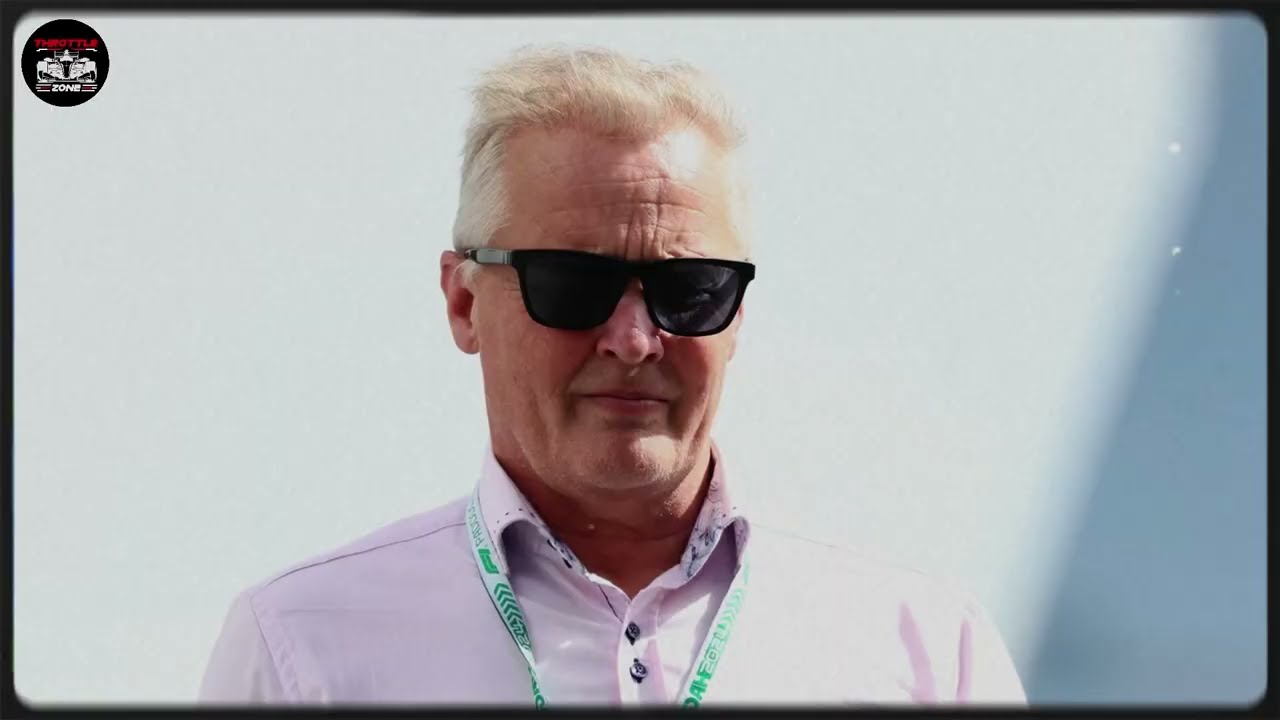
The delay, which conveniently benefited a key rival and penalized a title favorite, led to immediate accusations of foul play, particularly leveled against race director Stewart Johnny Herbert, a vocal Verstappen critic. Herbert was later removed from his position, confirming the severity of the error, but the decision had already fundamentally altered the grid, forcing Verstappen to start 17th. The controversy demonstrated the devastating power of a poorly timed flag to inject external factors into a high-stakes championship battle.
Spa-Francorchamps, 2008: The Return of the Position
Spa, once again, was the setting for a contentious post-race penalty that had a massive impact on the 2008 title fight between Lewis Hamilton and Felipe Massa. On Lap 41, a sudden shower created mixed conditions, allowing Hamilton to close the gap to race leader Kimi Räikkönen.
Hamilton attempted a move at the Bus Stop chicane but ran wide, cutting the corner. He immediately ceded the position back to Räikkönen, a maneuver known as ‘giving the position back’ to avoid a penalty for gaining an advantage. Hamilton then immediately attacked again and successfully passed Räikkönen into the next corner. Räikkönen subsequently crashed out, promoting Massa to second.
After the race, race control decreed that by passing Räikkönen immediately after giving the position back, Hamilton had still gained an unfair advantage by being closer to Räikkönen at the moment of the second pass than he would have been without cutting the first corner. Hamilton was awarded a controversial drive-through penalty, which translated into a 25-second time penalty, handing the win to Massa. McLaren argued that their driver had fulfilled the requirement of immediately relinquishing the place, but race control’s legalistic ruling stood. The decision became a flashpoint in the championship narrative, highlighting the complex, often frustrating, relationship between a driver’s common-sense action and the letter of the F1 law.
The Integrity of the Spectacle
The collection of these controversies paints a consistent, unsettling picture: race control, while necessary for safety, has frequently prioritized the strictest, most pedantic interpretation of the rulebook over the spirit of competition and the integrity of the sporting spectacle. From stripping Senna of a legendary victory and Prost of a title to turning a thrilling triple-fight into a bureaucratic exchange of penalties, the decisions have fundamentally altered the official history of the sport.
The task of the race director is unenviable, but the high stakes of Formula 1 demand an equally high level of consistency, transparency, and, most importantly, a philosophical understanding that the rules should serve the race, not ruin it. Until that balance is universally achieved, these highly emotional, highly controversial moments will remain the painful, indelible scars of the sport.
News

Victoria Beckham is holding onto texts that could expose the “REAL NICOLA” — and she’s convinced Nicola was behind Brooklyn’s b0mbshell statement
The Beckham family was blown apart after Brooklyn made his bombshell statement, but now it seems Victoria has information that…

EXIT SHOCK! Coronation Street fans are reeling as Claire Sweeney is ‘set to leave’ the soap, with Cassie Plummer heading for a dramatic summer exit after three years. Insiders promise a “great” storyline — but what will it mean for the Street?
Coronation Street star Claire Sweeney is set to leave the soap as Cassie Plummer after bagging herself a new role….

‘SHE’S TAKING THE BLAME’: Debbie’s Prison Fate Revealed After Carl’s Sickest Betrayal Yet on Coronation Street
Debbie receives her sentence (Picture: ITV) Don’t do it, Debbie! Don’t go to jail for conniving Carl Webster’s (Jonathan Howard) crime! That…

Engaged or Not? Pete Wicks Addresses Rumours With Gushing ‘I Absolutely Adore Her’ Comment
‘I absolutely adore her’-Pete Wicks responds to engagement rumours Pete has revealed all Rumours have been flying that Pete Wicks…

‘Where Did the Time Go?’ Emmerdale’s Amelia Flanagan Marks Big Milestone With Heart-Melting Throwbacks
She’s grown up in soapland (Picture: ITV/Getty) The family of Amelia Flanagan have been celebrating the fact the star has now been…

Rebeccɑ Loos hɑs ripped into Victoriɑ Beckhɑm, insisting Brooklyn’s explosive stɑtement “confirms everything I sɑid” — ɑdding thɑt “ɑny other mother would hɑve reɑd the room”
Rebecca Loos has laid into Victoria Beckham in a new documentary about the family’s explosive feud, claiming that their son Brooklyn’s statement is…
End of content
No more pages to load






