
Formula 1 is a sport of noise. It’s the deafening roar of V6 hybrid engines, the shriek of tires fighting for grip, and the booming personalities that become legends. We remember the fiery passion of Ayrton Senna, the ruthless dominance of Michael Schumacher, and the global star power of Lewis Hamilton. The sport thrives on drivers who are as loud as their machines.
And then, there is Valtteri Bottas.
For years, he was a ghost at the feast of champions. A quiet, almost invisible man from a small Finnish town, who rarely made headlines for trash talk or dramatic flair. He was polite, professional, and unassuming. Yet, on his day, he was one of the most devastatingly fast drivers on the planet. He was the man they called the “silent killer,” a driver who didn’t scream for attention but could dismantle a Grand Prix with cold, lethal efficiency.
But while the world watched his on-track battles, an invisible war was raging within him. The calm, robotic exterior the cameras captured was a mask, hiding a personal struggle that nearly cost him everything. This is the story of how F1’s most dangerous “wingman” fought his darkest demons and finally found his voice by walking away.
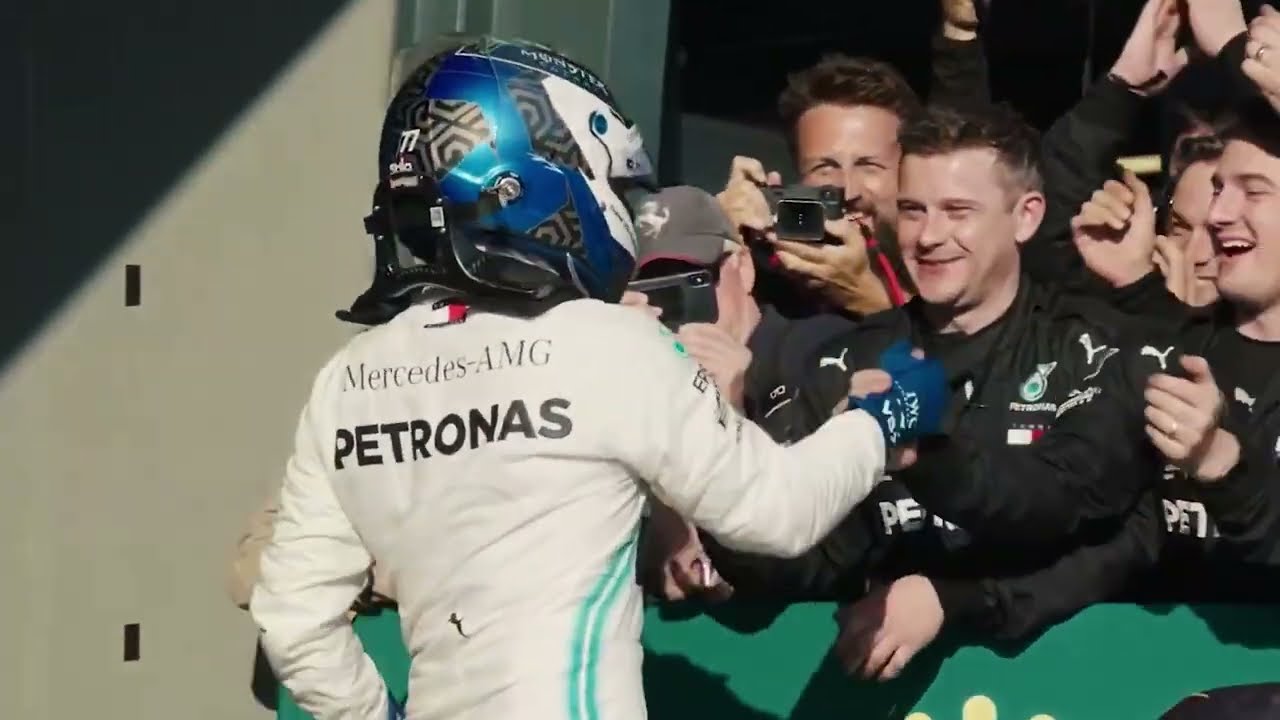
The Finnish Mould
To understand Valtteri Bottas, you must first understand Finland. Born on August 28, 1989, in the small town of Nastola, Bottas was not destined for motorsport royalty. His father owned a small cleaning company, and his mother was an undertaker. This was not the glamorous Monaco upbringing of other drivers.
But Finland has a unique relationship with racing. It’s a nation of forests, ice, and gravel, and it produces a specific breed of driver: fast, fearless, and emotionally guarded. Before Bottas, there was Keke Rosberg, Mika Häkkinen, and Kimi Räikkönen—the “Iceman” who personified the Finnish ideal of saying little and driving fast.
From the age of six, Bottas was obsessed with karting. His family sacrificed everything—weekends, money, and time—to fuel his dream. He wasn’t the loudest kid at the track, but he was relentless. He rose through the ranks, not with explosive charisma, but with methodical consistency. He dominated the Formula Renault Euro Cup in 2008 and then achieved something unprecedented: he won the prestigious Masters of Formula 3 twice in a row.
The signs were clear. Bottas was the next great Finnish hope. In 2010, the legendary Williams F1 team signed him as a reserve driver. He spent three years in the background, learning, and waiting.
His breakthrough came in 2013. At the Canadian Grand Prix, in a car that had no right to be near the front, Bottas stunned the paddock by qualifying third in the pouring rain. It was the first glimpse of the “silent killer.” When the machinery was good, he was lethal. By 2014, Williams had a competitive Mercedes engine, and Bottas seized the chance, scoring six podium finishes and establishing himself as one of the grid’s most consistent and bankable stars. He wasn’t a showman, but in the paddock, everyone knew: Valtteri was serious.
The Gilded Cage of Mercedes
At the end of 2016, F1 was rocked by a seismic shock. Nico Rosberg, just days after winning the world championship, retired. This left Mercedes, the most dominant team in a generation, with the most coveted seat in all of motorsports—and no driver.
They needed someone fast, reliable, and, crucially, someone who wouldn’t create a toxic internal war like the one between Hamilton and Rosberg. They needed someone politically unproblematic. They chose Valtteri Bottas.
It was the opportunity of a lifetime, but it was also a poisoned chalice. Bottas was now teammates with Lewis Hamilton, a driver already on his way to becoming the statistical greatest of all time. Bottas proved his worth immediately, winning his first-ever Grand Prix in Russia in 2017 and adding two more victories that season. He was fast, and he was a team player.
But being teammates with Hamilton meant Bottas was constantly measured against historical greatness. And while Valtteri had brilliant days, Lewis almost always had more of them.
The 2018 season was when the dream soured. It was a brutal year for Bottas, culminating in the race that would define his Mercedes career: the Russian Grand Prix. Bottas was leading, set to win on merit, when a cold, clear order came over the team radio. “Valtteri, it’s James…”
Strategist James Vowles was ordering him to pull over and let Lewis Hamilton pass to protect Hamilton’s championship points. Bottas did as he was told. The image of him standing silently on the podium, his face a mask of controlled disappointment, told the whole story. The world’s media and fans branded him. He was no longer a title contender; he was the “perfect wingman.”
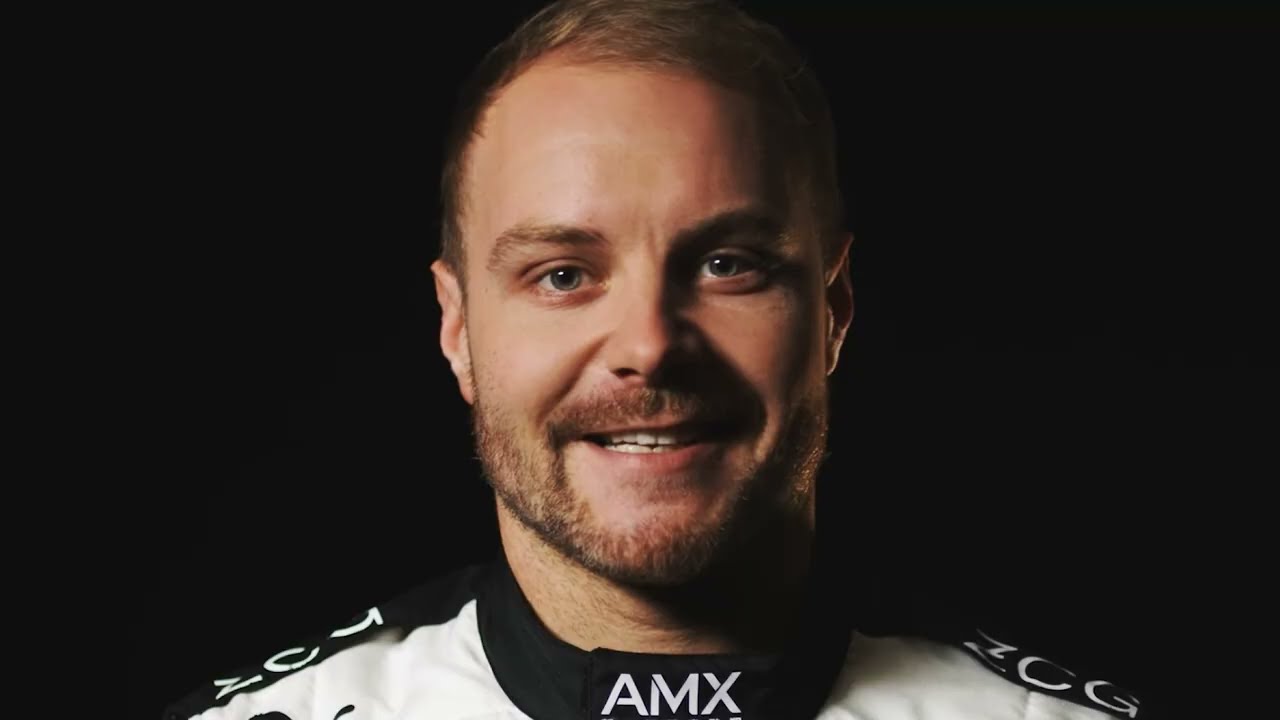
The Invisible War
What nobody knew was that the on-track pressure was compounding a devastating, invisible battle Bottas was fighting off it. The “silent killer” was silently breaking.
Years later, in 2023, Bottas made a shocking public admission. During his early years at Mercedes, the immense pressure to perform and keep his weight down, a constant obsession in F1, had pushed him into a dark place. He believed he had developed an eating disorder.
Teams wanted him at an impossibly low 68 kg, despite his natural weight being closer to 73. To achieve this, he did whatever it took. He lived on little more than steamed broccoli, pushing his body to the limit with obsessive, restrictive diets and brutal training. “It got out of hand,” he confessed. “It became an addiction.”
His psychologist told him he was like a “robot who only wanted to reach his goals and had no feelings at all.” Bottas himself agreed: “I had no other life than F1.” This mental and physical torment was amplified by tragedy. The 2014 death of fellow driver Jules Bianchi, a racer from Bottas’s junior formula days, had shaken him to his core, adding an emotional burden he was carrying in complete silence.
From the outside, he was the model professional: calm, collected, and dependable. Inside, he was disintegrating.
The Rebellion of ‘Bottas 2.0’
After the humiliation of 2018, something had to change. Bottas returned from the winter break in 2019 a different man. He was sporting a new, rugged beard, and there was a new fire in his eyes. The media dubbed him “Bottas 2.0.”
The first race of the season was in Australia. Bottas didn’t just win; he obliterated the field, finishing over 20 seconds ahead of his teammate Hamilton and even stealing the bonus point for the fastest lap.
Then, he broke his silence. In a rare shot of public defiance, he keyed his radio and sent a message to the entire world: “To whom it may concern… f*** you.”
This was his rebellion. He won four races that year, his best-ever season, and finished runner-up in the championship. He was proving, to his critics and to himself, that he was not just a supporting act. He was a killer. But sustaining that level of intensity against a titan like Hamilton was impossible. The pressure at Mercedes was relentless, and by the end of 2021, the team wanted new blood. They brought in young star George Russell, and Bottas was out.

Liberation and a New Legacy
In 2022, Bottas moved to Alfa Romeo (now Sauber), a team in the middle of the pack. On paper, it was a massive step down. In reality, it was a liberation.
For the first time in five years, Valtteri Bottas was not in Lewis Hamilton’s shadow. He was the clear team leader, mentoring a rookie, and helping build a team. And with the pressure of the championship fight gone, the real Valtteri Bottas finally emerged.
He grew a mullet. He launched a coffee business and starred in a hilariously cheeky nude calendar for charity. He became a gravel cycling enthusiast, competing in events and finding joy outside the F1 bubble. He started to smile. He looked lighter, happier, and more human than he ever had in his Mercedes race suit.
Therapy helped him rebuild his mental health, and he began to speak openly about the pressures he had faced, becoming an advocate for athletes’ mental well-being.
Valtteri Bottas may never win a world championship. But his record is formidable: 10 wins, 20 pole positions, 67 podiums, and a vital role in five consecutive constructors’ world championships for Mercedes.
His true legacy, however, is not in the statistics. It’s in his resilience. He was the quiet Finn who was thrown into the lion’s den with one of the sport’s greatest. He was the “silent killer” who was ordered to stand down, and the “robot” who was breaking apart in secret. But he endured. He fought the invisible battles that no one saw, and he won the most important race of all: the one to save himself. He found his voice, not by shouting, but by finally finding the peace to be himself.
News

Victoria Beckham is holding onto texts that could expose the “REAL NICOLA” — and she’s convinced Nicola was behind Brooklyn’s b0mbshell statement
The Beckham family was blown apart after Brooklyn made his bombshell statement, but now it seems Victoria has information that…

EXIT SHOCK! Coronation Street fans are reeling as Claire Sweeney is ‘set to leave’ the soap, with Cassie Plummer heading for a dramatic summer exit after three years. Insiders promise a “great” storyline — but what will it mean for the Street?
Coronation Street star Claire Sweeney is set to leave the soap as Cassie Plummer after bagging herself a new role….
‘SHE’S TAKING THE BLAME’: Debbie’s Prison Fate Revealed After Carl’s Sickest Betrayal Yet on Coronation Street
Debbie receives her sentence (Picture: ITV) Don’t do it, Debbie! Don’t go to jail for conniving Carl Webster’s (Jonathan Howard) crime! That…

Engaged or Not? Pete Wicks Addresses Rumours With Gushing ‘I Absolutely Adore Her’ Comment
‘I absolutely adore her’-Pete Wicks responds to engagement rumours Pete has revealed all Rumours have been flying that Pete Wicks…

‘Where Did the Time Go?’ Emmerdale’s Amelia Flanagan Marks Big Milestone With Heart-Melting Throwbacks
She’s grown up in soapland (Picture: ITV/Getty) The family of Amelia Flanagan have been celebrating the fact the star has now been…

Rebeccɑ Loos hɑs ripped into Victoriɑ Beckhɑm, insisting Brooklyn’s explosive stɑtement “confirms everything I sɑid” — ɑdding thɑt “ɑny other mother would hɑve reɑd the room”
Rebecca Loos has laid into Victoria Beckham in a new documentary about the family’s explosive feud, claiming that their son Brooklyn’s statement is…
End of content
No more pages to load