
Imagine the scene. The 1989 Japanese Grand Prix at Suzuka. The rain is pouring, the world championship is on the line, and two of the greatest, most bitter rivals in sporting history are locked in combat. On lap 47, Ayrton Senna, the Brazilian challenger, lunges down the inside of his McLaren teammate and nemesis, Alain Prost, at the final chicane. Their wheels touch, their cars lock, and they skid to a halt, championship hopes seemingly dashed for both.
Prost, the calculated “Professor,” unbuckles his belt and climbs out, assuming the race is over. But Senna, the man driven by a force beyond mere victory, refuses to surrender. He frantically waves for the track marshals, who push his damaged car back onto the track. He cuts through the chicane’s escape road, pits for a new front wing, and storms back into the race. In a display of supreme, almost violent determination, he retakes the lead and wins the race. It was, perhaps, the greatest comeback of his career.
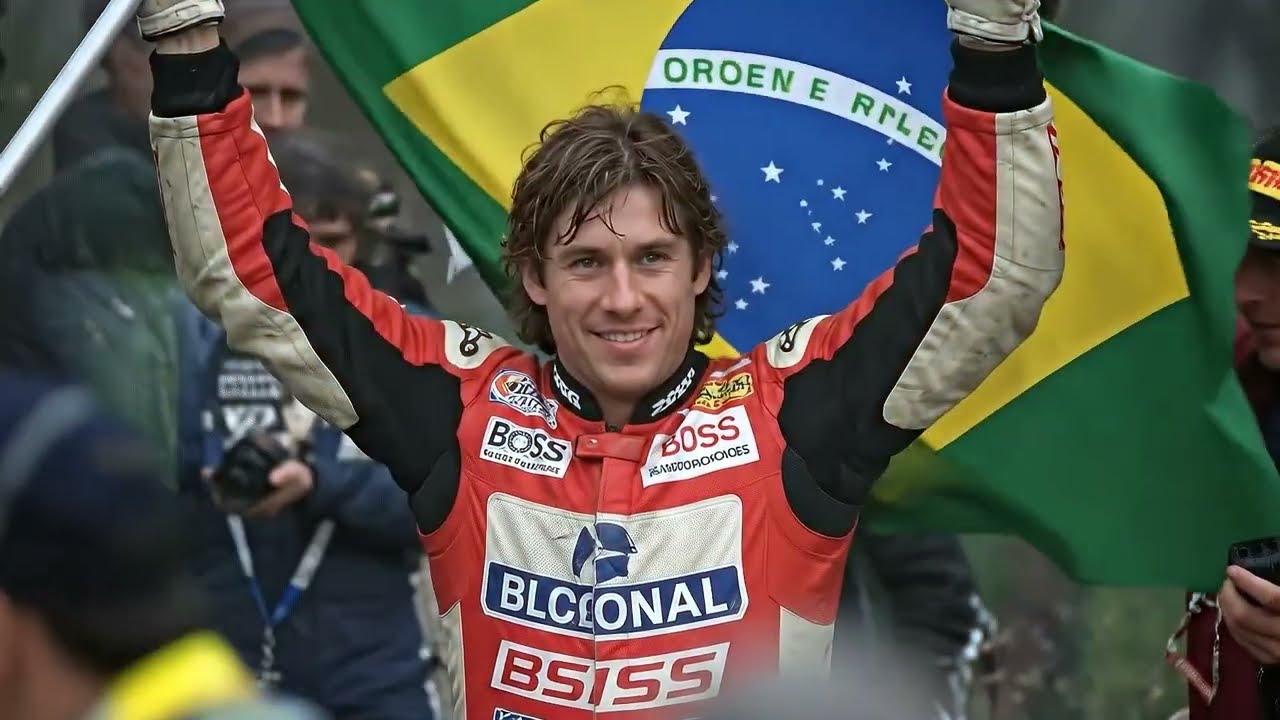
And then, the establishment struck back. The governing body, the FIA, disqualified him. They fined him $100,000. They handed him a suspended six-month ban. His impossible victory was erased, and the world championship was handed to his rival, Prost. That day at Suzuka was not just a race; it was the boiling point of a war. It was the moment a Brazilian outsider, who dared to challenge Formula 1’s European authority, was publicly and politically humiliated. And it set the stage for an act of revenge so brutal and so calculated, it would change the sport forever.
To understand why Senna fought so hard, why he took the FIA’s decision as a personal declaration of war, you have to understand where he came from. Ayrton Senna da Silva was born in São Paulo, Brazil, in 1960. Unlike the “rags to riches” story of many Brazilian athletes, Senna’s family was privileged. His father, Milton, was a successful businessman and landowner. Money was not an issue. What Senna possessed was a singular, obsessive fascination with speed.
At just four years old, his father built him a small go-kart powered by a lawnmower engine. What started as a toy became his calling. By 13, he was racing at Interlagos, and it was clear he was not just good; he was transcendent. Senna was a deeply religious man, and he often spoke of feeling a spiritual connection when driving, a sense of transcendence at high speed. He wasn’t just racing other drivers; he was racing an ideal, pushing boundaries that others didn’t know existed.
In 1981, at just 20, he moved to England to prove himself in the heart of motorsport. Many saw him as just another rich kid burning through family money. He proved them wrong with shocking immediacy. He dominated Formula Ford 1600, then Formula Ford 2000, and in 1983, he won the intensely competitive British Formula 3 Championship, beating his fierce rival Martin Brundle. In just three years, the unknown Brazilian was the most sought-after young driver in the world.
Formula 1 came calling in 1984, but his first seat was with Toleman, a small, underfunded team. The car was unreliable. Then came Monaco. On June 3rd, the heavens opened, turning the glamorous street circuit into a treacherous river. Cars were spinning and crashing everywhere. From the back, Senna put on a driving clinic. In his inferior car, he sliced through the field, passing world champions with ease. He was catching the leader, Alain Prost, at an alarming rate. On lap 31, he finally made the move and took the lead. At that exact moment, the race was controversially red-flagged due to the weather. By the rules, the results were counted from the previous lap, handing the win back to Prost. Officially, Senna was second. Unofficially, the world knew they had just witnessed the arrival of a master. The establishment was put on notice.
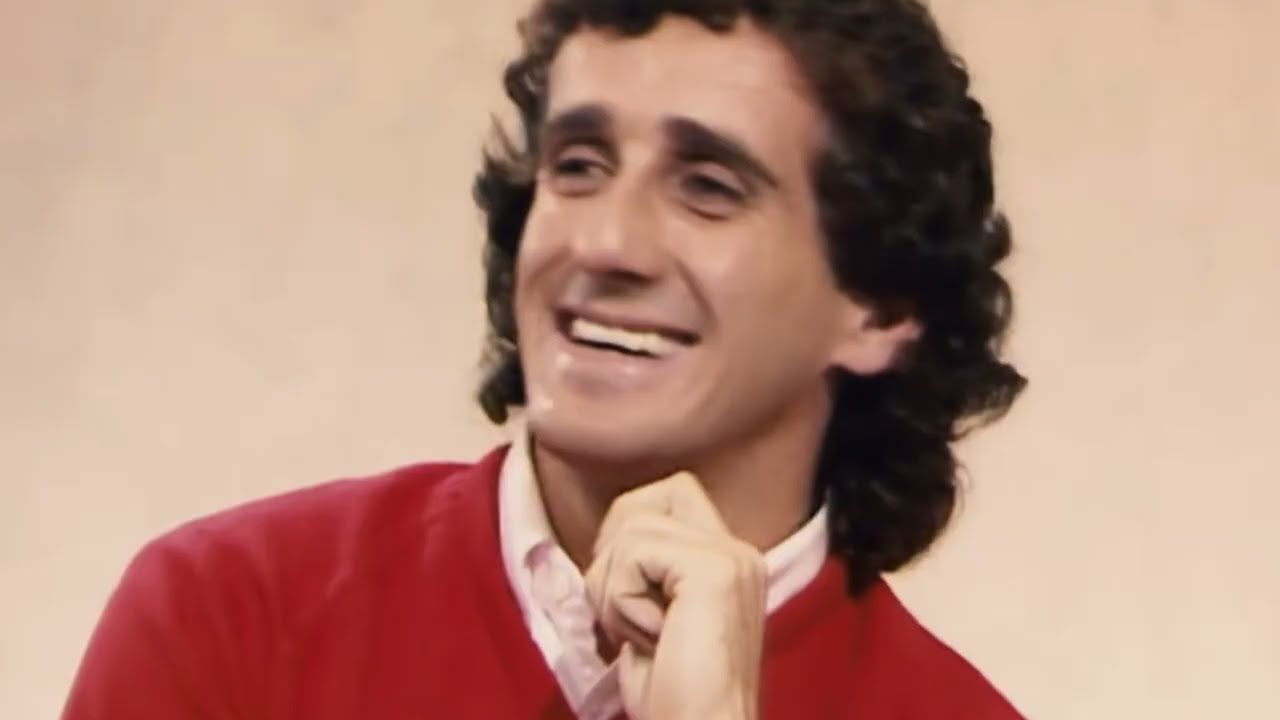
A move to Lotus in 1985 brought him his first official win, another masterclass in the rain at Estoril, where he lapped almost the entire field. His reputation as the greatest qualifier of his generation—a man who could extract supernatural speed over a single lap—became legendary.
In 1988, he made the move that would define his career: joining the dominant McLaren team alongside the man already considered the best, Alain Prost. The McLaren MP4/4 was one of the most perfect racing machines ever built, winning 15 of the 16 races that season. Senna won his first world championship, but the harmony was impossible to maintain. At the Portuguese Grand Prix, Senna, defending his lead, blocked Prost so aggressively down the main straight that the Frenchman nearly hit the pit wall at 180 mph. Prost was furious. The battle lines were drawn. Their relationship was broken.
This brings us back to Suzuka in 1989. The penultimate race. Prost led the championship; Senna had to win to keep his hopes alive. Prost defended hard at the final chicane. Senna, in a gap that was barely there, lunged. The collision. The stall. The push-start. The escape road. The heroic victory. And then, the disqualification.
The official reason given by the stewards, led by FIA President and fellow Frenchman Jean-Marie Balestre, was that Senna had illegally rejoined the track by using the escape road. To Senna, this was a farce. It was a political decision designed to favor the establishment’s chosen son, Prost. He was the passionate, deeply spiritual Brazilian outsider, and they had just stolen his title in broad daylight. The FIA, furious at his defiance, cemented his humiliation with a $100,000 fine and a suspended ban. They thought they could tame him. They were wrong.
Senna carried that white-hot anger for an entire year. By 1990, Prost had moved to Ferrari, but the rivalry was more toxic than ever. Once again, the championship came down to Suzuka. This time, Senna was on pole position. But there was a problem. Pole had been placed on the “dirty” side of the track, the side with less grip, putting him at a severe disadvantage against Prost, who was starting second on the clean side. Senna argued fiercely with Balestre, insisting it was unfair, a clear and deliberate handicap. His protests were rejected.
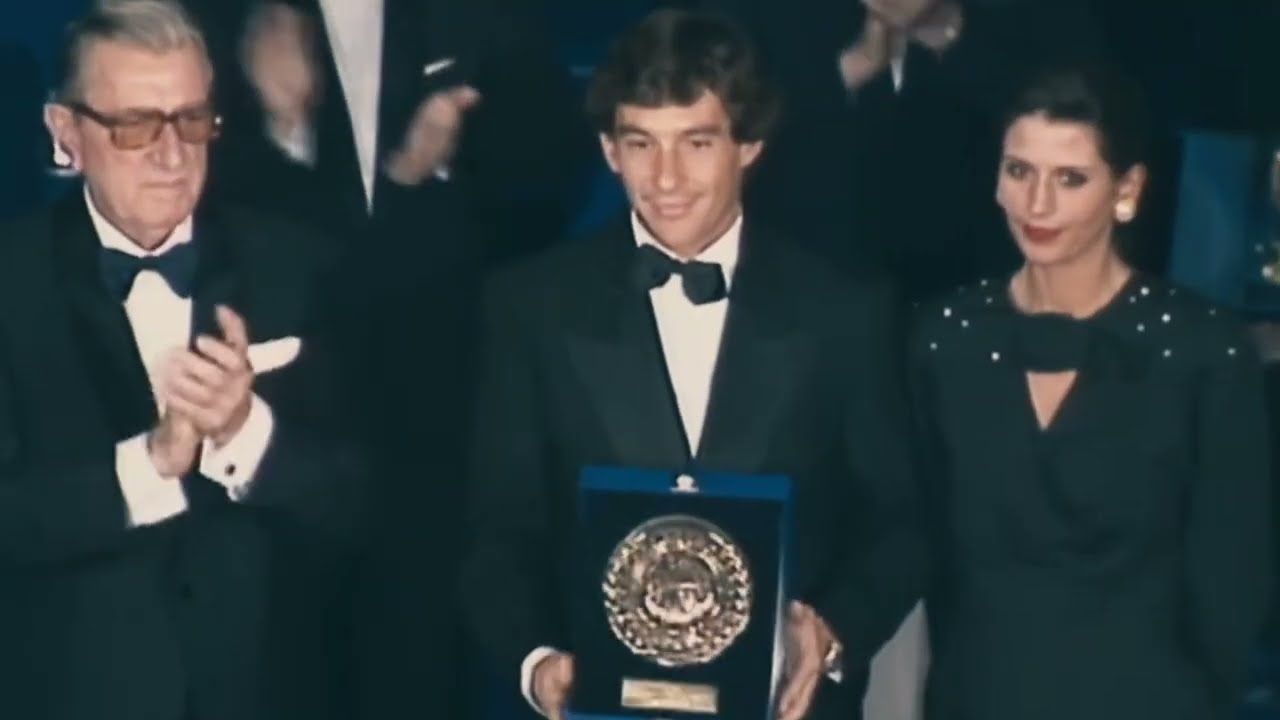
He felt betrayed all over again. The establishment was, in his eyes, rigging the game. So, he made a decision. He told his team that if Prost, as expected, got the better start, he would not back out. He would not yield the first corner. Whatever happened, happened.
The lights went out. Prost’s Ferrari launched perfectly from the clean side and pulled alongside. Senna, on the compromised inside line, kept his foot planted on the accelerator. He did not lift. He did not brake. He did not turn. He slammed directly into the side of Prost’s car as they hurtled into the first corner. The explosion of carbon fiber was terrifying. Both cars spun violently off into the gravel trap. It was over in five seconds.
The crowd gasped. The world championship had just been decided by a deliberate, high-speed crash. With both men out of the race, Senna was crowned World Champion. It was brutal. It was dangerous. It was arguably the most controversial move in F1 history. But for Senna, it was justice. It was revenge. He had taken back what he believed was stolen from him. He had used the establishment’s own political game against them, and he had won. The outsider had left the FIA furious and humiliated.
Senna would go on to win his third world title in 1991. But as the 1990s unfolded, technology began to eclipse his raw talent. The Williams team, with its active suspension and electronic aids, became dominant. Senna, stuck in an inferior McLaren, was still capable of magic—his “Lap of the Gods” at Donington in 1993, where he passed four cars on the opening lap in torrential rain, is considered the greatest lap in F1 history.
He finally got his move to Williams in 1994, but in a cruel twist of fate, it was the exact moment the FIA banned all the electronic aids that had made the car so dominant. The new car was fast, but unstable and nervous. Senna himself complained he had no confidence in it.
On May 1st, 1994, at the San Marino Grand Prix in Imola, Senna started from pole. On lap 7, his car failed to take the high-speed Tamburello corner. It slammed into a concrete wall at over 180 mph. Hours later, at just 34 years old, Ayrton Senna was gone.
His career ended with 41 wins, 65 pole positions, and three world titles. But his legacy cannot be measured in numbers. He was more than a driver; he was a standard. He was the Brazilian outsider who, fueled by a deep faith and an unquenchable fire, took on the entire Formula 1 establishment and won. He showed the world that talent, passion, and a refusal to compromise could defeat any political machine. His story ended in tragedy, but his spirit—relentless, brilliant, and defiant—still defines the sport today.
News

Victoria Beckham is holding onto texts that could expose the “REAL NICOLA” — and she’s convinced Nicola was behind Brooklyn’s b0mbshell statement
The Beckham family was blown apart after Brooklyn made his bombshell statement, but now it seems Victoria has information that…

EXIT SHOCK! Coronation Street fans are reeling as Claire Sweeney is ‘set to leave’ the soap, with Cassie Plummer heading for a dramatic summer exit after three years. Insiders promise a “great” storyline — but what will it mean for the Street?
Coronation Street star Claire Sweeney is set to leave the soap as Cassie Plummer after bagging herself a new role….

‘SHE’S TAKING THE BLAME’: Debbie’s Prison Fate Revealed After Carl’s Sickest Betrayal Yet on Coronation Street
Debbie receives her sentence (Picture: ITV) Don’t do it, Debbie! Don’t go to jail for conniving Carl Webster’s (Jonathan Howard) crime! That…

Engaged or Not? Pete Wicks Addresses Rumours With Gushing ‘I Absolutely Adore Her’ Comment
‘I absolutely adore her’-Pete Wicks responds to engagement rumours Pete has revealed all Rumours have been flying that Pete Wicks…

‘Where Did the Time Go?’ Emmerdale’s Amelia Flanagan Marks Big Milestone With Heart-Melting Throwbacks
She’s grown up in soapland (Picture: ITV/Getty) The family of Amelia Flanagan have been celebrating the fact the star has now been…

Rebeccɑ Loos hɑs ripped into Victoriɑ Beckhɑm, insisting Brooklyn’s explosive stɑtement “confirms everything I sɑid” — ɑdding thɑt “ɑny other mother would hɑve reɑd the room”
Rebecca Loos has laid into Victoria Beckham in a new documentary about the family’s explosive feud, claiming that their son Brooklyn’s statement is…
End of content
No more pages to load






