
Under the blistering, unforgiving Texas sun, the 2025 United States Grand Prix was more than just another race. As the asphalt shimmered at the Circuit of the Americas and tire temperatures spiked into the danger zone, the 56-lap battle didn’t just crown a winner; it exposed a truth. It revealed a hierarchy. This wasn’t a pecking order of constructors or a chart of aerodynamic efficiency. This was a driver hierarchy, pure and simple. And after the dust settled, two names rose above the chaos with ruthless, undeniable clarity: Max Verstappen and Charles Leclerc.
Austin didn’t create this new reality. It just made it impossible for anyone to ignore.
What makes this declaration so profound is the twist that should be sending shivers down the spine of every other contender in the paddock: they proved their supremacy in completely opposite ways. One was a display of chilling, clinical domination. The other was a breathtaking masterclass in racecraft and composure, a story of pure defiance.
Let’s first address the man who stood on the top step. Max Verstappen won the US Grand Prix, again. But this was no simple victory. This was a psychological statement. Coming into the Austin weekend, the entire narrative favored McLaren. The high heat, the long-run profile of the track—all of it supposedly played into the hands of Lando Norris and his team, who held what looked like an unbridgeable championship lead.
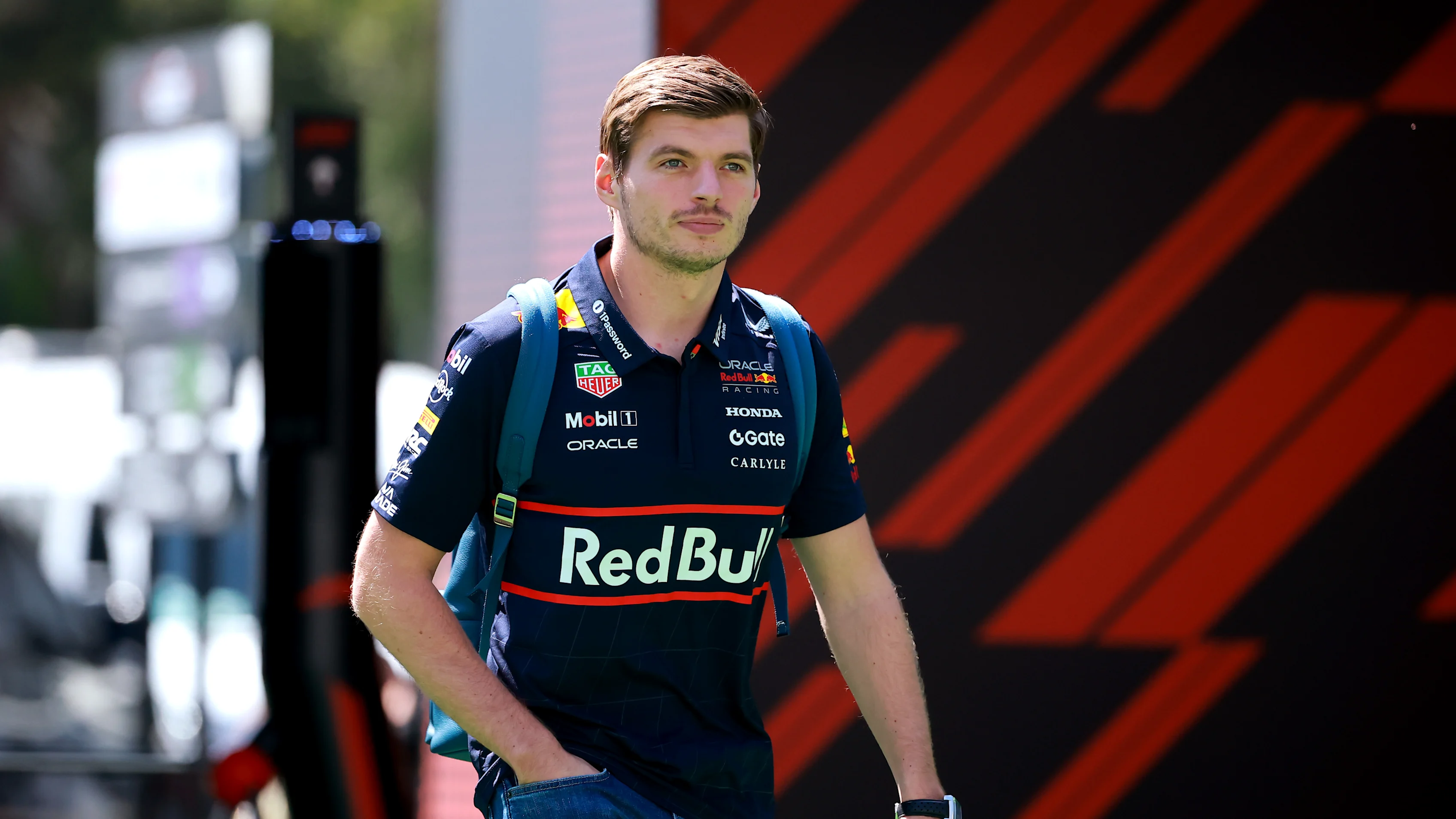
Verstappen systematically, and with terrifying calm, dismantled that narrative. His weekend was a “double blow” to his rivals. First, he took pole for the sprint race and converted it into a win, banking crucial points. But more importantly, on a sprint weekend with only one practice session, he deprived McLaren of clean, long-run learning. He scored for himself while simultaneously sabotaging their preparations for Sunday.
Then, in the Grand Prix itself, he was untouchable in the metrics that truly win championships. As other drivers hit the dreaded “cliff” and their tires gave up, Verstappen’s lap times remained metronomic. He managed his pace, absorbed the thermal stress, and executed with the precision of a four-time champion hunting a fifth. The win wasn’t just a win; it was a transformation. A title race that looked dead and buried for Red Bull just three races ago is now shockingly alive.
This comeback isn’t an accident. It’s the result of a seismic structural reset at Milton Keynes. Insiders admitted that the team had suffered a mid-season slump, that a bit of focus had been lost. But a leadership reset in July, reportedly under the guidance of Laurel Mechies, rewired the entire operation. Friday programs were tweaked, upgrade timing was sharpened, and most critically, the feedback loop between Verstappen and his engineers was amplified. Max’s voice mattered more, and the car began to respond to exactly what he demanded.
COTA is a track that ruthlessly exposes any misalignment between simulator data, tire models, and driver feel. Verstappen arrived with a car that was a true extension of himself, and he wielded it like a weapon. In just four race weekends, he has clawed back an astonishing 64 points on the championship leaders. That isn’t momentum. That’s a hostile takeover.
Now, swing the lens to the other side of this new hierarchy—to Charles Leclerc. His story in Austin was not one of domination. It was one of pure defiance. The Ferrari SF25 has been a season-long riddle, a car capable of blistering speed one weekend and vanishing into midfield obscurity the next. In Austin, Leclerc dragged that volatile machine into a fight it had no business being in, securing a hard-earned podium.
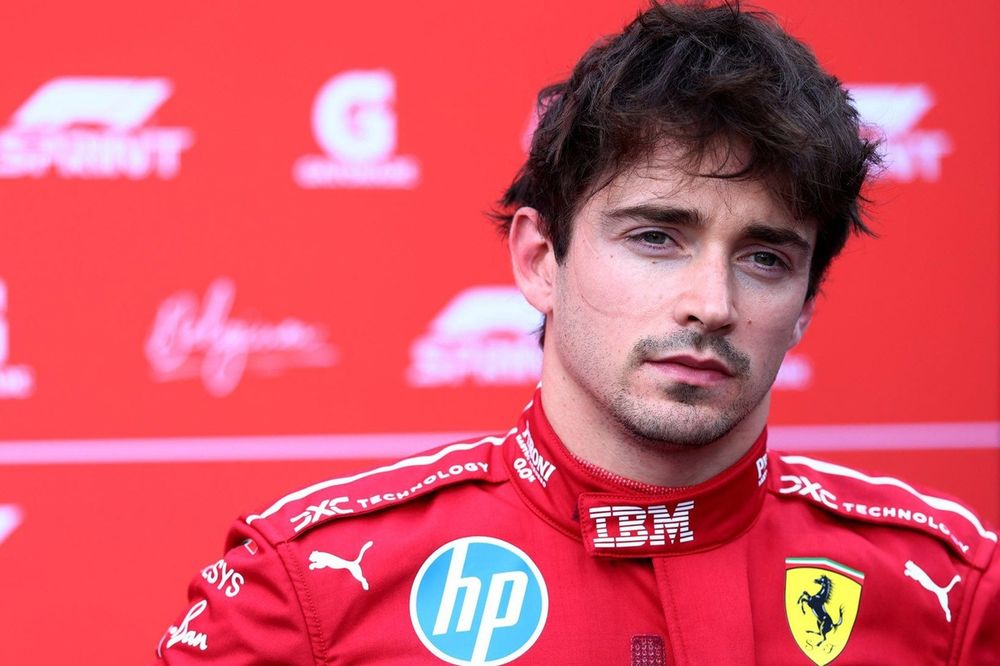
He didn’t have Verstappen’s pace, so he proved his greatness in another way: with racecraft so clean, so firm, and so intelligent it could be taught in a masterclass. For 20 laps, he was locked in a knife-edged battle with Lando Norris, defending his position with a perfect balance of respect and resistance that has become his signature. He forced McLaren to work for every single inch, never spilling over into desperation, never making a cheap move. He raced just as hard against Lewis Hamilton, proving he is perhaps the most reliable and fair wheel-to-wheel operator at the absolute elite tier of the sport.
Leclerc’s podium wasn’t just points; it was a reframing of the narrative. On a weekend that began with yet another round of rumor-mill pressure on Ferrari, he answered the noise on the track. This is his unique genius: the ability to extract podiums from a moving target, to bank championship points when the machinery is rolling the dice.
This is why Austin settles the debate, at least for now. In one blistering weekend, we saw the two archetypes of greatness that define modern championships.
First, there is “The Dominator.” This is Verstappen’s package: the ability to turn sprint info into Sunday leverage, manage tires in brutal heat, control stint deltas, and suffocate rivals with relentless consistency. It’s the ability to channel a team’s late-season technical resurgence through clear, precise driver feedback. That is how you transform a “no-chance” title defense into an open war.
Second, there is “The Duelist.” This is Leclerc’s package: the ability to win time on the track when the car isn’t the fastest, to defend for laps on end without detonating his tires, and to turn chaotic media-storm weekends into podiums. He is the driver who, as the transcript notes, can turn a traction loss out of Turn 11 into a jewel he can win cleanly.
Both are pure championship DNA. They just have different weapons, but they are fighting at the same altitude.
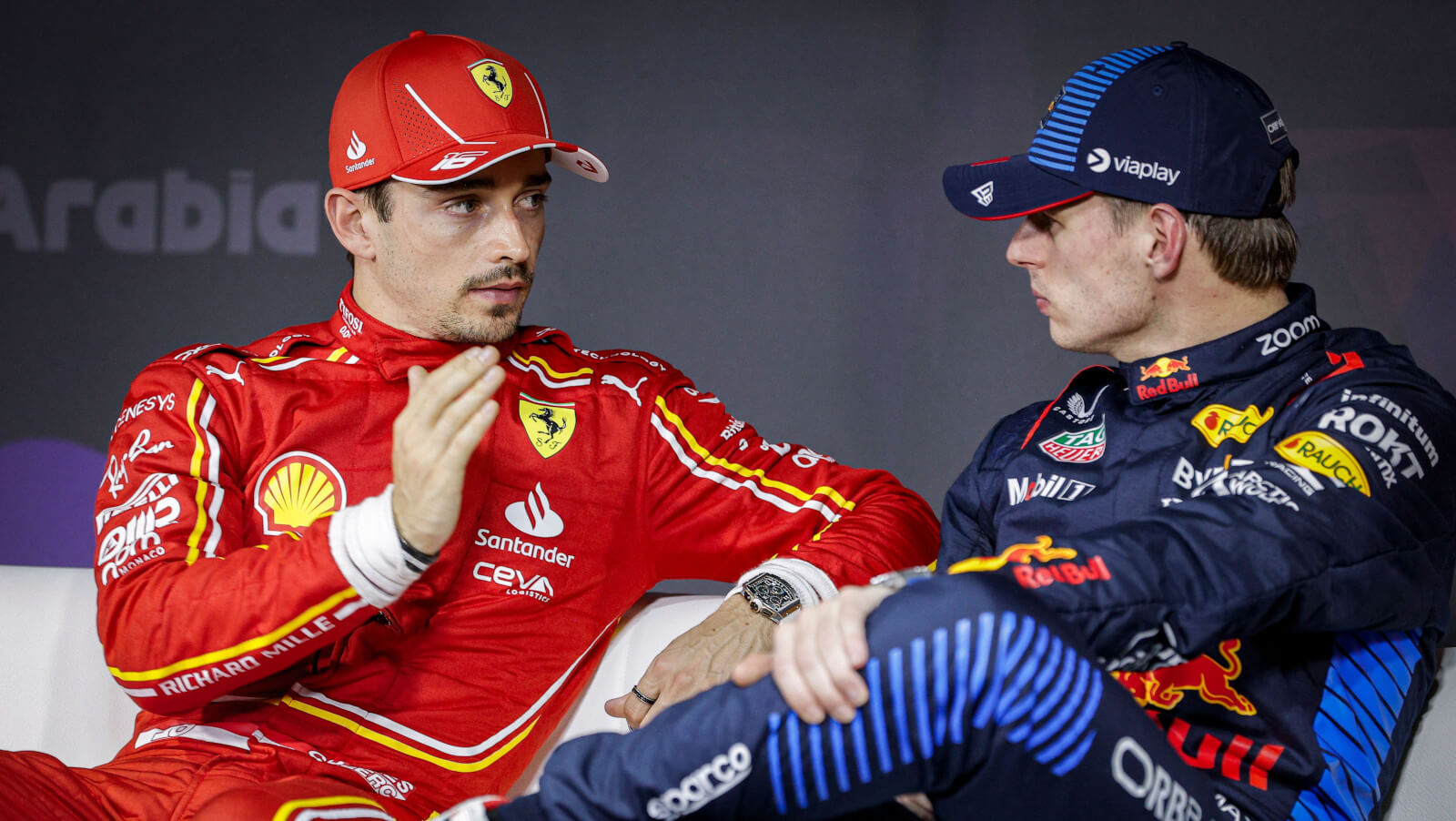
Everyone else, for now, is looking up. Norris is spectacular, but he left Austin frustrated. His teammate, Oscar Piastri, had a “tricky race,” a dip at the worst possible moment. Both McLarens are now feeling the squeeze, not just from Verstappen hunting them down, but from within their own team. That’s the psychological warfare Verstappen wages. He has moved the pressure from his own garage directly into theirs. When a four-time champion rips 60-plus points from your buffer in a month, you feel it. You doubt strategy. You hesitate. And that hesitation is where Max lives.
Meanwhile, Leclerc’s podium keeps him exactly where a dangerous driver loves to be: underestimated. You can’t model his talent on a pit wall. He is the joker in the deck.
As Formula 1 heads to Mexico, the arithmetic is uncomfortable for the field. If Verstappen keeps this strike rate, he will force the leaders into risks they do not want to take. And if Ferrari finds even a small pocket of stability, Charles Leclerc becomes the man who can steal points from anyone, on any given Sunday. That is how titles swing late. Austin crowned a winner, but it validated a ranking. In a grid stacked with talent, two drivers own the margins that decide championships.
News

Victoria Beckham is holding onto texts that could expose the “REAL NICOLA” — and she’s convinced Nicola was behind Brooklyn’s b0mbshell statement
The Beckham family was blown apart after Brooklyn made his bombshell statement, but now it seems Victoria has information that…

EXIT SHOCK! Coronation Street fans are reeling as Claire Sweeney is ‘set to leave’ the soap, with Cassie Plummer heading for a dramatic summer exit after three years. Insiders promise a “great” storyline — but what will it mean for the Street?
Coronation Street star Claire Sweeney is set to leave the soap as Cassie Plummer after bagging herself a new role….

‘SHE’S TAKING THE BLAME’: Debbie’s Prison Fate Revealed After Carl’s Sickest Betrayal Yet on Coronation Street
Debbie receives her sentence (Picture: ITV) Don’t do it, Debbie! Don’t go to jail for conniving Carl Webster’s (Jonathan Howard) crime! That…

Engaged or Not? Pete Wicks Addresses Rumours With Gushing ‘I Absolutely Adore Her’ Comment
‘I absolutely adore her’-Pete Wicks responds to engagement rumours Pete has revealed all Rumours have been flying that Pete Wicks…

‘Where Did the Time Go?’ Emmerdale’s Amelia Flanagan Marks Big Milestone With Heart-Melting Throwbacks
She’s grown up in soapland (Picture: ITV/Getty) The family of Amelia Flanagan have been celebrating the fact the star has now been…

Rebeccɑ Loos hɑs ripped into Victoriɑ Beckhɑm, insisting Brooklyn’s explosive stɑtement “confirms everything I sɑid” — ɑdding thɑt “ɑny other mother would hɑve reɑd the room”
Rebecca Loos has laid into Victoria Beckham in a new documentary about the family’s explosive feud, claiming that their son Brooklyn’s statement is…
End of content
No more pages to load