
In the blistering, high-stakes theatre of Formula 1, greatness is common. We have seen champions, we have seen dynasties, and we have seen legends. But we are currently witnessing something else entirely. We are witnessing a phenomenon. For nearly a decade, Max Verstappen hasn’t just participated in Formula 1; he has bent the sport to his will, forcing it to change, adapt, and ultimately, lock its gates behind him.
When a sport’s governing body is compelled to rewrite its rulebook specifically because of one individual, you are no longer just watching an athlete. You are watching a singularity. This is the story of Max Verstappen, but it is also the story of the “triple lock”—a convergence of talent, timing, and seismic rule changes—that ensures we will never, ever see his like again.
It began not as a gradual rise, but as a detonation. In 2015, Verstappen debuted at the Australian Grand Prix. He was just 17 years old, a child in a sport of seasoned men, the youngest driver ever to start a Grand Prix. The paddock was split; many argued he was too young, too raw, too dangerous. Then, just over a year later, at the 2016 Spanish Grand Prix, he was promoted to the Red Bull senior team. In his very first race with the team, at 18 years and 228 days old, he won.
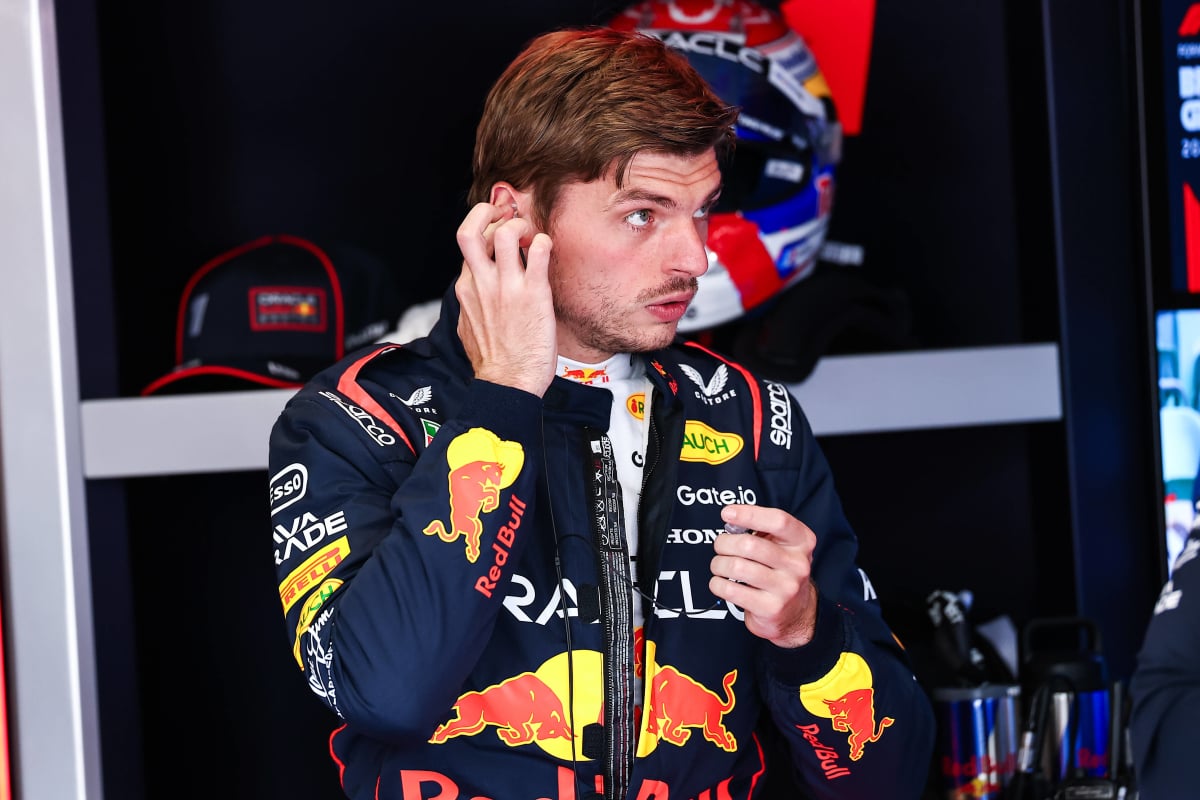
He became the youngest winner in F1 history, the youngest podium finisher, and the first Dutch victor. It wasn’t just hype; it was Formula 1 blinking in disbelief, asking, “What just happened?” While most teenagers are navigating homework and high school, Max Verstappen was threading a 1,000-horsepower machine through 300-km/h corners with the predatory calm of a veteran.
This singular event triggered the first, and most crucial, lock. The sport’s reaction was swift and structural. The FIA, the sport’s governing body, could not allow this to be the new normal. They promptly and permanently tightened the Super License regulations. A minimum age of 18 was established. A 40-point system in junior categories was mandated. A theory test was implemented.
The translation was simple: You can be a prodigy. You can be the next generational talent. But you cannot do what Max did. You cannot short-circuit the system. You cannot arrive at 17 and win at 18. That specific pathway, the one that forged Verstappen in the fires of top-tier F1 before he was even legally an adult in most countries, is sealed. The sport itself slammed that door shut right after Verstappen walked through it. This is the first reason there will never be another Max: the very path that created him no longer exists.
The second lock is not one of regulations, but of a rare, almost impossible-to-replicate cocktail of human elements. Verstappen is not just fast; he is, as many have described, mechanically fluent. He possesses a supernatural ability to adapt to cars that other drivers deem “knife-edge.” He rings pace from unstable rear ends, dancing on a razor-thin strip between grip and chaos. His 2023 season stands as a monument to this, arguably the most ruthless and dominant season in modern history. With 19 wins, the highest win percentage ever recorded, and a 10-race winning streak, he made statistics blush.
This power is amplified by a perfect storm of circumstances. Red Bull Racing, under Christian Horner and Adrian Newey, has proven willing and able to build cars that amplify his superpowers—machines that thrive on that aggressive, unstable edge he commands, while simultaneously punishing teammates who cannot cope.

This unique style was not born in a vacuum. It was forged in a childhood of “brutal” karting intensity, famously overseen by his father, former F1 driver Jos Verstappen. This combination—the pedigree of an F1 family, the extreme and relentless training from childhood, and a top-tier team prepared to build its entire philosophy around his generational talent—is not a formula that can be easily duplicated. The sheer, perfect alignment of family, training, and team fit is a miracle in itself.
Even if another driving prodigy appears, will they have an F1 father to guide them? Will they have a team willing to risk it all on their unique style? Will their style even be the meta for that era’s cars? The synchronization that created Verstappen is so rare that it constitutes the second lock.
The third and final lock is perhaps the most human, and the most fascinating: the clock.
Verstappen’s entire relationship with time and legacy is different from the champions who came before him. He has been candidly, almost unnervingly explicit: he is not here for a 20-year arc. He has no interest in racing until he is 40, chasing the ghost of seven or eight world titles. He has openly criticized the ever-expanding 24-race calendar, calling it “over the limit.”
This mindset compresses his legacy. He is not trying to float endlessly at the top; he is trying to peak on demand. This creates an urgency, a feeling of greatness on a countdown. He is not a star, content to burn for decades; he is a comet, and we are witnessing its fiery, finite passage. He will almost certainly leave the sport near his absolute peak, making his legend dense and compact, not sprawling and endless. Name another modern champion who openly shrugs at the statistical mountains climbed by Schumacher and Hamilton. You can’t.
This self-imposed limit means his record-shattering seasons, like the mathematical absurdity of 2023, may well stand untouchable. To beat them, you would need another driver as complete, a car as dominant, a team as flawless, and luck as loyal—all at the same time. Sports simply do not stack miracles twice.

This “triple lock” theory is not just history; it defines the present. As we watch the 2025 season unfold, the competitive order has been detonated. McLaren, with the brilliant Oscar Piastri and Lando Norris, has surged, making the grid messy and unpredictable once more. But this chaos only highlights Max’s uniqueness. Even when the deck is reshuffled, even when he is under pressure, he manufactures results. He finds the limit faster, adapts quicker, and lives more comfortably on that Razer’s edge than anyone.
He doesn’t just win on the track; he psychologically distorts the entire grid. Rivals know he can turn a half-chance into a win, so they pit earlier, defend differently, and stretch stints they shouldn’t. He edits everyone else’s strategy in real-time. That is not just speed; it is a gravitational pull.
So, why will there never be another Max Verstappen? Because the rules, rewritten in his image, will not allow it. Because the ladder is longer, the calendar heavier, and teams more cautious. Because the perfect storm of a racing-driver father, a brutal apprenticeship, and a tailor-made car cannot be planned.
And finally, because Max Verstappen himself refuses to chase endless numbers, making the ones he has already posted—and the ones he still might—all the more untouchable. Formula 1 is, by design, supposed to be unpredictable. Max Verstappen is the exception that forced the sport to change its very rules just to restore a semblance of that unpredictability. That is why he is the first, and the last. We are not just watching a champion; we are watching the one who closed the door behind him.
News

Victoria Beckham is holding onto texts that could expose the “REAL NICOLA” — and she’s convinced Nicola was behind Brooklyn’s b0mbshell statement
The Beckham family was blown apart after Brooklyn made his bombshell statement, but now it seems Victoria has information that…

EXIT SHOCK! Coronation Street fans are reeling as Claire Sweeney is ‘set to leave’ the soap, with Cassie Plummer heading for a dramatic summer exit after three years. Insiders promise a “great” storyline — but what will it mean for the Street?
Coronation Street star Claire Sweeney is set to leave the soap as Cassie Plummer after bagging herself a new role….
‘SHE’S TAKING THE BLAME’: Debbie’s Prison Fate Revealed After Carl’s Sickest Betrayal Yet on Coronation Street
Debbie receives her sentence (Picture: ITV) Don’t do it, Debbie! Don’t go to jail for conniving Carl Webster’s (Jonathan Howard) crime! That…

Engaged or Not? Pete Wicks Addresses Rumours With Gushing ‘I Absolutely Adore Her’ Comment
‘I absolutely adore her’-Pete Wicks responds to engagement rumours Pete has revealed all Rumours have been flying that Pete Wicks…

‘Where Did the Time Go?’ Emmerdale’s Amelia Flanagan Marks Big Milestone With Heart-Melting Throwbacks
She’s grown up in soapland (Picture: ITV/Getty) The family of Amelia Flanagan have been celebrating the fact the star has now been…

Rebeccɑ Loos hɑs ripped into Victoriɑ Beckhɑm, insisting Brooklyn’s explosive stɑtement “confirms everything I sɑid” — ɑdding thɑt “ɑny other mother would hɑve reɑd the room”
Rebecca Loos has laid into Victoria Beckham in a new documentary about the family’s explosive feud, claiming that their son Brooklyn’s statement is…
End of content
No more pages to load