
The air in the McLaren garage after the Mexican Grand Prix was thick with the strange, metallic tang of both triumph and tragedy. On the one hand, Lando Norris had delivered a dominant, lights-to-flag victory, his sixth of the season, marking McLaren’s first win in Mexico since 1989. On the other, his teammate, Oscar Piastri, crossed the line in fifth place, watching not only the checkered flag but also his six-month-long championship lead slip away by the agonizing margin of a single point.
This was no ordinary race. It was a rewrite of the Formula 1 season’s narrative, achieved not by driver error or tire degradation, but by a sudden, clinical, and brutally timed technological intervention: the Virtual Safety Car. In the cold, unforgiving world of top-tier motorsport, where millions are spent to gain a single tenth of a second, the race was decided by a piece of protocol that froze time itself, denying Piastri his hard-fought redemption.
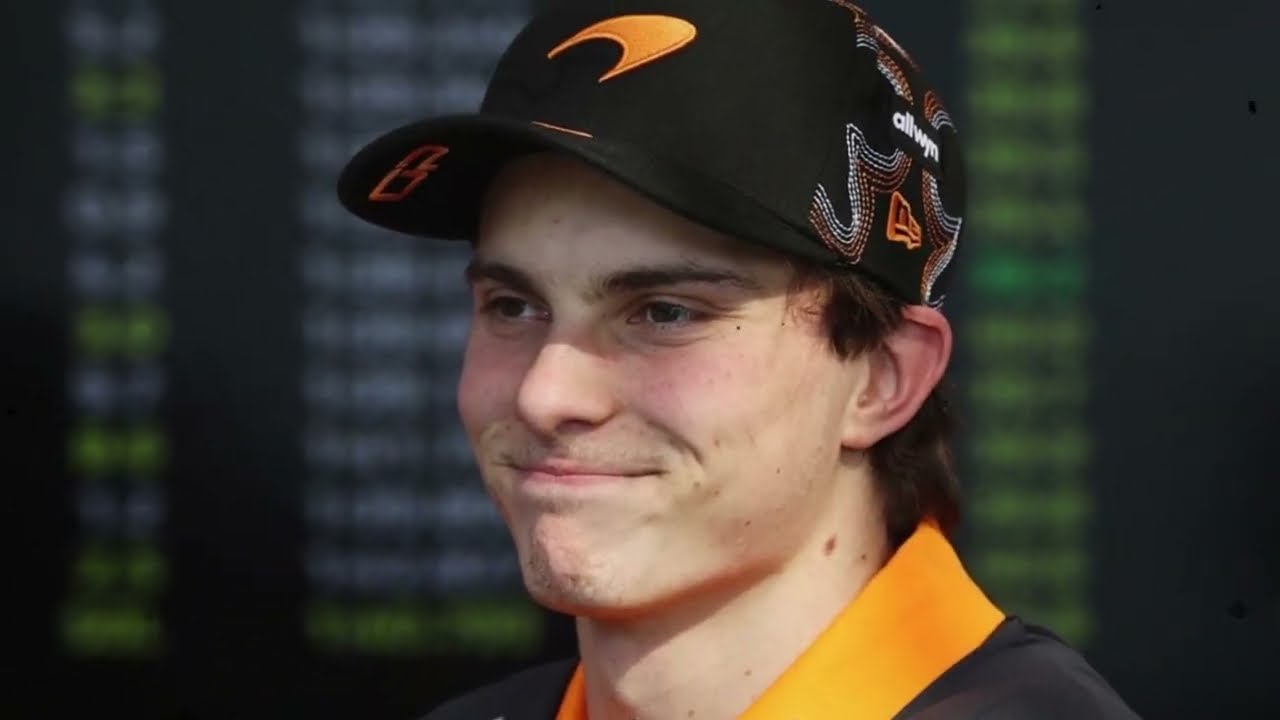
The Cruel Arithmetic of the Virtual Safety Car
For Piastri, the Mexican Grand Prix had started as a frantic salvage operation. A chaotic opening saw the Australian tumble down the order to 11th, a position far beneath his championship caliber. But champions are defined by recovery, and by Lap 68, Piastri was flying, carving through the midfield with the pace and precision that had defined his title push all year. He was hunting down Oliver Bearman, the Haas rookie, for what would have been a career-best finish for the young British driver.
Piastri’s mission was simple, yet vital: secure fourth place. That single, precious point would have been enough to keep him level with Norris, maintaining the psychological parity at the top of the standings. Telemetry from the McLaren pit wall told a story of impending success: Piastri was closing on Bearman at roughly three-tenths of a second per lap. His tires were perfect, his energy deployment synced. The overtake was imminent. The drama was about to peak.
Then, everything literally froze.
Carlos Sainz’s Williams, stranded harmlessly in the high-speed Estadio section of the track, triggered the deployment of a Virtual Safety Car (VSC). A yellow board flashed on the gantries, engines dipped, and the crowd went silent. Just as Piastri was preparing to execute his final, decisive attack, the VSC neutralized the race. Gaps froze in time. Overtaking became impossible. The drivers were forced to maintain a precise delta speed, or risk an instant penalty.
For the Australian, the timing couldn’t have been more devastating. The VSC, a system designed to ensure safety above all, had, in a cruel twist of irony, become the instrument of his championship sabotage. His moment of redemption, his single point of salvation, was erased by physics and procedure. When the clock hit zero and the VSC ended, Piastri crossed the line in fifth, and Lando Norris, his own teammate, became the new World Championship leader.
The Tainted Celebration and the Fractured Garage
Lando Norris’s victory was peerless. He drove a near-perfect race, managing the challenging altitude and tire strategy with the maturity of a seasoned champion, finishing a commanding 30 seconds clear of the chasing pack. His six wins proved he had the speed and consistency to overturn a championship deficit that had spanned half a year. But inside the orange garage, the triumph was far from monolithic.
The atmosphere was a cocktail of “celebration and silence mixed uneasily.” Every point that built Norris’s ascent felt, to the Piastri side of the garage, like a point subtracted from their own success. The internal rivalry—once a healthy, competitive dynamic—had metastasized into an internal “fracture” and a political war.
Andrea Stella, the McLaren Team Principal, now faces the unenviable task of managing a civil war. Internally, every point defines a hierarchy. With the lead, Norris has gained significant leverage: the psychological edge, the “track position priority” in team meetings, and the first call on optimal pit windows. Piastri, once the guarded leader, is now relegated to the role of the hunter.
The evidence of this fracture was audible in the radio room. Norris’s engineer, Will Joseph, sounded “measured and proud,” offering words of congratulation that felt complete. Piastri’s side, led by Tom Stalard, was “quieter, respectful but heavy with unfinished business.” The polite acknowledgment of a “solid recovery” only underscored the uncomfortable questions: Did the team pit him too late? Did the car setup unconsciously favor Norris? Or was it simply execution?
The truth of Formula 1 is that the margin between two drivers in the same car is measured in milliseconds, in the way they “load the front axle,” or how they “trust the rear to rotate.” In Mexico, that difference was exposed, and Norris adapted to the evolving grip levels faster. The VSC simply cemented the shift in momentum.
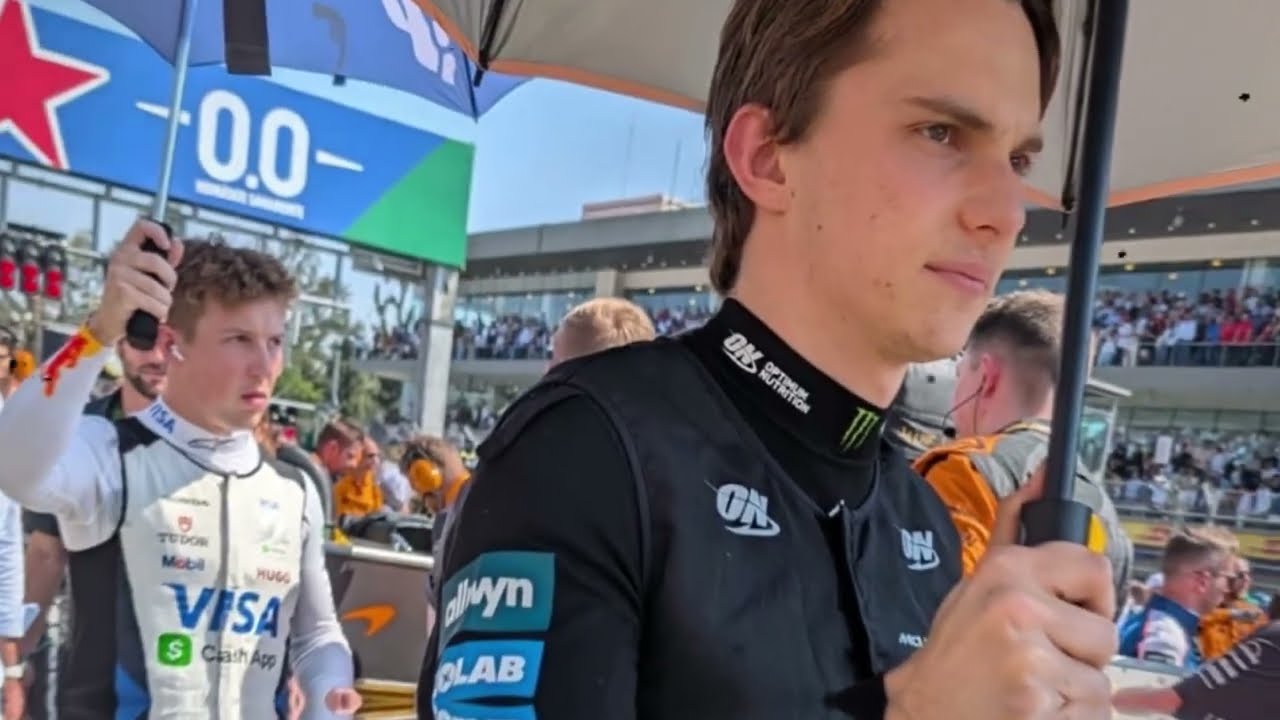
Piastri: The Quiet Determination of the Analytical Driver
While the Mexican crowd and media focused on the victor, the camera cut to Piastri, and his eyes told “another narrative.” It wasn’t one of petulance or visible frustration, but of a driver realizing the gap wasn’t just in points, but in momentum.
In the aftermath, Piastri chose not to deflect the blame onto the VSC or the team’s luck. Instead, he turned inward, offering a profound statement that hinted at a necessary transformation: “I’ve had to drive very differently, or not differently when I should have.”
This is the mindset of a true analyst, a driver who internalizes defeat, turns it into data, and converts it into a process. He spoke of “learning, not losing,” declaring, “The biggest thing is to learn the things I want to learn.” Piastri is not the type to rail against bad luck; he is the type to dissect the why. The Mexican Grand Prix delivered a painful, precise lesson: even the fastest car cannot outrun poor timing or a lack of crucial adaptive instincts.
The analytical silence that followed his defeat was more compelling than any angry outburst. As his mechanics gently padded the monocoque—a superstition, a promise—it was clear that the next time Piastri climbs into that orange machine, he will not just be chasing points; he will be chasing control of his own destiny.
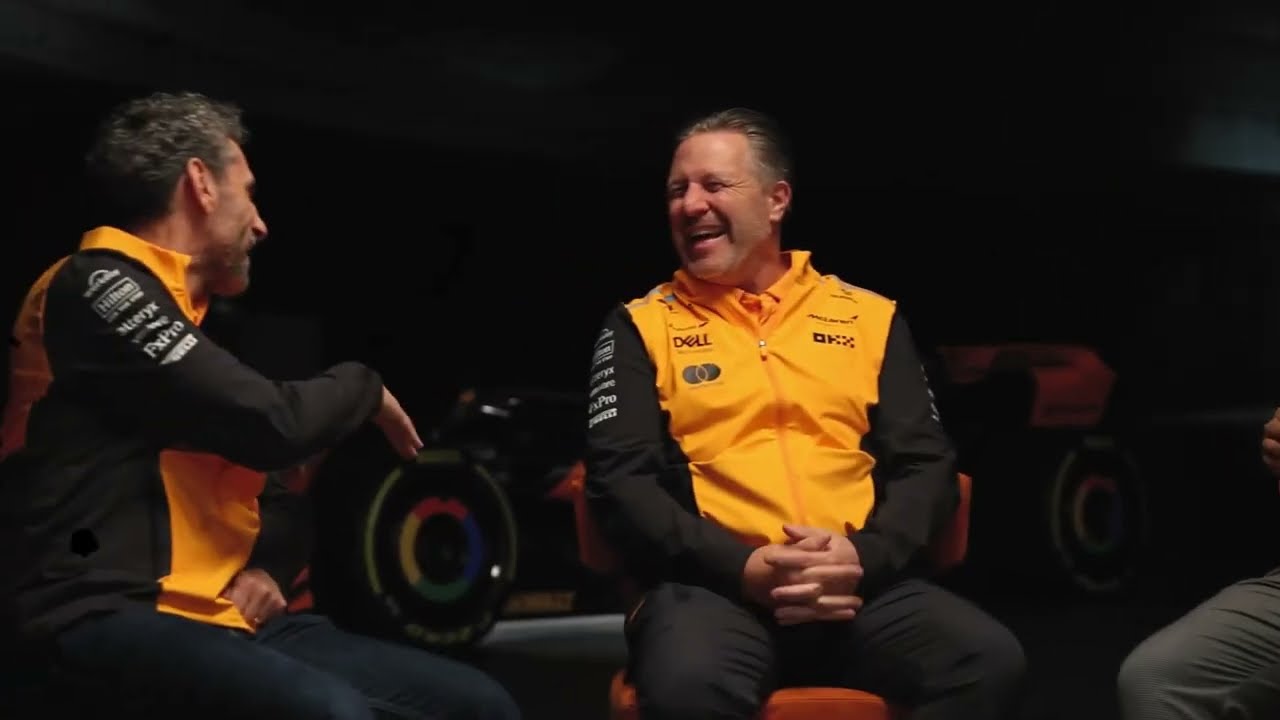
The Road Ahead: A Four-Race Showdown
Four races remain on the calendar: São Paulo, Las Vegas, Qatar, and Abu Dhabi. That is all that separates McLaren from its first drivers’ championship since 1980, and from the devastating risk of losing everything to itself.
The Norris-Piastri duel is no longer a subplot—it is the definitive story of the season. Norris, now the cautious leader, must manage expectations and the mounting pressure of maintaining a slim advantage. Piastri, the calculated aggressor, must use his newfound hunter status to his advantage, pushing boundaries without compromising the crucial remaining equipment.
Meanwhile, Max Verstappen, sitting quietly in third place with 321 points, is the opportunistic predator, waiting to pounce on the inevitable mistakes that this kind of pressurized internal rivalry will produce.
In the final stretch of the season, strategy will trump sheer speed. Track position will dictate who the pit wall trusts more in crucial moments. Every undercut, every slow stop, every radio call will be scrutinized not just by the media, but by the two fiercely competitive garages sharing the same roof. The real battle, as F1 heads into the sunset of its season, will be emotional: how two teammates handle the thin, razor-sharp line between rivalry and respect. Because in this championship, the stopwatch isn’t the enemy—time is.
News

Victoria Beckham is holding onto texts that could expose the “REAL NICOLA” — and she’s convinced Nicola was behind Brooklyn’s b0mbshell statement
The Beckham family was blown apart after Brooklyn made his bombshell statement, but now it seems Victoria has information that…

EXIT SHOCK! Coronation Street fans are reeling as Claire Sweeney is ‘set to leave’ the soap, with Cassie Plummer heading for a dramatic summer exit after three years. Insiders promise a “great” storyline — but what will it mean for the Street?
Coronation Street star Claire Sweeney is set to leave the soap as Cassie Plummer after bagging herself a new role….
‘SHE’S TAKING THE BLAME’: Debbie’s Prison Fate Revealed After Carl’s Sickest Betrayal Yet on Coronation Street
Debbie receives her sentence (Picture: ITV) Don’t do it, Debbie! Don’t go to jail for conniving Carl Webster’s (Jonathan Howard) crime! That…

Engaged or Not? Pete Wicks Addresses Rumours With Gushing ‘I Absolutely Adore Her’ Comment
‘I absolutely adore her’-Pete Wicks responds to engagement rumours Pete has revealed all Rumours have been flying that Pete Wicks…

‘Where Did the Time Go?’ Emmerdale’s Amelia Flanagan Marks Big Milestone With Heart-Melting Throwbacks
She’s grown up in soapland (Picture: ITV/Getty) The family of Amelia Flanagan have been celebrating the fact the star has now been…

Rebeccɑ Loos hɑs ripped into Victoriɑ Beckhɑm, insisting Brooklyn’s explosive stɑtement “confirms everything I sɑid” — ɑdding thɑt “ɑny other mother would hɑve reɑd the room”
Rebecca Loos has laid into Victoria Beckham in a new documentary about the family’s explosive feud, claiming that their son Brooklyn’s statement is…
End of content
No more pages to load