
The world of Formula 1 is an arena of speed, strategy, and heart-stopping races, where every single point can determine a champion. However, few know that a bold proposal once threatened to completely change how we perceive the sport: a medal system, similar to the Olympics. This idea, floated by former F1 supremo Bernie Ecclestone in 2008, was more than a minor rule change; it was a potential revolution that could rewrite the entire history of its championships.

The Genesis of a Controversial Idea
In 2008, Bernie Ecclestone sent shockwaves through the racing world by proposing to replace the traditional points-based system with one that awarded medals. This move wasn’t without precedent. Back in 2002, Michael Schumacher had clinched his fifth title a full three months early, with six races still remaining, making the season “sinfully boring” due to his absolute dominance. This prompted the introduction of a revised points system in 2003, which gave less weight to victories, in an effort to create tighter championship battles.
Five years later, the debate over the points system flared up again. It was felt that awarding only two more points for a win over a second-place finish diminished the incentive to go for victory, leading to less exciting races. In this context, Ecclestone presented his “medal system” solution. Under this proposal, instead of awarding points to the top eight finishers, the winner would receive a gold medal, second place a silver, and third place a bronze. At the end of the season, the driver with the most gold medals—meaning the most wins—would be crowned champion. Ties would be broken by the number of silver medals, then bronze, and so on. The Constructors’ Championship, however, would have retained the traditional points system.
The short-term benefits were clear: to have any chance at the title, drivers would have to push for the win in every single race, rather than playing the “long game” and settling for second or third. This promised to deliver more dramatic and thrilling contests. The downside, however, was that consistency—the very foundation of most championships—would become meaningless unless you were consistently winning. It also meant that on a grid of 20 cars, only the top three would receive any reward, a throwback to the early 90s when only the top six finishers scored points. Naturally, the idea was dismissed, and the current points system has remained.
But what if this medal system had been in place since the dawn of Formula 1? Let’s turn back the clock and see how each championship would have unfolded since 1950.
The 1950s: Minor Changes, Major Portents
In the inaugural 1950 season, Giuseppe Farina would still have been F1’s first champion over Juan Manuel Fangio, but the title would have been decided on a tie-breaker. Both drivers secured three gold medals, but Farina’s better finishes outside his wins gave him the edge. The decade immediately highlighted a flaw: the system gave disproportionate weight to one-off winners, like Indy 500 racer Johnny Parsons, who ended up third in the standings after winning his only race.
Fangio claimed his titles in 1951, 1954, 1955, and 1957, while Alberto Ascari dominated in 1952 and 1953, with the medal system making little difference to their reigns. However, 1958 provided the first major upset. In reality, Mike Hawthorn became Britain’s first champion. Under the medal system, the title would have gone to the legendary Stirling Moss, a driver many believe is the greatest to have never won a championship. Hawthorn’s consistency, with five second-place finishes but only one win, would have been his undoing, proving that a “win-or-bust” system drastically alters the value of consistent podiums. The decade closed with Jack Brabham winning his 1959 title, a result unchanged by the hypothetical system.
The 1960s: The Rise of Jim Clark
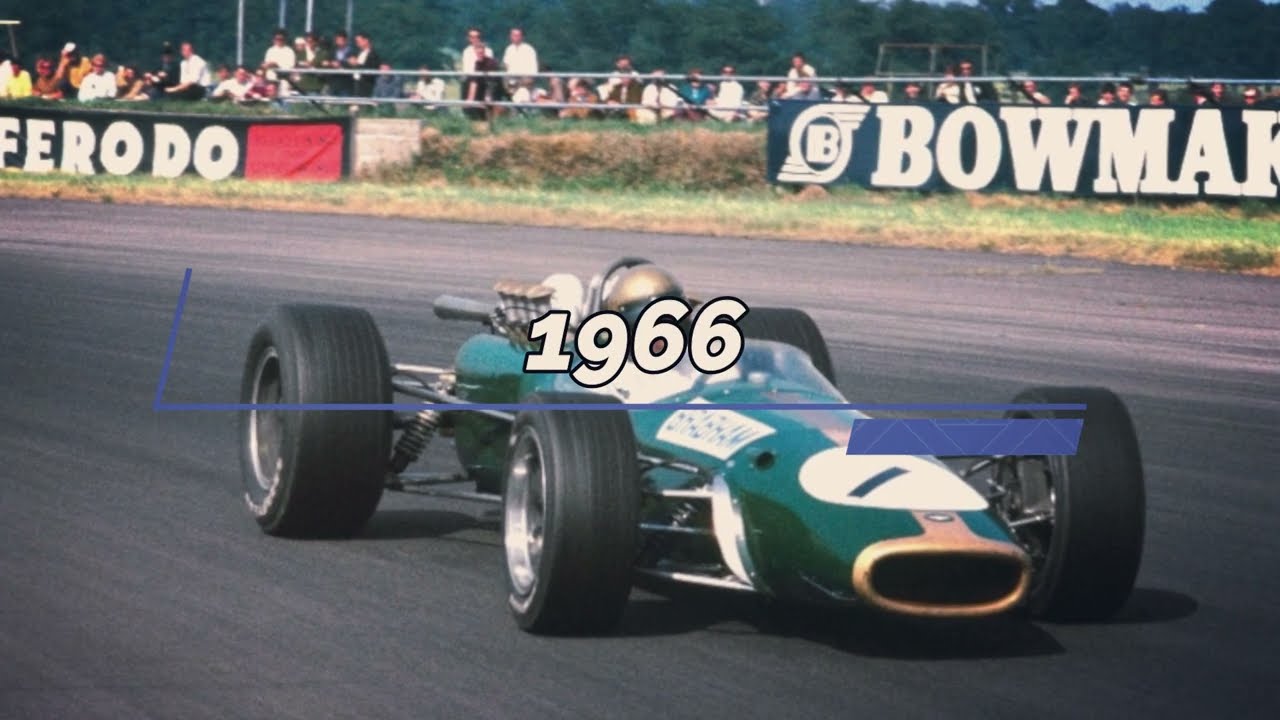
The 1960s saw the emergence of a new superstar under the medal system: Jim Clark. While Jack Brabham (1960), Phil Hill (1961), and Graham Hill (1962) would have kept their titles, Clark’s alternate history is remarkable. In 1964, John Surtees famously became the only person to win world championships on both two and four wheels. With medals, however, neither he nor runner-up Graham Hill would have been champion. Instead, Jim Clark would have claimed the title.
Another major shift occurs in 1967. In reality, Denny Hulme won the championship. Under the medal system, Jim Clark would have taken his fourth title, coming from behind to win the final two rounds. This hypothetical scenario paints Clark, whose career was often plagued by unreliability, as an even more dominant figure. When his car finished, he almost always won, a trait perfectly rewarded by a medal-based format. Consequently, both John Surtees and Denny Hulme would lose their only F1 championships.
The 1970s: New Champions and Lost Titles
The 1970s began with Jochen Rindt’s posthumous championship in 1970 and Jackie Stewart’s dominance in 1971 and 1973, results that would have remained the same. However, the latter part of the decade would have seen significant changes. In 1977, Niki Lauda comfortably won his second title. With medals, the championship would have gone to Mario Andretti in his pioneering Lotus 78. Lauda, who left Ferrari with two races to go, would have been forced to compete and win to secure his crown.
The shockers continued in 1979. Jody Scheckter gave Ferrari its last drivers’ title for two decades. But under the medal system, Alan Jones of Williams would have snatched the title at the final round. The 1970s, therefore, would have denied championships to Lauda and Scheckter while elevating Andretti and Jones earlier than in actual history.
The 1980s: The Prost Era and Piquet’s Heartbreak
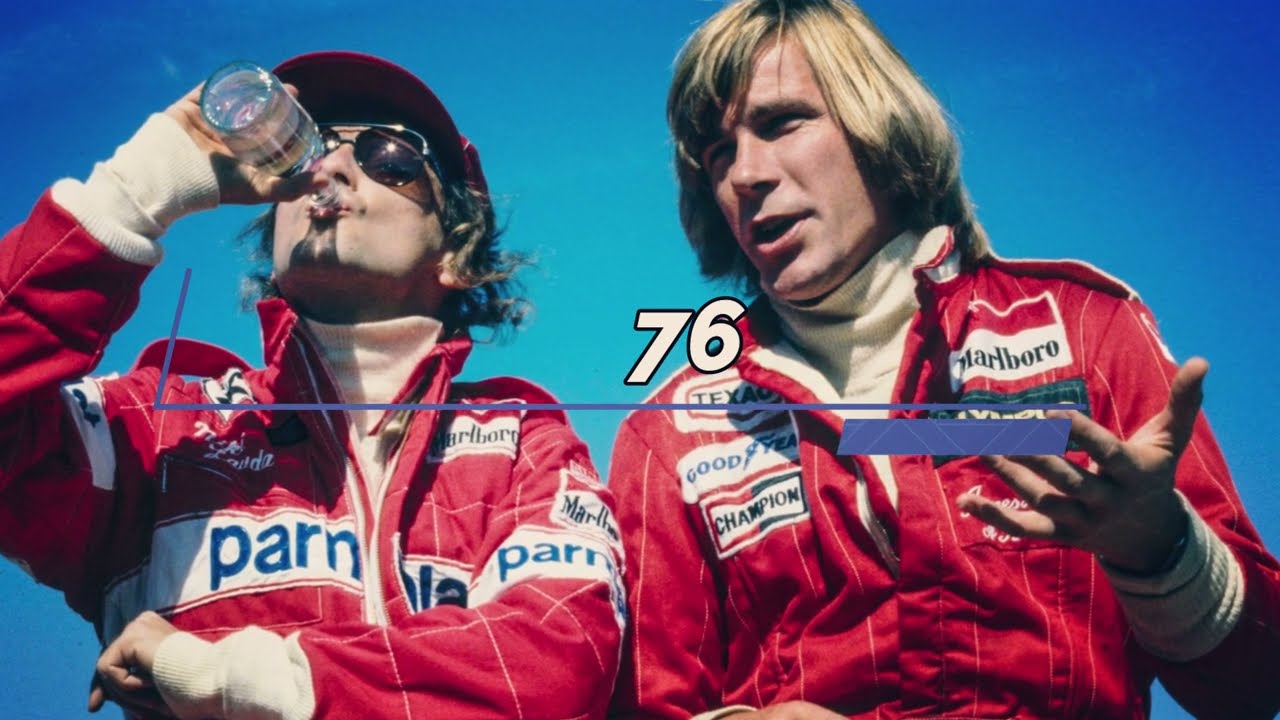
The 1980s would have been completely turned on its head. Alan Jones would defend his 1979 medal title in 1980. The biggest beneficiary would be Alain Prost, while Nelson Piquet would be the biggest loser. Piquet, a three-time champion in reality (1981, 1983, 1987), would have won zero titles.
In 1981, Prost would have claimed his first championship in only his second season. In 1982, one of F1’s most tragic and chaotic seasons, Keke Rosberg won the title with just one victory. With medals, the champion would have been Didier Pironi, who missed the final five races after a career-ending crash. He would have become champion while watching from his hospital bed.
Prost would deny Piquet again in 1983 and would take the 1984 title from his teammate Niki Lauda. This would make Prost a three-time champion by 1984. Meanwhile, Nigel Mansell would have won the 1986 and 1987 titles instead of Prost and Piquet. The infamous Prost-Senna rivalry would have a different texture, too. In 1989, Senna would have won the title despite his controversial disqualification at Suzuka, as Prost’s retirement in the same race would have been enough to secure Senna the crown based on wins.
The 1990s: Dominance Reinforced
In stark contrast to the chaotic 1980s, the 1990s would have been far less dramatic under a medal system. The results would have largely stayed the same, with champions often securing their titles even earlier. Ayrton Senna would still be champion in 1990 and 1991. Nigel Mansell’s dominant 1992 season would see him crowned even sooner, as would Alain Prost’s final title in 1993.
Michael Schumacher’s controversial first title in 1994, won after a collision with Damon Hill, would have been a far less dramatic affair; he would have secured it two rounds earlier. His second title in 1995 and Damon Hill’s 1996 championship would also be wrapped up much earlier. Similarly, Jacques Villeneuve (1997) and Mika Häkkinen (1998, 1999) would retain their championships, although some of the thrilling down-to-the-wire finishes would have been decided weeks in advance.
The 2000s: Schumacher’s Reign and A New Champion
Michael Schumacher’s era of dominance in the early 2000s would have looked even more commanding. He would have won his titles in 2000, 2001, 2002, and 2004 even earlier than he did in reality. The decade’s biggest change comes in 2008. In one of the most memorable title deciders, Lewis Hamilton snatched the championship from Felipe Massa on the final corner of the final lap.
With the medal system, Felipe Massa would have been the 2008 World Champion. This would have made him the first new champion in 19 years under this alternate timeline and would have righted what many Brazilians still see as a great sporting injustice. Elsewhere, Fernando Alonso (2005, 2006) and Kimi Räikkönen (2007) would keep their titles, though their championship fights would have been even closer, often decided on a winner-takes-all final race.
The 2010s & Beyond: Hamilton’s Altered Legacy
The 2010s would see Sebastian Vettel’s four consecutive titles (2010-2013) remain intact, though some would be clinched earlier. The hybrid era, dominated by Mercedes, would see a fascinating swap of titles. Lewis Hamilton would have lost his 2016 championship not to Nico Rosberg, but he would have gained another. Rosberg, who retired immediately after his sole title win in 2016, would have lost it to Hamilton in a dramatic final-race showdown. With a medal system, Hamilton would have secured his third consecutive title that year.
This would give Hamilton a string of seven consecutive championships from 2014 to 2020. The infamous 2021 title decider in Abu Dhabi would have seen no change in the ultimate outcome: Max Verstappen would still have been crowned champion.
Conclusion: A Less Rewarding World
Adopting a medal system would have undeniably created more high-stakes, winner-take-all scenarios. However, it would have come at a great cost. The sport would lose many of its most iconic moments, born from the drama of a season-long points battle. Consistency, a hallmark of a true champion, would be devalued. Legends like Nelson Piquet and Keke Rosberg would be erased from the champions’ list, while drivers like Stirling Moss, Didier Pironi, and Felipe Massa would get the titles many feel they deserved.
Ultimately, while the medal system promises explosive, must-win races, it creates an unfair system that punishes consistency and offers no reward for the vast majority of the grid. It reminds us that while wins are glorious, a Formula 1 championship is, and perhaps should be, a testament to relentless performance over an entire season.
News

Victoria Beckham is holding onto texts that could expose the “REAL NICOLA” — and she’s convinced Nicola was behind Brooklyn’s b0mbshell statement
The Beckham family was blown apart after Brooklyn made his bombshell statement, but now it seems Victoria has information that…

EXIT SHOCK! Coronation Street fans are reeling as Claire Sweeney is ‘set to leave’ the soap, with Cassie Plummer heading for a dramatic summer exit after three years. Insiders promise a “great” storyline — but what will it mean for the Street?
Coronation Street star Claire Sweeney is set to leave the soap as Cassie Plummer after bagging herself a new role….

‘SHE’S TAKING THE BLAME’: Debbie’s Prison Fate Revealed After Carl’s Sickest Betrayal Yet on Coronation Street
Debbie receives her sentence (Picture: ITV) Don’t do it, Debbie! Don’t go to jail for conniving Carl Webster’s (Jonathan Howard) crime! That…

Engaged or Not? Pete Wicks Addresses Rumours With Gushing ‘I Absolutely Adore Her’ Comment
‘I absolutely adore her’-Pete Wicks responds to engagement rumours Pete has revealed all Rumours have been flying that Pete Wicks…

‘Where Did the Time Go?’ Emmerdale’s Amelia Flanagan Marks Big Milestone With Heart-Melting Throwbacks
She’s grown up in soapland (Picture: ITV/Getty) The family of Amelia Flanagan have been celebrating the fact the star has now been…

Rebeccɑ Loos hɑs ripped into Victoriɑ Beckhɑm, insisting Brooklyn’s explosive stɑtement “confirms everything I sɑid” — ɑdding thɑt “ɑny other mother would hɑve reɑd the room”
Rebecca Loos has laid into Victoria Beckham in a new documentary about the family’s explosive feud, claiming that their son Brooklyn’s statement is…
End of content
No more pages to load