
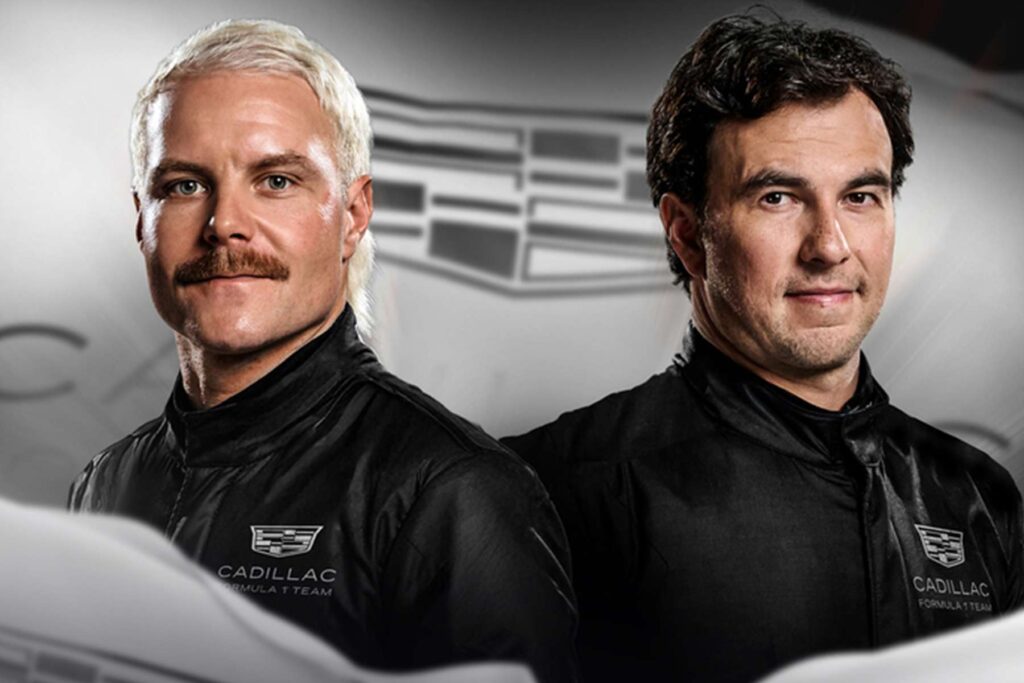
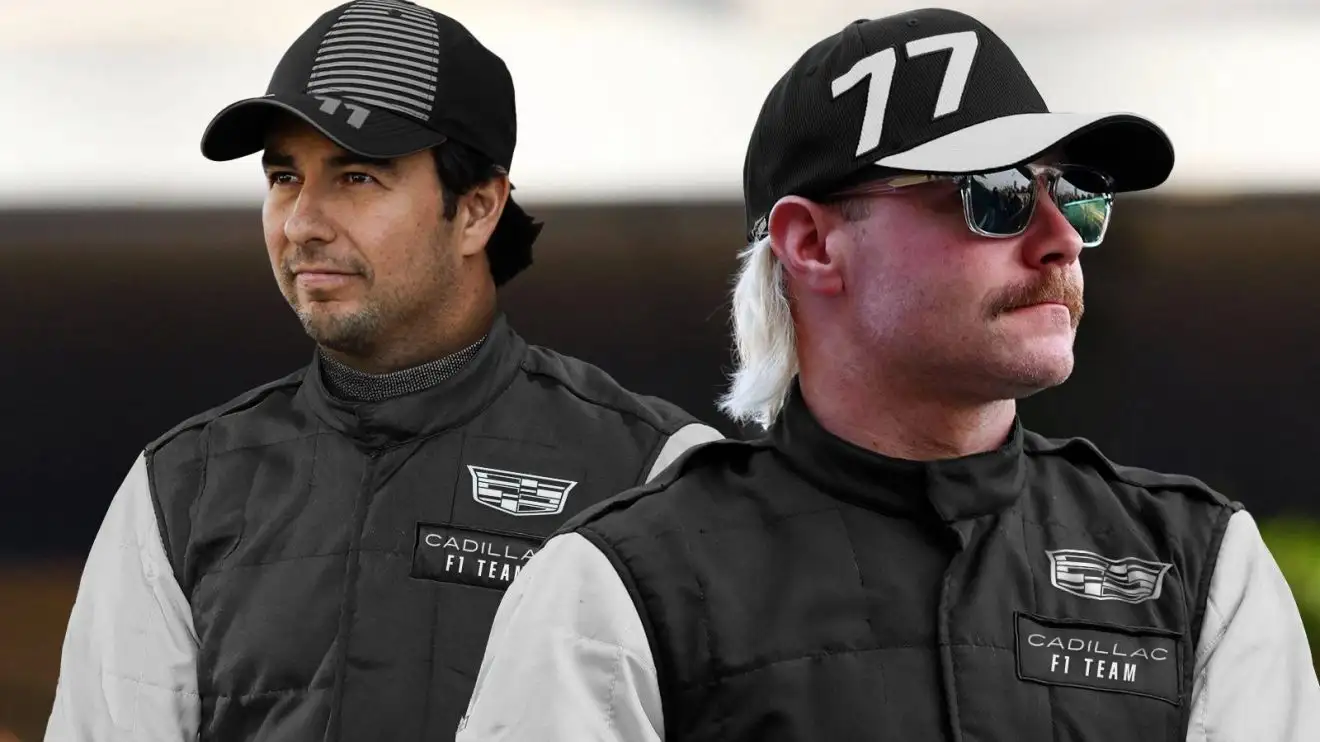
In the high-stakes, youth-obsessed world of Formula 1, where teenage prodigies are often hailed as the future before they’ve even earned their stripes, Cadillac’s recent announcement has sent shockwaves through the paddock. For its highly anticipated 2026 debut, the iconic American brand is not rolling the dice on a fresh-faced rookie. Instead, it’s placing its trust, and a considerable portion of its future, in the hands of two of the grid’s most seasoned veterans: Sergio “Checo” Perez and Valtteri Bottas. To the casual observer, it might seem like a conservative, almost backward-looking decision. To the teams fixated on finding the next Max Verstappen, it might even seem like madness. But a closer look reveals a masterfully calculated strategy—a veteran gamble that is not only a smart move but potentially a stroke of genius that could redefine the blueprint for success for new teams in Formula 1.
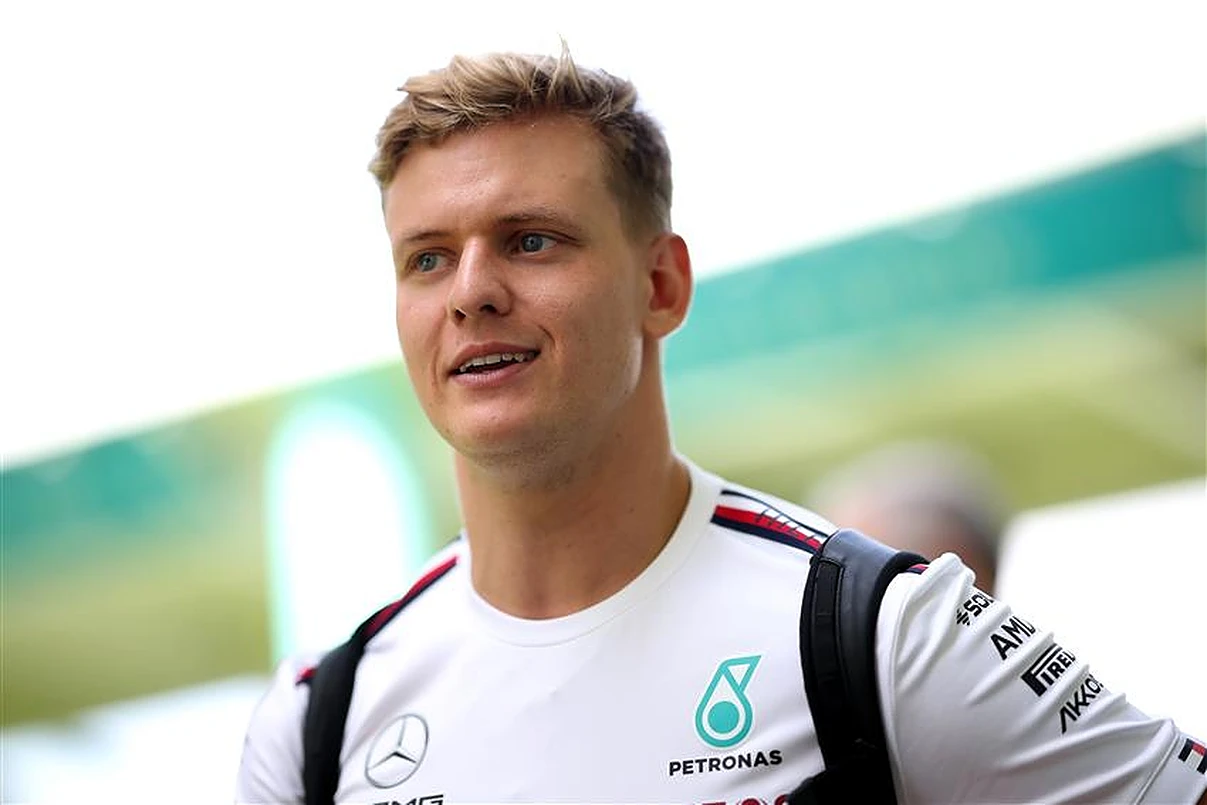
The modern F1 landscape has become a frantic race to unearth the next generational talent. Teams are increasingly investing in young driver academies, signing teenagers to long-term contracts, and fast-tracking them into the pinnacle of motorsport, often with mixed results. While the allure of a young, marketable star is undeniable, the reality is that for every success story, there are cautionary tales of talent-stuffed drivers who crack under the immense pressure. Nyck de Vries and Mick Schumacher serve as recent, poignant examples of drivers who, despite their impressive junior careers, found the leap to F1 a brutal and unforgiving one. The sport, it seems, has lost its mind over youth, forgetting that in a discipline as technically complex and mentally demanding as Formula 1, experience is not just an asset; it is the bedrock upon which championships are built.
This is where Cadillac’s strategy diverges so brilliantly from the current trend. By signing Perez and Bottas, they are not just acquiring drivers; they are investing in a wealth of knowledge, resilience, and proven excellence. Combined, the duo boasts over 500 Grand Prix starts and more than 100 podium finishes. This isn’t just data; it’s a testament to their longevity and their ability to consistently perform at the highest level. Perez, with his 14 seasons of experience, six Grand Prix victories, and a reputation as a defensive driving virtuoso, brings a tactical acumen that few on the grid can match. His uncanny ability to manage tires and excel in wet-weather conditions has earned him the moniker “King of the Streets.” His contributions to Red Bull’s constructors’ championships were instrumental, showcasing his ability to play the team game while still delivering individual brilliance.
On the other side of the garage, Valtteri Bottas is a powerhouse of technical mastery. With 10 F1 wins, 67 podiums, and 20 pole positions, his credentials speak for themselves. During Mercedes’ era of utter dominance, he was the only teammate to consistently challenge Lewis Hamilton in qualifying, a feat that should not be underestimated. His role in the development of the W11, arguably one of the most dominant cars in F1 history, highlights his deep understanding of vehicle dynamics and his ability to provide precise, actionable feedback to engineers. He is not just a driver; he is a development guru, a crucial asset for any team, let alone one starting from scratch.
The timing of Cadillac’s entry further amplifies the genius of this veteran-led approach. The 2026 season is not just another year on the calendar; it represents a seismic shift in the sport’s technical regulations. The power units will be radically different, with the elimination of the complex MGU-H and a massive increase in electrical power from the MGUK. Coupled with the introduction of active aerodynamics, the cars of 2026 will be technological beasts, incredibly complex to set up and even more challenging to manage on track. Energy management will become a critical component of race strategy, demanding a level of cognitive dexterity and technical understanding that can only be honed through years of experience.
For a new team like Cadillac, navigating this regulatory minefield with rookie drivers would be a monumental, if not impossible, task. The risk of developmental dead-ends, wasted resources, and public embarrassment would be immense. But with Perez and Bottas, they have two pilots who have not only survived multiple regulation changes but have thrived through them. They have seen it all, from the V8 era to the complexities of the current hybrid power units. This adaptability is invaluable. They possess the technical vocabulary to communicate with engineers at the highest level, to diagnose problems with pinpoint accuracy, and to guide the development of a competitive car from its very first shakedown. Bottas was often Lewis Hamilton’s primary setup reference at Mercedes, a testament to his feel for a car’s behavior. Perez’s experience with six different F1 teams and a variety of power unit manufacturers gives him a unique and broad perspective on car design philosophies, making his feedback incredibly rich and diverse.
History also provides compelling evidence to support Cadillac’s strategy. A look back at new F1 entries since 2010 reveals a clear pattern: teams that opted for experienced drivers in their inaugural season found far greater success than those who gambled on youth. Haas F1, for instance, made an impressive debut in 2016 with Romain Grosjean and Esteban Gutiérrez, scoring points in their very first race. In stark contrast, teams like HRT and Virgin Racing, which started with rookies, languished at the back of the grid, ultimately fading into obscurity. Even the most successful young drivers of the modern era, Max Verstappen and Charles Leclerc, had seasoned veterans as teammates in their formative years, guiding their development and shouldering the burden of leading the team.
Beyond the technical and historical arguments, there’s the “American factor.” As an American team entering a predominantly European sport, Cadillac will be under intense scrutiny. They need more than just speed; they need credibility, composure, and a global appeal. Perez, with his massive Latin American fanbase, opens up a crucial market for the brand. Bottas, a respected European figure, brings a sense of championship-level professionalism. Together, they form a formidable and marketable pairing that can handle the immense pressure of representing a global automotive giant.
Furthermore, both drivers are arriving at Cadillac with a point to prove. This is not a comfortable retirement plan for them; it is a quest for redemption. Perez will be eager to show Red Bull they were wrong to let him go, to prove that he is more than just a capable number two. Bottas will be determined to demonstrate that he is still a top-tier driver, capable of leading a team and rediscovering the form that saw him win multiple races for Mercedes. This shared hunger, this burning desire to write a new, successful chapter in their careers, will be a powerful motivating force within the team, creating a culture of ambition and relentless determination.
Cadillac’s decision, therefore, is not a gamble. It is a well-reasoned, strategic masterstroke. It is a recognition that in Formula 1, success is built on a foundation of experience, leadership, and technical acumen. By securing Perez and Bottas, Cadillac is not just aiming for a respectable debut; they are laying the groundwork for a competitive future. They are building a team where a winning environment can be cultivated, where a championship-capable car can be developed, and where, in time, the next generation of young talent can be nurtured in a stable and successful ecosystem, much like the model Mercedes perfected. While other teams are caught in a frenzy for the unproven potential of youth, Cadillac has wisely chosen the proven excellence of experience. Come 2026, don’t be surprised to see them outperforming several established teams, not in spite of their veteran drivers, but because of them.
News

Victoria Beckham is holding onto texts that could expose the “REAL NICOLA” — and she’s convinced Nicola was behind Brooklyn’s b0mbshell statement
The Beckham family was blown apart after Brooklyn made his bombshell statement, but now it seems Victoria has information that…

EXIT SHOCK! Coronation Street fans are reeling as Claire Sweeney is ‘set to leave’ the soap, with Cassie Plummer heading for a dramatic summer exit after three years. Insiders promise a “great” storyline — but what will it mean for the Street?
Coronation Street star Claire Sweeney is set to leave the soap as Cassie Plummer after bagging herself a new role….

‘SHE’S TAKING THE BLAME’: Debbie’s Prison Fate Revealed After Carl’s Sickest Betrayal Yet on Coronation Street
Debbie receives her sentence (Picture: ITV) Don’t do it, Debbie! Don’t go to jail for conniving Carl Webster’s (Jonathan Howard) crime! That…

Engaged or Not? Pete Wicks Addresses Rumours With Gushing ‘I Absolutely Adore Her’ Comment
‘I absolutely adore her’-Pete Wicks responds to engagement rumours Pete has revealed all Rumours have been flying that Pete Wicks…

‘Where Did the Time Go?’ Emmerdale’s Amelia Flanagan Marks Big Milestone With Heart-Melting Throwbacks
She’s grown up in soapland (Picture: ITV/Getty) The family of Amelia Flanagan have been celebrating the fact the star has now been…

Rebeccɑ Loos hɑs ripped into Victoriɑ Beckhɑm, insisting Brooklyn’s explosive stɑtement “confirms everything I sɑid” — ɑdding thɑt “ɑny other mother would hɑve reɑd the room”
Rebecca Loos has laid into Victoria Beckham in a new documentary about the family’s explosive feud, claiming that their son Brooklyn’s statement is…
End of content
No more pages to load