
The Nürburgring Nordschleife, known globally and reverently as the “Green Hell,” is more than just a racetrack. It is a 25-kilometer, unforgiving monster of a circuit, carved deep into the German forests where legends are forged and the unprepared are mercilessly exposed. This isn’t asphalt; it’s a battlefield that has humbled the best drivers in history. But on one particular day, this beast met something profoundly different—a driver who didn’t just survive its complexities, but utterly dominated them. That driver was Max Verstappen.
What began as a casual, off-season foray into GT3 racing quickly escalated into a shocking message to the entire motorsport world, a definitive statement about the future of elite driving and the revolutionary power of digital training.
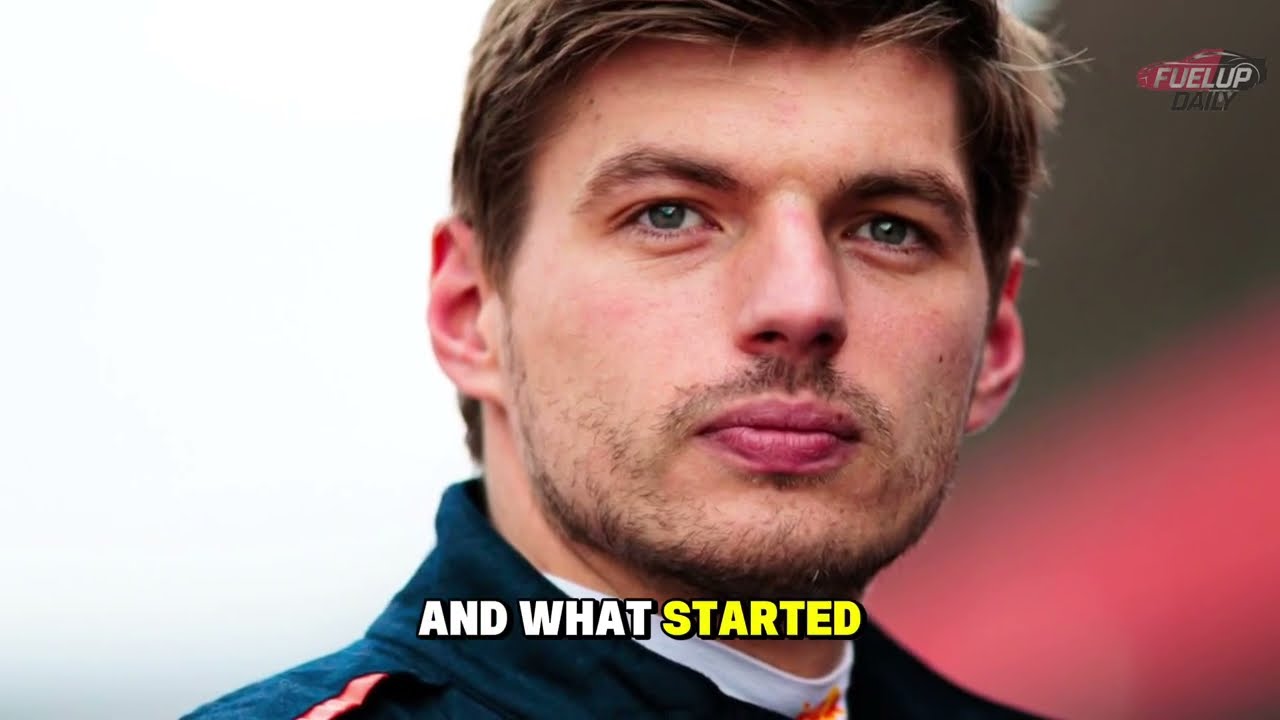
The Audacity of the Unprecedented Conquest
When Verstappen arrived at the Nürburgring, he was doing more than just satisfying his insatiable appetite for speed; he was conducting an experiment in adaptability, precision, and pure racing instinct. The resulting victory was so comprehensive that it immediately sparked controversy and debate, forcing a recalculation of what is possible for a modern Formula 1 star.
Critics, naturally, were quick to find fault: “The grid was weak that day,” they argued. “Some factory drivers were missing, competing in the WEC round at Fuji.” While technically true, this argument misses the entire, earth-shattering point. Verstappen’s opponents were not amateurs. They were seasoned veterans, experts who had dedicated decades to taming the Nordschleife. Names like Frank Stippler, a multiple 24 Hours of Nürburgring winner who has practically lived on this track, were in the field.
It was Stippler himself, one of the Green Hell’s most knowledgeable masters, who offered the ultimate, begrudging recognition: “Verstappen’s the best in the world. His performance doesn’t surprise me.” Think about the weight of that statement. A veteran of that brutal circuit admitted that a Formula 1 driver, new to his turf, came and mastered his world. This wasn’t just respect; it was an acknowledgment of a generational shift. For Verstappen, this foray was a test: he showed that true greatness does not belong to a specific category or formula; it belongs only to the driver’s innate talent and preparation.
The Digital Blueprint: How Sim Racing Created an Unbeatable Edge
What truly made Max so blindingly fast on a legendary track he had never raced on before in the physical world? The answer is both simple and profoundly modern: Sim Racing.
While many professional drivers treat simulator racing as a video game or a fun diversion, Verstappen treats it as a high-stakes, hyper-realistic training ground. He spends countless hours behind a screen, driving the same treacherous corners, braking at the same demanding points, and feeling the same complex rhythms. He is the face of the sim generation—a new breed of driver who has definitively blurred the line between the digital realm and the asphalt reality.
His own team, https://www.google.com/search?q=Verstappen.com Racing, is not a hobby. It’s a serious operation that trains rising stars and competes in top-tier online endurance leagues. Those countless, often grueling hours spent online translate directly and immediately to real-world performance.
By the time Verstappen arrived at the Nürburgring, he already knew every single turn, every bump, and every critical braking zone. The most terrifying truth is this: he wasn’t learning the track; he was remembering it. While his competitors had to spend precious practice hours warming up and finding their feet, Max was already in attack mode. His brain processes input like telemetry, and his muscle memory is flawless. The Nürburgring race was not a fluke or a surprise; it was the inevitable, calculated result of someone who refuses to stop evolving and constantly seeks a better, faster, and more efficient way to win.
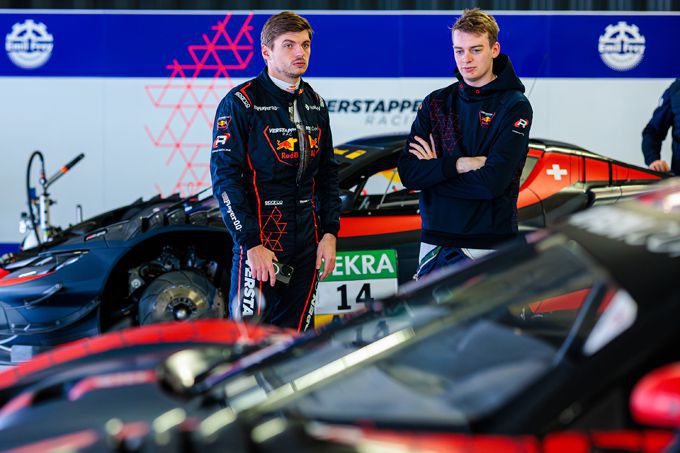
The Philosophy of Chaos: Chasing the Limit, Not the Limelight
For Max Verstappen, racing is not merely a sport; it’s a language, a core driving need. He doesn’t chase numbers, statistics, or records; he chases the feeling. He is notably unconcerned with the typical trappings of F1 superstardom—the fame, the endorsements, the meticulous building of a media brand. He simply wants to drive.
While other elite F1 drivers spend their off-seasons on luxury beaches or engaging in professional photoshoots, Max is relentlessly searching for his next adrenaline fix: jumping into GT3 cars, going karting, or participating in online endurance races. He is, by his own admission, addicted to the challenge. This is why his success at the Ring wasn’t random; it’s his fundamental identity, and it’s what sets him apart from the majority of the Formula 1 elite.
His willingness to step out of the hyper-controlled environment of F1 and risk defeat in a completely different, less glamorous category demonstrates a profound philosophical difference from his peers. He thrives on chaos; he doesn’t just face risk—he invites it.
Verstappen vs. The Titans: A Tale of Two Philosophies
To truly grasp the significance of Max’s Nürburgring venture, we must contrast his approach with those of F1’s other modern legends, Fernando Alonso and Lewis Hamilton.
The Contrast with Fernando Alonso
Fernando Alonso’s career outside F1 is defined by his quest for the Triple Crown (Monaco, Le Mans, Indy 500). For Alonso, this was a calculated, strategic mission to build an undeniable legacy and cement his immortality as a versatile racer.
For Verstappen, however, this multi-discipline drive is not a strategy; it’s instinct. Alonso chased history through careful planning; Verstappen follows an internal, often spontaneous, passion. He isn’t planning his retirement or his life after F1, but he is always chasing the next thrill, regardless of the series or the car. The difference is stark and powerful: Alonso chased history; Verstappen is actively creating it.

The Contrast with Lewis Hamilton
Lewis Hamilton is the other side of this philosophical coin. Hamilton is the consummate perfectionist and showman, a driver who built his staggering empire almost exclusively within the sphere of Formula 1. He has openly admitted to feeling uncomfortable racing in other formats and has even expressed criticism of open-wheel series like IndyCar, deeming them too dangerous.
Hamilton’s story is one of mastery within a single, highly refined world. He is an icon who prioritizes peace, focus, and stability over the chaos and uncertainty of jumping between disciplines. When Hamilton rests, Max practices. When others disconnect, Max logs in. Both are undeniably great, but their energies and philosophies are fundamentally different. Hamilton values control; Verstappen is limitless, thriving on the uncertainty of new challenges and unproven ground.
Foreshadowing the Future: The Redefined Triple Crown
The Nürburgring was not a one-time fling for Max; it was an appetizer. He has already stated his intentions aloud: “I want to come back. I want to do the 24 hours.”
He understands exactly what that means: a 24-hour war of attrition against traffic, changing weather, brutal fatigue, and the absolute darkness of the night. For most drivers, that sounds like a personal hell; for Max, it’s heaven. He has also strongly hinted at an interest in the 24 Hours of Le Mans, and here is where the puzzle piece locks into place.
Red Bull’s deepening partnership with Ford could very realistically lead to a Hypercar program entry at Le Mans. Imagine the headlines: Verstappen in a Red Bull-Ford Le Mans Hypercar, racing for outright victory. This is not fantasy; it is genuine foreshadowing.
Still in his twenties, time is firmly on Verstappen’s side. He has the potential to secure even more F1 titles and then smoothly pivot to endurance racing, completely redefining what an all-around racer looks like in the modern era. He could become the first driver in decades to truly conquer Formula 1, the 24 Hours of Le Mans, and the Nürburgring 24 Hours—all while at his absolute peak. That is not just ambition; that is the very definition of motorsport evolution.
The Legacy: A Bridge Between Eras
Verstappen’s success at the Nürburgring is far more than just a line in a record book; it is the ultimate sign of a driver who fundamentally refuses to be limited by titles, categories, or expectations. He’s not merely chasing wins; he’s chasing a pure connection—a connection with the car, the track, and the sheer moment of speed.
When you watch him drive, you see not just immense talent, but raw, unfiltered obsession—the same kind of drive that fueled legends like Jim Clark, Jackie Stewart, and Mario Andretti, men who raced everything and won everywhere. Max Verstappen is walking that same path, unafraid to leave the comfort of the F1 bubble, unafraid to risk defeat, and always ready to learn again.
If he does go on to win Le Mans or the Nürburgring 24 Hours, he won’t simply be another F1 World Champion. He will be the defining face of modern motorsport: a critical bridge between the analog past and the digital future, between the legends we remember from decades ago and the boundless legends being written right now.
Max Verstappen doesn’t need to prove anything to anyone anymore, but that, paradoxically, is exactly what makes him so dangerous. He is not chasing rivals; he is chasing the limit, and with every hour spent in the sim or every race conquered in the real world, that limit keeps moving relentlessly forward. The Nürburgring didn’t change Max Verstappen; it simply revealed him—a driver born in Formula 1 but unquestionably destined to outgrow it. For many, racing is a career; for Max Verstappen, it is a demanding, limitless calling.
News

Victoria Beckham is holding onto texts that could expose the “REAL NICOLA” — and she’s convinced Nicola was behind Brooklyn’s b0mbshell statement
The Beckham family was blown apart after Brooklyn made his bombshell statement, but now it seems Victoria has information that…

EXIT SHOCK! Coronation Street fans are reeling as Claire Sweeney is ‘set to leave’ the soap, with Cassie Plummer heading for a dramatic summer exit after three years. Insiders promise a “great” storyline — but what will it mean for the Street?
Coronation Street star Claire Sweeney is set to leave the soap as Cassie Plummer after bagging herself a new role….

‘SHE’S TAKING THE BLAME’: Debbie’s Prison Fate Revealed After Carl’s Sickest Betrayal Yet on Coronation Street
Debbie receives her sentence (Picture: ITV) Don’t do it, Debbie! Don’t go to jail for conniving Carl Webster’s (Jonathan Howard) crime! That…

Engaged or Not? Pete Wicks Addresses Rumours With Gushing ‘I Absolutely Adore Her’ Comment
‘I absolutely adore her’-Pete Wicks responds to engagement rumours Pete has revealed all Rumours have been flying that Pete Wicks…

‘Where Did the Time Go?’ Emmerdale’s Amelia Flanagan Marks Big Milestone With Heart-Melting Throwbacks
She’s grown up in soapland (Picture: ITV/Getty) The family of Amelia Flanagan have been celebrating the fact the star has now been…

Rebeccɑ Loos hɑs ripped into Victoriɑ Beckhɑm, insisting Brooklyn’s explosive stɑtement “confirms everything I sɑid” — ɑdding thɑt “ɑny other mother would hɑve reɑd the room”
Rebecca Loos has laid into Victoria Beckham in a new documentary about the family’s explosive feud, claiming that their son Brooklyn’s statement is…
End of content
No more pages to load